Sodium chloride, most commonly known as salt, is everywhere. Ancient in its uses and abundant in nature, it preserves local ecosystems, de-ices roads, is vital in a variety of industrial processes, and is likely sitting on your kitchen table as a seasoning for your meals. Today, it is attributed relatively little value –considering it used to be as worthy as gold–, and unlike other nature-derived alternatives such as algae or mycelium, there doesn’t seem to be enough research and interest around all of its physical, mechanical or aesthetic properties. And yet it is a material with infinite, extraordinary potential. Apart from its life-supporting qualities, salt is affordable, easily available, antibacterial, resistant to fire, can store humidity and heat, and is great at reflecting and diffusing light.
Environmental Activism by Design, a monograph by architects and educators Coleman Coker and Sarah Gamble, challenges designers to actively engage the environmental crisis through their work, while articulating an optimistic, tangible means to pursue community good and environmental justice through design activism and engagement. The authors assert that in addition to greener buildings, cheaper housing, and technological fixes, we must rethink pedagogy and praxis so that every single architecture graduate can define equity and transform the profession.
AHL is the most prominent, prestigious, and progressive architectural practice working in Hawaii. As such, the history of Modern Hawaiian architecture is very much the history of AHL. Over the past 75 years, no firm has built bigger, higher, or more frequently than AHL. This book tells their story and in so doing, tells the story of the making of a modern Hawaii.
Whether it is for a break, relaxation, or even free wifi, coffee shops tend to host a series of situations that involve more than just enjoying a cup of coffee. A quiet and pleasant place, which in addition to everything else offers a good hot drink, is a great attraction for those looking for a coffee shop to spend a few hours.
In this sense, a landscape project that integrates greenery into these environments can significantly increase the comfort of customers, by easing temperatures and offering a barrier against atmospheric, noise and visual pollution. In addition, after the restrictions imposed by the Covid-19 pandemic, open spaces, with natural ventilation and gardens became priorities for many projects, including coffee shops.
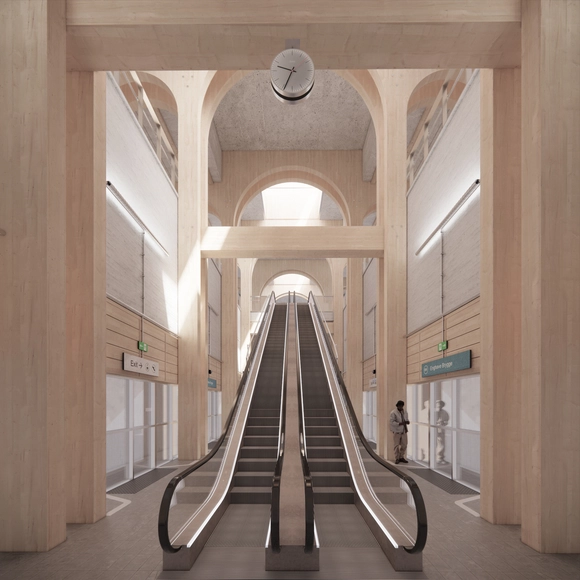
JAJA Architects won the competition organized by Metroselskabet, Denmark, to develop resource-efficient and climate-friendly metro stations. The winning team takes a comprehensive and holistic approach, looking at both material-optimized and sustainable design solutions and the character of the journey that passengers take to reach their destination. The proposal is centered around three core elements: Materials, Mobility Hub and Climate Campaign. While aiming to reduce CO2 emissions, the team also seeks to create an enjoyable and easy-to-navigate space for the many daily passengers. Snøhetta, 3XN/GXN, and Effekt also participated in the competition.
It is a great privilege to amplify the voice of architects and other built environment professionals. It is also an enormous challenge as it requires a lot of investigation and time from our content team. However, the effort is gratifying. It puts us in contact with some of the most prominent talents in our field who have been discussing subjects such as cities, metaverse, community, environment, democracy, sustainability, building technology and interiors, to mention just a few.
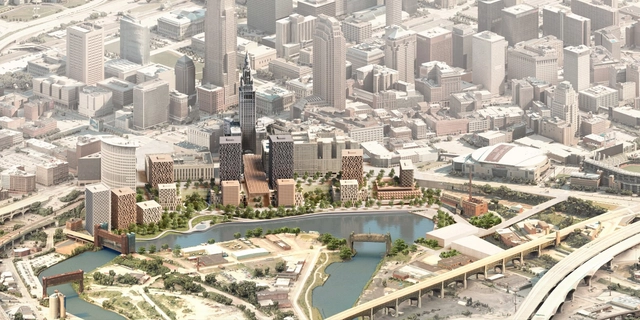
Axonometric View of Proposed Cuyahoga Riverfront Master Plan. Image Courtesy of Adjaye Associates
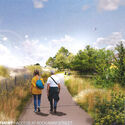
David Adjaye, in partnership with Bedrock and the city of Cleveland, unveiled the masterplan for the Cuyahoga Riverfront, a 15-to-20-year vision that will transform 35 acres of the riverfront to improve accessibility, equity, sustainability, and resilience of the downtown area. The design embraces the city’s rich history and connection to nature and creates a sustainable infrastructure that prioritizes pedestrian movement and activates open public spaces. David Adjaye, a British-Ghanian architect, has been awarded Britain’s Order of Merit, making him the fifth architect to be appointed the honor.
In interior design – and many other design disciplines – it is much easier to be unsustainable. Buying or developing custom solutions for a room often requires less time and research than purchasing second-hand materials or concern for waste flow and the circular economy.
But the construction and decoration industry can no longer afford the luxury of ignoring the environmental impacts caused by their activities.
There was a time when buildings wanted to be mountains, roofs wanted to be forests, and pillars wanted to be trees. As the world began to go into a state of alert with the melting of glaciers and the consequent rise of Earth’s temperature, architecture – from a general perspective – was concerned with imitating the shapes of nature. Something close to human-made “ecosystems”, seen by many as allegoric and decorative, in service of marketable images of “sustainable development”.
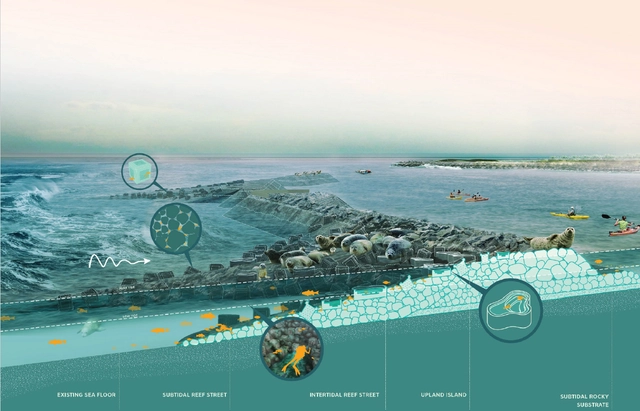
Living Breakwaters, Staten Island, NYC. Image Courtesy of SCRAPE
“Superstorm Sandy in 2012 was a wake-up call for NYC and made the city realize it needed to better prepare for climate change,” said Adrian Smith, FASLA, vice president at ASLA and team leader of Staten Island capital projects with NYC Parks. Due to storm surges from Sandy, “several people in Staten Island perished, and millions in property damage were sustained.”
On the 10th anniversary of Sandy, Smith, along with Pippa Brashear, ASLA, principal at SCAPE, and Donna Walcavage, FASLA, principal at Stantec, explained how designing with nature can lead to more resilient shoreline communities. During Climate Week NYC, they walked an online crowd of hundreds through two interconnected projects on the southwestern end of the island: Living Breakwaters and its companion on land — the Tottenville Shoreline Protection Project.
The motto of the Solar Decathlon Europe 21/22 was to convert and expand rather than to demolish and reconstruct. Recycling windows, using biodegradable materials for luminaires and connecting light with sensors represented just some innovative examples of the international university-level student competition in Wuppertal, Germany. For the first time, the competition presented an award for sustainable architectural lighting. This was a question of quality as much as quantity, and that applies equally to daylight and artificial light.
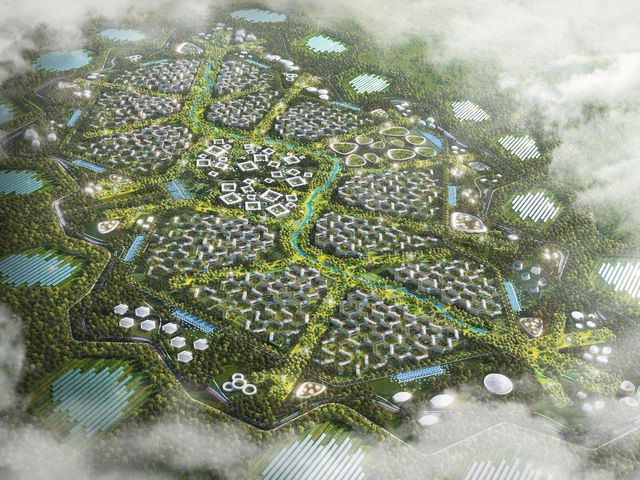
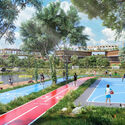
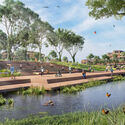
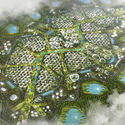
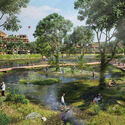
URB has unveiled plans to develop Africa's most sustainable city, a development that can host 150,000 residents. Known as The Parks, the city plans to produce 100% of its energy, water & food on-site through biodomes, solar-powered air-to-water generators, and biogas production. The 1,700-hectare project will feature residential, medical, ecotourism, and educational hubs to become one of the significant contributors to the growing green and tech economy in South Africa.
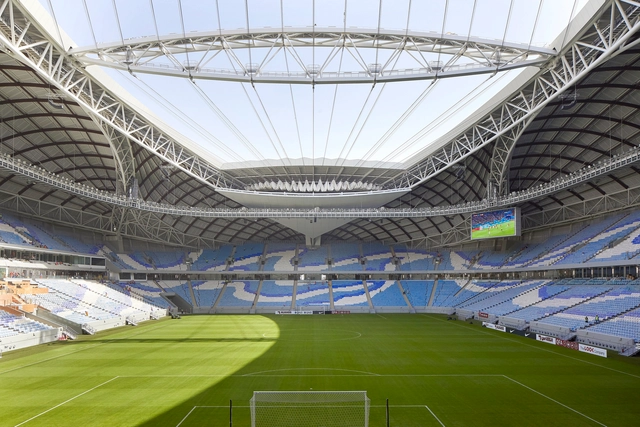
The World Cup will take place between November and December. This is due to the host country’s climate in June and July when Qatar can reach average temperatures of 40 to 50°C.
As climate change continues to reach unprecedented levels, many are pointing towards enhancing circularity in the construction sector. Essentially, the circular economy aims to eliminate waste and the continual use of resources by repeatedly reusing, repairing or recycling materials. The cyclical approach is able to meet demand and minimize CO2 emissions by extending a product’s lifespan, which is especially important when dealing with limited resources. Unlike the traditional linear extractive method –where everything goes through an extremely contaminating process of 'take-make-waste'–, circularity keeps materials in use for as long as possible to extract maximum value. This, in turn, reduces pollution, regenerates natural systems and contributes to a healthier built environment, hence building economic, natural, and social capital.
From smartphones to space rockets and self-driving cars, the power of technology in this modern digital era is enormous (and practically limitless). It has impacted every aspect of our lives and will continue to open up endless possibilities that today we cannot even begin to fathom. When applied in a socially and environmentally responsible way, technology has the power to enhance productivity, communication and sustainability, enabling global communities to function efficiently, addressing people’s everyday needs and improving their quality of life. Simply put, good technology serves humanity. And just as the healthcare or manufacturing industries have taken advantage of this, the architecture, design and construction world cannot fall behind.
Construction practices across the world, as well as the types and uses of building materials, have been identified as key factors that impact global warming. Studies have shown that the building sector will play a central role in achieving the UN Climate Change Conference (COP26) CO2 emissions reduction targets for 2030 and net zero CO2 emissions by 2050.
The construction sector's support for the achievement of these targets must focus on sustainable construction, which entails environmentally-friendly structures that consume less energy and have smaller or even net zero carbon footprints.
Green buildings are structures that, in their design, construction or operation, reduce or eliminate negative impacts on our climate and natural environment. They preserve precious natural resources and improve quality of life.
Climate change is becoming more and more real every day: all over the world, we are witnessing a clear increase in climate disasters. Moreover, the latest IPCC report warns us of possible “tipping points” from which the climate transition could become not gradual, but sudden and irrevocable.
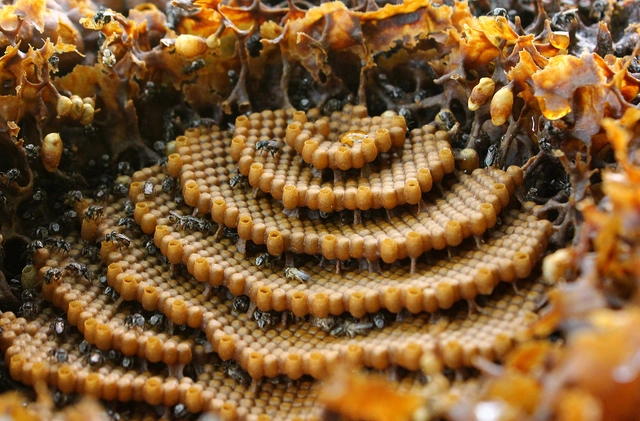
Bees are perhaps the insects that most arouse our fascination and curiosity. With the exception of Antarctica, they are found on all continents, in all habitats that contain insect-pollinated flowering plants. Representations of humans collecting honey from wild bees date back to 15,000 years ago, and pots of honey have even been found in the tombs of Egyptian pharaohs like Tutankhamen. Although we generally have a fixed idea about what cartoon bees look like, there are thousands of species around the world, with different sizes, colors and behaviors. There are even several examples of solitary bees, many without stingers, and even some species that survive by plundering other weaker colonies. But something that has consistently impressed researchers is the organization of their hives, which are truly highly populated cities with an efficiency to make any urban planner envious.