1. ArchDaily
  2. New York City

New York City: The Latest Architecture and News

Place Branding: Reviving Cities through Brand Strategy

Subscriber Access | 

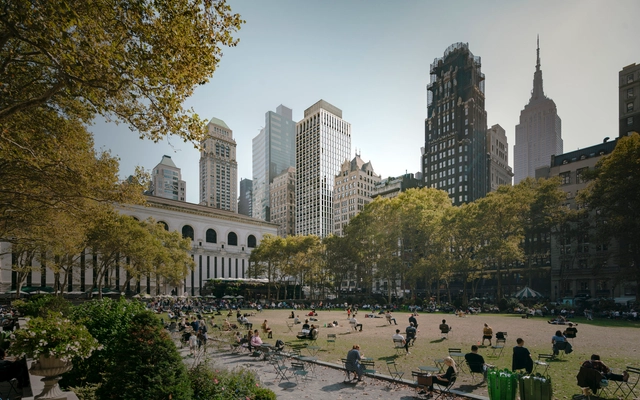
The 1970’s were a dark time for New York City. While the economy was down, crime rates were at an all-time high. The negative public image also kept tourists away, driving the city into a financial crisis. To change perceptions about The Big Apple, the New York State Department for Economic Development approached advertising firm Wells Rich Greene to create an inviting marketing operation. After 45 years, the resulting I Love NY campaign remains fresh in the minds of locals and tourists, successfully revamping New York City’s brand. Cities across the world like Paris, Amsterdam and Jerusalem have similarly invested heavily in constructing magnetic brands for themselves.

Place Branding: Reviving Cities through Brand Strategy  - Image 1 of 4Place Branding: Reviving Cities through Brand Strategy  - Image 2 of 4Place Branding: Reviving Cities through Brand Strategy  - Image 3 of 4Place Branding: Reviving Cities through Brand Strategy  - Image 4 of 4Place Branding: Reviving Cities through Brand Strategy  - More Images+ 1

Surveying 100 Years of the Regional Plan Association

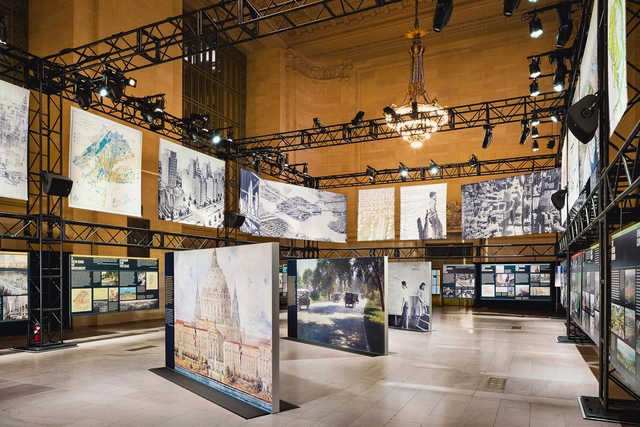
The Constant Future: A Century of the Regional Plan, an October exhibit at Vanderbilt Hall in Grand Central Terminal is a succinct yet gripping display of civic dreams selected from the imagination of the Regional Plan Association (RPA), an independent non-profit that conducts research on the environment, land use, and good governance with the intention of promoting ideas that improve economic health, environmental resiliency, and quality of life in the New York metropolitan area. The occasion is the organization’s centennial, and the show is a testament to its powerful role in developing the tri-state region. Not all of its ideas have been good, but the city owes a debt to the group’s long-term view.

Surveying 100 Years of the Regional Plan Association - Image 1 of 4Surveying 100 Years of the Regional Plan Association - Image 2 of 4Surveying 100 Years of the Regional Plan Association - Image 3 of 4Surveying 100 Years of the Regional Plan Association - Image 4 of 4Surveying 100 Years of the Regional Plan Association - More Images+ 1

The Second Studio Podcast: Interview with Mitchell Joachim

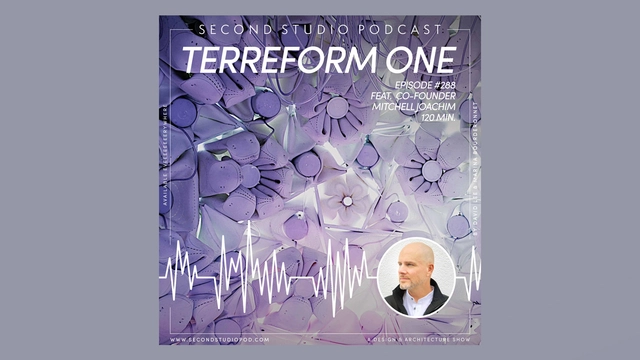
The Second Studio (formerly The Midnight Charette) is an explicit podcast about design, architecture, and the everyday. Hosted by Architects David Lee and Marina Bourderonnet, it features different creative professionals in unscripted conversations that allow for thoughtful takes and personal discussions.

A variety of subjects are covered with honesty and humor: some episodes are interviews, while others are tips for fellow designers, reviews of buildings and other projects, or casual explorations of everyday life and design. The Second Studio is also available on iTunes, Spotify, and YouTube.

This week David and Marina are joined by Mitchell Joachim, PhD, Associate Professor, NYU and Co-Founder, Terreform ONE to discuss the complexities of urban design; the role of the urban designer; the real-life applications of his research; funding projects; cricket farms; and more.

The Second Studio Podcast: Interview with Mitchell Joachim - Imagen 1 de 4The Second Studio Podcast: Interview with Mitchell Joachim - Imagen 2 de 4The Second Studio Podcast: Interview with Mitchell Joachim - Imagen 3 de 4The Second Studio Podcast: Interview with Mitchell Joachim - Imagen 4 de 4The Second Studio Podcast: Interview with Mitchell Joachim - More Images+ 6

A New Digital Tool Allows Users to Investigate Spatial Equity across New York City’s Communities

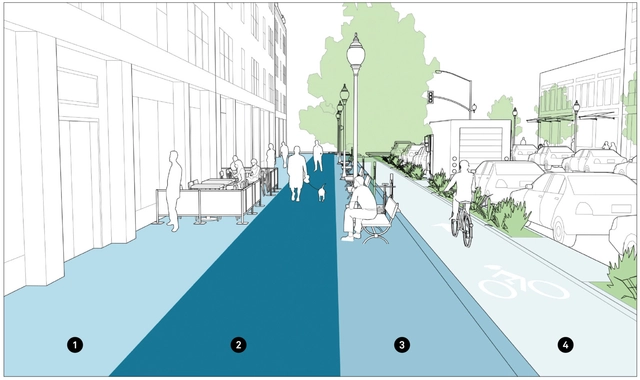
The Transportation Alternatives and the Massachusetts Institute of Technology have initiated a new digital tool, Spatial Equity NYC, to help users understand how space is distributed and restricted across the neighborhoods of New York City. The tool asses the use of streets, sidewalks, and public spaces, as they are key factors that influence data such as pollution, traffic fatalities, accessibility, or air quality. The data collected shows a direct correlation between neighborhoods with low-income communities and communities of color and the detrimental ways in which public space is used, leading to health and mobility issues in those communities.

A New Digital Tool Allows Users to Investigate Spatial Equity across New York City’s Communities - 1 的图像 4A New Digital Tool Allows Users to Investigate Spatial Equity across New York City’s Communities - 2 的图像 4A New Digital Tool Allows Users to Investigate Spatial Equity across New York City’s Communities - 3 的图像 4A New Digital Tool Allows Users to Investigate Spatial Equity across New York City’s Communities - 4 的图像 4A New Digital Tool Allows Users to Investigate Spatial Equity across New York City’s Communities - More Images+ 4

International High-Rise Award 2022/23 Announces the 5 World's Best Finalists

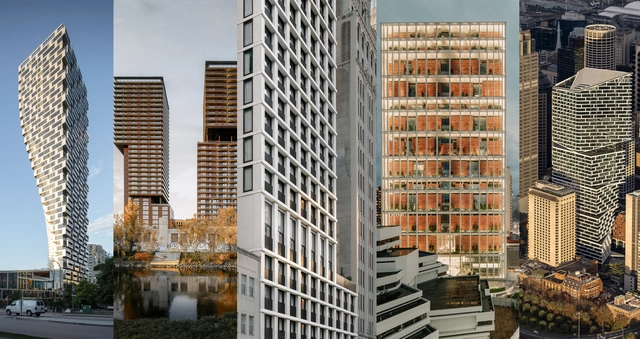
High-Rise Award (IHA) selected five buildings from Asia, Australia, Europe, and North America from 34 nominated high-rise buildings from 13 countries. Vancouver House by BIG, TrIIIple Towers in Vienna by Henke Schreieck Architekten, The Bryant in New York by David Chipperfield Architects, Singapore State Courts by Serie Architects+ Multiply Architects, and Quay Quarter Tower in Sydney by 3XN, are the 2022/23 finalist for exemplifying sustainability, and social aspects in a high-rise building.
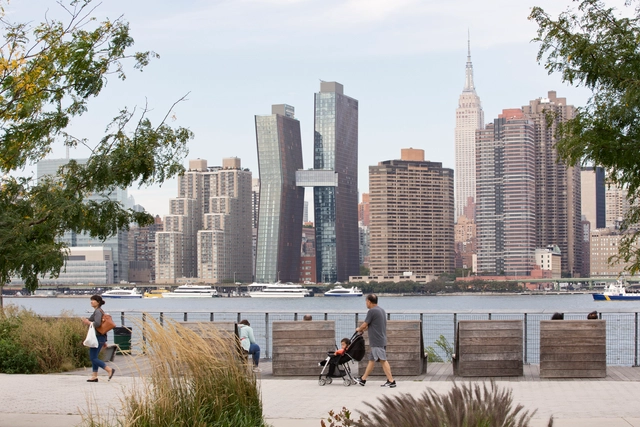
The IHA has aimed at architects and developers whose buildings are at least 100 meters high and have been completed in the past two years. Previous recipients include Norra Tornen by OMA (2020), Torre Reforma by LBR&A Arquitectos (2018), and Torre Agbar by Ateliers Jean Nouvel (2006).

International High-Rise Award 2022/23 Announces the 5 World's Best Finalists - Image 1 of 4International High-Rise Award 2022/23 Announces the 5 World's Best Finalists - Image 2 of 4International High-Rise Award 2022/23 Announces the 5 World's Best Finalists - Image 3 of 4International High-Rise Award 2022/23 Announces the 5 World's Best Finalists - Image 4 of 4International High-Rise Award 2022/23 Announces the 5 World's Best Finalists - More Images+ 11

First-Ever NFT Office Building is Sold in New York City

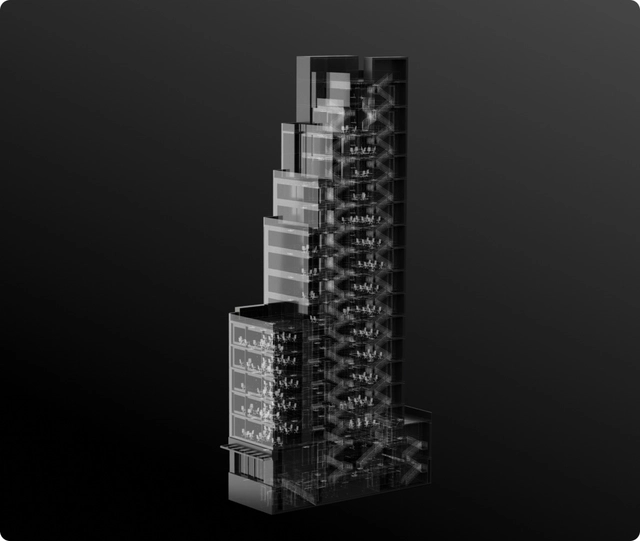
A developer in NYC purchased the first-ever non-fungible token (NFT) Office building in New York City. "Located" at 44 West 37th Street, the 4700 square meters NFT serves as an immutable digital asset that points to transforming how we design, build, operate, and monetize our spaces with only "one-click". The 16-story building was created by spatial intelligence company Integrated Projects and questions the function of architecture in Real Estate and the Metaverse.
First-Ever NFT Office Building is Sold in New York City - Imagem 1 de 4First-Ever NFT Office Building is Sold in New York City - Imagem 2 de 4First-Ever NFT Office Building is Sold in New York City - Imagem 3 de 4First-Ever NFT Office Building is Sold in New York City - Imagem 4 de 4First-Ever NFT Office Building is Sold in New York City - More Images

Is Fixing City Sidewalks Feasible for Future Cities?

Subscriber Access | 

Whether you live in an urban, suburban, or rural area, there’s a good chance that using a sidewalk, in some capacity, is part of your everyday routine. Whether crossing over a sidewalk to get to your car in a parking lot or walking several blocks on your commute to your office downtown, sidewalks are critical for creating safe places for pedestrians away from the streets. But what happens when cities don’t take ownership over sidewalk maintenance, and they’re left to be protected by the people who just use them?

New York Studio Bernheimer Architecture Forms The First Only Private-Sector Union in The US

The first and only formal architecture union in the American private sector was just formed by Bernheimer Architecture's employees after two years of the union campaign. The Union aims to reframe the discipline and profession and create an established sector of better labor rights standards and work conditions. The BA Union will be associated with the International Association of Machinists and Aerospace Workers to reshape the industry at a large scale and work on Industrywide problems like long hours and low pay.

15 Years Later and What Do You Get? A Lot More Cars and a Planet in Flames

This article was originally published on Common Edge.

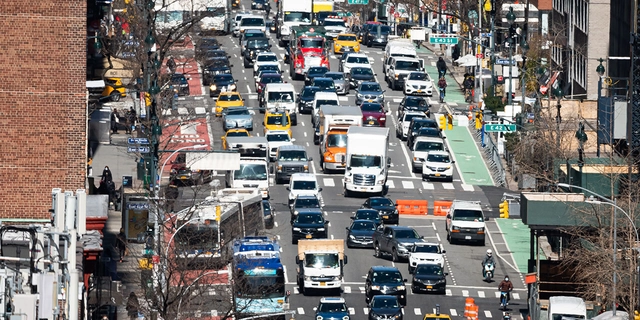
In 2007, New York City Mayor Michael Bloomberg proposed congestion pricing for Manhattan. The state legislature rejected the plan. Fifteen years later, we’re still debating the idea, fiddling while the planet burns.

The newest problem is that a new environmental study and traffic model from the MTA, The Central Business District Tolling Program Environmental Assessment, says that what’s good for 1.63 million residents of Manhattan and the planet, in general, will increase the pollution in the already unhealthy air in the Bronx. Yes, that’s a problem. Turning the perfect into the enemy of the good is also a problem. We need a plan that benefits all.

ODA Unveils Residential Tower on New York City’s Billionaire Row

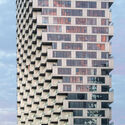
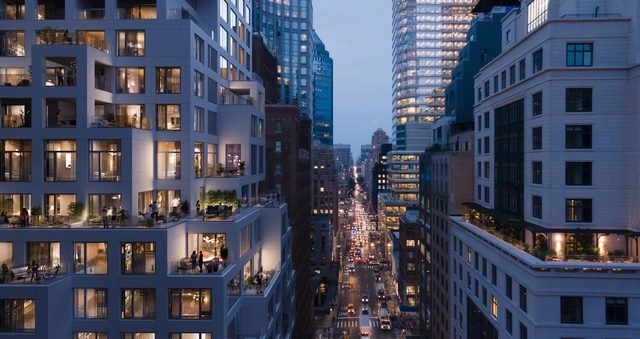
Construction has begun at 126 East 57th street, a project designed by architecture office ODA, with interiors designed by Gambellini Sheppard. On 57th street, a copper mirrored gateway leads residents through the 6-story atrium and toward the 28-story residential tower. The site spans the width of a city block from 56th to 57th street and the proposed tower measures 175,000 square feet, complete with private outdoor terraces for every unit, as the pixelated cast-in-place concrete façade recesses at irregular intervals.

ODA Unveils Residential Tower on New York City’s Billionaire Row - Imagem 1 de 4ODA Unveils Residential Tower on New York City’s Billionaire Row - Imagem 2 de 4ODA Unveils Residential Tower on New York City’s Billionaire Row - Imagem 3 de 4ODA Unveils Residential Tower on New York City’s Billionaire Row - Imagem 4 de 4ODA Unveils Residential Tower on New York City’s Billionaire Row - More Images

New York's Modernism Architecture City Guide: Beaux-Arts, Art-Deco, International Style, Brutalism and Organic Architecture

Subscriber Access | 

“A hundred times have I thought New York is a catastrophe, and fifty times: It is a beautiful catastrophe.” Le Corbusier. This architecture city guide celebrates Modernism in one of the world's greatest cities: New York. We embark on an architectural journey through nearly a century of innovative, revolutionary architecture: from early 20th century, revivalist Beaux-Arts; to machine-age Art Deco of the Inter-War period; to the elegant functionalism of the International Style; to the raw, exposed Brutalism characteristic of the Post-War years; and, finally, to the splendid forms of organic architecture. From world-renowned landmarks to undiscovered jewels, we invite you to explore the 2,028 blocks that make Manhattan an architectural mecca for citizens around the world.

New York's Modernism Architecture City Guide: Beaux-Arts, Art-Deco, International Style, Brutalism and Organic Architecture - Image 1 of 4New York's Modernism Architecture City Guide: Beaux-Arts, Art-Deco, International Style, Brutalism and Organic Architecture - Image 2 of 4New York's Modernism Architecture City Guide: Beaux-Arts, Art-Deco, International Style, Brutalism and Organic Architecture - Image 3 of 4New York's Modernism Architecture City Guide: Beaux-Arts, Art-Deco, International Style, Brutalism and Organic Architecture - Image 4 of 4New York's Modernism Architecture City Guide: Beaux-Arts, Art-Deco, International Style, Brutalism and Organic Architecture - More Images+ 26

"The Idea of Elasticity and the Pliability of the Architectural Grid is a Fundamental Aspect of Our Thinking ": Florian Idenburg on Their Work With SO–IL

Subscriber Access | 

Fortunately, architecture has the power to solve numerous issues of the modern world and how we live in it, and there are infinite ways of doing so. However, not all architecture is effective in providing solutions while also being sensitive and thought-provoking. With a portfolio that is getting richer every year, SO–IL, an architecture practice based in New York City, has proven that buildings can actually do this and much more.

"The Idea of Elasticity and the Pliability of the Architectural Grid is a Fundamental Aspect of Our Thinking ": Florian Idenburg on Their Work With SO–IL - Image 1 of 4"The Idea of Elasticity and the Pliability of the Architectural Grid is a Fundamental Aspect of Our Thinking ": Florian Idenburg on Their Work With SO–IL - Image 2 of 4"The Idea of Elasticity and the Pliability of the Architectural Grid is a Fundamental Aspect of Our Thinking ": Florian Idenburg on Their Work With SO–IL - Image 3 of 4"The Idea of Elasticity and the Pliability of the Architectural Grid is a Fundamental Aspect of Our Thinking ": Florian Idenburg on Their Work With SO–IL - Image 4 of 4The Idea of Elasticity and the Pliability of the Architectural Grid is a Fundamental Aspect of Our Thinking : Florian Idenburg on Their Work With SO–IL - More Images+ 11

Placemaking through Play: Designing for Urban Enjoyment

Subscriber Access | 

Humane cities center around the relationships between people and places. Communities thrive on shared resources, public spaces, and a collective vision for their locality. To nurture happy and healthy cities, designers and the public apply methods of placemaking to the urban setting. Placemaking—the creation of meaningful places—strongly relies on community-based participation to effectively produce magnetic public spaces.

Placemaking through Play: Designing for Urban Enjoyment  - Image 1 of 4Placemaking through Play: Designing for Urban Enjoyment  - Image 2 of 4Placemaking through Play: Designing for Urban Enjoyment  - Image 3 of 4Placemaking through Play: Designing for Urban Enjoyment  - Image 4 of 4Placemaking through Play: Designing for Urban Enjoyment  - More Images+ 2

New York City Bans the Construction of New Schools Near Highways

New York City Bans the Construction of New Schools Near Highways - Featured Image
New York CIty. Image © Sean Pavone via Shutterstock

The New York City Senate and Assembly have passed the SIGH act, prohibiting the construction of new schools near major roadways. The act, named The Schools Impact by Gross Highways Act, aims to protect school-age children from air pollution. Under this law, the commissioner of education for the city will not be able to approve the plans for the construction of any new schoolhouse within 500 feet (150 meters) of a controlled-access highway unless the commissioner determines that space limitations are so severe that there is no other site to erect such new schoolhouse.

New York City Bans the Construction of New Schools Near Highways - Image 1 of 4New York City Bans the Construction of New Schools Near Highways - Image 2 of 4New York City Bans the Construction of New Schools Near Highways - Image 3 of 4New York City Bans the Construction of New Schools Near Highways - Image 4 of 4New York City Bans the Construction of New Schools Near Highways - More Images

Designing New York: Reimagining Coastlines, Housing and Rail

No city is like New York. As an amalgam of different cultures, it is one of the most diverse in the world. New York is also facing social and environmental challenges that range from the need for new housing and transportation demands, to rising sea levels and storm surges. As the global pandemic further underlined the importance of design in shaping public life, city officials and planners are looking at a range of approaches and models for urban development and renewed growth.

Designing New York: Reimagining Coastlines, Housing and Rail - Image 1 of 4Designing New York: Reimagining Coastlines, Housing and Rail - Image 2 of 4Designing New York: Reimagining Coastlines, Housing and Rail - Image 3 of 4Designing New York: Reimagining Coastlines, Housing and Rail - Image 4 of 4Designing New York: Reimagining Coastlines, Housing and Rail - More Images+ 17

New York City Architecture Guide: Discover 10 Must-See Landmarks and 20 Contemporary Attractions

Subscriber Access | 

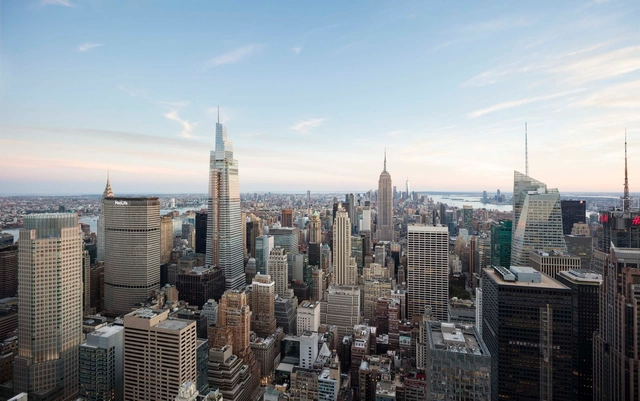
As the largest city in the United States, New York City is one of the most diverse and vibrant cities in the world, recognized by many as the center for global media, culture, fashion art, and finance. The city was founded in 1624 by settlers from the Dutch Republic and has since grown into “the city that never sleeps”.

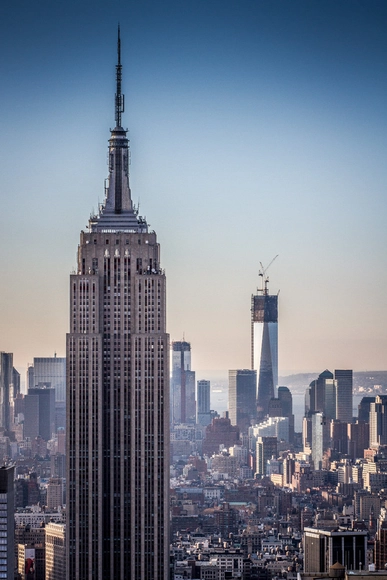
While almost every style of architecture exists in New York City, the metropolis is most well known for its skyscrapers, both in historical styles such as Neoclassical and Art Deco and in their varied contemporary expressions. The first building to bring the world's tallest title to New York was the New York World Building, in 1890. Later, New York City was home to the world's tallest building for 75 continuous years, starting with the Park Row Building in 1899.

New York City Architecture Guide: Discover 10 Must-See Landmarks and 20 Contemporary Attractions - Image 1 of 4New York City Architecture Guide: Discover 10 Must-See Landmarks and 20 Contemporary Attractions - Image 2 of 4New York City Architecture Guide: Discover 10 Must-See Landmarks and 20 Contemporary Attractions - Image 3 of 4New York City Architecture Guide: Discover 10 Must-See Landmarks and 20 Contemporary Attractions - Image 4 of 4New York City Architecture Guide: Discover 10 Must-See Landmarks and 20 Contemporary Attractions - More Images+ 26

How Do the Critics of Yesteryear Think About Urban Density?

Subscriber Access | 
How Do the Critics of Yesteryear Think About Urban Density? - Featured Image
Corvidae Coop, Seattle, designed by Allied8 Architects. Image Courtesy of Allied8 Architects

This article was originally published on Common Edge.

In the 1960s and 1970s, a series of critiques of the modern city appeared. Jane Jacobs’s attack on those intent on redeveloping New York City was the most immediately impactful, loosening the grip of Robert Moses and his followers, but others had a broader influence on practicing architects and planners. As an observer of San Francisco Bay Region’s cities, I wondered if their books from this period would shed light on current issues of adding density in urban contexts.

NYCxDESIGN Celebrates its 10th Anniversary with Architectural Installations and Interventions across the City

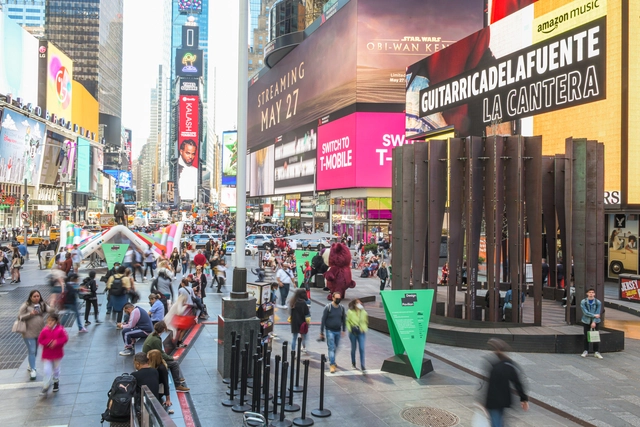
With a mission to support, empower, and grow the city's design sector, New York's annual design festival, the NYCxDESIGN presented a selection of architectural installations, talks, and events to celebrate global creative accomplishments, share new ideas, and inspire through design. This year, the festival returned for its tenth edition, running from May 10th - 20th. Having been a special anniversary, this year showcased New York's creative diversity and talent, putting on display its designers, makers, manufacturers, innovative design businesses, as well as world-class cultural and academic design institutions.

NYCxDESIGN Celebrates its 10th Anniversary with Architectural Installations and Interventions across the City - Imagen 1 de 4NYCxDESIGN Celebrates its 10th Anniversary with Architectural Installations and Interventions across the City - Imagen 2 de 4NYCxDESIGN Celebrates its 10th Anniversary with Architectural Installations and Interventions across the City - Imagen 3 de 4NYCxDESIGN Celebrates its 10th Anniversary with Architectural Installations and Interventions across the City - Imagen 4 de 4NYCxDESIGN Celebrates its 10th Anniversary with Architectural Installations and Interventions across the City - More Images+ 35