Installation in Courtyard. Image Courtesy of Atelier YokYok + Ulysse Lacoste
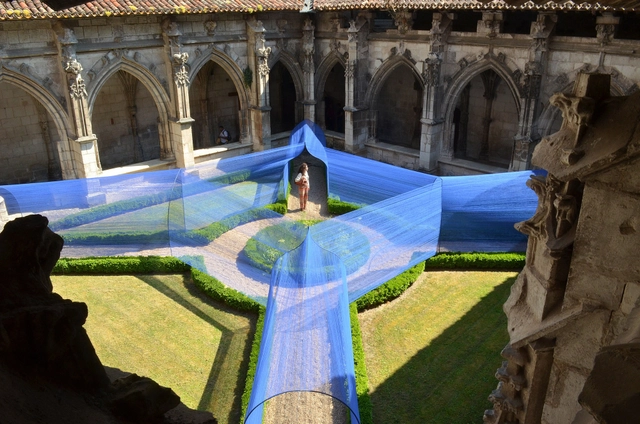
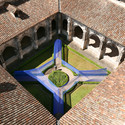
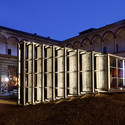
Atelier YokYok has created an immersive experience of string and light for their "Shooting Vaults” installation at St. Stephen’s Cathedral in Cahors, France. Created in collaboration with Ulysse Lacoste and Laure Qaremy, the project will be on display through the month of June.
Despite being at the forefront of digital fabrication technology, 3D printing is still shrouded in mystery, something which the Design Exchange (DX) hopes to change with its most recent exhibition, “3DXL” in Toronto. Curated by the director of DX, Sara Nickleson, 3DXL brings together 3D printing projects from across fields, including work from medicine, design and architecture. As the name suggests, the exhibit presents 3D printing on a scale not normally observed by the public. In particular, the exhibit addresses the role 3D printing will play in the future of architecture, and how it may begin to replace more traditional architectural construction.
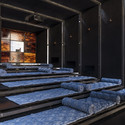
An exploration of "post-war design for play," The Brutalist PlaygroundbyAssemble and artist Simon Terrill has opened to the public at RIBA's Architecture Gallery. The immersive installation draws on a number of historic London estates - Churchill Gardens, Pimlico; the Brunel Estate, Paddington and the Brownfield Estate in Poplar - where playgrounds were once made from concrete and cast into sculptural forms to offer children an abstract landscape for play. Now deemed unsafe, these playgrounds no longer exist. Thus, The Brutalist Playground was envisaged to explore play, "the Brutalist way."
Images of the complete installation, after the break.
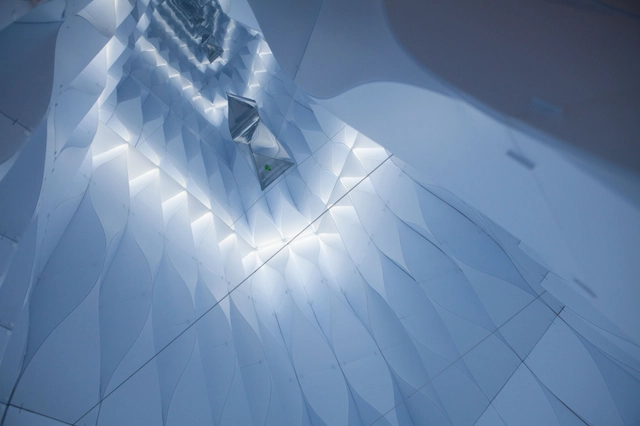
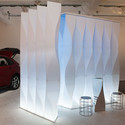
Brooklyn design studio The Principals have completed the Dynamic Sanctuary, an interactive installation at Sight Unseen OFFSITE, during the 2015 NYCxDESIGN festival. Commissioned by Ford Motors, the light-based installation detects and pulses with the biorhythms of its visitors, creating a dynamic space in both name and nature.
The modular installation was manually constructed by The Principals in their Brooklyn studio. Learn more about the project and view selected images after the break.
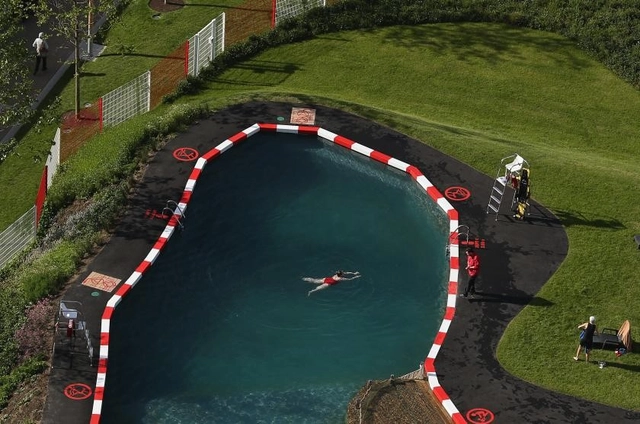
A new pool has just opened in the heart of London's King's Cross. In the centre of one of the city's largest mixed-use development projects Ooze Architects, in collaboration with artist Marjetica Potrc, have developed and realised "the UK's first man-made fresh water public bathing pond" as a piece of and art. The oblong pool is forty metres long, built two metres above ground level, and is surrounded by "pioneer plants, wild flowers grasses, and bushes so that the environment evolves as the seasons change." It will be purified through "a natural closed-loop process, using wetland and submerged water plants to filter and sustain clean and clear water."
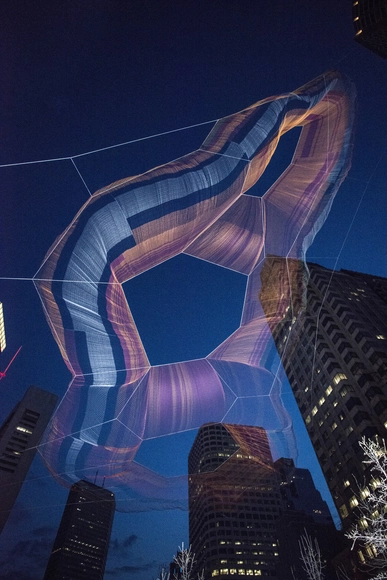
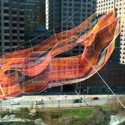
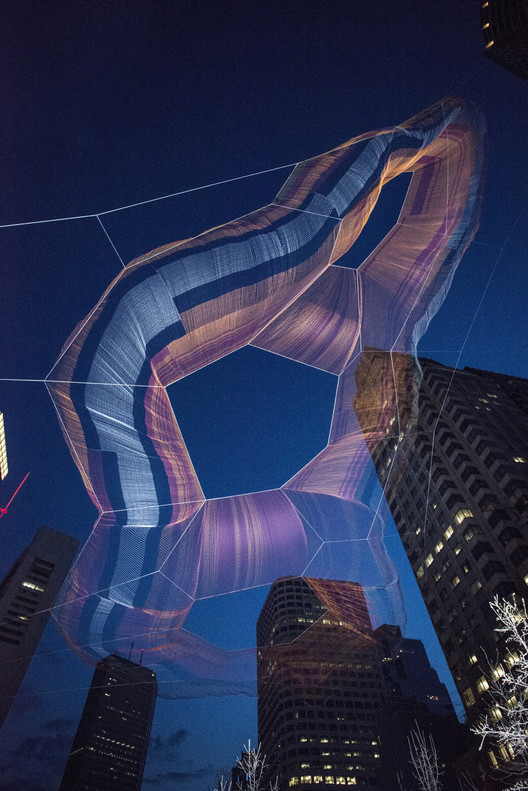
Janet Echelman's latest aerial sculpture has been suspended 365 feet above Boston's Rose Kennedy Greenway. On view through October 2015, the monumental installation spans 600 feet, occupying a void where an elevated highway once divided the city's downtown from its waterfront.
"The sculpture’s form echoes the history of its location," describes Echelman. "The three voids recall the 'Tri-Mountain' which was razed in the 18th-century to create land from the harbor. The colored banding is a nod to the six traffic lanes that once overwhelmed the neighborhood, before the Big Dig buried them and enabled the space to be reclaimed for urban pedestrian life."
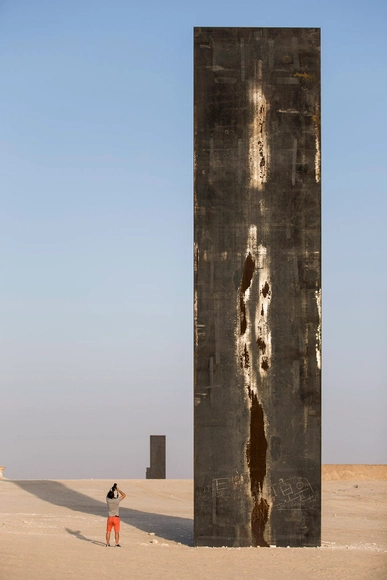
A new sculpture has risen in the desert of Qatar: “East-West/West-East,” Richard Serra's second public commission by the Gulf nation. Sited in a barren landscape that was suggested by Sheikh Hamad bin Khalifa al-Thani, the former Emir, the installation is comprised of four steel plates incrementally placed and standing perpendicular to the ground.
Much like Serra's first Qatari sculpture - "7" in Doha - the German rolled steel structure will oxidize, changing from gray to orange and eventually a dark amber, much like the Seagram Building in midtown, said Serra in an interview with The New Yorker. The artist hopes it will become a landmark within the country.
A selection of images from architecture photographer Nelson Garrido, after the break.
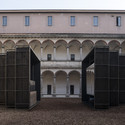
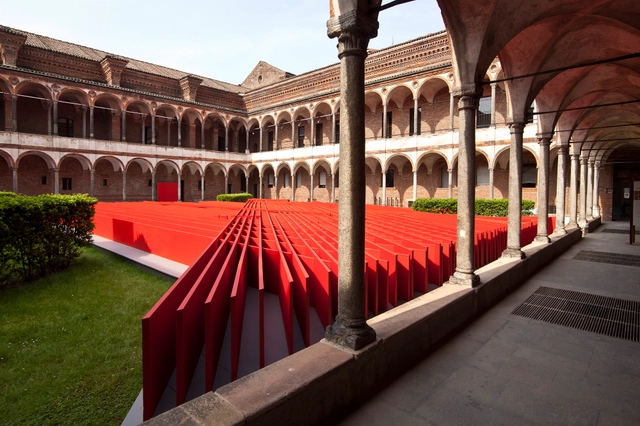
Daniel Libeskind, together with Italian paint company Oikos, has transformed the Università Statale’s Pharmacy Courtyard into a garden of "Future Flowers" as part of the 2015 Milan Design Week. On view through May 24, the installation was inspired by one of Libeskind’s "Chamberwork" drawings. It features a series of intersecting red metal "blades" that represent a collection of Oikos paints developed by Libeskind.
By adjoining 200,000 fabric-lined floatable components, Christo hopes to allow the residents of two mainland towns in Italy's Lombardy region to walk on water for a duration of two weeks in June 2016. If approved, the "Floating Piers" would connect both towns with the Lake Iseo islands via an extended, brightly colored fabric dock that would stretch across two miles.
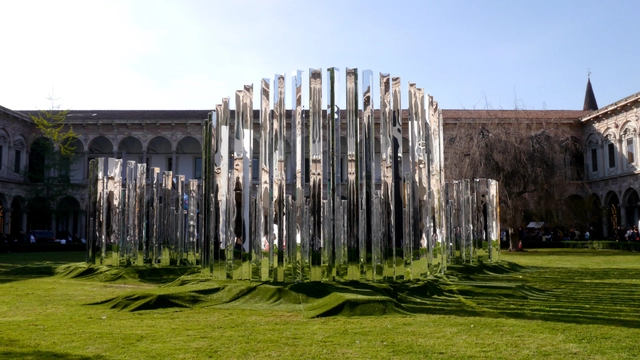
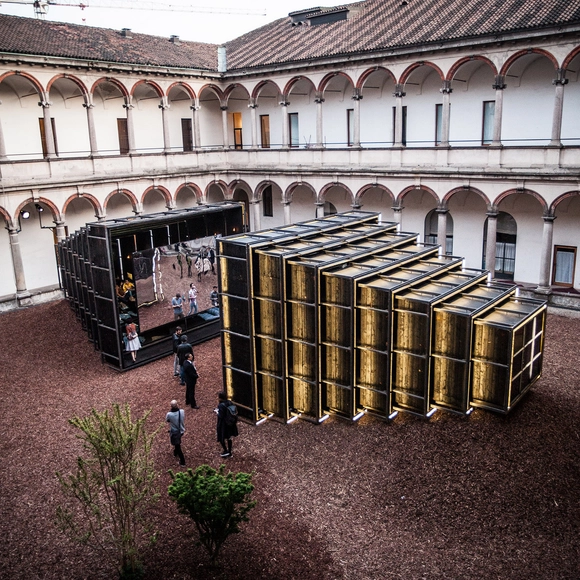
Russian architects Sergei Tchoban (SPEECH architectural office), Sergey Kuznetsov, and Agniya Sterligova are featuring the "Living Line" sculpture at this year's Milan Design Week. Created for a central part of the University of Milan's main courtyard, which occupies the Ca 'Granda complex of 15th century Renaissance buildings, the mirrored plexiglass "Mobius strip" aims to reflect the exhibition's theme "Energy for Life."
Associate professor Toni Kotnik and assistant professor Carlos Bañón have collaborated on the design of an exhibition platform for the 2015 SUTD Open House. Held in early, the exhibition was the main showcase for the department of Architecture and Sustainable Design at the Singapore University of Technology and Design.
Contrasting the neutrality of the white exhibition space, Kotnik and Bañón's design used 200 wooden studs, each 1-meter in length and configured into a modular grid system. The structure was supported by 16 oxidised steel tripods that add both stability and a visual density to the platform. Both Kotnik and Bañón are faculty members at the Singapore University of Technolgoy and Design, with particular interests in architecture and sustainable design. More images after the break.
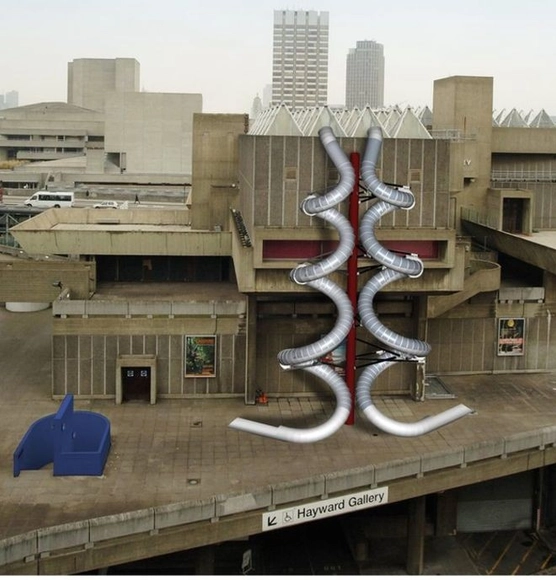
German artist Carsten Höller is returning to London with plans for two new giant slides to be built at the Hayward Gallery this Summer. As part of his exhibition “Decision,” Holler will provide visitors with a two-slide exit option that will (hopefully) induce an “emotional state that is a unique condition somewhere between delight and madness.”
“[Holler] is "one of the world's most thought-provoking and profoundly playful artists, with a sharp and mischievous intelligence bent on turning our 'normal' view of things upside-down,” says Ralph Rugoff, director of the Hayward Gallery. Decision, he continued, "will ask visitors to make choices, but also, more importantly, to embrace a kind of double vision that takes in competing points of view, and embodies what Holler calls a state of 'active uncertainty' - a frame of mind conducive to entertaining new possibilities.”



.jpg?1434051501&format=webp&width=640&height=580)
.jpg?1434051743 "© Tristan Fewings / Getty Images for RIBA")
.jpg?1434051645 "© Tristan Fewings / Getty Images for RIBA")
.jpg?1434051783 "© Tristan Fewings / Getty Images for RIBA")
.jpg?1434051823 "© Tristan Fewings / Getty Images for RIBA")
.jpg?1434051501)








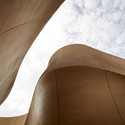
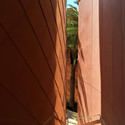
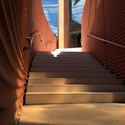







.jpg?1430423256 "“East-West/West-East” / Richard Serra. Image © Nelson Garrido")

.jpg?1429823426&format=webp&width=640&height=580)