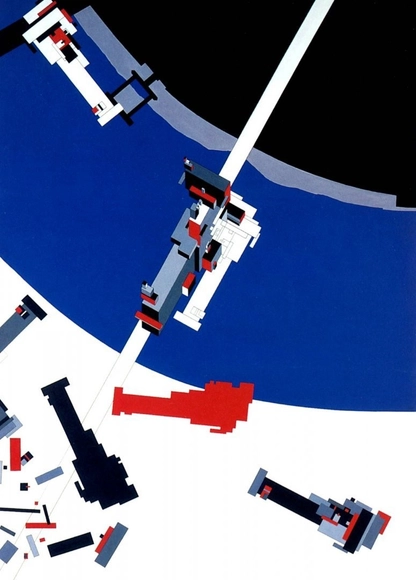
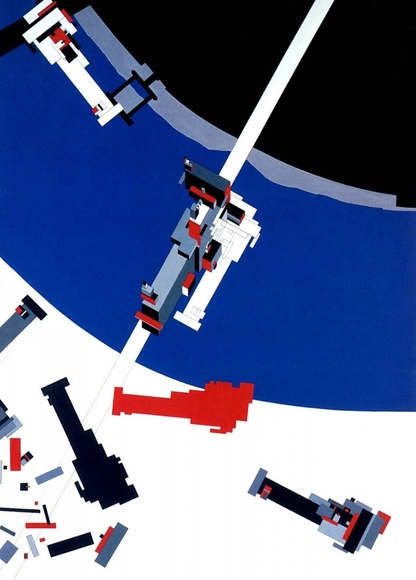
Malevich’s Tektonik. Image Courtesy of Zaha Hadid Architects
Zaha Hadid has been featured in a 30-minute BBC Secret Knowledge film based on Kazimir Malevich: The Russian Revolutionary: Zaha Hadid on Kazimir Malevich. One of Hadid’s greatest influencers, the Russian painter and theoretician inspired the Dame’s AA graduation thesis which transformed Malevich’s 1923 Arkitekton model into a 14-story hotel that stretched across London’s Hungerford Bridge. You can watch the film online (here) through September 16.
As summer draws to an end and we enter into the last quarter of 2014, we decided to round-up a selection of the most useful articles we've published over the past three years. Ranging from The 40 Architecture Documentaries to Watch in 2014 to The 10 Most Overlooked Women in Architectural History, we've also brought together app guides, career tips, and city guides. Alongside links to open-source CAD files and cut-out people, we've also featured book recommendations, study tips, and links to our complete coverage of some of the world's major architectural events and prizes. Delve into our collection and discover what our readers have found most useful!
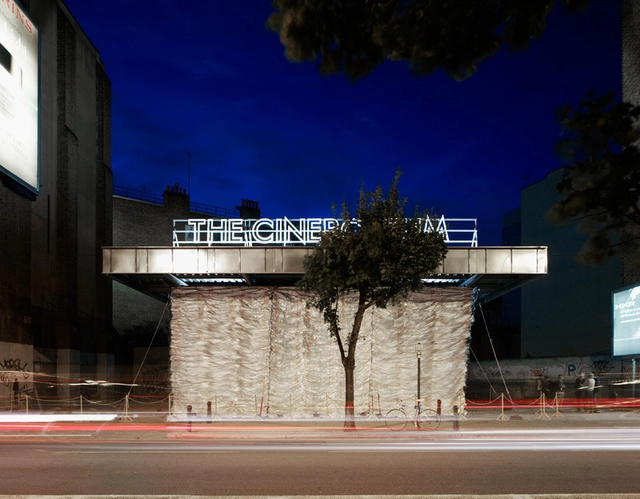
The Cineroleum, a self-initiated project built in 2010 by London based practice Assemble Studio, transformed a derelict petrol station into a "hand-built" cinema on one of capital's busiest roads. Aimed at raising awareness to the wider potential for reusing the 4,000 empty petrol stations across the UK for public use, the adapted structure on Clerkenwell Road was "enclosed by an ornate curtain" strung from the "roof of the petrol station's forecourt. Described as an "improvisation of the decadent interiors that greeted audiences during cinema’s golden age," classic infusions of cinematic iconography were integrated into a space built from only cheap, reclaimed or donated materials.
This time-lapse video, entitled "Above LA," is Chris Pritchard's love letter to Los Angeles. Filmed over the course of two years, Pritchard sought out locations to showcase the city in a way people rarely get to see – from above. Some of the views were easy to seek out, while others involved some exploratory hiking and trespassing. He encourages "everyone - lifelong Angelenos, transplants, visitors - to hit the trails, drive the mountain roads, find a reason to get on top of a high-rise. From the basin to the valley, this city offers so many opportunities to rise above and look down. Never stop exploring."
The first film takes the viewers on a "poetic climb" up and through the building's social circuit, which "purposefully encourages inter-disciplinary activity, with the hope to inspire positive energy for the future of art." The second film unpacks the design of the Reid Building in a conversation with design architects Steven Holl and Chris McVoy.
Stanley Kubrick has been called many things: pretentious, unpretentious, alienated, ambiguous, audacious, empty, disturbing, outrageous, devilish, soulless, patient, unflinching, impersonal, arrogant, calculated, paranoid, aloof, visionary, genius, tyrant, misogynist, cineaste, original, and in the immortal words of Kirk Douglas, a “talented shit.”
It’s interesting to note then, when asked about his film, 2001: A Space Odyssey (1968), Stanley Kubrick himself said, “It's not a message that I ever intend to convey in words.” The film itself is a “nonverbal experience.” There are no words – or dialogue – for more than two-thirds of the film. Stanley Kubrick is a visual storyteller; in his films, words are secondary.
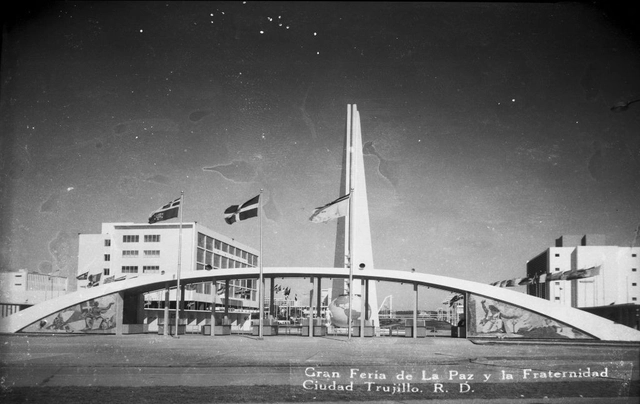
Alysa Nahmias and Benjamin Murray’s Unfinished Spaces has been awarded the 2014 Society of Architectural Historian’s (SAH) Award for Film and Video, an award presented annually to the “most distinguished work of film on the history of the built environment.” Initially released in 2011, the critically acclaimed documentary reveals the turbulent past of Fidel Castro’s Cuba and tells the story of his utopian dream to construct the Cuban National Arts Schools. You can learn more about the film here, and the school’s history, here.
Malevich’s Tektonik. Image Courtesy of Zaha Hadid Architects
The BBC’s Tony Hall has announced that Zaha Hadid will be presenting a 60-minute Secret Knowledge film based on Kazimir Malevich. The Russian painter and theoretician, who founded the Suprematist movement, inspired Hadid’s AA graduation thesis which transformed Malevich’s 1923 Arkitekton model into a 14-story hotel that stretched across London’s Hungerford Bridge. Hadid will be one of many influential art leaders enlisted to participate in the program, which intends to place the arts on “center-stage.”
A new hour long documentary for PBS' series, Building the Great Cathedrals, explores the mystery of how, in the 15th century, Florentine architect Filippo Brunelleschi constructed one of the largest domes the world had ever seen. Winning what could be considered one of the earliest architectural competitions, Brunelleschi developed a unique system that allowed construction on the dome to occur while services were being conducted in the cathedral 100 metres below. The team in this episode model this freestanding structure in an attempt to understand just how Brunelleschi achieved such a feat of Renaissance engineering.
You can find out more about the film here. Please note that the film is only viewable through PBS within the USA. For those of you outside the USA, you can watch the 30 second preview above; for those in the USA, see the full video after the break...
In an hour long documentary for PBS, Geoffrey Baer tours the USA in search of the ten buildings that "changed America." From a state capitol designed by Thomas Jefferson to resemble a Roman temple to Henry Ford's factory that first saw the Model T enter production, the film explores the "shocking, funny, and even sad stories of how these buildings were created." Investigating places of worship, shopping malls, concert halls and skyscrapers this film is tipped as "a journey inside the imaginations of the daring architects who set out to change the way we live, work, and play."
Videos
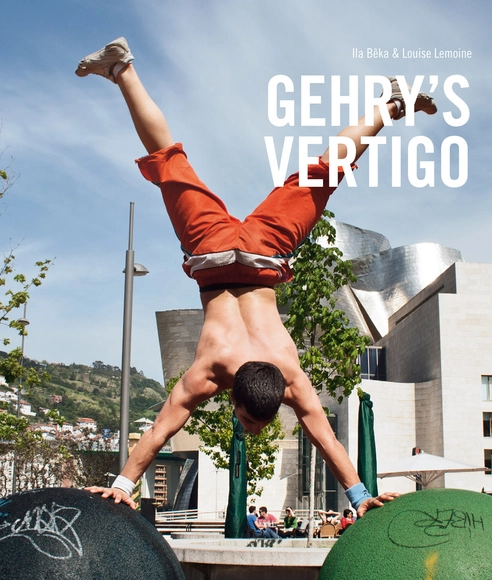
Gehry's Vertigo. Image Courtesy of Living Architectures
This time last year we published our 30 Architecture Docs to Watch in 2013featuring a fantastic range of films telling the tales of some of the world's greatest unsung architectural heroes. We now bring you eleven more for 2014, looking past the panoply of stars to bring you more of the best architectural documentaries which will provoke, intrigue and beguile.
Los Angeles-based cinematographer Tomas Koolhaas is nearing completion of his highly anticipated film, REM. The feature length documentary, which focuses on the work of Tomas’ famed father, Rem Koolhaas, is the first architectural film to “comprehensively explore the human conditions in and around Rem Koolhaas' buildings from a ground level perspective.” Rather than lifeless still shots and long-winded, intellectual discourse, REM exposes the one thing that gives each building function and purpose: how it is used by people.
So far, REM has been funded entirely by grants. However, in order for Tomas to collect the necessary funds to complete post-production, he has turned to you by launching a Kickstarter campaign.
Watch REM's official trailer above, which follows a parkour expert as he moves through the Casa De Musica in Porto, and follow us after the break for Tomas’ exclusive interview with Kanye West, who comments on his work with OMA at the 2012 Cannes film festival.
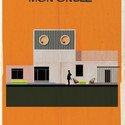
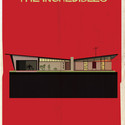
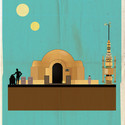
Federico Babina, the mastermind behind ARCHI-PIX (Parts One and Two) has come up with a fun new series - ARCHICINE - representing iconic works of architecture that have played protagonists on film. We've rounded up all the illustrations -check them out after the break!
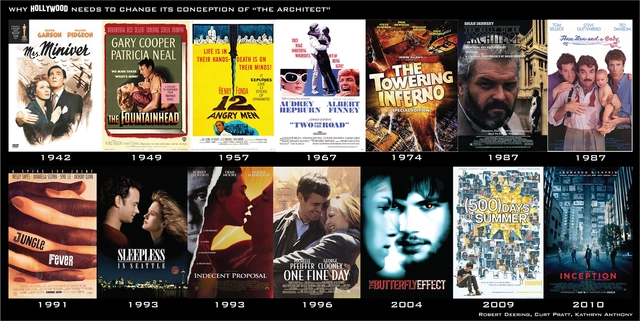
Courtesy of Kathryn Anthony, Robert Deering & Curt Pratt
Writers, directors, producers, and actors in the Hollywood film industry play major roles in shaping how millions around the world perceive architects and the architectural profession. Television shows, too, create stereotypes of professions that are repeatedly drummed into the brain with each successive episode. Both make long-lasting impacts that may encourage or dissuade young people from pursuing architecture as a career.
https://www.archdaily.com/441844/why-hollywood-needs-to-change-its-conception-of-the-architectKathryn Anthony, Robert Deering & Curt Pratt
Think traffic is bad now? One billion cars are already on the road today and another billion is expected to join in the coming decade. Pollution and stressful commuting is at an all time high, empowering many politicians and bicycle activists to declare war on the multi-billion dollar car industry which has profoundly impacted city development worldwide.
Interiors is an online film and architecture journal, published by Mehruss Jon Ahi and Armen Karaoghlanian. Interiors runs an exclusive column for ArchDaily, analyzing and diagramming films in terms of space.
The rise of the director in music videos came in the early 1990s, when MTV started crediting directors alongside artists and song titles. The influx of visionary directors such as Michel Gondry, Spike Jonze and David Fincher emphasized that music videos were becoming an auteur’s medium, much in the same way as film. The shift from stylized and performance-based music videos into narrative-based works, however, came much later, as the medium became more “cinematic” in its look and narrative structure.