1. ArchDaily
  2. Education

Education: The Latest Architecture and News

The Question of Honors in Architectural Education

Subscriber Access | 

This article was written by Barbara Campbell-Lange, Head of Teaching at the AA School of Architecture in London, on her experience working at the school.

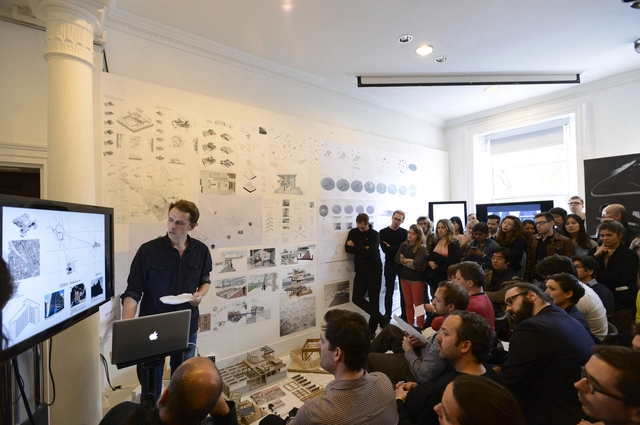
To be taught in a Georgian home, in rooms with fireplaces and moulded ceilings, in the centre of London, is exceptional. High ceilinged drawing rooms over-looking Bedford Square are connected to an idiosyncratic mews at the back via a network of un-designed bridge-pieces. This allows, through juxtapositions and awkwardnesses, glimpses and serendipitous meetings between students, staff and visitors that might otherwise not occur. It is the very nature and imperfection of this architecture that creates the School Community. Rubbing up against each other, against difference, against history, is essential to the formation of ideas: impossible people and situations are essential to creativity. Great thinkers and makers have walked these stairs, others will follow.


Radical Pedagogies: Reconstructing Architectural Education

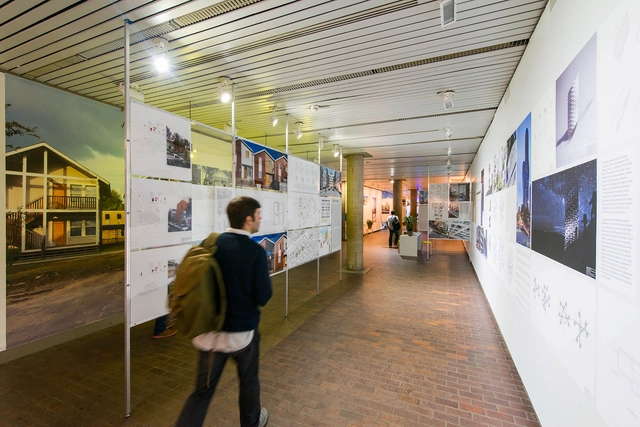
This is the third edition of “Radical Pedagogies” exhibition. Earlier versions of this show were presented at the 3rd Lisbon Architecture Triennale (2013) and the 14th Venice Biennale of Architecture, curated by Rem Koolhaas (2014), where it was awarded a Special Mention. For the occasion of its presentation in Warsaw, the exhibition opens up new directions and a new density of global interconnections. Eastern Europe, Africa, East Asia and Australasia become the protagonists, opening new insights into pedagogical experimentation after 1945.

Radical Pedagogies: Reconstructing Architectural Education - Image 1 of 4Radical Pedagogies: Reconstructing Architectural Education - Image 2 of 4Radical Pedagogies: Reconstructing Architectural Education - Image 3 of 4Radical Pedagogies: Reconstructing Architectural Education - Image 4 of 4Radical Pedagogies: Reconstructing Architectural Education - More Images+ 4

MASS Design Group to Propose “Bauhaus of Africa” at UN Summit

Subscriber Access | 

In designing and building multiple successful public buildings in central Africa and around the world, MASS Design Group has employed and guided thousands of local craftsmen, curating the building process to inspire dignity. Now, they wish to help the African people obtain the skills necessary to guide the process themselves. At the United Nations Solutions Summit this Sunday Christian Benimana, a program director for the non-profit design studio, will present plans for what they are calling the “Bauhaus of Africa”: three “African Design Centers” to be built over the next 10 years in strategic locations throughout the continent. The design centers will house an education program tasked with training a new generation of African architects - a workforce certain to be indispensable as Africa enters a period of unprecedented urban growth.

Harvard GSD and John A. Paulson SEAS Launch Collaborative Design Engineering Degree Program

Harvard University’s Graduate School of Design (GSD) and John A. Paulson School of Engineering and Applied Sciences (SEAS) have announced a new, collaborative program: the Master in Design Engineering (MDE) degree. Beginning in Fall 2016, the program, lasting for four terms over two years, will offer students the resources of both GSD and SEAS, combining skills and knowledge across fields to solve multi-scale, complex, open-ended problems.

In Conversation With Will Hunter, Director Of The New London School Of Architecture

The great schools of architecture have been around since time immemorial, or at least that's how it can often feel. In London, a city particularly dense with institutions of this calibre, this is perhaps felt more acutely. How, then, do you develop an entirely new school in this tightly packed environment which has the potency and capacity to compete? Will Hunter, former executive editor of the London-based Architectural Review, began a process to do just this with an article in 2012. Following this, he set up the ARFA—Alternative Routes For Architecture—in order to explore different models for architectural education, calling upon professionals and academics to contribute to a series of informal discussions.

“When the tuition fees in the UK escalated to around £9000 per year in 2013, it got me thinking about different models for architectural education,” Hunter recalls. The casual meetings held around this time gradually become more serious until, “at a certain point, we decided to test them: to make a school.” The project gathered momentum from that point on and now, two years later, the London School of Architecture (LSA) are preparing to take in their first ‘trailblazing cohort’ of postgraduate students.

RIBA Agrees Upon Major Changes To UK Architectural Education

Exactly one year ago an important event took place. A gathering of seventy student delegates, organised by the Architecture Students Network (ASN), met to discuss the future of architectural education. Their meeting was sparked by the latest directive from the European Union which seeks to “establish more uniformity across Europe by aligning the time it takes to qualify”, making mutual recognition of the architect’s title easier between countries.

The ASN’s discussions concluded that the course content throughout the UK system of ‘Part I, II, and III’, and the duration of said course, urgently needs to be re-evaluated in order to reflect the changing needs of the profession - especially in light of the recent rise in tuition fees and associated university costs. Back then, a spokesperson for the ASN said that “it really felt like momentum for change has finally reached a tipping point.”

SCI-Arc Offers Emerging Systems, Technologies & Media Post Professional Program

Subscriber Access | 

A dynamic post-professional program in Emerging Systems, Technologies, & Media (ESTm) offered by the Southern California Institute of Architecture (SCI-Arc) in Los Angeles has been charged with examining core contemporary issues facing architecture and design today. Spanning topics from advanced manufacturing methodologies to new building systems, this one year Master of Design Research track allows professionals to rethink architecture and design through the experimental hands-on approach of the SCI-Arc community.

The ESTm program tests new levels of environmental performance as it prepares students to successfully integrate formal, technical, logistical, and material processes into advanced architectural designs. The program is open to graduates in architecture, engineering, product design, computer sciences and other professionals who wish to develop advanced research and design skills in light of continuously evolving materials and new production paradigms of the 21st century.

ABDM and RAU Win Competition to Design College Campus in Kortrijk

Belgian architects ABDM and Dutch architects RAU have been selected over eight teams to design the new Howest College Campus in Kortrijk. A collaboration with Delva Landscape Architects, the school will act as the campus’ main building, open to all 24/7.

A Practical Study in the Discipline of Architectural Modelmaking

Subscriber Access | 

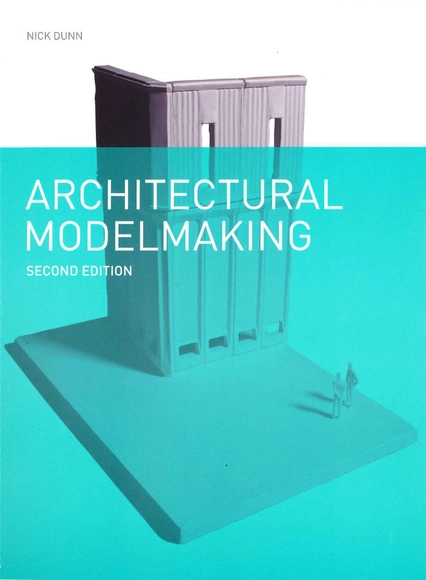
Why do we make models? From sketch maquettes and detail tests to diagrammatic and presentation models, the discipline of physically crafting ideas to scale is fundamental to the architect's design process. For architect and educator Nick Dunn, architectural models ultimately "enable the designer to investigate, revise and further refine ideas in increasing detail until such a point that the project's design is sufficiently consolidated to be constructed." In Dunn's second edition of his practical guide and homage to the architectural model, the significance and versatility of this medium is expertly visualised and analysed in a collection of images, explanations, and case studies.

A Practical Study in the Discipline of Architectural Modelmaking - Image 1 of 4A Practical Study in the Discipline of Architectural Modelmaking - Image 2 of 4A Practical Study in the Discipline of Architectural Modelmaking - Image 3 of 4A Practical Study in the Discipline of Architectural Modelmaking - Image 4 of 4A Practical Study in the Discipline of Architectural Modelmaking - More Images

Interview: Behind the Scenes of the University of Toronto's Mental Health Report

In a TED Talk from 2009, writer Elizabeth Gilbert muses about how uncomfortable she is with the assumption that “creativity and suffering are somehow inherently linked.” The majority of Gilbert's thoughtful and humorous monologue is about finding sanity amidst both success and failure, or in other words, about finding a way to break this link. Earlier this year, the University of Toronto Graduate Architecture Landscape and Design Student Union’s (GALDSU) set out to do just that – break the link between creativity and suffering at their school – and start a productive dialogue about mental health. GALDSU began by gathering the facts through a mental health study of their peers, the results of which we discussed several months ago.

To learn more about what's happened at their school (and beyond) since it was published, we sat down with Joel Leon, the man who spearheaded the effort and the newly elected president of the student union, as well as Elise Hunchuck, the vice-president of the student union.

Amale Andraos Named Dean of Columbia GSAPP

New York-based architect and co-founder of WORKac, Amale Andraos, has been selected as the new dean of Columbia University’s Graduate School of Architecture, Planning and Preservation (GSAPP), the Columbia Spectator has reported. Andraos will assume the position on September 1, replacing Mark Wigley who announced his retirement last year.

PlanGrid Launches Educational Offering

PlanGrid, touted as "the fastest blueprint viewer" available, is one of the most mature apps for viewing, amending and discussing construction drawings on a collaborative cloud-based platform. This week they launched PlanGrid for Education, allowing students full and uninhibited access to every feature of the app free of charge. According to the company, they currently have "40,000 blueprints being uploaded to PlanGrid daily and over 9 million blueprints stored digitally", making the platform one of the fastest growing in its market.

Heatherwick Studio To Build "Learning Hub" in Singapore

London based Heatherwick Studio have won a competition to design a Learning Hub at Nanyang Technological University, Singapore. The construction of the Hub, part of a £360 million scheme, will be the first redevelopment of its campus in twenty years. Having already won the BCA Green Mark Platinum Award for Sustainability from the Singaporean Government, the design seeks to redefine the aspiration of a university building. Within this new context the purpose of the university is to "foster togetherness and sociability" so that students can meet and learn in a space that encourages collaboration.

How Will Architecture Respond to a "Boom" in UK University Spending?

With the recent news that Dutch practice Mecanoo, along with Penoyre & Prasad, have been selected for a £200 million new engineering campus at the University of Manchester, Amanda Baillieu of BDOnline argues that they "need to set their ambitions a whole lot higher." Alongside's Manchester's announcement, universities in Sheffield, Newcastle and Oxford also recently announced a big investment in their campuses. The trick, Baillieu suggests, will be in ensuring the architecture is not "safe and office-like" (which fits universities’ "business-like" mindset). As we enter a "golden age" in university capital investment, educational architecture will be playing a central role. Read the article in full here.

Mental Health in Architecture School: Can the Culture Change?

Subscriber Access | 

The Graduate Architecture, Landscape, and Design Student Union (GALDSU) at the University of Toronto recently published the results of its first mental health survey, which asked students to reflect on their experience at the John H. Daniels Faculty of Architecture, Landscape, and Design. Many past and present students have met the findings, which paint a blatantly bleak picture of the architecture student experience, with little to no surprise. The report brings the issue of poor mental and physical health in architecture schools to the forefront of our consciousness; however, the cool response it has elicited undercuts the initiative and raises important questions. If we were already aware of the problem, why hasn't change already been initiated? Will this always be the accepted, brutal reality of architecture education?

Strelka Unsettled: A New Future for Moscow’s Most Neglected Architecture?

The Strelka Institute, Moscow’s most innovative school for architecture and urbanism, "might be soon forced to leave its current venue in the heart of the Russian capital" due to proposed redevelopment of the area. Faced by the threat of this possibility, the school formed a competition in order to collect ideas for the relocation. The winning proposal, developed by Squadra Komanda, proposes a "visionary program of development for the disputed and immense architectural legacy from the late-Soviet period."

Late Soviet architecture constitutes "almost two third of all buildings in Moscow." As it represents "an unpleasant reminder of the recent past," many Russians dislike this kind of building. As a result, the Strelka Unsettled, with the possibility for collaboration with the outdated cultural institutions hosted inside the building of the All Russian State Library for Foreign Literature (built in 1966), seeks to offer new scenarios for this "neglected kind of architecture."

Why Africa's Cities Need African Planning

Subscriber Access | 

In this article, originally posted on Future Cape Town as "Designing African Cities: Urban Planning Education in Nigeria", Professors Vanessa Watson and Babatunde Agbola discuss a paradigm shift occurring in Nigerian Planning Schools: from the American and European planning theories that have so far been applied in Nigeria to new theories more suited to dealing with the unique challenges presented by African cities.

In June 2011, the Governor of Osun State inaugurated a 10 man Committee for the state Urban Renewal Programme. The Committee of which I was the Chairman was to prepare an Urban Renewal Master Plan for each of the 9 selected cities in the state. At the inauguration, the Governor emphasized and re-emphasized that the type of plans he anticipated for each of these cities are not the types and models of New York, Washington, London or any other Euro-American cities. The plans were to reflect African cities' realities and thus have relevance for the lives of the residents of these cities.

These observations of the Governor point to the widespread belief of Nigerians that there is an observable disconnect between what the planners learn and know and what they put into practice for the general welfare and liveability of the populace. Admittedly, theory feeds and inform practice but when theories of other climes are transplanted for practice in another, the result cannot but be disastrous. Such is the effect of received contemporary planning education and knowledge on the morphology of Nigerian towns and cities.

Read on to find out what is being done about this education conundrum

Lines Drawn: UK Architecture Students Network Discuss the Future of Architectural Education

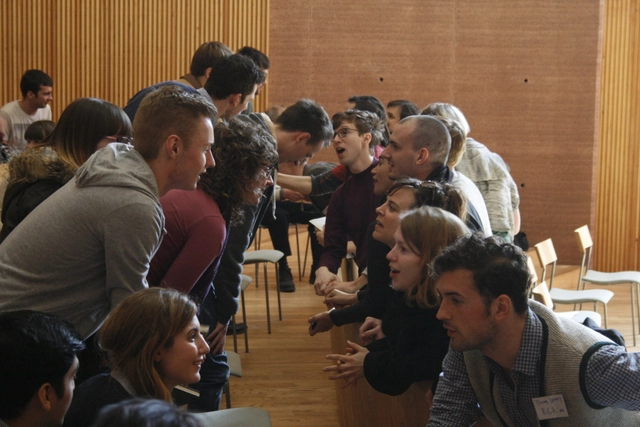
Lines Drawn, the latest gathering of student delegates by the Architecture Students Network (ASN), recently met at the Centre for Alternative Technology (CAT) to discuss the future of architectural education. Seventy RIBA Part 1, 2 and 3 students (including those on their placement years) from across twenty two schools of architecture gathered together to address and unify their voice in calling for improvements to the current pedagogy of UK’s architectural education to reflect a changing society.

The weekend conference provoked questions surrounding the merits and pitfalls of the Part 1, 2 and 3 British route to qualification, raising aspirations of a more flexible education system. Sparked by the latest directive from the European Union (EU), which seeks to "establish more uniformity across Europe by aligning the time it takes to qualify" and by making mutual recognition of the architect's title easier between countries, the discussions centred around how architecture students' opinions can be harnessed at this critical moment of change to have voices heard.

Continue reading for ArchDaily's exclusive pre-coverage of the ASN's report.