1. ArchDaily
  2. Climate Crisis

Climate Crisis: The Latest Architecture and News

From Policy to Pavement: Preparing Cities for El Niño in the Greater Horn of Africa

Audio available

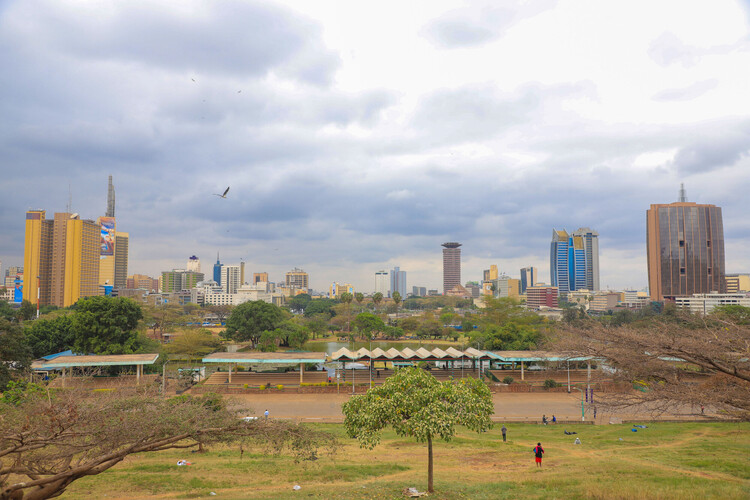
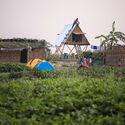
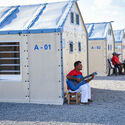
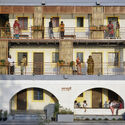
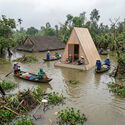
To limit the toll of El Niño's October-December rains, IGAD's specialized climate institution, the Climate Prediction and Applications Centre (ICPAC), has released a practical guide with UN-Habitat for Horn of Africa cities. The Intergovernmental Authority on Development (IGAD) is a regional bloc in Eastern Africa of governments from the Greater Horn of Africa, and their High-Level Call to Action on El Niño Preparedness establishes a regional commitment to move from reactive disaster response to proactive action for long-term resilience. Emphasizing cross-border coordination and crediting local knowledge, the call states: "We recognize that climate and disaster risks do not respect national borders, and that no single country or institution can manage them alone."

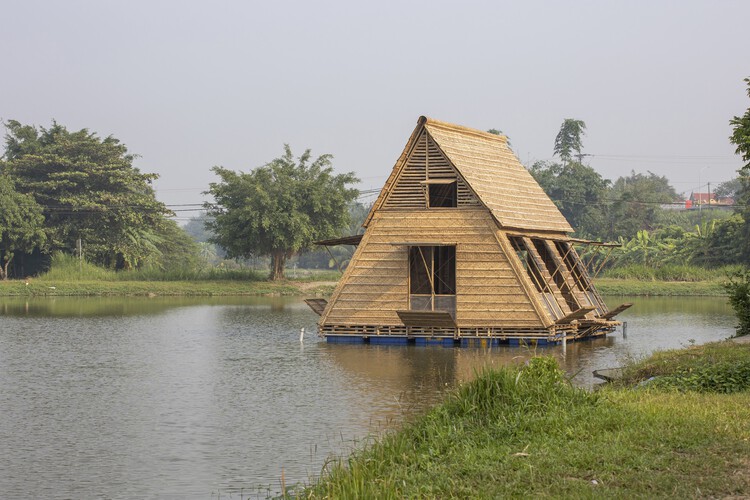
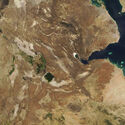
But what does it look like when the framework is read along the current of "governance-as-design" through two contrasting urban realities within the Greater Horn of Africa, such as wetland Kampala and arid, coastal Djibouti? Will it illustrate the adaptability of the anticipatory design tool to different urban topographies as well as governance systems? And will it also reveal how the guide navigates the eddying of national advocacy, municipal authority, community-led infrastructure and informal land tenure?
From Policy to Pavement: Preparing Cities for El Niño in the Greater Horn of Africa - Image 1 of 4From Policy to Pavement: Preparing Cities for El Niño in the Greater Horn of Africa - Image 2 of 4From Policy to Pavement: Preparing Cities for El Niño in the Greater Horn of Africa - Image 3 of 4From Policy to Pavement: Preparing Cities for El Niño in the Greater Horn of Africa - Image 4 of 4From Policy to Pavement: Preparing Cities for El Niño in the Greater Horn of Africa - More Images+ 6

COP31 in Antalya: What the Climate Summit Means for Buildings and Cities

Audio available

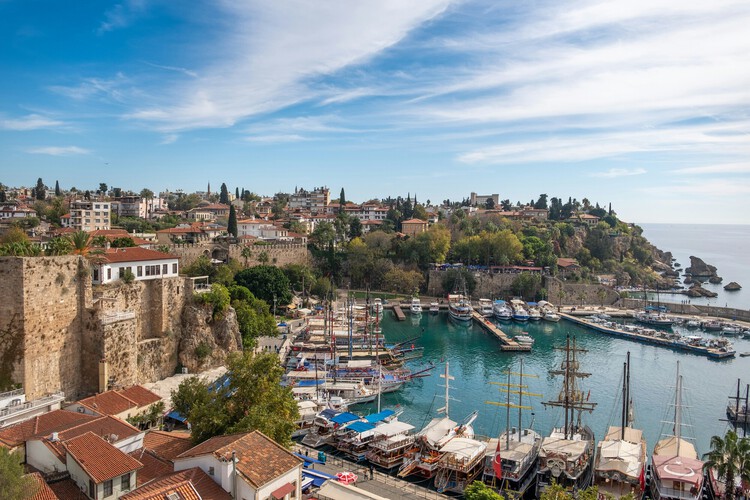
The 31st United Nations Climate Change Conference (COP31) concluded on November 22, 2026, in Antalya, Türkiye, following negotiations that extended beyond the scheduled closing date. Hosted by Türkiye with Australia leading the negotiations, the summit brought together representatives of nearly 200 Parties, alongside researchers, businesses, climate organizations, and civil society, to advance international climate action. While countries reached decisions on climate finance, adaptation, just transition, and other agenda items, they failed to agree on the proposed overarching Antalya Pact, with disagreements over fossil fuels, finance, and the level of ambition in the final text. For the built environment, COP31 advanced several initiatives addressing building energy performance, electrification, urban resilience, and climate investment, while leaving broader questions of implementation and international coordination unresolved.

COP31 in Antalya: What the Climate Summit Means for Buildings and Cities - Imagem 1 de 4COP31 in Antalya: What the Climate Summit Means for Buildings and Cities - Imagem 2 de 4COP31 in Antalya: What the Climate Summit Means for Buildings and Cities - Imagem 3 de 4COP31 in Antalya: What the Climate Summit Means for Buildings and Cities - Imagem 4 de 4COP31 in Antalya: What the Climate Summit Means for Buildings and Cities - More Images+ 6

Subscriber Access

The Power of the Streets: Why Cities Remain Irreplaceable in the Digital Age

Audio available

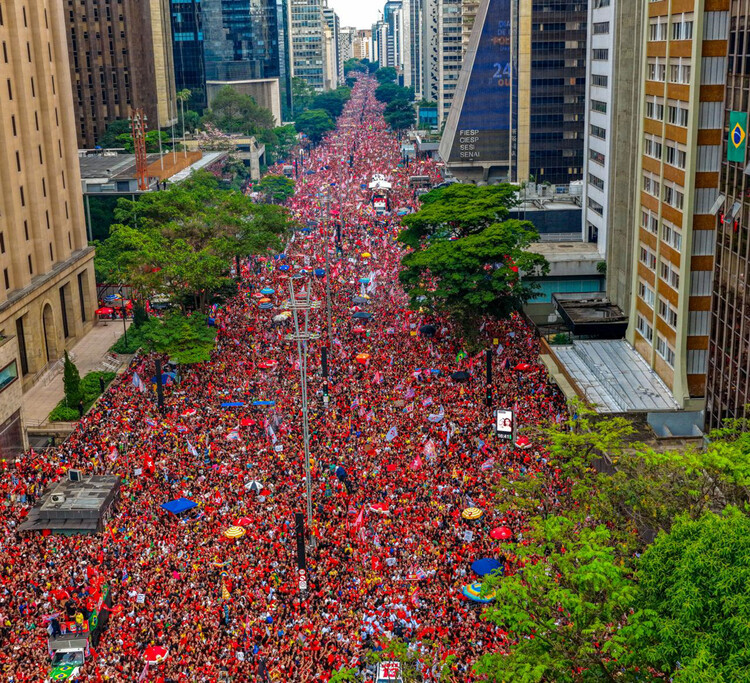
Whether in Lisbon's medieval alleyways, along Haussmann's boulevards in Paris, on the wide avenues of car-oriented Chicago, or amid the metropolitan intensity of Avenida Paulista in São Paulo, different urban morphologies seem to give way to the same scene: crowds taking to the streets.

The scale of this phenomenon is documented by the Protest Monitor, a Columbia University initiative dedicated to tracking demonstrations in defense of democracy and freedom of expression worldwide. In October 2026 alone, the platform recorded mobilizations involving more than 3.1 million people in Brazil, between 410,000 and 800,000 demonstrators in a single day in France, and approximately 150,000 in Serbia. Protests continued into November, with around 400,000 people taking to the streets in Spain and tens of thousands mobilizing in India.

The Power of the Streets: Why Cities Remain Irreplaceable in the Digital Age - Imagem 1 de 4The Power of the Streets: Why Cities Remain Irreplaceable in the Digital Age - Imagem 2 de 4The Power of the Streets: Why Cities Remain Irreplaceable in the Digital Age - Imagem 3 de 4The Power of the Streets: Why Cities Remain Irreplaceable in the Digital Age - Imagem 4 de 4The Power of the Streets: Why Cities Remain Irreplaceable in the Digital Age - More Images+ 8

UN-Habitat and ICPAC Launch a Practical Guide to Help Cities Prepare for El Niño

Audio available

El Niño is a natural climate pattern expected to peak from October 2026 through March 2027. It is characterized by a strong impact on global weather patterns, bringing floods, droughts, heat waves and storms to different regions. On November 5, 2026, the United Nations Human Settlements Programme (UN-Habitat) and the Climate Prediction and Applications Centre (ICPAC) of the Intergovernmental Authority on Development (IGAD) launched a short practical guide for city governments to help them prepare for the upcoming season. The guide offers considerations applicable to different climate regions, but it is framed by IGAD in the context of preparedness, anticipatory action and resilience in the Horn of Africa (Djibouti, Eritrea, Ethiopia, Kenya, Somalia, South Sudan, Sudan and Uganda). Its aim is to offer actionable guidance to improve urban resilience, protect vulnerable communities and reduce the impacts of climate-related hazards.

UN-Habitat and ICPAC Launch a Practical Guide to Help Cities Prepare for El Niño - Image 1 of 4UN-Habitat and ICPAC Launch a Practical Guide to Help Cities Prepare for El Niño - Image 2 of 4UN-Habitat and ICPAC Launch a Practical Guide to Help Cities Prepare for El Niño - Image 3 of 4UN-Habitat and ICPAC Launch a Practical Guide to Help Cities Prepare for El Niño - Image 4 of 4UN-Habitat and ICPAC Launch a Practical Guide to Help Cities Prepare for El Niño - More Images+ 3

Subscriber Access

Building "Reservoirs of Hope" in Future Cities: Lessons from Utopian Hours 2026

Audio available

Utopia is commonly understood as an imagined ideal society or place where political, social, and living conditions are fundamentally different from those of the present. Derived from Greek, the word literally means "no-place" or "nowhere." Although utopia may not exist in reality, the act of imagining it has long inspired architects and urban thinkers to envision the world otherwise. Amid the ongoing challenges that cities face today — climate crisis, pollution, soaring land prices, aging populations, housing inequality, lack of social services, growing social and economic disparities, and persistent injustices — some regions face overheating and environmental degradation, while others are fighting for access to nature, land, and communities, which rather makes us think of a dystopian future. Thinking about utopia in such a default condition of contemporary cities shaped by the partially failed logic of modern urban planning, what might a more livable, sustainable, diverse, and inclusive city look like in the 21st century? 

This was the underlying question running through Utopian Hours 2026, an international festival dedicated to city-making. Across its talks, exhibitions, and roundtables, the festival explored how to shape urban landscapes and what forms of design thinking can transform urban life.

Building "Reservoirs of Hope" in Future Cities: Lessons from Utopian Hours 2026 - SustainabilityBuilding "Reservoirs of Hope" in Future Cities: Lessons from Utopian Hours 2026 - SustainabilityBuilding "Reservoirs of Hope" in Future Cities: Lessons from Utopian Hours 2026 - SustainabilityBuilding "Reservoirs of Hope" in Future Cities: Lessons from Utopian Hours 2026 - SustainabilityBuilding Reservoirs of Hope in Future Cities: Lessons from Utopian Hours 2026 - More Images+ 6

From Coastal Reclamation to Data Centers: How India's Architecture Grows Around Water

Audio available

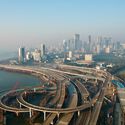
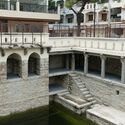
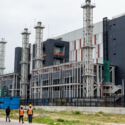
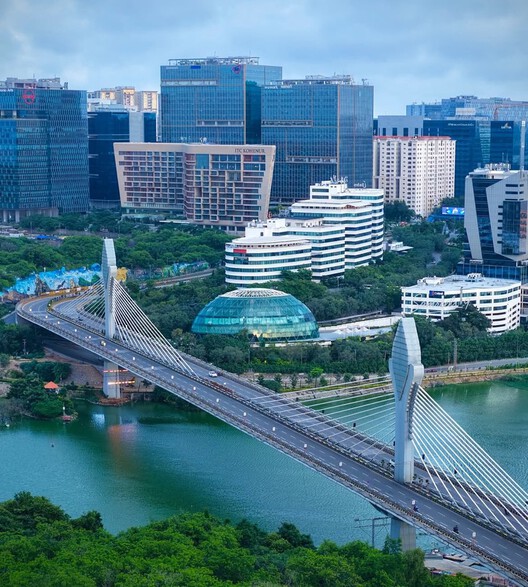
Architecture has treated water either as a backdrop or a problem: a view to be framed, a hazard to be drained, or a utility to be connected. In contemporary India, a more consequential relationship takes shape. Water remains a shared ecological resource, yet the land and infrastructure around it are increasingly financed and defended as economic assets. Coastlines are extended to carry traffic and lake edges become lucrative development zones. The decision to do so passes through multiple institutions with different vocabularies, thereby challenging who determines how water and its surroundings are used, and who faces the consequences.

From Coastal Reclamation to Data Centers: How India's Architecture Grows Around Water - Image 1 of 4From Coastal Reclamation to Data Centers: How India's Architecture Grows Around Water - Image 2 of 4From Coastal Reclamation to Data Centers: How India's Architecture Grows Around Water - Image 3 of 4From Coastal Reclamation to Data Centers: How India's Architecture Grows Around Water - Image 4 of 4From Coastal Reclamation to Data Centers: How India's Architecture Grows Around Water - More Images+ 1

COP31 to Take Place in Antalya, Turkiye, as SP Architects Adapts Former Expo Grounds

Audio available

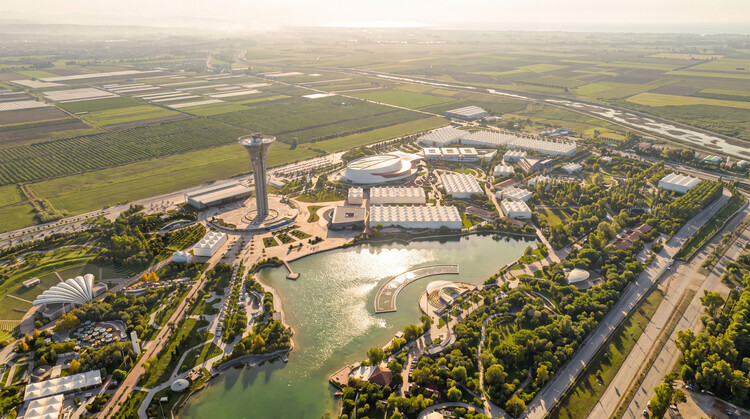
The 31st Conference of the Parties to the United Nations Framework Convention on Climate Change (COP31) will take place in Antalya, Türkiye, from November 9 to 20, under a joint governance model where Türkiye hosts the summit and presidency, while Australia leads the formal negotiations. The conference will bring together national delegations, government representatives, scientists, businesses, and civil society to discuss international climate action, including emissions reduction, adaptation to climate impacts, and climate finance. As countries continue to face the challenges of extreme weather, resource consumption, and the transition to lower-carbon economies, this year's programme includes dedicated discussions on zero waste, energy and transport, and resilient cities. In preparation for the event, SP Architects is adapting the former EXPO 2016 grounds in Antalya to accommodate the conference, with plans for the site to remain in use after it concludes.

COP31 to Take Place in Antalya, Turkiye, as SP Architects Adapts Former Expo Grounds - Imagen 1 de 4COP31 to Take Place in Antalya, Turkiye, as SP Architects Adapts Former Expo Grounds - Imagen 2 de 4COP31 to Take Place in Antalya, Turkiye, as SP Architects Adapts Former Expo Grounds - Imagen 3 de 4COP31 to Take Place in Antalya, Turkiye, as SP Architects Adapts Former Expo Grounds - Imagen 4 de 4COP31 to Take Place in Antalya, Turkiye, as SP Architects Adapts Former Expo Grounds - More Images+ 10

World Monuments Watch 2027 Nominations Point to Government Austerity, Climate Impact and Skills Shortages as Main Threats to Heritage

Audio available

The World Monuments Fund (WMF), an independent nonprofit organization dedicated to the preservation of historic architecture and cultural heritage since 1965, receives nominations through the World Monuments Watch, a flagship advocacy and conservation program. Every two years, the Watch selects 25 sites from the nominations received from individuals and community-based organizations worldwide. Nominations for the 2027 World Monuments Watch closed on March 20, 2026, with a total of 372 public nominations from 84 countries and territories. Before announcing the selected sites in early 2027, the WMF offers an analysis of the nominations. Global data shows three main causes of heritage endangerment worldwide: government austerity, intensifying climate impact, and lack of access to specialized skills and expertise. At a time when political priorities tend to stray from history, the call is to recognize heritage sites as an area of shared opportunity rather than a burden.

World Monuments Watch 2027 Nominations Point to Government Austerity, Climate Impact and Skills Shortages as Main Threats to Heritage - Imagem 1 de 4World Monuments Watch 2027 Nominations Point to Government Austerity, Climate Impact and Skills Shortages as Main Threats to Heritage - Imagem 2 de 4World Monuments Watch 2027 Nominations Point to Government Austerity, Climate Impact and Skills Shortages as Main Threats to Heritage - Imagem 3 de 4World Monuments Watch 2027 Nominations Point to Government Austerity, Climate Impact and Skills Shortages as Main Threats to Heritage - Imagem 4 de 4World Monuments Watch 2027 Nominations Point to Government Austerity, Climate Impact and Skills Shortages as Main Threats to Heritage - More Images+ 15

On the International Day for Disaster Risk Reduction: "Resilience Starts at Home"

Audio available

Every year on October 13, the International Day for Disaster Risk Reduction (IDDRR) draws attention to the ways communities can reduce exposure and vulnerability to hazards. Established by the United Nations in 1989, the day provides an opportunity to consider how governments, communities, and professionals can strengthen preparedness and resilience before disasters occur. For its 2026 edition, the United Nations Office for Disaster Risk Reduction (UNDRR) has selected "Resilience Starts at Home" as its theme, placing housing at the center of this year's campaign.

On the International Day for Disaster Risk Reduction: "Resilience Starts at Home" - Image 1 of 4On the International Day for Disaster Risk Reduction: "Resilience Starts at Home" - Image 2 of 4On the International Day for Disaster Risk Reduction: "Resilience Starts at Home" - Image 3 of 4On the International Day for Disaster Risk Reduction: "Resilience Starts at Home" - Image 4 of 4On the International Day for Disaster Risk Reduction: Resilience Starts at Home - More Images+ 11

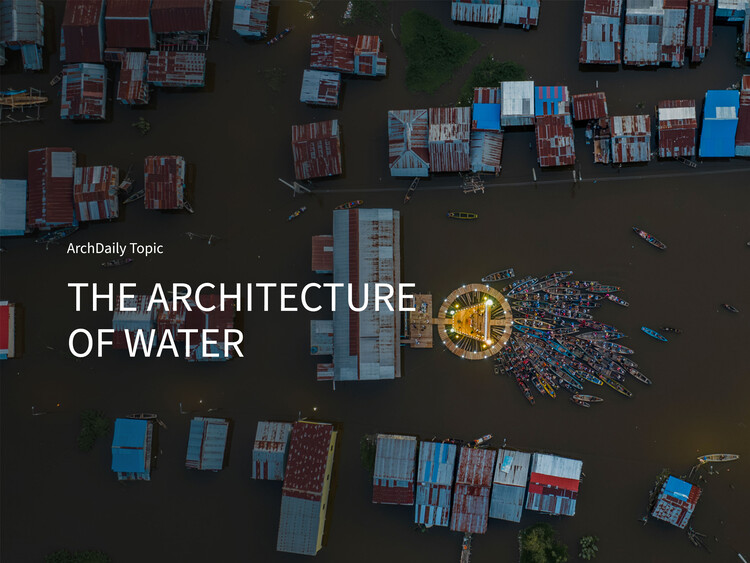
The Architecture of Water: ArchDaily's October Editorial Focus

Audio available

Water is life. Animals, plants, fungi, and bacteria all depend on it: water structures their cells, carries their nutrients, and hosts the chemistry that keeps them alive. Even the rare exceptions confirm the rule. Some seeds and spores can lose nearly all their water and enter a dormancy so deep that their metabolism almost stops, yet it is water that brings them back. In the most literal sense, water connects us.

But it also divides us. Every year, thousands of people leave North Africa in overcrowded boats bound for Lampedusa, seeking better living conditions in Europe; more than 30,000 have died or gone missing in the Mediterranean since 2014. Water draws borders and controls flows. Before the war on Iran began in February 2026, the Strait of Hormuz carried around 25% of the world's seaborne crude oil, with effects felt in fuel prices far from the Gulf. Water also sits at the center of the environmental debate, where its excess can be as lethal as its absence. Severe floods increasingly strike countries that have contributed least to global emissions, while the largest polluters remain better equipped to resist. If water is life, it can also mean death. Ultimately, water is political.

The Architecture of Water: ArchDaily's October Editorial Focus - Image 1 of 4The Architecture of Water: ArchDaily's October Editorial Focus - Image 2 of 4The Architecture of Water: ArchDaily's October Editorial Focus - Image 3 of 4The Architecture of Water: ArchDaily's October Editorial Focus - Image 4 of 4The Architecture of Water: ArchDaily's October Editorial Focus - More Images+ 2

Himalayan Glacier Collapse Triggers Flash Floods and Infrastructure Destruction in Nepal

Audio available

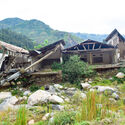
A lower section of a Himalayan glacier collapsed on Wednesday, August 26, creating an ice and rock avalanche down the Lhende River valley that triggered severe flash floods on the Nepal-Tibet border. The floods destroyed entire villages, with at least 350 confirmed dead and more than 1,300 people still missing. Characterized by their sudden and violent nature, flash floods occur within the first six hours after heavy rainfall or another floodwater source. In this case, the event has been attributed to a glacier collapse higher in the Himalayas, linked, in some scenarios, to a heat wave in the area. The speed of the movement is also distinctive of this type of flood, whose path of destruction in this case follows the Trishuli River basin in Nepal. According to the International Federation of Red Cross, the most affected areas are the Nepalese Rasuwa and Nuwakot districts. A more detailed assessment is expected in the coming days as floodwaters recede; in the meantime, it is already possible to outline some of the evidence from a territorial point of view.

Himalayan Glacier Collapse Triggers Flash Floods and Infrastructure Destruction in Nepal - Image 1 of 4Himalayan Glacier Collapse Triggers Flash Floods and Infrastructure Destruction in Nepal - Image 2 of 4Himalayan Glacier Collapse Triggers Flash Floods and Infrastructure Destruction in Nepal - Image 3 of 4Himalayan Glacier Collapse Triggers Flash Floods and Infrastructure Destruction in Nepal - Image 4 of 4Himalayan Glacier Collapse Triggers Flash Floods and Infrastructure Destruction in Nepal - More Images+ 2

Subscriber Access

What is Blue Infrastructure? Rethinking Water's Role in City Design

Audio available

Nature-based solutions are a primary strategy for contemporary climate adaptation and urban ecological resilience, embraced by cities regardless of their geography or climate zone. Green roofs, urban forests, bioswales, expanding tree canopy, protected wetlands, and permeable landscapes are featured prominently in municipal adaptation plans. These interventions are deployed across neighborhoods, distributed through street networks, and measured by hectares restored, trees planted, stormwater retained, or temperatures reduced. This shift expands the role of ecology within cities, establishing environmental elements as infrastructure systems and providing planners with a grounded framework for integrating natural systems into urban development.

What is Blue Infrastructure? Rethinking Water's Role in City Design - Image 1 of 4What is Blue Infrastructure? Rethinking Water's Role in City Design - Image 2 of 4What is Blue Infrastructure? Rethinking Water's Role in City Design - Image 3 of 4What is Blue Infrastructure? Rethinking Water's Role in City Design - Image 4 of 4What is Blue Infrastructure? Rethinking Water's Role in City Design - More Images+ 36
Africa and China Advance Great Green Walls as Continental Wildlife Corridors

Audio available

The idea of a "Great Green Wall" designates a large-scale reforestation initiative undertaken specifically to halt desertification. Currently underway in Africa to prevent the advancement of the Sahara Desert and in China around the Gobi Desert, it is a landscape, agriculture, economic, and social development project in reaction to the rise of global temperatures, over-farming, and unsuitable land management. Both projects, currently underway, are intersectional initiatives involving governments from different countries, civil society organisations, and both individual volunteers and organised groups, guided by the idea of a unified response to global environmental issues through wildlife restoration. It is a large-scale, infrastructural application of a 'green' or 'wildlife corridor': a linear strip of vegetation or natural landscape that connects fragmented ecosystems and wildlife populations separated by human development on a continental scale.

Africa and China Advance Great Green Walls as Continental Wildlife Corridors - Image 1 of 4Africa and China Advance Great Green Walls as Continental Wildlife Corridors - Image 2 of 4Africa and China Advance Great Green Walls as Continental Wildlife Corridors - Image 3 of 4Africa and China Advance Great Green Walls as Continental Wildlife Corridors - Image 4 of 4Africa and China Advance Great Green Walls as Continental Wildlife Corridors - More Images+ 2

Subscriber Access

An Architectural Language of Artificial Cooling: Shade, Mist, and Autonomy

Audio available

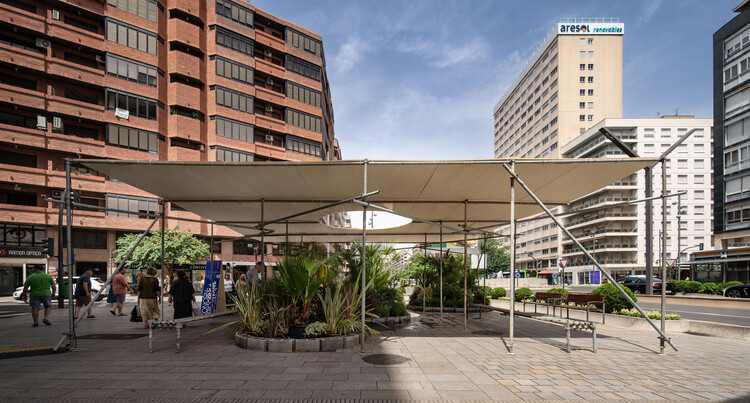
Concéntrico returned to Logroño for its 12th edition in June and transformed the city into a working site for architecture. Since its founding in 2015, the festival has built an identity on resisting a distant, controlled exhibition of design by constructing full-scale installations in the city's streets, plazas, and vacant lots, engaging residents and visitors as part of daily life. This year's program brought together more than twenty interventions by architects, designers, and researchers working across a wide range of geographies and methods, each contributing to a citywide experiment in reimagining public space.

When Mobility Becomes the Ground: Architecture, Adaptation, and the Search for Continuity

Audio available

Few conditions have shaped contemporary architectural discourse as profoundly as uncertainty. Across international biennials, exhibitions, and forums, architecture increasingly imagines its relationship to the world through flexibility, reversibility, and responsiveness—qualities intended to engage with climate emergencies, political instability, and unprecedented human mobility. Buildings are designed to transform, infrastructures to evolve, and cities to accommodate conditions that appear increasingly unpredictable. This emphasis on agility has expanded the discipline's capacity to engage with environmental change, offering valuable strategies for a world in constant transformation.

Yet this evolution points to a deeper shift in how architecture mediates the human condition. Architecture has long functioned as a mechanism for existential orientation—a way for human consciousness to carve an intelligible coordinate out of an indifferent cosmos, anchoring memory and identity to a fixed point. Within much contemporary architectural discourse, uncertainty increasingly appears less as an external condition to be mitigated than as the horizon from which architectural thinking begins. Spatial experience is increasingly shaped by environments designed around the persistence of flux, where static reference points give way to conditions of continuous transformation.

When Mobility Becomes the Ground: Architecture, Adaptation, and the Search for Continuity - Imagem 1 de 4When Mobility Becomes the Ground: Architecture, Adaptation, and the Search for Continuity - Imagem 2 de 4When Mobility Becomes the Ground: Architecture, Adaptation, and the Search for Continuity - Imagem 3 de 4When Mobility Becomes the Ground: Architecture, Adaptation, and the Search for Continuity - Imagem 4 de 4When Mobility Becomes the Ground: Architecture, Adaptation, and the Search for Continuity - More Images+ 5

Subscriber Access

Beyond the Canopy: Six Architectural Strategies for Urban Shade

Audio available

As cities around the world brace for extreme temperatures and waves of unrelenting heat, urban greening is one of the best solutions for leaders to combat this reality. The benefits of planting trees for physical health, mental well-being, and thermal relief are well documented, and a mature canopy can transform a space by several degrees on a hot day. Trees cool the air through evapotranspiration, filter pollutants and absorb stormwater, and enhance biodiversity in urban spaces.

Beyond the Canopy: Six Architectural Strategies for Urban Shade - Imagen 1 de 4Beyond the Canopy: Six Architectural Strategies for Urban Shade - Imagen 2 de 4Beyond the Canopy: Six Architectural Strategies for Urban Shade - Imagen 3 de 4Beyond the Canopy: Six Architectural Strategies for Urban Shade - Imagen 4 de 4Beyond the Canopy: Six Architectural Strategies for Urban Shade - More Images+ 96

Subscriber Access

Becoming What? Threads from UIA 2026 Barcelona
Barcelona has just become the first city in the history of the UIA World Congress of Architects to host the event twice. Thirty years separate the two editions, and the distance between them says as much about architecture's changing self-understanding as anything spoken from a stage. In 1996, the congress placed the city at the center of the debate, consolidating a post-Olympic urban model that would go on to be studied and contested for decades.

In 2026, under the theme "Becoming. Architectures for a Planet in Transition," Barcelona hosted a very different conversation. The congress's curatorial team — Pau Bajet, Mariona Benedito, Maria Giramé, Tomeu Ramis, Pau Sarquella, and Carmen Torres — organized the program around six thematic lines: Becoming More-than-human, Becoming Circular, Becoming Embodied, Becoming Interdependent, Becoming Hyper-Conscious, and Becoming Attuned. As they told ArchDaily ahead of the opening, the premise behind this structure was that most architectural decisions are, in practice, very specific — which material is used, what is demolished or preserved, how much water or energy a building consumes — yet those specific decisions carry planetary implications.

Becoming What? Threads from UIA 2026 Barcelona - 1 的图像 4Becoming What? Threads from UIA 2026 Barcelona - 2 的图像 4Becoming What? Threads from UIA 2026 Barcelona - 3 的图像 4Becoming What? Threads from UIA 2026 Barcelona - 4 的图像 4Becoming What? Threads from UIA 2026 Barcelona - More Images+ 12

Record Heatwaves in Europe and a New Museum of Comics in Taiwan: This Week’s Review

Audio available

Covering a broad array of subjects, this week's headline stories have reflected the wide scope of architecture's practice: its potential to respond to the climate crisis, the construction and renovation of cultural infrastructure around the world, and events that promote contemporary disciplinary reflection. This does not preclude questions about the contradiction between the technical and creative skills demanded by the discipline and the role it has come to occupy in today's market. Alongside these reflections, this week we feature projects that reinforce architecture's cultural significance in preserving knowledge, hosting collective entertainment, and supporting new forms of living: a comic book museum in Taiwan, a membership club for families in London, and the renovation of a landmark stadium in Riyadh.

Record Heatwaves in Europe and a New Museum of Comics in Taiwan: This Week’s Review - Image 1 of 4Record Heatwaves in Europe and a New Museum of Comics in Taiwan: This Week’s Review - Image 2 of 4Record Heatwaves in Europe and a New Museum of Comics in Taiwan: This Week’s Review - Image 3 of 4Record Heatwaves in Europe and a New Museum of Comics in Taiwan: This Week’s Review - Image 4 of 4Record Heatwaves in Europe and a New Museum of Comics in Taiwan: This Week’s Review - More Images+ 29