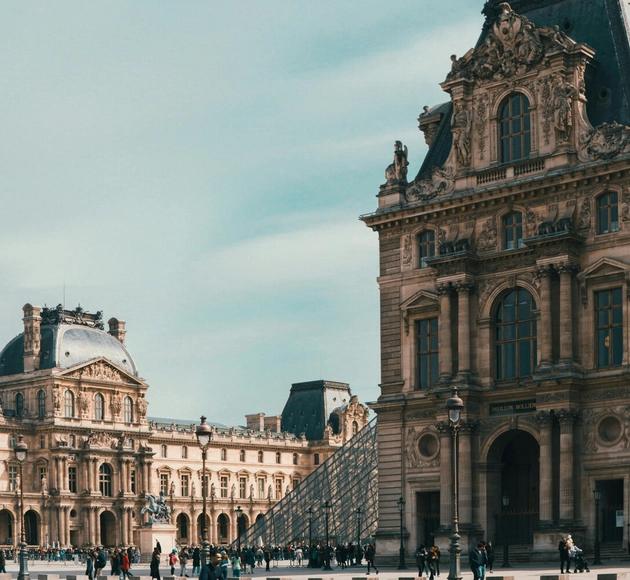
Art and architecture go through a series of interpretive processes before their creation that involve recognizing a capacity for wonder, experimentation, communication, and imagination. Sharing sensitivities and creative quests, they can transform the experience of the world by responding to a collective set of ideas that, at times, design, paint, and write about themes related to the connection with nature, the role of society in the built environment, the sensations conveyed by spaces, and more.
The relationship between art and humanity dates back to the origins of civilization. Museums have become spaces where vast collections of art and artifacts narrate the history of time, humankind, cities, and countless stories about cultures and societies. Over the years, the museum's role has evolved, taking on different forms and scales, including the modern-day art gallery. The importance of art and culture in contemporary cities and neighborhoods is undeniable. However, galleries serve multiple roles in integrating art and culture into daily life. Why are these spaces valuable to communities? How do they support emerging artists? How can galleries revitalize neighborhoods?
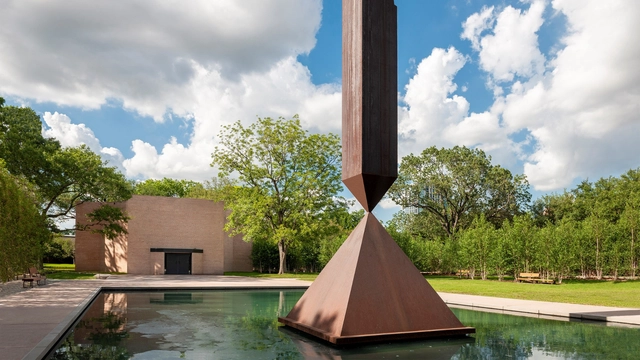
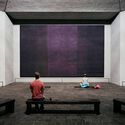
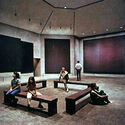
Rothko Chapel. Image via Huston Museum District, under policy of fair use
Built in 1971, the Rothko Chapel in Huston, Texas, was conceived as an intimate sanctuary for people of every belief, while in front of the chapel, Barnett Newman's sculpture "Broken Obelisk" stands in memory of Dr. Martin Luther King Jr. In 1964, Mark Rothko was commissioned by John and Dominique de Menil to create a meditative space for his site-specific paintings. Rothko’s vision clashed with that of the initial architect, Philip Johnson, over the scale and grandiosity of the building, which he felt distracted from the art. The project underwent several revisions with different architects, including Howard Barnstone and Eugene Aubry. Now officials have announced the indefinite closing of the chapel, after having sustained severe damage during Hurricane Beryl, the Category 1 storm that hit Houston on July 9.
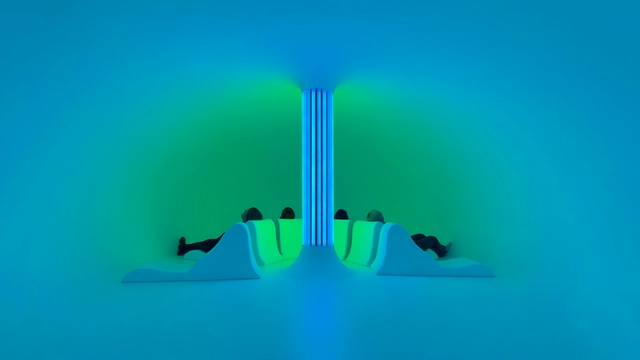
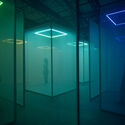
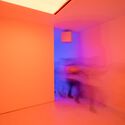
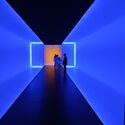
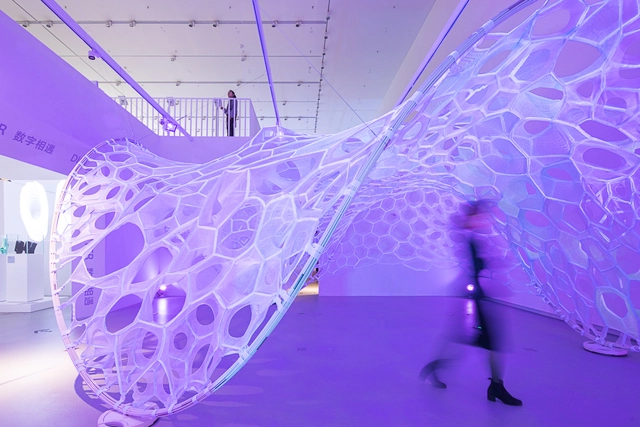
Step into the realm where the minimalism of the 1960s Light and Space movement intertwines with contemporary high-tech algorithms and sensors. Back then, light artists like James Turrell, Dan Flavin, and Robert Irwin captivated audiences with the bare essentials, using precisely daylight or lamps to heighten visual perception. Fast forward to today, Chromasonic takes this synergy of light and color but augments it with sound and algorithms. Envisioned as a global network to experience the harmony of body and mind, Johannes Girardoni's team unveiled the first satellite of perception in the heart of Venice Beach, California. Through a collaboration with Google, Milan Design Week showcased how the interplay of light and color can go on tour as a walk-in installation on a larger scale.
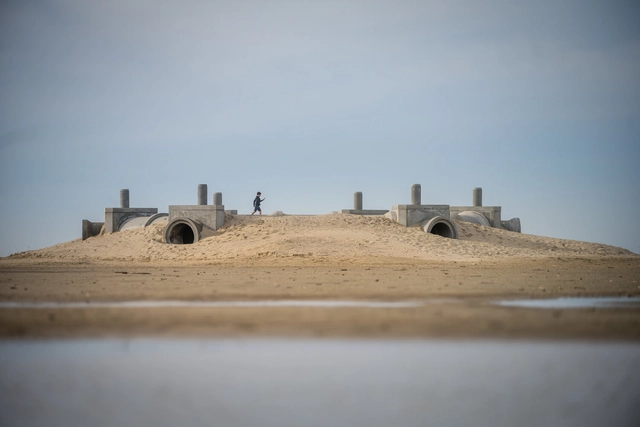
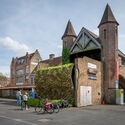
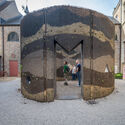
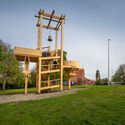
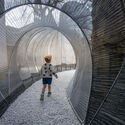
The fourth edition of the Bruges Triennial: Spaces of Possibility, curated by Shendy Gardin and Sevie Tsampalla, will be held from Saturday 13 April to Sunday 1 September 2024. This event promises to transform the streets and historic center of Bruges, Belgium, into a showcase of contemporary art and architectural interventions. With a focus on exploring the latent potential of this UNESCO World Heritage Site, the festival raises questions about how concepts like change and sustainability can interact with preservation.
The 12 selected artists and architects have been prompted to challenge the existing spaces within Bruges. Among the invited names are Boonserm Premthada’s Bangkok Project Studio, Mona Hatoum, Studio Ossidiana, and Sumayya Vally, founder of Counterspace and curator of the first Islamic Arts Biennale, among others. Until September 1st, they are presenting temporary interventions and large-scale installations that seek to reveal the hidden potential of the city, echoing the festival's theme. Against the backdrop of Bruges' rich history, this edition of the Bruges Triennial underscores the importance of adaptable urban spaces in today's ever-evolving world.
Throughout various historical civilizations and art movements, from Classical Greece and Rome to the Renaissance and the Bauhaus, the collaboration between art and architecture has been a significant societal expression. However, the 20th-century ideals of modernism and mass production resulted in the decline and near disappearance of art within buildings.
In response, many European countries have taken on the responsibility of promoting the collaboration between art and architecture. Schemes were created mandating that a percentage of the total cost of a new public building, place, or space must be spent on art. This legislation, commonly known as 'Percentage for Art', originated in France and has been explored by artists and architects over the years to create new architectural experiences.
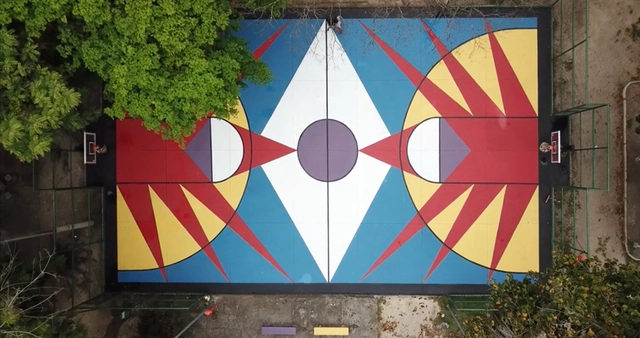
How do we give new meaning to degraded public spaces? Vibrant colors, geometric patterns, and community collaboration. That could describe the approach of Rio de Janeiro artist Antonio Ton. Drawing inspiration from interactions he finds on the streets and engaging in dialogue with local communities, his works extend beyond revitalizing sports courts and skate parks. Ton demonstrates how art fosters the creation of a space for gathering and leisure. We spoke with him to delve into his artistic process and explore the outcomes his paintings offer.
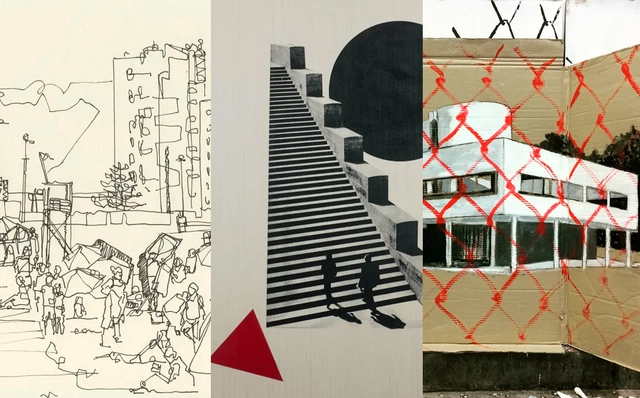
Digitization has revolutionized the way we experience art on platforms like SINGULART, which combines multiple influences from various artists.. Image Courtesy of SINGULART
The relationship between art and architecture is a recurring topic of discussion, seeing as architecture can be positioned at the intersection of structure, technology, and aesthetics. Despite the utilization of technical knowledge, architecture, and interior design also incorporate artistic concepts into their processes. From captivating illustrations during the design development phase to murals and artistic pieces that form an integral part of spatial conception, art plays an essential role in architectural production and society.
In the context of contemporary society, many of our activities are carried out digitally, from booking accommodation for travel to manufacturing materials and creating art exhibitions. In this sense, digitalization has also permeated the art world, conceiving initiatives like SINGULART, which challenges the traditional concept of art galleries by existing in a digital format. This platform combines works from various sources of inspiration and artistic techniques, encompassing everything from sketches and paintings to architectural photography. It fuses multiple influences from various contexts, including architectural work.
https://www.archdaily.com/1006625/from-sketch-to-painting-a-digital-art-gallery-to-inspire-everyday-architectural-workEnrique Tovar
At the 18th International Architecture Exhibition – La Biennale di Venezia, Karin Sander, and Philip Ursprung curated the Swiss Pavilion “Neighbors”. In her interview with Louisiana Channel, Karin Sander talks about expanding the understanding of the pavilion, reimagining the connected role of architecture and art, and explaining her artistic process. “Neighbors” was focused on spatial proximity between the Swiss Pavilion and its Venezuelan neighbor. Sander highlights also the conversation between the two structures, that became possible after the removal of a separating wall.
Every year in Mexico City, during the month of February, "Art Week" is celebrated with a series of events that seek to offer experiences in different spaces, mostly museums, cultural centers, or art galleries that join the cultural agenda. This event is important because both the city and these venues become the stage for different contemporary artists who come together to exhibit their work and enrich the dialogue around today's art. It is also a tourist destination that attracts collectors from all over the world.
Videos
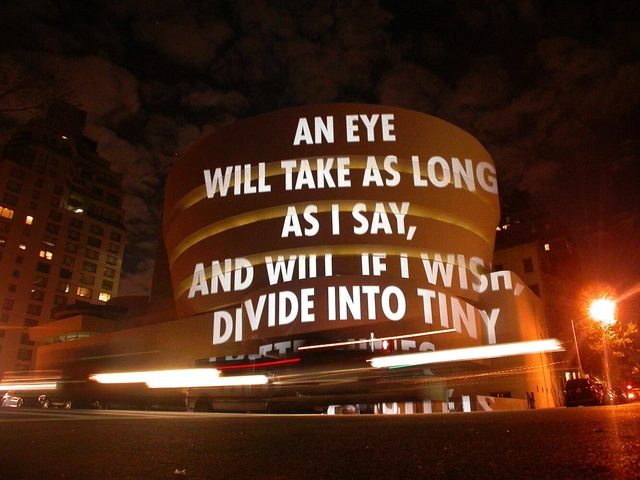
Jenny Holzer, installation at Guggenheim New York. Image: fluido & franz, CC BY-NC-SA 2.0 via Flickr
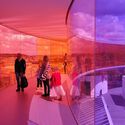
Light has been present in art for centuries. To think of the Baroque or Gothic without this element would be impossible. However, in the 20th century, artists began to explore light qualities and transformed them into a means of materializing art. Sculptures, immersive installations, and ways of shaping the environment through light, its colors and intensities brought new spatial perceptions by establishing a unique relationship with architecture.
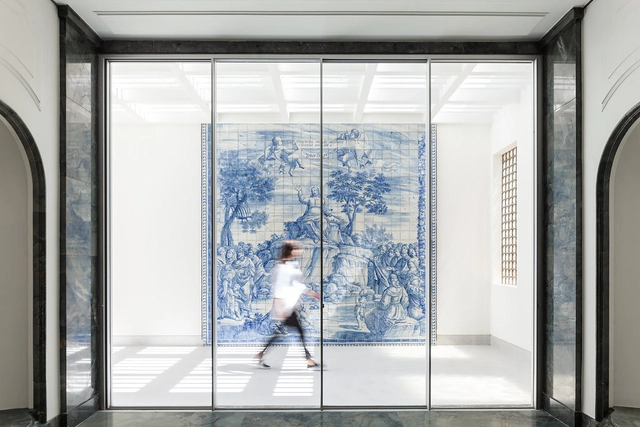
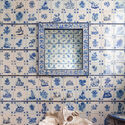
Culture reflected in a material. Portuguese tiles narrate historical themes, from the religious to the profane. They shape the Portuguese landscape and scenery when covering buildings, interiors and public spaces. In this way, its expression continues in constant change and adaptation to weave the Moorish ancestry with contemporaneity.
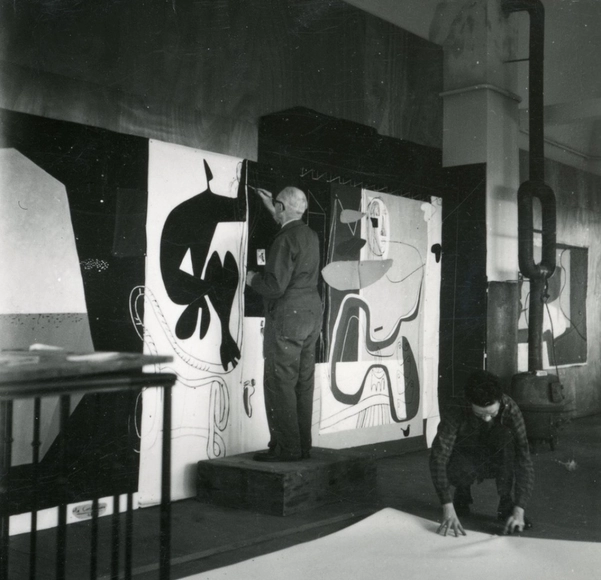
For sixty years, Le Corbusier used a wide variety of media to explore the themes and forms of his art, ranging from drawing to urbanism and including painting, architecture, and sculpture. He first discovered tapestry in 1936, in response to a request from Marie Cuttoli, who was then commissioning artworks woven in a factory in Aubusson from modern painters. However, it was twelve years later that he expressed his interest in producing woven artworks based on his drawings and found his way to this city in central France, where a true renaissance of tapestry had begun, at the initiative of Jean Lurçat and Jean Picart Le Doux.
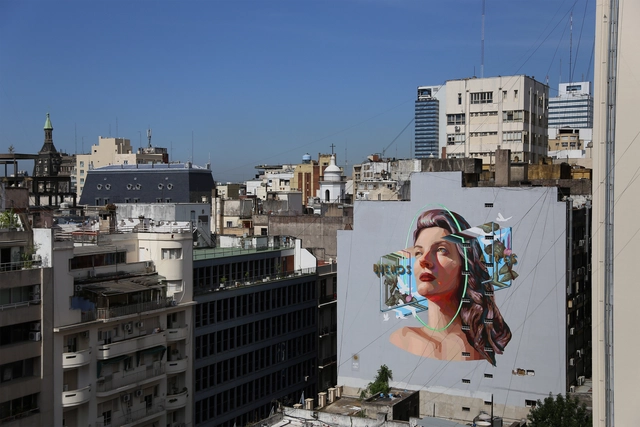
Addressing themes involving memory, oblivion and gender, the Argentinean visual artist and muralist, Mariela Ajras, displays her art on the walls of numerous cities around the world such as Barcelona, Valencia, Salamanca, Mexico City, Bogota, Montevideo, Buenos Aires, among many others. With a background in psychology, she has participated in different urban art festivals, exhibitions, fairs and public art projects, one of the largest murals in the city of Buenos Aires being the one she developed for the project "Corredor de la Memoria", commemorating the 25th anniversary of the AMIA bombing.
Architecture in its broadest sense concerns itself with the uprooting of structures that are permanent, cementing themselves within the greater cultural context and history of its humanity, however, where do we place the creation of structures that are designed with the intention to be disassembled. How much meaning and value can these structures hold, knowing they were never designed to last, but to simply take up space for a moment?
The Metropolitan Museum of Art in New York has selected Mexican architect Frida Escobedo to design the new $500 million modern and contemporary art wing. The Met does not have, until now, a thematic area that would house pieces corresponding to this temporality in art.
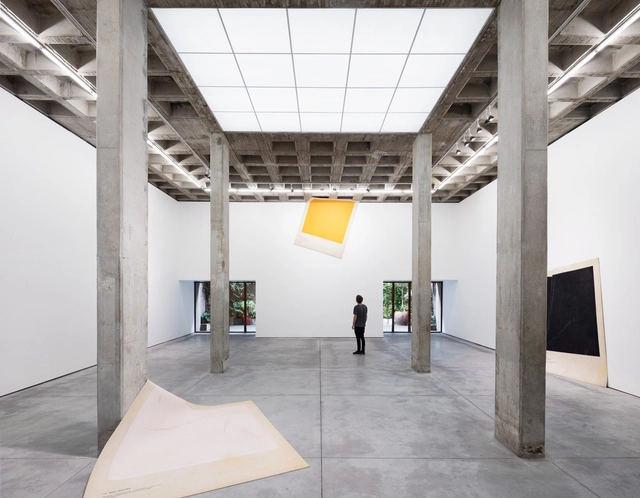
Ever since the period of the Renaissance in Europe, the indivisible relationship between art and architecture has long been heatedly discussed and vividly reflected in numerous classical books and buildings. With the deep connection that unites art and architecture together, designers, artists, and architects have been actively collaborating and came up with solutions on how we can house and exhibit art in the form of changing spaces.
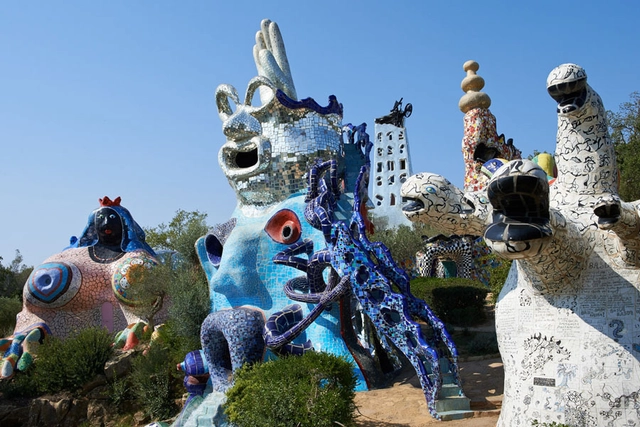
Tarot is often described as a mirror of the soul. Much like the spaces we inhabit, we can look at the symbols housed within the 72-card deck and see reflections of ourselves and our belief systems. The object and practice itself contain many architectural associations: It’s not uncommon for words like “structures,” “foundations,” and “home” to come up in a tarot reading. Traditional cards depict towers, castles, and churches. Sometimes the cards are described as keys, sometimes as gateways.
https://www.archdaily.com/959469/the-fantastic-architecture-of-niki-de-saint-phalleLeilah Stone