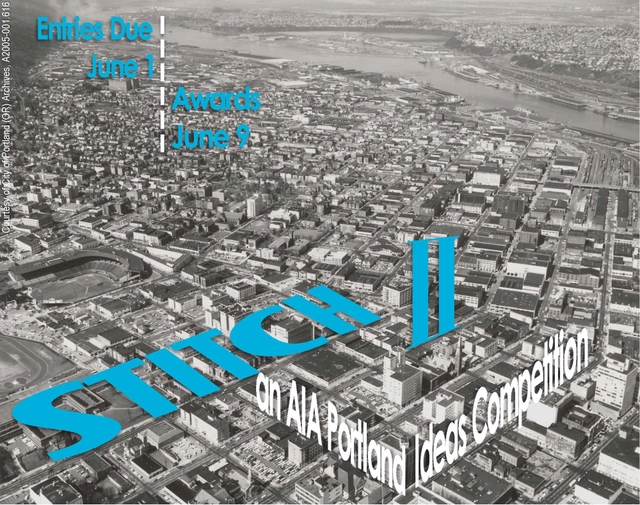
Now in its second year, the AIA Portland is seeking entries for its ideas competition - "2015 STITCH II." Open to everyone, the competition asks participants to reinvent an unused site beneath Portland's I-405 bridge into an active public space or shelter. While the specific programming is left to the participants' discretion, designs must respond to the specific context of the neighborhood. Registration is open now and submissions are welcomed through June 1, 2015. Three winners will be chosen by a multidisciplinary jury and announced at a ceremony on June 9, receiving monetary prizes between $100 and $500. For more information, visit aiaportland.org. To register, visit eventbrite.com. You can see last year’s winner, here.
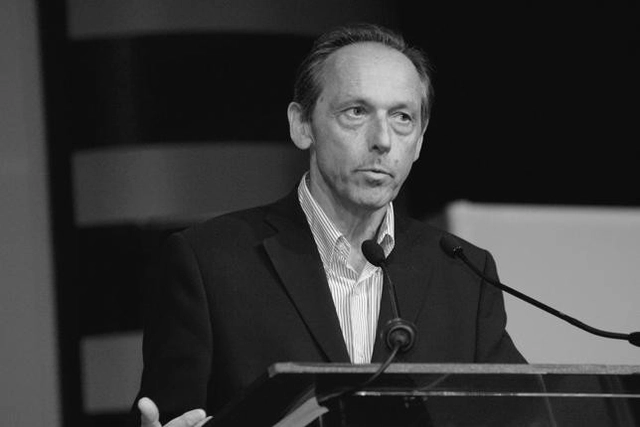
David Chipperfield. Image Courtesy of David Chipperfield Architects
Manhattan based real-estate company HFZ Capital Group has announced "The Bryant," David Chipperfield Architects' first residential condominium project in New York City, located at 16 West 40th Street. The proposal for the 32-story building features a hotel on the lower levels, with 57 apartments ranging from one- to four-bedrooms, including two duplex penthouses, on floors 15 through 32 - offering residents "the rare opportunity to live in a new construction, residential development on the fully-restored Bryant Park," according to the developers.
After the unexpected departure of Rick Bell last week, the American Institute of Architects' New York Chapter (AIANY) and the Center for Architecture have named David Burney as interim Executive Director until a long-term replacement can be found. Currently an Associate Professor of Planning and Placemaking at the Pratt Institute’s School of Architecture and Board Chair for the Center for Active Design, Burney worked as an architect at Davis Brody Bond until 1990, when he embarked on a 24-year career as one of New York's key civil servants: first as director of design at the NYC Housing Authority (NYCHA) until 2003, and then as Commissioner of the City’s Department of Design and Construction (DDC) from 2004 until 2014.
The Nasher Sculpture Center has announced the new $100,000 Nasher Prize, an international prize that will be awarded annually to living artists worldwide for "work that has had an extraordinary impact on the understanding of sculpture." The inaugural winner will be announced in Fall of 2015.
"The Nasher Sculpture Center is one of a few institutions worldwide dedicated exclusively to the exhibition and study of modern and contemporary sculpture," says the center. "As such, the prize is an apt extension of the museum’s mission and its commitment to advancing developments in the field. By recognizing those artists who have influenced our understanding of sculpture and its possibilities, the Nasher Sculpture Center will further its role as a leading institution in enhancing and promoting this vital art form."
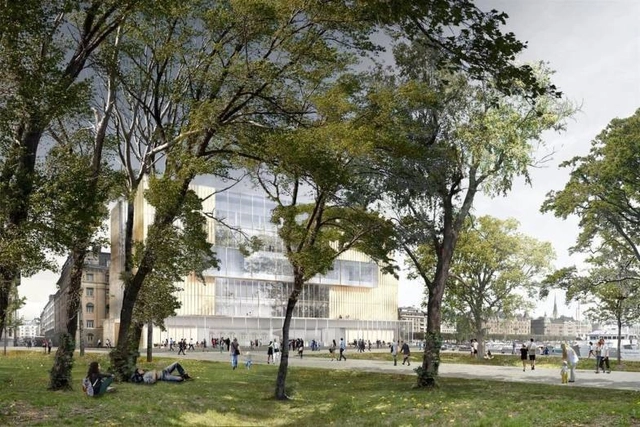
With opposition seemingly mounting against the Nobel Foundation’s plans to build a new, David Chipperfield-designed center along Stockholm’s Blasieholmen, advisors for Norrmalm's neighborhood management has spoke up in favor of the project believing to be an opportunity to enhance the urban fabric and make the area more family-friendly. "The administration believes that the new park should be as green as possible and that more play environments for children and youth a priority in the development of public spaces," reads the statement, highlighting the open space provided in the plan. Their response is just one of many that will help sway Stockholm’s City Planning and City Council final decision later this year.
Budapest-based art program Hello Wood has put out an open call for Project Village, their 2015 workshop and symposium to be held between July 11 and July 19. This year's event follows the success of Hello Wood's workshop in the summer of 2014, which saw participation from over 120 architects, artists and designers from 25 countries.
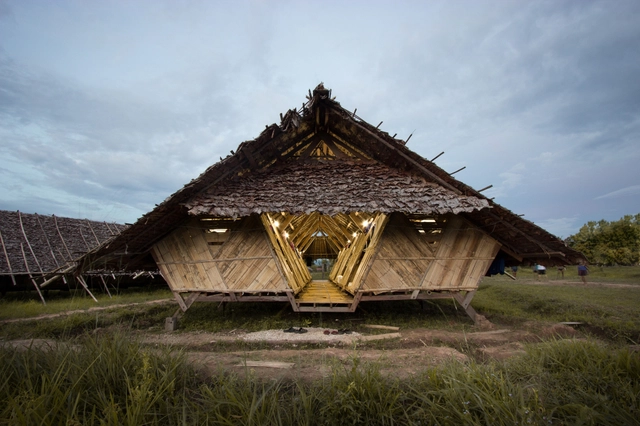
Last year on ArchDaily, we featured a.gor.a Architects' Temporary Dormitories in Mae Sot, a series of low-cost shelters that help this town on the Thai border accommodate the influx of Burmese refugees from neighboring Myanmar. But tragically, last month a fire from a nearby sugar cane plantation burned down all four dormitories, negating the generous funding from the Embassy of Luxembourg in Bangkok, preventing the plan to recoup money by recycling the dormitories when they were no longer needed, and of course destroying much-needed accommodation for refugees. To make the most of a bad situation, the architecture firm has turned to Indiegogo in an attempt to raise $5,500 and rebuild at least two of the dormitories. You can visit their Indiegogo page here to help.
Ever since last year, in response to the publication of Thomas Piketty's Capital in the Twenty-First Century, the hot topic in the field of economics has been inequality. Piketty's book, which argues that if left unchecked wealth will be increasingly concentrated into the already wealthy end of society, many saw the book as evidence for progressive taxes on the wealthiest members of a society. However, according to The Economist a new critique of Piketty's work is making waves among economists. A paper by MIT graduate student Matthew Rognlie argues that, since the 1970s, the only form of capital that has demonstrably increased the wealth of the wealthy is housing. With this in mind, The Economist suggests that, instead of focusing on taxation, "policy-makers should deal with the planning regulations and NIMBYism that inhibit housebuilding." Read more about Rognlie's paper at The Economist, or (for the more adventurous) read the paper for yourself here.
Pratt Institute is presenting two architectural symposiums that are free and open to the public: "An Inventory of What's Possible" on April 10 and "The Language of Architecture and Trauma" on April 11, 2015. "An Inventory of What's Possible" will focuse on the history of America’saffordable housing emerging from the research, architectural prototypes, and financing that occurred in New York, as well as the city’s future potential in response to Mayor de Blasio's housing plan.
Organized by Czech collective Arch for People, ModulARCH is a new festival of modular architecture to be held in Brno, Czech Republic this April. The festival will explore all aspects of modular architecture from the ecological to the economic, and discuss the role of the typology within the contemporary city. Learn more about the three day conference after the break.
The three day program of ModulARCH will unfold on the grounds of Brno's Moravian gallery, and comprise three distinct blocks. In succession, the festival will address modular architecture's relationship with the public space, the modular EXPO 2015 pavilion in Milan, and the social necessity of modular architecture, alongside its role in public buildings. Two evening lectures will be given by Chilean architect Sebastian Irarrazaval, whose practice and research has dealt closely with modular architecture and construction.
The masterplan for the Expo produced by Herzog & de Meuron in 2009. Image Courtesy of Herzog & de Meuron
It seems Jacques Herzog is not particularly excited about the opening of the 2015 Expo in Milan later this year. In an interview with uncube magazine Herzog - one half of Herzog & de Meuron, the Expo's masterplanners - explains why they left the project in 2011, along with collaborators Stefano Boeri, William McDonough and Ricky Burdett. In their absence, he says, the Expo will now feature their plan "only as an urbanistic and formal pattern, not as an intellectual concept," and their plan to transform the event into "a radically new vision for a world exhibition" has been twisted so that the Expo "will be the same kind of vanity fair that we’ve seen in the past." Read the full interview here.
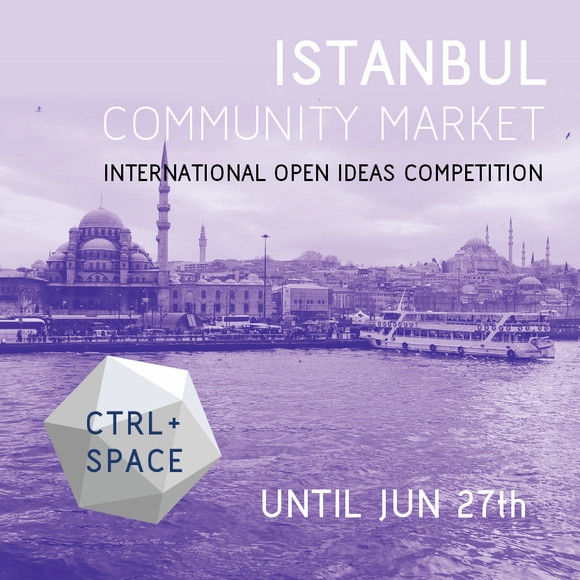
CTRL+SPACE has launched its Istanbul Community Market Ideas Competition. Seeking designs from students and professionals (developed individually or in teams of four or less), the competition challenges participants to create a site-specific, multi-functional market with a strong public element. Submissions are welcomed now until June 27 and winners will be announced on July 17, 2015. Three winning designs will receive monetary prizes from 500€ to 3500€, and five merit award recipients will also be selected. For more details or to register, visit ctrl-space.net.
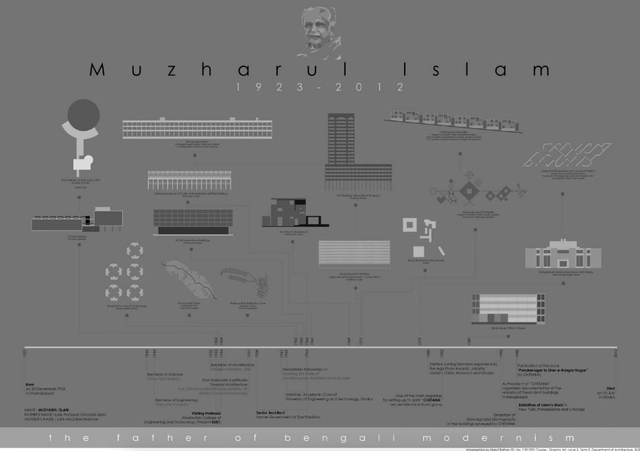
Maruf Raihan, founder of Bangladeshigraphic design firm Studio Biporit has created an infographic tracing the career of Muzharul Islam, widely recognized as the Master Architect of South Asian Modernism. The timeline begins with Islam's birth in Murshidabad in 1923, spanning from his first major project— the Central Library at the University of Dhaka, in 1953— to his last, the World Bank Office in Dhaka in 1987. Also documented are his numerous academic and architectural milestones, including extensive international publication and exhibition. Highly legible and amply illustrated, the infographic concludes with an entry noting Islam's death in 2012, at the age of 88. The full-sized graphic can be viewed here.
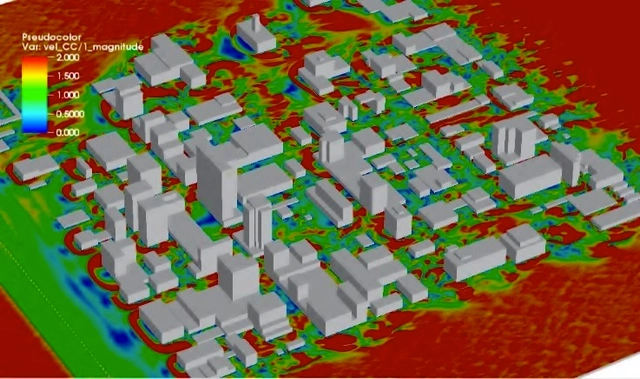
What possible use could architects have for a supercomputer? Well, of course it would be nice to produce that ultra-high-quality render in a matter of seconds rather than hours - but this post on the XSEDE blog recounts another use that is (arguably) much more important. XSEDE, an organization that helps researchers by providing them with access to supercomputers, has been working with a group from the University of Utah's Mechanical Engineering Department to simulate wind flow in cities, with the ultimate aim of providing architects and engineers with the tools to reduce wind tunneling effects, improve energy efficiency and lower pollution. Find out more about the research project here.
Ever wanted your very own Flatiron Building to sit on your mantelpiece? What about a Guggenheim for your desk, or a block of London apartments for your side table? Ittyblox, a Dutch company based in Den Bosch, is determined to make this dream a reality, 3D printing 1:1000 models of iconic buildings and city blocks. The models are printed in full color and designed to slot into modular baseplates, which can be arranged into complete cityscape dioramas. Buildings currently in production hail from London, Miami, New York, and Chicago, with a new building added each week.
Still in its early days, Ittyblox is seeking support on its Kickstarter page, here. Backers will receive limited edition postcards, renders, or building models, with rewards varying depending on donation amount. For more information, head to Ittyblox's website.
This April, non-profit organization Building Trust will host a Live Build Workshop in Laos, in partnership with the local Free the Bears Fund rescue centre. Participants are invited to work with the Laotian local community and Free the Bears staff to construct a design a sustainable merchandise store. It is envisioned that the store will allow Free the Bears to sell merchandise that will in turn fund their ongoing bear conservation projects in Laos and beyond.
Walk21 Vienna has launched its Walking Visionaries Awards, a challenge that invites people from around the globe to explore the many ways walking can be implemented into our daily lives to support sustainable and livable cities. Submit a solution now through April 30, 2015 for a chance to participate in the Walk21 Conference in Vienna, Austria in October 2015. 30 winners will receive a free ticket to the conference and given the chance to meet leading professionals and share their ideas with other visionaries through mediums such as lectures, round table discussions, and workshops. Additionally, the winners' solutions will be published in the conference documentation. Selected by both public opinion and a jury vote, winning submissions will be announced in June 2015. For more information or to submit an idea, visit walk21vienna.com.
As reported by the Architect's Newspaper, AIANY and The Center for Architecture have released a joint statement announcing the resignation of Executive Director of the AIANY Rick Bell, effective immediately. Bell helped to lead the AIA's New York Chapter to a period of success, with significant growth during his tenure. The statement explains:
“Rick Bell has offered, and the organization’s Board of Directors has accepted, his immediate resignation. An interim Executive Director will be named next week and a search to find a new Executive Director will also begin at that time.”