Award-winning architect Nicolas Valencia is the former Head of Editorial at ArchDaily, leading a global editorial team ---- @nicolasvalencia.cl | nicolasvalencia.cl | hellonicolasvalencia@gmail.com
Stores in Santiago, Chile, ran out of yeast in mid-March, such as it happened after the beginning of the social crisis in 2019. Given that Chile has the second-highest bread consumption per capita in the world, it would seem that Chileans handle uncertainty stocking up ingredients for bread making. Everybody wants to make bread, including myself.
Carlos Figueroa, under license CC BY-SA 4.0. ImageHeadquarters of the Ministry of Cultures, Arts, and Heritage of Chile in Valparaíso.
In the context of the global health emergency caused by the COVID-19 pandemic, Chile's Ministry of Cultures, Arts, and Heritage has launched a public survey for freelancers, workers, and representatives of the cultural and artistic sectors to assess the status of their organizations, centers, and agents across the country.
In times of quarantine, architects and designers are settling into a new remote working environment. In this process of implementing platforms and workflows to work from home, the risk of social isolation remains real, even for companies used to this environment, such as ArchDaily. As David Basulto, CEO of ArchDaily, wrote last week, the quarantine implies not just working online, but "staying connected and support each other."
In 2018 ArchDaily spoke in Madrid with Spanish architect Izaskun Chinchilla, who reflected on the challenges our cities face due to gender bias. "We live in cities built by and for men between 35 and 55 years old who drive and commute to work in a private car," the architect states.
According to the academic at UCL, ETSAM, and IE, private transport reveals one of the aspects demonstrating that we live in discriminatory and non-inclusive cities. "Men still drive twice as much as women, and in cities, all we have to do is step outside: they are designed by and for cars," she explains.
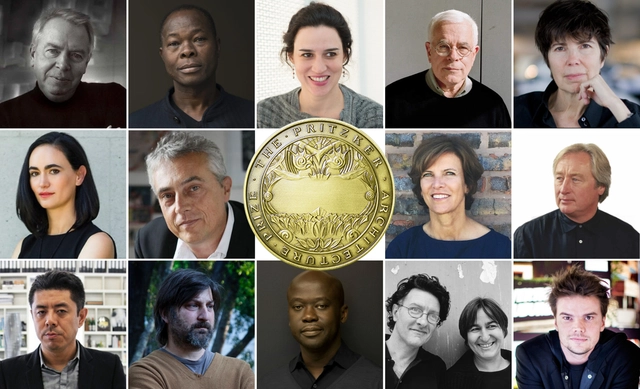
Pritzker Prize 2020 Laureates, Irish architects Yvonne Farrell and Shelley McNamara are known for their powerful yet delicate approaches. In this exclusive video for ArchDaily, Martha Thorne, executive director of the Pritzker Architecture Prize and Dean of IE School of Architecture and Design, shares some of the reasons why Grafton Architects has won the Pritzker Prize 2020.
Some of the potential winners of Pritzker Prize 2020, according to our readers in 2019 poll.. Image
Since the winner(s) of the Pritzker Prize 2020 will be announced this Tuesday, March 3, we have asked our readers who should win the most important award in the field of architecture.
The Hyatt Foundation has revealed the announcement date of the Pritzker Prize 2020 Winner. The most relevant recognition in architecture will be announced on Tuesday, March 3rd, 10 am EST.
For the third time since its founding in 2002, Mexico will host the Latin American Social Workshop of Architecture Students (TSL Mexico 2020). This edition is organized by the Latin American Coordinator of Architecture Students (CLEA Latin America), alongside CONEA Mexico and the Municipality of San Felipe del Progreso.
In 2018, Chilean researchers Teodoro Dannemann, Boris Sotomayor-Gómez, and Horacio Samaniego published the results of a study in Royal Society Open Science that, by anonymously tracking the "footprint" of 350,000 mobile phones during working hours, visualized urban segregation in Santiago.
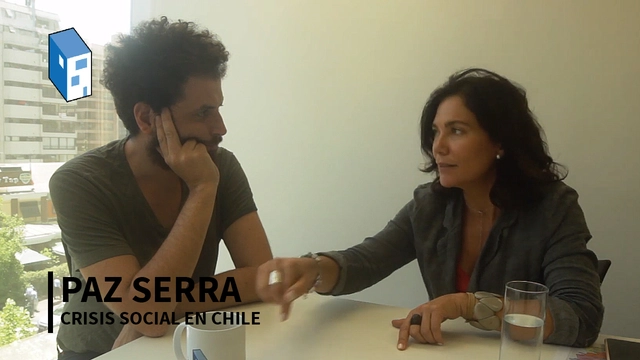
In light of the social crisis Chile is currently experiencing, ArchDaily speaks with urban and regional planning specialists to understand its impact on our cities. On this occasion, we speak with Isabel Serra, an architect graduated from the Pontificia Universidad Católica de Chile, specialized in public policy, a member of the City and Territory Laboratory (Laboratorio de Ciudad y Territorio) at Universidad Diego Portales, and an academic at the same institution.
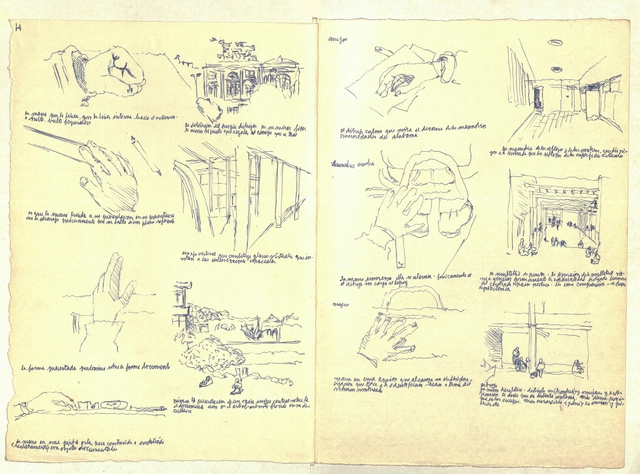
Alberto Cruz, one of the Chilean architects who re-founded the School of Architecture of the Pontificia Universidad Católica de Valparaíso and founder of Amereida and the subsequent Open City, left behind more than 2,200 notebooks and folders, 200 drawings in various techniques, formats, and mediums, and around a thousand documents when he passed away in 2013.
Five years earlier, his granddaughter, historian Sara Browne, began working with Cruz to catalog his private output. Today, this entire archive is part of the Alberto Cruz Covarrubias Foundation, a space dedicated to honoring the memory of the 1975 National Architecture Award recipient.
In this email conversation with Browne, the historian examines the challenges of conserving and digitizing this historic archive, while also reflecting on Cruz Covarrubias's legacy.
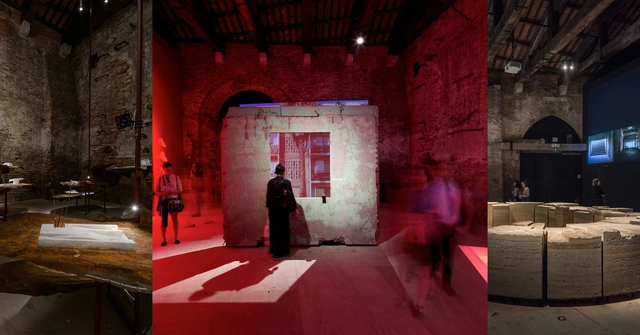
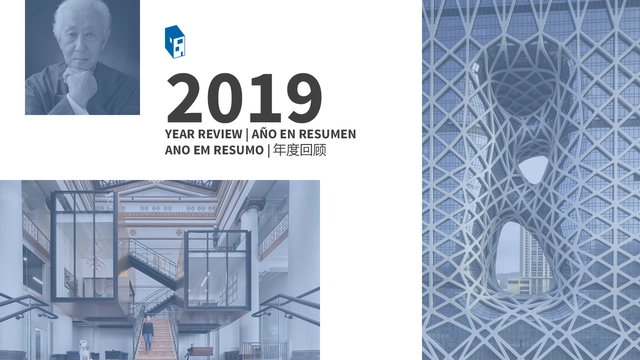
2019 has been a very fruitful year in architecture, unveiling projects, discourses, and careers that cover most of the multiple layers, interest, and fields related to this discipline, and highlighting how relevant it has become to our societies —from the Pritzker Prize 2019 awarded to Japanese architect Arata Isozaki to the revealed theme of the Venice Biennale 2020. Take a look at the main architectural milestones of this year across the globe.
Regardless of where you live or work or who you’re friends with, you usually move around the same neighbourhoods and streets of your city. It may be London, Santiago, Shanghai, or Moscow, but in any of these places, there are always districts you have never set a foot in. Have you ever considered how many ‘cities’ are within your own city?
A research article published in The Royal Society Open Science and signed by Chilean researchers utilizes big data to analyze and visualize urban segregation, delivering spatial tools that allow us to develop strategies in a city of many cities. "We know there are [social] bubbles in Santiago, Chile, and that therefore, there is segregation," says Teodoro Dannemann, co-author of the research paper The time geography of segregation during working hours, in a conversation with ArchDaily. “We know that each person explores only a small fraction of the city, which is basically the home-work trajectory. This implies that we only engage with a small group of citizens," he adds.
This article was originally published in ArchDaily en Español last October 30, twelve days after the social crisis in Chile escalated. Some ideas of the analysis may feel outdated since some structural reforms were recently announced, but the author decided to keep the original spirit of the piece.
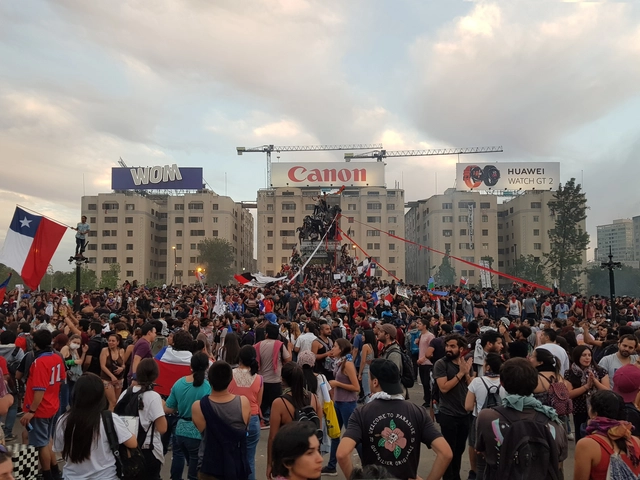
A 4 cent fair increase for the Metro in Santiago sparked mass fare-dodging protests in Chile starting on October 6. Alongside spontaneous street demonstrations, the protests spilled into widespread violence across Santiago during the following days until October 18. That day, the Metro network collapsed, the riots multiplied across the city, and looting and fires were out of control. That night, President Sebastian Piñera declared a state of emergency.