Award-winning architect Nicolas Valencia is the former Head of Editorial at ArchDaily, leading a global editorial team ---- @nicolasvalencia.cl | nicolasvalencia.cl | hellonicolasvalencia@gmail.com
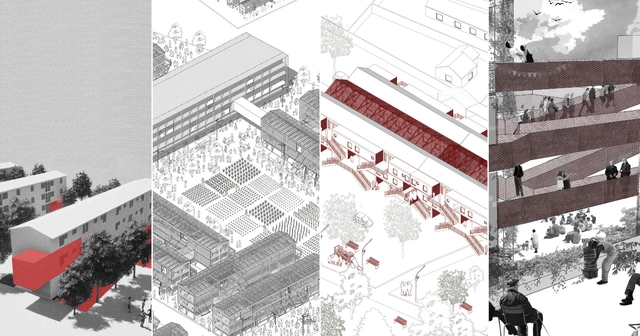
As part of Semana UTEM 2019—"The Project Within the Project"—21 teams from the Faculty of Architecture at the Metropolitan Technological University of Chile (UTEM) participated in the Domestic Pre-Existences workshop. The students proposed interventions for the historic "C Blocks" in Santiago's pericenter—residential complexes designed by the state Housing and Urban Development Service (SERVIU) between 1986 and 1996.
Accessibility is often approached as a field related to disability, whether physical or mental. When it comes to architectural design, it always comes up as a peripheral consideration of the project and not as something fundamental. However, there are other barriers.
In this edition of Editor's Talk, editors from ArchDaily Brazil share their thoughts on what they understand as accessibility and whether it's possible to create a neutral architecture.
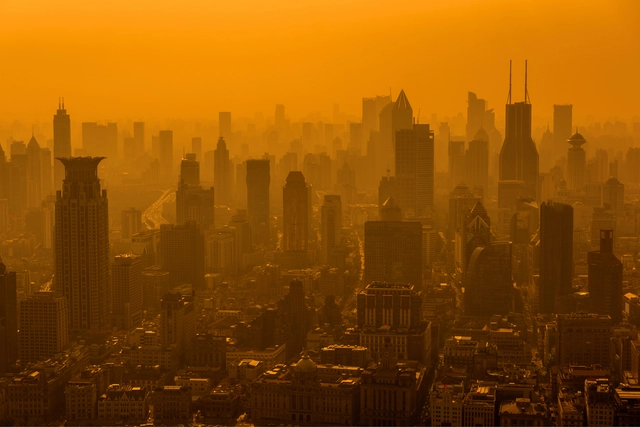
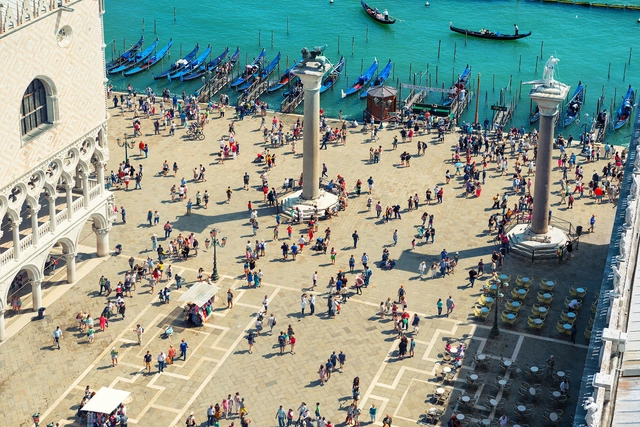
Everyone wants to travel the world, whether it's to meet new people, taste new food, or visit new places. Travel is consequently an extremely lucrative industry, but tourist destinations are getting more crowded than ever and associated pollution emissions are only worsening the climate emergency.
Why do we travel? In this edition of Editor's Talk, four editors from ArchDaily based in Lebanon, the United States, and Chile share their thoughts on the meaning of travel, and why tourists enjoying a beach in a location like Brazil should also care about the cities they visit.
A 301,400-square-feet extension for a shopping center and two 12-story buildings will be the first project by Foster + Partners in Chile, according to local newspaper El Mercurio.
Planned to be built in San Joaquin, a predominantly industrial, working-class neighborhood in Santiago, Chile, the project will be made for real estate company Grupo Patio.
Inspired by the successful Tejiendo la Calle initiative—winner of the Design and Citizen Participation Award at the 2016 Ibero-American Design Biennial—Supertrama is a public art program in the autonomous community of Extremadura, Spain, focused on rural areas. In municipalities with fewer than 5,000 inhabitants, residents collaborate with architects, artists, and other creative professionals interested in public art to transform their local public spaces.
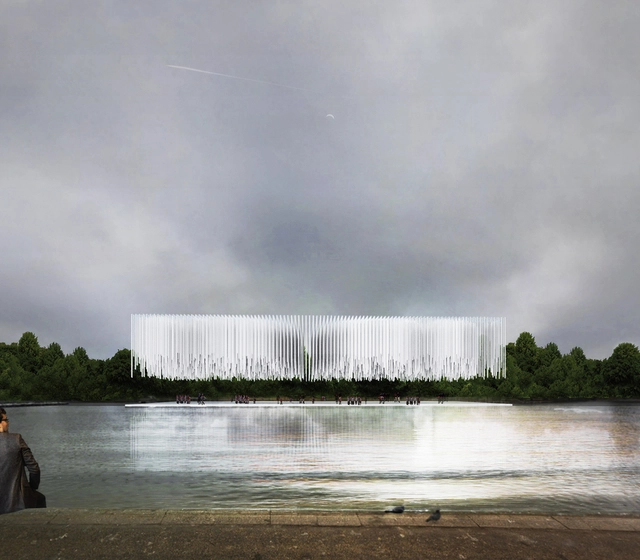
After receiving 94 proposals from 29 different countries, the Hyde Park Music Pavilion (HPMP) international ideas competition, organized by arquideas, has announced the winning projects. Hyde Park is one of the largest parks in London, England, and one of the city's nine Royal Parks, three of which form a chain from the entrance of Kensington Palace, through Kensington Gardens and Hyde Park, to Buckingham Palace.
Lahoud, who is also Dean of the School of Architecture at the Royal College of Art, has defined the theme for the inaugural edition —Rights of Future Generations— as an instance to "question how inheritance, legacy, and the state of the environment are passed from one generation to the next, how present decisions have long-term intergenerational consequences, and how other expressions of co-existence, including indigenous ones, might challenge dominant western perspectives."
Resilience has become increasingly common in our vocabulary when we talk about people, buildings, cities or even whole societies overcoming all kind of problems. In fact, Google searches related to resilience have continued to grow since 2004 in English, Spanish, and Portuguese.
During the first half of this year, the XXI Chile Biennial of Architecture and Urbanism invited students, architects, firms, institutions, publishers, and collectives to participate in one of the most important architectural events in Chile and Latin America, which this year will focus on proposals geared toward the "everyday" public.
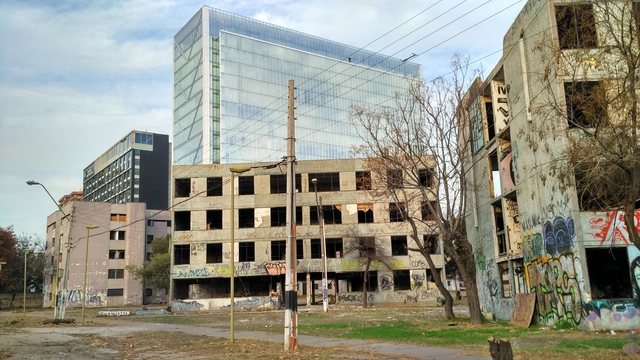
Almost exactly one year after being declared a historic monument, the historic Villa San Luis in Santiago, Chile, is back in the public eye. According to digital news outlet El Mostrador, Chile's National Monuments Council (CMN) overturned the designation on June 26, authorizing the demolition of the two remaining blocks, which survived the progressive dismantling of the housing complex since the 1990s.
China seems to be at the peak of a refurbishment fever. Not only hutongs in historic downtowns, but abandoned industrial factories are becoming new tech or cultural hubs, and even buildings in the risk of collapse are refurbished to extend their lifespan. Why is this happening? Who is investing? How could this happen in a country where you cannot buy properties?
In this edition of Editor's Talk, our editors from ArchDaily China share their thoughts on how in a fast-paced development process, such as the one China is going through, there is a refurbishment fever in its biggest cities.
This year, 2019, marks 170 years since French architect Claude Brunet de Baines established the first architecture chair in Chile, which would eventually become the School of Architecture at the University of Chile. Fermín Vivaceta, designer of the Central Market and co-designer of the university's central campus building (Casa Central), was part of its inaugural graduating class.
This year also marks the 75th anniversary of the founding of the university's Faculty of Architecture and Urbanism (FAU). To celebrate this double milestone, Dean Manuel Amaya—through the Strategic Projects Center directed by Guillermo Crovari—commissioned architect Domingo Arancibia to design a pavilion commemorating these two historic landmarks in Chilean architectural education.
Vienna, Austria has been ranked as the city with the best quality of life in the world for ten consecutive years. The ranking made by multinational consultancy Mercer is dominated by Western European cities in the highest positions, while Vancouver, Canada reached third place, becoming the highest-ranking city in North America for the last 10 years.
Miguel Eyquem walks with one hand resting on his bag, bringing a handkerchief to his nose. He says he has a cold and hopes it will not be an obstacle to our conversation. Like all those who embody history, Eyquem's ideas race ahead of him. He walks, speaks, stops, thinks, speaks again, changes the subject, and keeps walking.
Many were surprised that this edition of BBConstrumat in Barcelona lacked carpeting across its 34,000-square-meter exhibition space, or that the schedule of events was only available via the event's app. As climate change—or rather, the climate emergency—becomes irreversible and adaptation demands more drastic measures, the construction sector is also feeling the pressure to reinvent itself.
In its most recent edition, BBConstrumat, Spain's largest construction trade fair, underscored its commitment to supporting a new model in the construction industry—one centered on the circular economy and sustainable development.
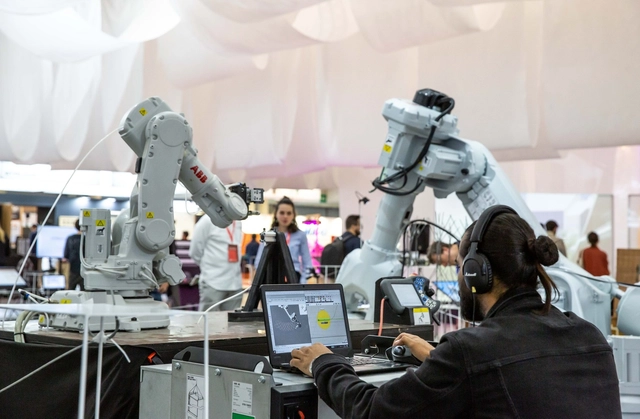
Among the event's key highlights, Ricardo Devesa—editor-in-chief at Actar and urbanNext and professor at IAAC—curated the refreshing congress Logics of Innovation and Change, where presentations and discussions revolved around global challenges such as climate change, robotics, resilience, migration, and new global narratives.
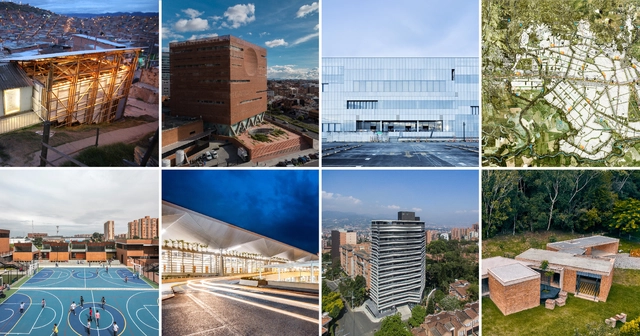
The XI Ibero-American Biennial of Architecture and Urbanism (XI BIAU) recently announced the 210 projects selected for its upcoming edition, which will be held for the first time in Asunción this October.
.jpg?1566510800&format=webp&width=640&height=580)