Nicolás Valencia

Award-winning architect Nicolas Valencia is the former Head of Editorial at ArchDaily, leading a global editorial team ---- @nicolasvalencia.cl | nicolasvalencia.cl | hellonicolasvalencia@gmail.com

BROWSE ALL FROM THIS AUTHOR HERE
↓

50 AutoCAD Commands You Should Know

Subscriber Access | 

After spending countless hours in front of AutoCAD working on a project, you’re bound to have your own set of favorite commands to standardize a few steps. We also bet that you don’t have them all memorized or often forget them. To help you remember, we've made a list of 50 commands that can help you speed up your work game, discover new shortcuts, or come in use as a handy tool for when you forget what the command you need is called.

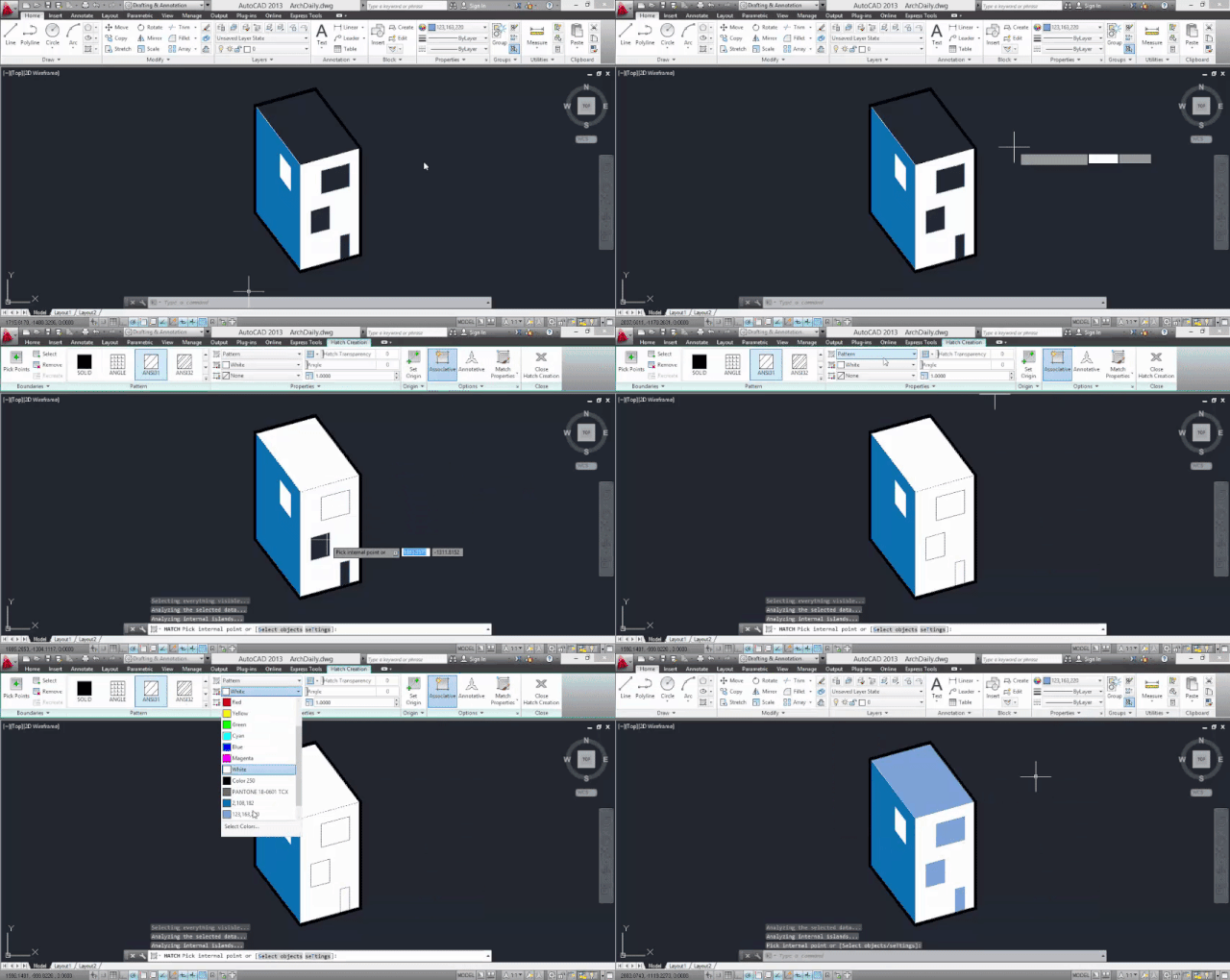
The following listing was developed and corroborated by our team for the 2013, 2014 and 2015 versions of AutoCAD in English. We also prepared a series of GIFs to visualize some of the trickier ones.

When you’ve finished reading, we would love to know what your favorite commands are (including those that we didn’t include). We will use your input to help us update the article!
These are the winners of the second edition of the 'Proyectar a Conciencia' STO competition.

Subscriber Access | 

Do you have ideas on how to improve existing social housing to transform environmental conditions? That was the question posed by Proyectar a Conciencia 2.0, a competition open to students and faculty throughout Chile, aiming to intervene in the Family Heritage Protection Program (PPPF) of the Chilean Ministry of Housing and Urbanism (MINVU).

Why Arata Isozaki won the Pritzker Prize 2019

Subscriber Access | 

Named 2019 Pritzker Prize Laureate, Japanese architect Arata Isozaki is incredibly prolific and influential among his contemporaries. Deeply aligned with the period of change and reinvention that Japan experimented after Second World War and Allied Occupation, Isozaki has developed a solid career on a truly global scale, avoiding being labeled in a specific style throughout his life.

BD Bacatá will resume construction in Bogotá and is expected to open in 2020

Construction of Colombia's second-tallest skyscraper, BD Bacatá, is finally resuming following an agreement signed between BD Promotores, Prabyc Aluman, and Acción Fiduciaria. The deal involves a total investment of 48 billion Colombian pesos ($15.5 million), according to reports by local media outlets Portafolio and W Radio.

Kópera, an opera written by architects, explores new ways of city-making in Madrid

Subscriber Access | 

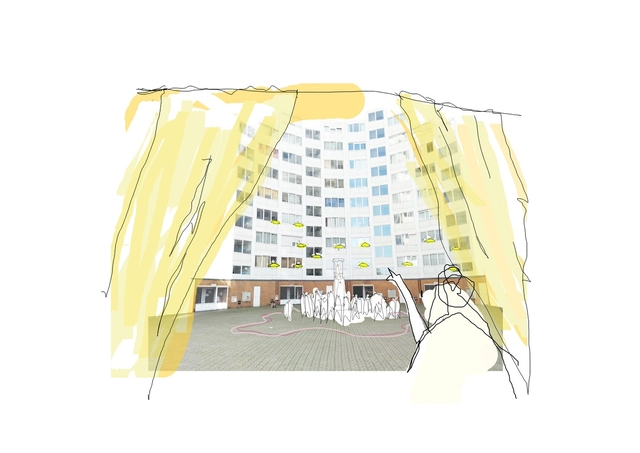
A spotlight illuminates a window opening in a Madrid building. A woman looks out. "I am a young, beautiful dove, full of hope," she declaims before breaking into Volare, the 1980s flamenco hit by the Gipsy Kings. This is one of the scenes from Kópera, the dystopian opera written by architects and neighborhood organizations for the first edition of Imagina Madrid.

In 2017, the experimental public art program of the Madrid City Council, coordinated by Intermediae, launched an open call to explore new forms of cultural intervention in the Spanish capital's public space. Out of 175 submissions, an international jury selected ideas, merged teams, reassigned proposals, and designated nine districts on Madrid's periphery. 

Kópera, an opera written by architects, explores new ways of city-making in Madrid - Imagen 4 de 4Kópera, an opera written by architects, explores new ways of city-making in Madrid - Imagen 9 de 4Kópera, an opera written by architects, explores new ways of city-making in Madrid - Imagen 12 de 4Kópera, an opera written by architects, explores new ways of city-making in Madrid - Imagen 16 de 4Kópera, an opera written by architects, explores new ways of city-making in Madrid - More Images+ 15

Why Keep Drawing When Digital Tools Deliver Hyperrealistic Images?

Starting this month, ArchDaily has introduced monthly themes that we’ll explore in our stories, posts and projects. We began this month with Architectural Representation: from Archigram to Instagram; from napkins sketching to real-time-sync VR models; from academic lectures to storytellers.

It isn’t particularly novel or groundbreaking to say that the internet, social media, and design apps have challeged the relation between representation and building. A year ago we predicted that "this is just the beginning of a new stage of negotiation between the cold precision of technology and the expressive quality inherent in architecture". But, is it? Would you say digital tools are betraying creativity? This is an older dilemma than you think.

In this new edition of our Editor's Talk, four editors and curators at ArchDaily discuss drawings as pieces of art, posit why nobody cares about telephone poles on renders and explore how the building itself is becoming a type of representation.

Why Keep Drawing When Digital Tools Deliver Hyperrealistic Images? - More Images+ 4

9 Lessons For Post-Architecture-School Survival

Subscriber Access | 

We’ve already talked about this. You’re preparing your final project (or thesis project). You’ve gone over everything in your head a thousand times; the presentation to the panel, your project, your model, your memory, your words. You go ahead with it, but think you'll be lousy. Then you think just the opposite, you will be successful and it will all be worth it. Then everything repeats itself and you want to call it quits.  You don’t know when this roller coaster is going to end. 

Until the day arrives. You present your project. Explain your ideas. The committee asks you questions. You answer. You realize you know more than you thought you did and that none of the scenarios you imaged over the past year got even close to what really happened in the exam. The committee whisper amongst themselves. The presentation ends and they ask you to leave for a while. Outside you wait an eternity, the minutes crawling slowly. Come in, please. The commission recites a brief introduction and you can’t tell whether you were right or wrong. The commission gets to the point.

You passed! Congratulations, you are now their new colleague and they all congratulate you on your achievement. The joy washes over you despite the fatigue that you’ve dragging around with you. The adrenaline stops pumping. You spend weeks or months taking a much-deserved break. You begin to wonder: Now what?

The university, the institution that molded you into a professional (perhaps even more so than you would have liked), hands you the diploma and now you face the job market for the first time (that is if you haven’t worked before). Before leaving and defining your own markers for personal success (success is no longer measured with grades or academic evaluations), we share 9 lessons to face the world now that you're an architect.

Will Automation Affect Architects? Readers Trust Their Creativity (and Adapting Quickly)

Subscriber Access | 

Automation has become a major talking point—not only for its potential to replace countless low-income or low-skilled jobs, but also for its capacity to render entire professional careers obsolete through artificial intelligence and machine learning.

At ArchDaily, we opened the floor to this discussion in 2017 with an in-depth report on the subject, and we recently turned to our Instagram audience to ask what they think about automation. Do they believe it will affect them? Our readers seem confident: some argue that architecture is an art—or rather, a discipline centered on emotions—even if they overlook the standardization and modulation processes already established in the real estate market. According to those who responded to our poll, this emotional dimension inherent to architecture is precisely what makes it harder to automate.

URLO Studio, winner of the master plan ideas competition for Quito's southern railway axis

Subscriber Access | 

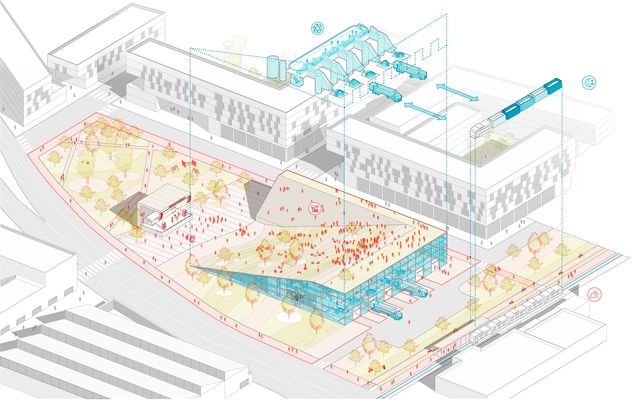
Ecuadorian firm URLO Studio has been selected as the winner of the ideas competition for the southern articulating axis of Quito, a contest aimed at urban renewal in the Ecuadorian capital through the development of micro-centralities along the 13-kilometer tourist route.

Fernando Pérez Oyarzún, New Director of the Museum of Fine Arts of Chile

Chilean architect and academic Fernando Pérez Oyarzún has been named the new director of the Museum of Fine Arts of Chile. The announcement by the Ministry of Cultures concludes the open call organized by the National Cultural Heritage Service, which drew 58 applicants.

11 Architecture Biennials to Pay Attention to in 2019

Venice captured all architects' hearts and minds last year, but 2019 —a Venice-less year— will be still a year full of biennials and festivals around the world (many of which we're proud to be official partners of). The excitement is already building. 

From Chicago's new approaches to the traditional practices to Shenzhen's future technology prospect; from Oslo's degrowth agenda to Brazil's focus on everyday architecture, it's time to start saving dates for the following biennials around the world!

These are the emerging practices selected for the 2019 Latin American Architecture Biennial.

Aiming to internationalize emerging architectural production in Latin America, the Latin American Architecture Biennale (BAL 2019) has announced the practices selected to participate in the next edition of the event, which will take place in September 2019 in Pamplona, Spain.

Who has won the Ibero-American Prize for Architecture and Urbanism?

Subscriber Access | 

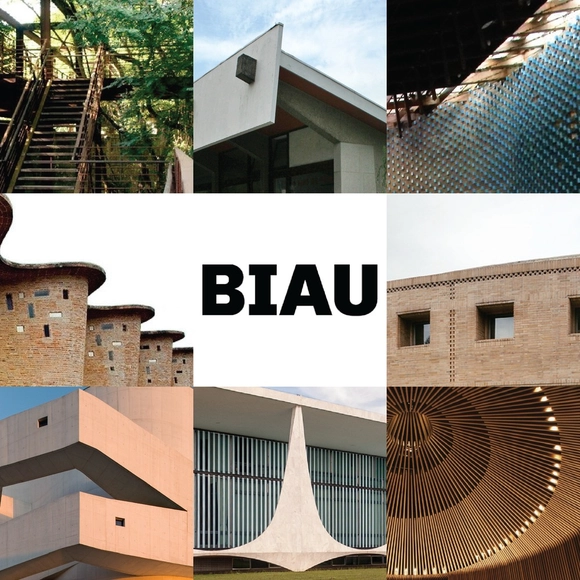
In each edition of the Ibero-American Biennial of Architecture and Urbanism (BIAU), the event honors masters of Ibero-American architecture with the Ibero-American Architecture and Urbanism Prize.

The Ibero-American Architecture and Urbanism Prize recognizes work "directly related to architecture and/or urbanism, highlighting its aesthetic, functional, technical, social, economic, and environmental aspects. This may include built work, planning, heritage conservation and restoration, knowledge production, or social commitment," as outlined in the competition guidelines.

3rd Richard H. Driehaus Architecture Competition seeks to preserve three historic cities in Spain

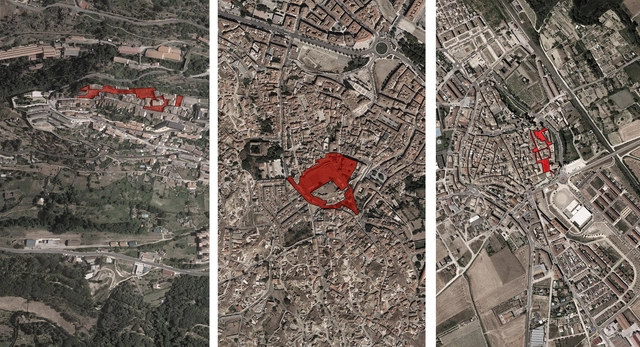
The second phase of the 3rd Richard H. Driehaus Architecture Competition is now underway. This international contest aims to "promote the practice of architecture and urbanism that preserves and continues local traditions" in the Spanish cities of Guadix (Granada), Olite (Navarra), and Béjar (Salamanca).

The Graduation Projects Nominated for the Archiprix International 2019

As an initiative of the Archiprix Foundation, Archiprix International 2019 recently invited all schools worldwide in Architecture, Urbanism and Landscape Architecture to select and submit their best graduation project. "This graduation work presents a wealth of ideas for a broad range of contemporary and future challenges", explains the organization on its website.

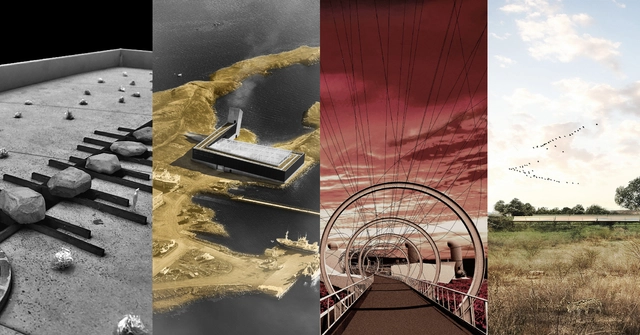
After analyzing all the submissions sent by universities from more than 100 countries, the jury —Francisco Díaz, Rosetta Elkin, Marta Moreira, Martino Tattara, and Sam Jacoby— nominated 22 projects for the awards in a special session held in Santiago, Chile. The winners of the awards will be announced at the Award ceremony on May the 3rd 2019 in the same city.

The complete list (in alphabetical order) of the projects nominated for the awards, below:

These are the 10 universities selected for Construye Solar 2019

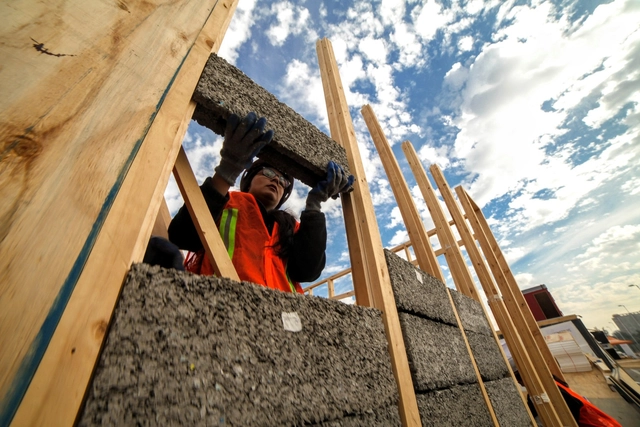
Ten sustainable social housing projects from Chilean universities have qualified to be built for the third edition of the Construye Solar competition, and will be exhibited in Santiago in October 2019.

Organized by La Ruta Solar and sponsored by the Technological Center for Innovation in Construction (CTec), the Construye Solar initiative aims to "generate new capabilities within the sustainable construction sector in Latin America and raise public awareness of the economic, environmental, and social benefits offered by eco-friendly housing," as noted by the organizers.

All in Line: Discover the 14 projects from the EA USS workshop with Kersten Geers in Chile

Subscriber Access | 

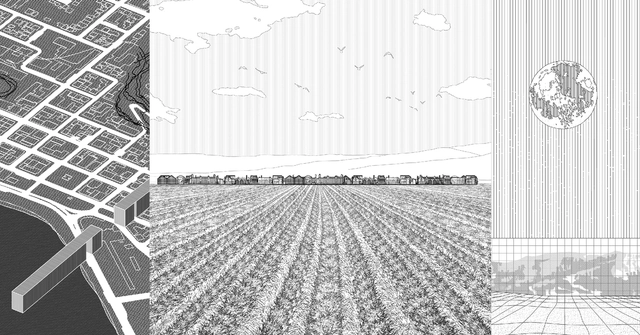
The third edition of the EA USS Workshop, organized by the School of Architecture at Universidad San Sebastián (Chile), featured Belgian architect Kersten Geers, founding partner of OFFICE KGDVS. In addition to participating in a series of discussions with workshop attendees, Geers held a public conversation with Enrique Walker and delivered a keynote lecture presenting his work and architectural reflections.

The 2018 edition brought together 14 teams, 11 of which represented domestic architecture schools, while 3 came from international institutions in Peru, Argentina, and Costa Rica—totaling 96 participants, including students and faculty advisors. To foster the development of projects capable of driving debate, each day of the workshop addressed a distinct theme, beginning with strategies led by Ernesto Silva, Director of the Santiago campus of EA USS, followed by the materialization of the project, led by Albert Tidy, Dean of the USS Faculty of Architecture.

To conclude, on Friday, October 26, an exhibition of the work produced by the teams was held, alongside an engaging conversation between Enrique Walker and Kersten Geers. The event wrapped up with a social gathering to celebrate the meeting of the schools and the high quality of the projects.

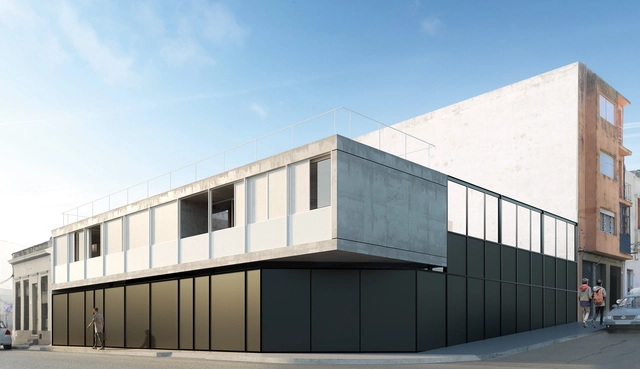
These are the winning projects of the 2018 Rifa Housing Competition in Uruguay

Held since 1949, the Raffle House Competition is a historic contest that has given new generations of architects at the School of Architecture, Design, and Urbanism (FADU – UdelaR) the opportunity to design and build a real project in Uruguay. The winning design becomes one of the prizes of the Architecture Raffle, an initiative through which each graduating class from the school takes a trip around the world to experience the best of global architecture.

This annual competition is open to all students at the Universidad de la República's School of Architecture, "contributing to collective construction and serving as a fundamental academic tool in the education of all students in general, and the competition participants in particular." For this edition, the brief was based on the concept of a sustainable city, utilizing existing infrastructure and connectivity while enhancing the landscape, urban, historical, and cultural heritage of Montevideo's Rambla Sur area.