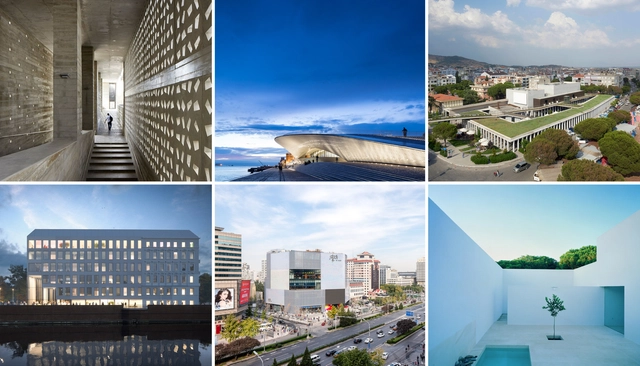
Guilherme Essvein de Almeida's doctoral dissertation presents an analysis of two major works of contemporary architecture: the Casa da Música in Porto, designed by Rem Koolhaas, and the Cidade das Artes in Rio de Janeiro, designed by Christian de Portzamparc. Defended in 2018, the dissertation was advised by Prof. Dr. Carlos Eduardo Dias Comas as part of the graduate program at the Federal University of Rio Grande do Sul. Read the author's abstract and find the link to the full dissertation below.
https://www.archdaily.com/1122173/casa-da-musica-and-cidade-das-artes-towards-monumentalityPedro Vada
However, just as the selection of the Pritzker Prize can shape public debate, it is also influenced by public opinion. Consequently, a month ago we asked our Ibero-American readers from ArchDaily en Español and ArchDaily Brasil to share their thoughts on the potential winners. We conducted a poll on who should win the 2019 Pritzker Prize, offering a selection of architects we thought stood a chance, along with the freedom to nominate their own candidates—always keeping in mind not who is likely to win, but who should win.
https://www.archdaily.com/1120841/our-readers-suggest-who-should-win-the-2019-pritzker-prizeArchDaily Team
The Mirror Mind Without Time / RSAA/Büro Ziyu Zhuang, Shenzhen, China. Image
Enquanto meio de representação da arquitetura, a fotografia apresenta qualidades indiscutíveis. Com ela, é possível apresentar a um público distante obras erguidas em qualquer lugar do mundo, de vistas gerais a espaços internos e pormenores construtivos - ampliando o alcance e, de certo modo, o acesso à arquitetura.
Entretanto, como qualquer outra forma de representação, não é infalível. Na medida que avanços tecnológicos permitem fazer imagens cada vez mais bem definidas e softwares de edição oferecem ferramentas para retocar e, por vezes, alterar aspectos substanciais do espaço construído, a fotografia, por sua própria natureza, carece de meios para transmitir aspectos sensoriais e táteis da arquitetura. Não é possível - ao menos não satisfatoriamente - experienciar as texturas, sons, temperatura e cheiros dos espaços através de imagens estáticas.
Materials, products, and construction systems are constantly evolving and following new technologies, discoveries, and market trends. The question is: are we, as architects, evolving with them? We have heard about robots working on construction sites, responsive and intelligent materials and the continued rise of 3D printing, but is it all white noise at the moment of starting a new design? More importantly, could these new systems continue to progress without sensitively and effectively taking people's quality of life into account?
How should we use materials—both in their traditional forms and in their future conceptions—so that our projects are making relevant contributions to the way we are inhabiting our planet?
In order to evolve, we have to know how, so it' s worth beginning a discussion around these issues.
While the next edition of the Venice Biennale for Architecture is still more than a year away, the Art Biennale sister event is right around the corner. Ghana, for whom this will be their first ever foray into the major art event, has announced their pavilion lineup and designer - none other than Sir David Adjaye.
https://www.archdaily.com/912301/david-adjaye-to-design-ghanas-first-ever-pavilion-at-the-2019-venice-art-biennaleKatherine Allen
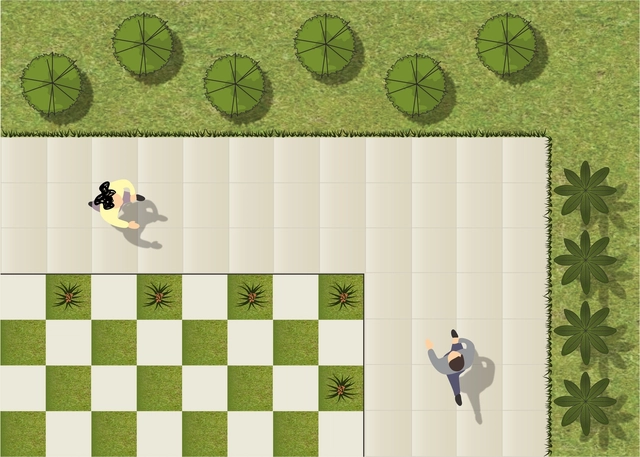
Just like the architectural elements that make up built space - floor, walls and ceilings - natural elements are also capable of creating spaces in large-, medium- and small-scale areas, in places like public and residential gardens.
According to Brazilian landscape architect Benedito Abbud, "Landscaping is the only artistic expression in which the five senses of the human being participate. While architecture, painting, sculpture and other visual arts use and abuse only the vision, landscaping also involves smell, hearing, taste and touch, providing a rich sensory experience by adding the most diverse and complete perceptual experiences. The more a garden can sharpen all the senses, the better it fulfills its role. " [1]
Below we list some of the key elements of landscape planning and design. See the principles and learn why you should never randomize the placement trees!
When we think of energy from renewable sources, the first that probably come to mind are solar and wind. And decentralizing power generation is something that has inspired engineers and inventors from all over the world.
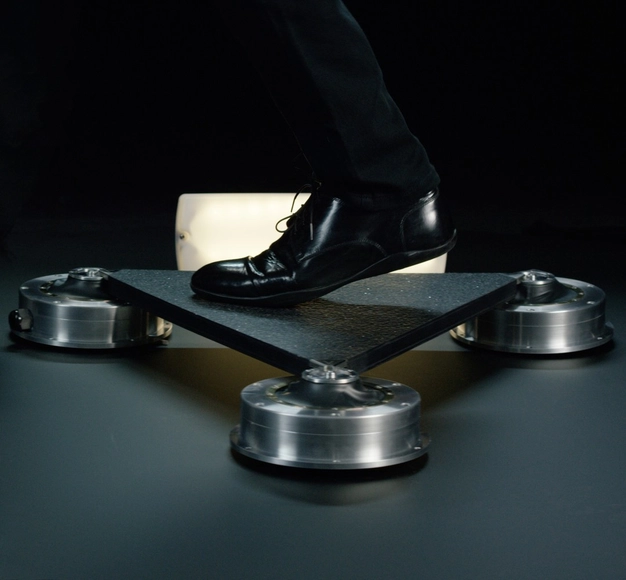
So what about turning the mechanical energy generated when people walk into electrical energy? It can be done thanks to technology developed by Laurence Kemball-Cook,founder of Pavegen. Using platforms inserted within sidewalks Pavegen converts steps into electric power (while also generating data and even rewards). But before you go out there feeling like Michael Jackson in Billie Jean, you should understand how this system works.
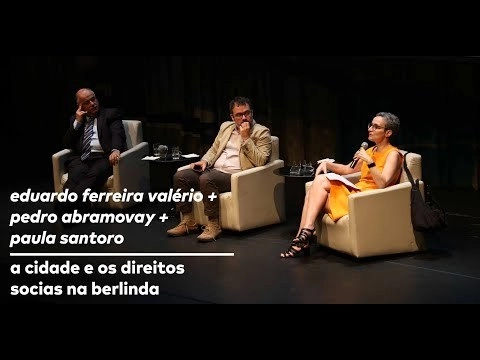
Through its Seminar on Culture and Contemporary Reality, Escola da Cidade invited Pedro Abramovay, Eduardo Ferreira Valério, and Paula Santoro to discuss social rights and the city. This topic has become increasingly urgent and sensitive when discussing any possibility of a democratic and empathetic city. In this video, the panel discusses some of the historical roots and contemporary issues surrounding this theme.
https://www.archdaily.com/1121356/the-city-and-social-rights-under-scrutinyPedro Vada
In a profession as complex as architecture, resistance to change is common. Adopting new technology brings new challenges. Nevertheless, as technology moves forward, architecture practices keep pace with it to stay relevant.
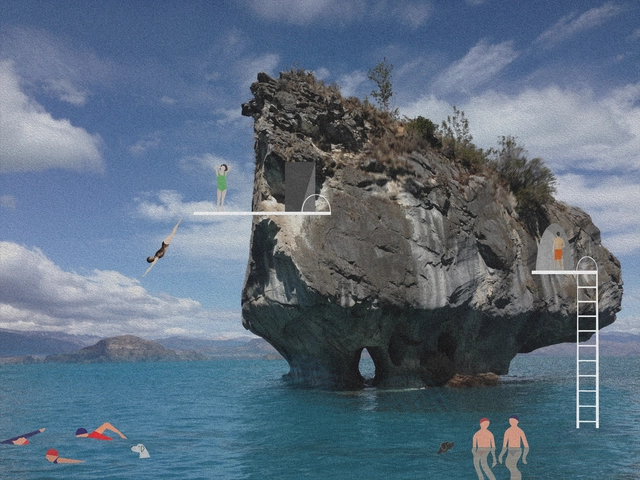
Global Warming is causing a series of changes in our climate, and as a result, in our landscape. Successful and exemplary Landscape Architecture delivers proposals that tackle these environmental changes in two areas of development: Design and Architectural Representation.
As industry has shifted over the past century, in format, location, and type, the manufacturing and industrial spaces scattered across the western world have been repurposed. You have no doubt seen these structures, though perhaps without realizing. The large windows, high ceilings, and open floor plans optimized for factory work now mark the territory of the “creative class”. Such spaces have been disproportionately appropriated by creative industries such as arts and architecture; think of Herzog + de Meuron’s renovation of the Tate Modern (from a former power station) or the recent collaborative transformation of a locomotive yard into a library in the Netherlands.
https://www.archdaily.com/911719/lacaton-and-vassals-frac-dunkerque-is-an-architectural-echo-both-in-form-and-in-conceptKatherine Allen
The future of architecture is urban; there is no longer any doubt about it. Projections indicate that by 2050—that is, in just over 30 years—75% of the world's population will live in cities, while in Brazil this figure will exceed 90%. However, our discipline must concern itself with the quality of life for everyone; therefore, projects in rural contexts will continue to be on the agenda of architects worldwide.
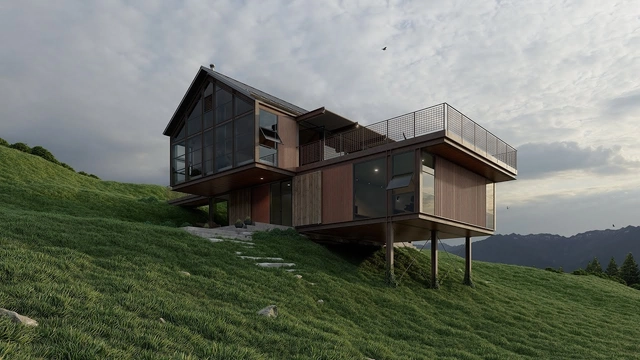
Below, we present a selection of residential projects built in the countryside. These Brazilian houses, nestled in rural and pastoral landscapes, are designed for the daily lives of their inhabitants or as temporary retreats to decompress from urban life. One way or another, they all share a single objective: to open themselves up to their bucolic surroundings.
Starting this month, ArchDaily has introduced monthly themes that we’ll explore in our stories, posts and projects. We began this month with Architectural Representation: from Archigram to Instagram; from napkins sketching to real-time-sync VR models; from academic lectures to storytellers.
It isn’t particularly novel or groundbreaking to say that the internet, social media, and design apps have challeged the relation between representation and building. A year ago we predicted that "this is just the beginning of a new stage of negotiation between the cold precision of technology and the expressive quality inherent in architecture". But, is it? Would you say digital tools are betraying creativity? This is an older dilemma than you think.
In this new edition of our Editor's Talk, four editors and curators at ArchDaily discuss drawings as pieces of art, posit why nobody cares about telephone poles on renders and explore how the building itself is becoming a type of representation.
Internationally renowned for her avant-garde search for architectural proposals that reflect modern living, Zaha Hadid made abstract topographical studies for many of her projects, intervening with fluid, flexible and expressive works that evoke the dynamism of contemporary urban life.
In order to further knowledge of her creative process and the development of her professional projects, here we have made a historic selection of her paintings which expand the field of architectural exploration through abstract exercises in three dimensions. These artistic works propose a new and different world view, questioning the physical constraints of design, and showing the creative underpinnings of her career.
YACademy launches the second edition of Architecture for Heritage, a high-level training course offering 8 scholarships and internships for internationally-renowned architectural firms.
106 hours of lessons, a 32-hour workshop and internships/lectures held by internationally-renowned architectural firms like OMA, Mccullough Mulvin Architects, Aires Mateus E Associados, Claudio Nardi Architects, and Carrilho Da Graça Arquitectos.
https://www.archdaily.com/912077/architecture-for-heritage-yacademys-course-offers-8-scholarships-and-internships-in-internationally-renowned-firmsSponsored Post
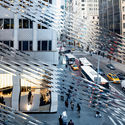
Courtesy Nicholas Calcott, via Metropolis Magazine
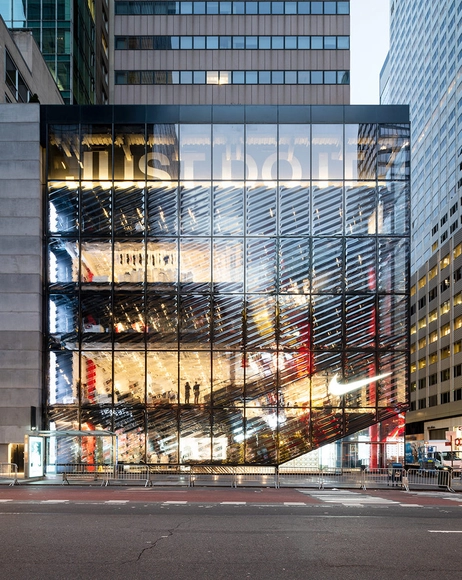
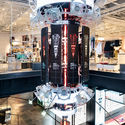
Nike's New York flagship store, primely located on Fifth Avenue, is perhaps the closest thing to a temple in the digital age. At a massive 68,000 square feet, it commands attention and symbolically dwarfs even its skyscraper surroundings. The exterior facade features a grid of undulating glass that casts glimmering shadows both inside and out. Inside, a tractor-beam type installation hangs from the ceiling, giving the space-age flavor. There's no set ritual or tradition like in the temples of old, but sneakerheads might certainly feel they've found their heaven on earth.
Le Corbusier - Ronchamp. Image Courtesy of Atelier RZLBD
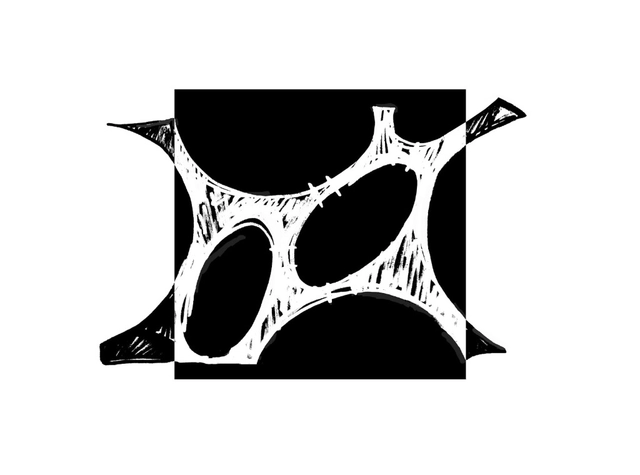
The history of architectural drawings is as old as architecture itself and has been developed through the architectural timeline. Once diagrams, they were as big as Ziggurats and Pyramids and drawn at the scale of one to one on site. Now in contrast, drawings are practically nonexistent as tangible objects. They only exist as digital data saved in virtual space. Regardless of their old history and drastic evolution, one single fact about them has never changed; they were and still are a medium: an intermediate device that visualizes an idea and goes through a journey of adventures before being realized. And yet, there is always a risk that the same set of drawings by an architect may be translated into different architectural interpretations.
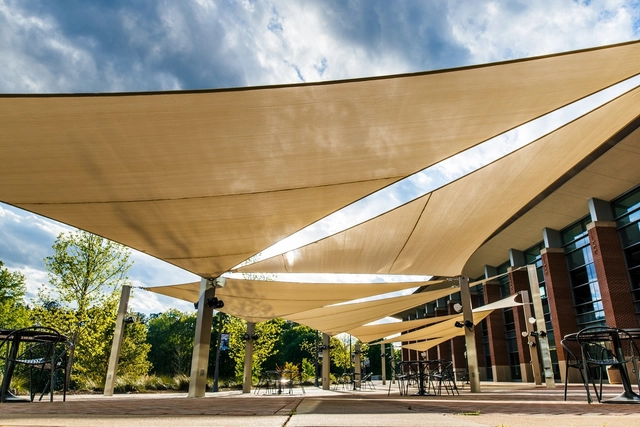
Superior Shade at University of West Georgia. Image Courtesy of Superior Recreational Products
In any successful architectural project, it is essential to provide users with a comfortable outdoor space. At any time of the year, modular shade structures can create spaces that protect from wind, dust, sun, rain, snow, and noise in a light, flexible and aesthetically pleasing way.
With this in mind, what should we look for when choosing shade structures for outdoor spaces? Below, we've provided you with Superior Recreational Products's top recommendations.
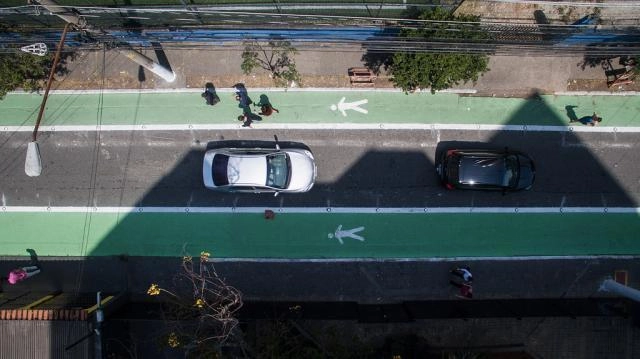
Joel Carlos Borges Street, in São Paulo. Photo: Pedro Mascaro/WRI Brasil
The latest Global Status Report on Road Safety from the World Health Organization (WHO) showed that over the last 15 years, the traffic mortality rate has remained stable relative to the world's population. While the fact that these numbers have not increased might sound positive, it is important to remember that this still represents the death of 1.35 million people annually, alongside 50 million injuries.
https://www.archdaily.com/1121788/traffic-deaths-are-not-decreasing-complete-streets-can-helpWRI Brasil
Selected works from six of the nine new honorary AIA Fellows.
More than 100 American architects and nine international practitioners have been elevated to the American Institute of ArchitectsCollege of Fellows. Fellowship in the AIA is a prestigious honor conferred upon those who have lasting contributions to the profession. While primarily a national award, the AIA also awards fellowship to a number of international designers each year.
https://www.archdaily.com/912052/aia-elevates-new-members-and-nine-international-honorary-members-to-the-college-of-fellowsKatherine Allen
Perspectiva. Image Cortesía de Arquitectos Rodrigo Schiavoni y Adán Yenerich
Rodrigo Schiavoni and Adán Yenerich, founding partners of SY arquitectos, have won the open competition organized as part of the eighth International Congress of the Spanish Language, held in the city of Córdoba from March 27 to 30, 2019. This competition called for the design of an urban-scale commemorative landmark to serve as a civic symbol.
Organized by the Córdoba Province Chamber of Tourism and open to artists, designers, and architects, this interdisciplinary competition called for the creation of urban-scale pieces to intervene in the public space of a prominent sector of the city: a portion of the historic founding district located just steps from the Jesuit Block, a site designated as a World Heritage Site by UNESCO.
If you are creating architectural visualizations through Lumion, the following tutorial can be of great use to you. These tutorials will maximize your output and teach you easy-to-master practical and technical tips.
Learn how to add objects, use lights, modify materials, and also create panoramic and 360° images, movies, and more.
"You're boosted. Your energy levels are higher, your oxygen is flowing, your mind is clear." Michel Rojkind has, by any standard lived a life of passion - first as a bonafide rockstar and now as an award-winning architect (not least among them an ArchDaily Building of the Year 2017 for his Foro Boca.) But those following Michel Rojkind's social media know what his true daily passion is.





.jpg?1550747759 "Cortesia de Pavegen")


_11.45.04.jpg?1550328316)

.jpg?1550610722 "Landscapes of Cohabitation")


_7061.jpg?1550506965&format=webp&width=640&height=580)
.jpg?1551105554&format=webp&width=640&height=580)
.jpg?1550605438&format=webp&width=640&height=580)


.jpg?1550605438)


_PA_01.jpg?1472565216 "The World (89 Degrees) - 1983. Image Cortesía de Zaha Hadid")