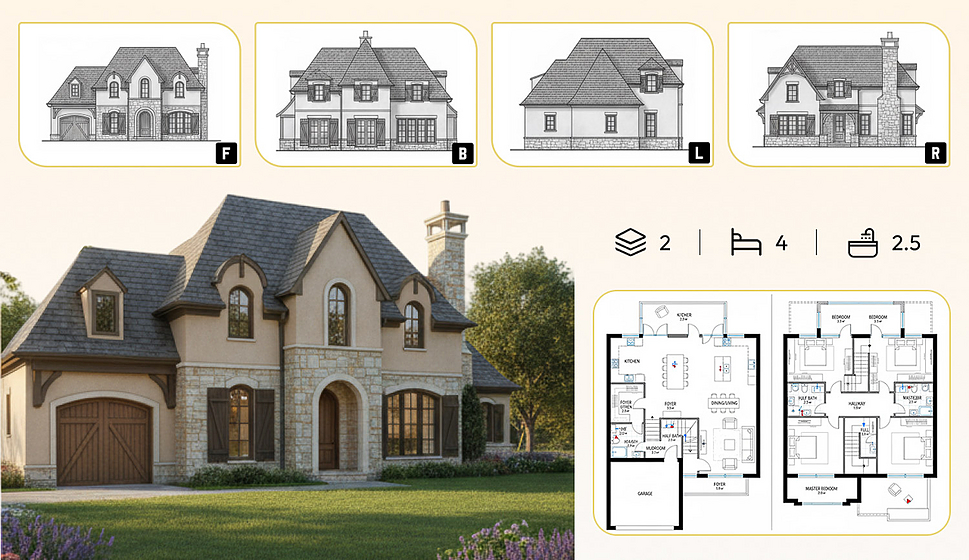
This guide covers a workflow that moves from project parameters to generated floor plans, 3D perspective views, exterior design exploration, and site context visualization, using AI tools in place of preliminary CAD and rendering work.
This guide covers a workflow that moves from project parameters to generated floor plans, 3D perspective views, exterior design exploration, and site context visualization, using AI tools in place of preliminary CAD and rendering work.

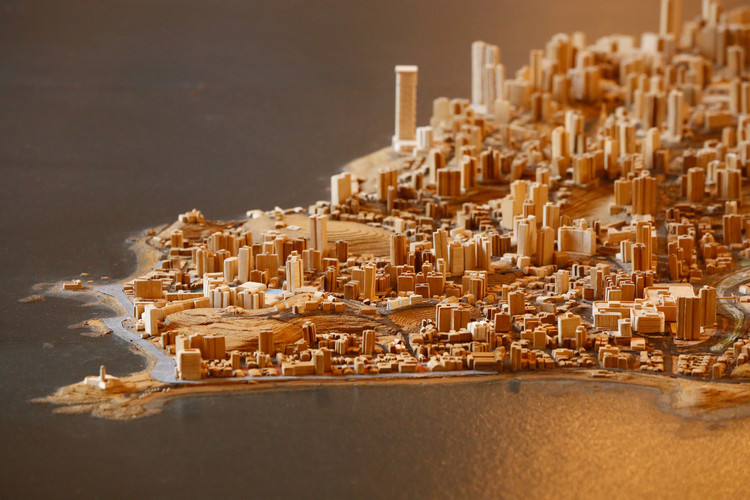
On August 20, the landmarking process began for the scale model of Salvador, which is currently on display at the Associação Comercial da Bahia in the state capital [1]. The model, which will remain open to visitors by appointment until September 18, 2020 [2], was first conceived in the early 1970s by architect Assis Reis. Since then, it has been continually updated by a team of craftspeople from the Salvador Municipal Government to represent the city's urban changes, thus preserving the original vision behind its creation.
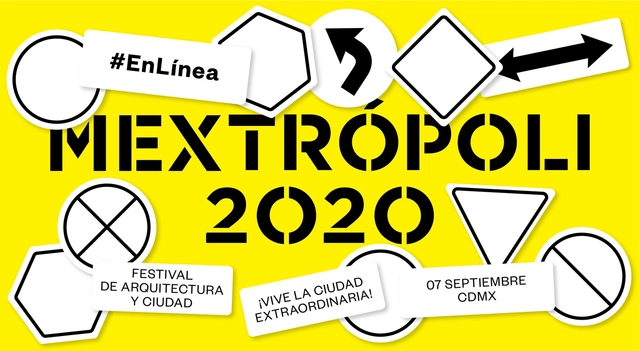
The health crisis forced the MEXTRÓPOLI Festival to be rescheduled from March to September. However, months later, it remains an equally critical landscape. In Latin America, and specifically in Mexico, the number of infections continues to increase and the outlook does not present a close solution to the problem. That is why it was decided to move, once again, the Festival's face-to-face activities to March 2021, hoping that by then a safer scenario will be lived that allows to enjoy the activities already programmed, and some that can be added. then.

ArchDaily's theme of August 2020, How We Will Live Together, invites readers to contemplate the way we inhabit spaces with those around us. In this article, we address different aspects of coexistence in a world impacted by COVID-19 and the changes that need to be made in order to create a world where everyone has the space to live, work, and grow.
Nowadays, our day to day interactions with those around us hinge on social distancing, leading many to question--is this truly the best solution for curbing the spread of COVID-19? With people worldwide still reeling from the socio-economic upheaval caused by the pandemic, the concept of forcefully distancing yourself from friends and family, especially at at time when you most need them, seems just plain inhuman. While distancing is undoubtedly necessary, it seems more optimistic words would serve to better drive home the message. For example, a slogan like 6ft of Empathy maintains the necessary safety principles without stripping away the social element that humanity thrives on.

With a complex debate underway about monuments and the way we engage history, we should start thinking about a COVID-19 Memorial. Yes, I know we are in the middle (or is it still the start?) of this pandemic, but the intensity of the moment might actually help us envision what such a memorial could be. Instead of waiting for a time when we have more distance from our current catastrophe, we should capture the passions coursing through society right now.

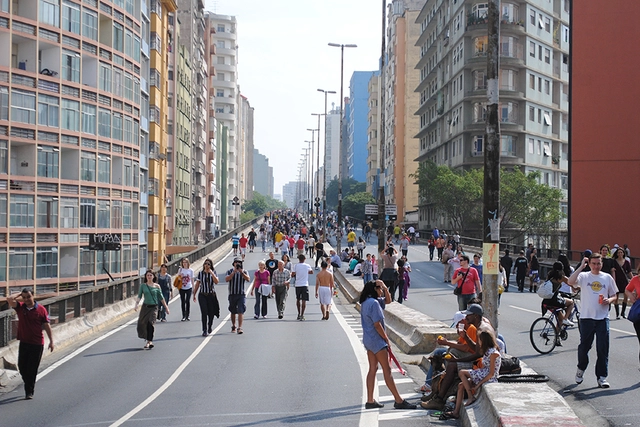
One of the most prevalent themes in current discussions about the city is gentrification. Broadly defined as "when someone different from you moves into your neighborhood," this urban phenomenon is far more complex than that, involving issues of land use, real estate speculation, public and leisure spaces, and urban planning.
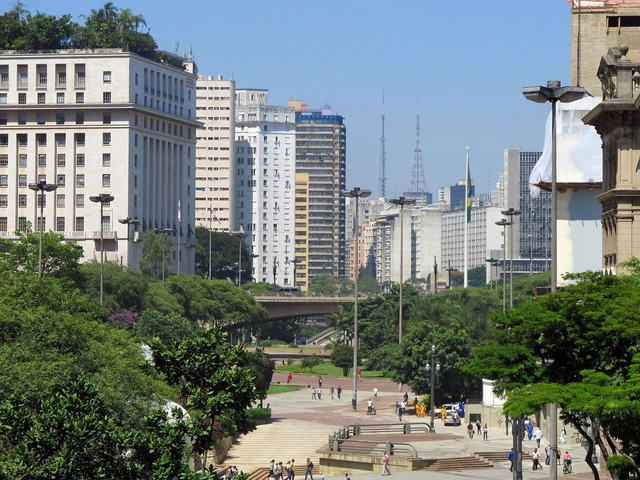
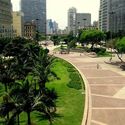
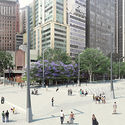
The Vale do Anhangabaú, or simply Anhangabaú, is the area of São Paulo that separates the so-called Centro Velho (Old Center) from the Centro Novo (New Center). True to its name, the Valley is the region bordering the stream of the same name—a somewhat ominous moniker that in Tupi-Guarani means “river or water of the evil spirit.” And indeed, judging by the various unsuccessful ways the space has been used over time, the “curse” embedded in its name seems to linger to this day.

The umbrella column or hollow vault (bóveda cáscara) is a reinforced concrete structure designed by Amancio Williams (Buenos Aires, 1913-1989) that, thanks to its form, has the capacity to support massive amounts of weight while independently maintaining its balance. In other words, it doesn't need any reinforcing structure, save for its singular column, to remain standing.
The studies surrounding bóveda cáscara in architecture were started by Williams in 1939, and resulted in numerous essays and small-scale models. The structures, specifically designed for high roofs and also known as 'umbrellas' or 'parasols,' are a prime example of the modern architectural movement in Argentina, distinguished by their experimentation in form and function.
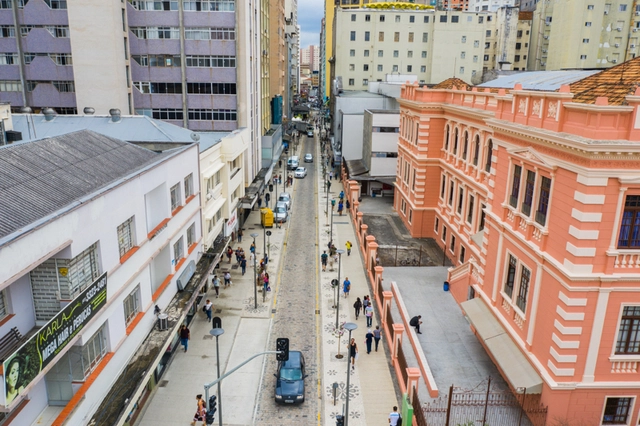
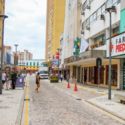
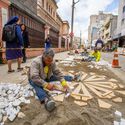
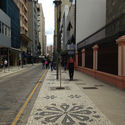
Amid century-old buildings, a major bus terminal, and a thriving commercial sector, Curitiba has implemented a complete street. Completed in February, the revitalization of Voluntários da Pátria Street has made the thoroughfare safer for pedestrians moving through the central area and more inviting for staying, featuring new benches and widened sidewalks. It is a reclamation of the past that makes the present more welcoming and strengthens the construction of a more humane future for Brazilian cities.
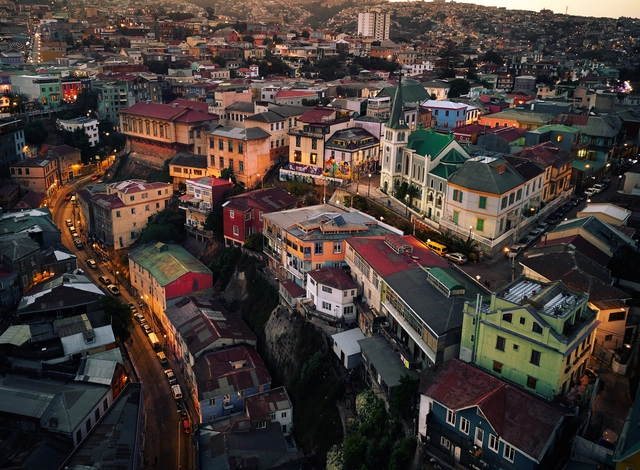
Situated at the foot of 45 hills along the Chilean coast, Valparaíso was a key port in the South Pacific during the 20th century before the construction of the Panama Canal. Thanks to its rapid industrial and commercial growth, the port underwent an urban transformation, attracting thousands of foreigners and cementing its reputation as a bustling South American cosmopolis rich in society, culture, and architecture.
Described by The Guardian as a "Berlin by the seaside", Valparaiso's historic downtown was declared a World Heritage Site by UNESCO in 2003 and the city's cultural and architectural wealth make it a must-see for tourists and architecture aficionados alike.
In this article, we present a guide written by one of the city's many enthusiasts that will give a complete and in-depth look at the port's many treasures. The guide is written as if for a walking tour, starting in Plaza Sotomayor, the city's main square. The route can be divided into two days, with the first part ending at the Palacio Baburizza and the second beginning with the Valparaiso Cultural Park. Take a tip from the experts--if you get lost, don't trust an app to find your way. Ask a local!
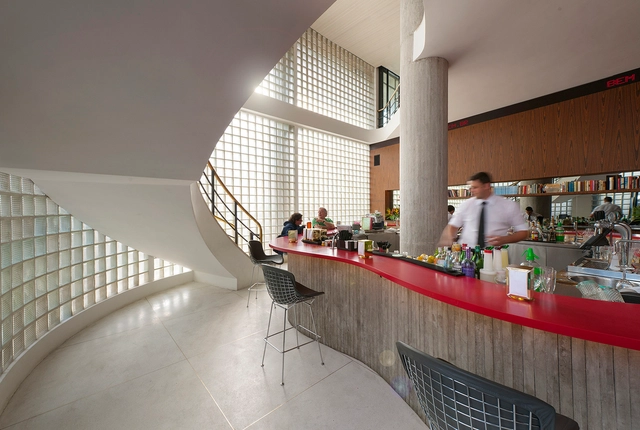
Associated with the architectural imagery of the 1980s, glass bricks—or blocks—are building elements whose sculptural potential has once again been recognized and revisited by contemporary design. First patented in 1907, this product was developed to meet the demand for light in building interiors; however, it is sought after today primarily for the visual effects produced by its translucency and texture. Currently, it is being used in diverse contexts, from bathrooms to residential partitions, and even entire facades of bars, stores, and restaurants.
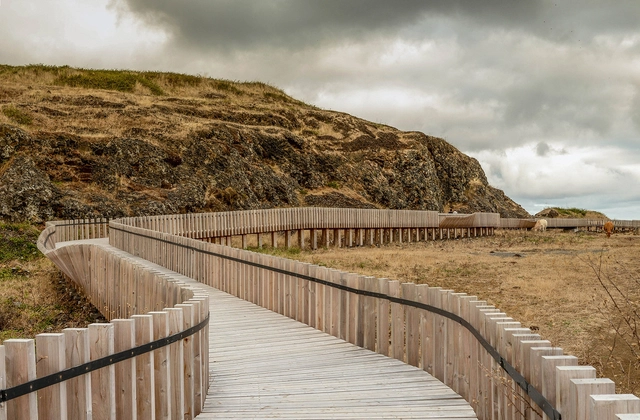
Modern Portuguese architecture has a renowned tradition of exploring the virtues of the landscape, either by integrating or emphasizing the natural elements to create new landscapes that result from the overlapping of culture and nature. Some fine examples are the Boa Nova Tea House and the Leça da Palmeira Tide Pools, both designed by Álvaro Siza, reacting to the rocky seascape where they lie, each in its own way.
However, it is not just Modern Architecture that is concerned with the landscape. In Portugal, contemporary works have been revealing exciting examples of the possibilities of approaching the natural environment, exploring its potential without compromising its integrity. To illustrate this, we have gathered 12 contemporary projects that use different resources to explore the relationship between natural and built.
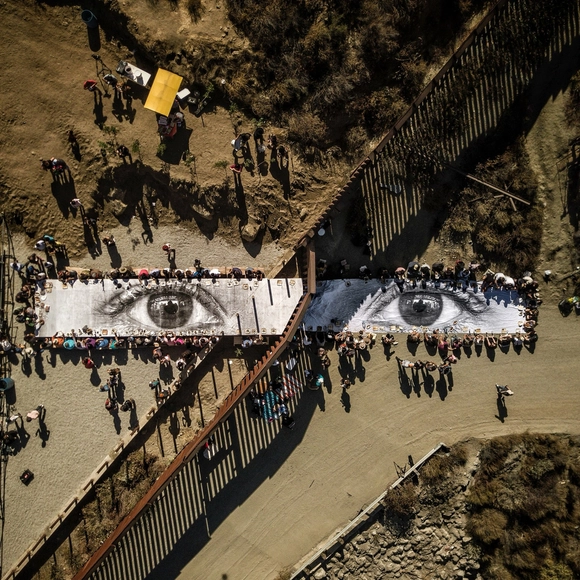
The world's population is expected to reach 9.7 billion in 2050, an increase of 2 billion persons in the next 30 years.
As the world's population continues to increase, new challenges are expected to arise in addition to the aggravating issues already faced today. How will we live together? The theme of the Venice Biennale of Architecture, postponed to 2021, intends to instigate discussions and proposals concerning the role of architecture in times of increasing political differences, intolerance, and growing economic inequality.

We have compiled a list of our best articles, projects, and products on natural and artificial lighting in architecture.
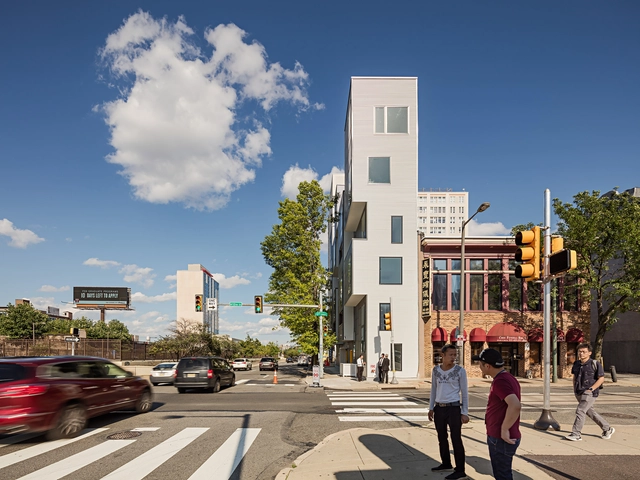
In all cities around the world, there are some forms of residual space, forgotten pieces of the urban fabric, remnants of overlapping layers of past development. This land whose conditions make it unsuitable for most types of conventional construction might be a fertile ground for architectural invention. Assigning a new value to vacant corner lots, dead-end alleys and strangely shaped plots opens up a new field of opportunities for inward urban development, expanding available living space and increasing amenities in densely populated cities. The following explores the potential for experiment and urban activation held by urban leftover space.
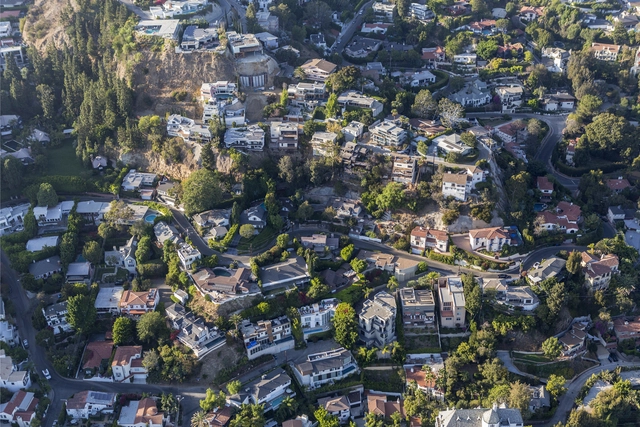
This article was originally published on Common Edge.
The most arresting image, among many, in the documentary Laurel Canyon: A Place in Time, directed by Alison Ellwood, is a black-and-white photograph of Eric Clapton visiting Los Angeles for the first time on tour with Cream. He sits a few feet from Joni Mitchell, who is playing guitar, with a visibly stoned David Crosby in the background on the backyard lawn of Cass Elliot’s house. Clapton observes Mitchell with such a smoldering intensity you think he’s going to blow an amp. He is transfixed by Mitchell not because she was striking—and she was—but because of her musicianship.

.jpg?1599092292&format=webp&width=640&height=580)
The state of Guanajuato is located in the north-central region of Mexico, bordering the states of Zacatecas, San Luis Potosí, Querétaro, Michoacán, and Jalisco. Covering an area of 30,607 km², it is one of the country's most populous regions. Its most prominent municipalities include León, Irapuato, Celaya, Salamanca, and San Miguel de Allende. The latter, designated a UNESCO World Heritage Site in 2008, is characterized by its Baroque and Spanish architecture. Additionally, this city is home to the Parroquia de San Miguel Arcángel, built from the region's characteristic pink cantera stone.
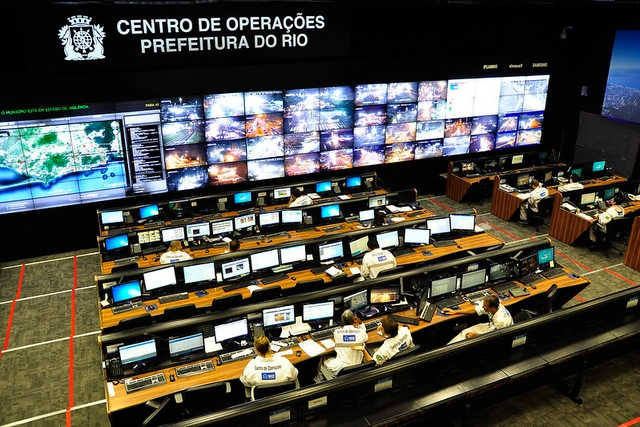
The growing presence of Information and Communication Technologies, known as ICTs, in daily life is driving profound transformations in society, shaped by new forms of interaction based on the intensive production and use of information. In a society where information is an essential raw material, the term big data has taken center stage across corporate, governmental, and academic spheres. Big data inherently refers to the vast, varied, and fast-moving volumes of data constantly being generated.
This "Data Revolution" is certainly palpable in Brazilian cities. But how can it help us move toward a better understanding and planning of our urban areas? The opportunities opened up by big data for exploring innovative questions about urban phenomena and dynamics—especially those involving real-time analysis—are undeniable.

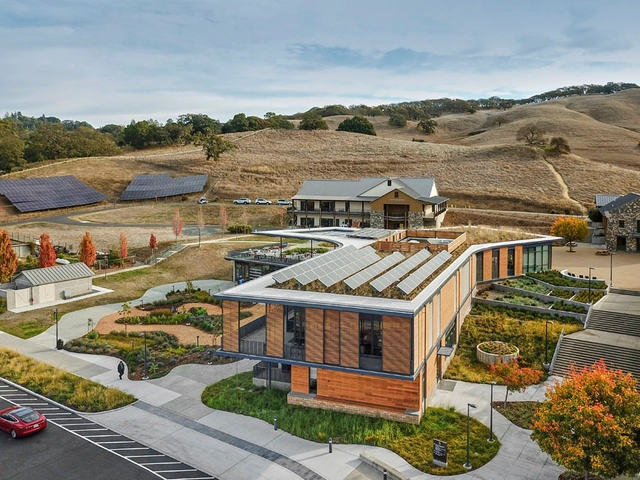
In the wake of the pandemic, designers and architects are rethinking and inventing innovative solutions for nearly every sector of design from hospitality, restaurants, workplace experience, and landscape architecture. According to the World Health Organization, 19 percent of factors that affect our health and well-being are directly related to the built environment, making architects and designers key to protecting public health.

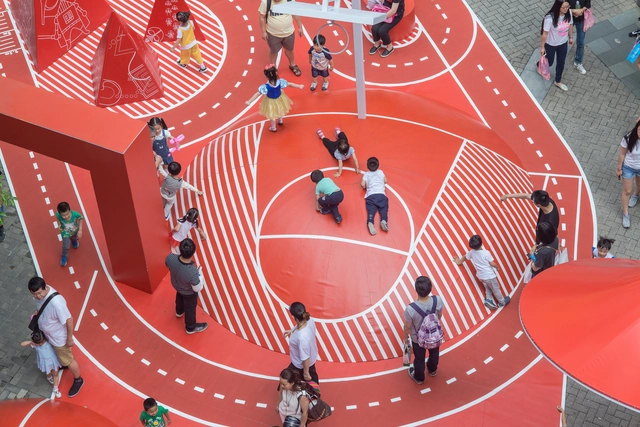
Since the 1990s, copious amounts of cities in China have been undergoing urban renewal. Prompted by this state-facilitated urban redevelopment, skyscrapers are being built rapidly in major cities to attract affluent middle-classes, resulting in countless relocation and displacement of the working-class population. Such process is known as “gentrification”.
As cities and neighborhoods are being gentrified thoroughly to meet middle-class taste and boost economic growth, urban land resources are being treated in ways to increase business potential, leaving little room for the development of urban street life. Among rows of concrete and steel constructions, nowadays, urbanites are struggling to find a place to sit, rest, and play during leisure time. Analyzing five architectural practices creating livable urban public spaces, this article discusses the challenges and opportunities of urban revitalization in China under the phenomenon of gentrification.
OBJECT CARPET’s recent collaboration with multidisciplinary architecture and design studio Ippolito Fleitz Group has led to expansive, unconventional and, more importantly, sustainable results.
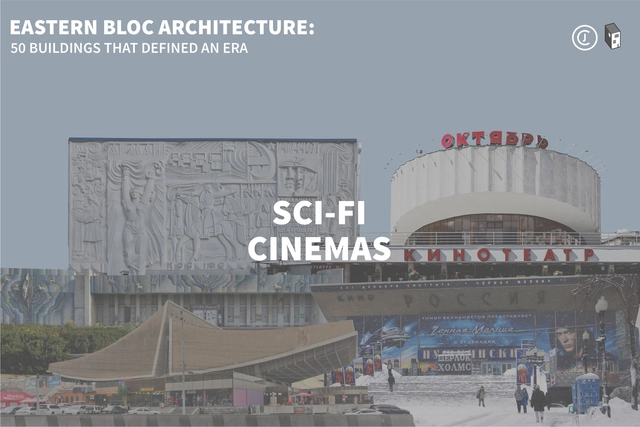
This article is part of "Eastern Bloc Architecture: 50 Buildings that Defined an Era", a collaborative series by The Calvert Journal and ArchDaily highlighting iconic architecture that had shaped the Eastern world. Every week both publications will be releasing a listing rounding up five Eastern Bloc projects of certain typology. Read on for your weekly dose: Cinemas.
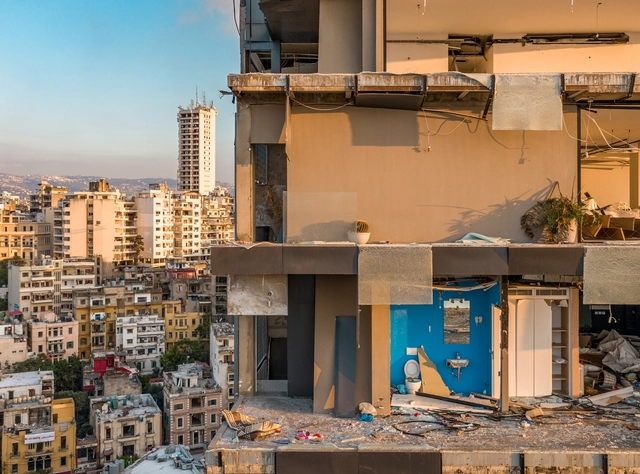
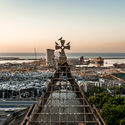
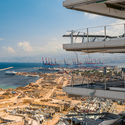
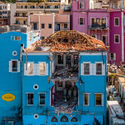
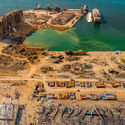
It only took a couple of seconds to destroy 40% of the city of Beirut on August 4th, 2020. A couple of trivial seconds were enough to determine the fate of the urban and social fabric of the Lebanese capital and its architectural heritage. Years and years of accumulated cultural assets fell instantly in distress, causing more harm than the infamous 15-year civil war. These seconds have erased the past, present, and destroyed future aspirations.
Hit right in its rich cultural center, the blast of the port shook the northeastern side of the Lebanese capital, leaving the neighborhoods of Mdawar, Rmeil, Gemmayze, Achrafieh, Mar Mkhayel, Karantina, and Geitawi, severely hurt. According to the UN Development Programme (UNDP), 200,000 housing units were affected by the explosions, with an estimated 40,000 buildings damaged, of which 3,000 were severely damaged.

The Bachelor in Architectural Studies thesis projects at the IE School of Architecture and Design are exciting displays following students' years of study, exploration and hard work. This year, the students produced creative, surprising and theoretically-sound solutions to architectural problems - primarily based in the Spanish city of Valencia.
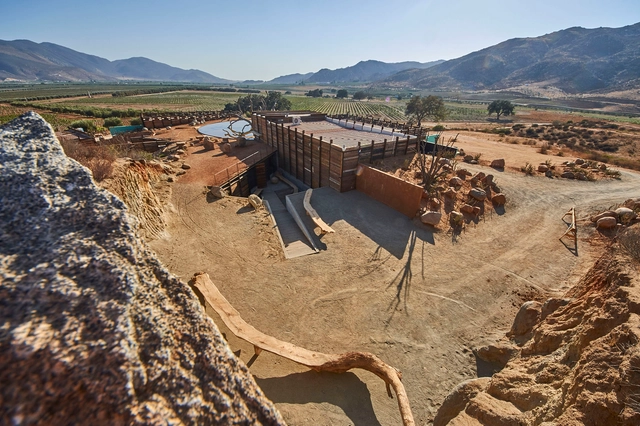
Given its diverse climate and geography, Mexico's wine production has steadily gained recognition in states such as Aguascalientes, Baja California, Baja California Sur, Chihuahua, Coahuila, Durango, Guanajuato, Nuevo León, Puebla, Querétaro, Sonora, and Zacatecas. In these regions, vineyards are increasingly in the spotlight, alongside wine festivals and curated experiences that offer visitors an immersive look into the various stages of production.


.jpg?1597856160 "Pabellón de exposición en Palermo (1966). Image Cortesía de Archivo Williams - Director Claudio Williams")
.jpg?1597856292 "Supermercado textil en Bernal (1960). Image Cortesía de Archivo Williams - Director Claudio Williams")
.jpg?1597855792 "Casa en Punta del Este (1961). Image Cortesía de Archivo Williams - Director Claudio Williams")
.jpg?1597856029 "Escuela Industrial en Olavarría (1960). Image Cortesía de Archivo Williams - Director Claudio Williams")








.jpg?1599092292)