How to build a business in social architecture? CAU has compiled ten valuable tips for architects looking to work in one of the most rewarding areas of our field.
How to build a business in social architecture? CAU has compiled ten valuable tips for architects looking to work in one of the most rewarding areas of our field.
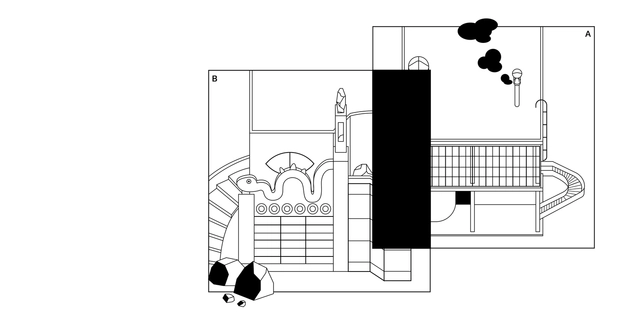
This project, combining architecture and illustration, grounds its research in archives, publications, and photographs detailing the history of modern construction in Mexico. It offers a graphic narrative of the continuities and transformations of key 20th-century works, explored through the synthesis, interpretation, and juxtaposition of their ideals. These pairings confront thought and form through deductive inference, where the sum of the parts hints at deeper meanings and critical motifs in architecture for its future reconstruction.
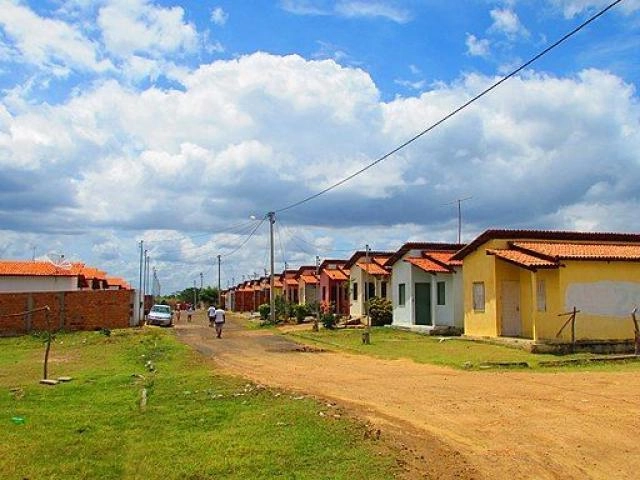
About three billion people, or 40% of the global population, will need new housing by 2030. This will require building approximately 21 million new homes per year worldwide.
Several of the fastest-growing countries have ambitious targets to meet this need. The Indian government aims to build 20 million low-cost homes by 2022. Nigeria targets one million homes built per year over the next decade. Indonesia's president has launched the One Million Houses program to serve low-income citizens.
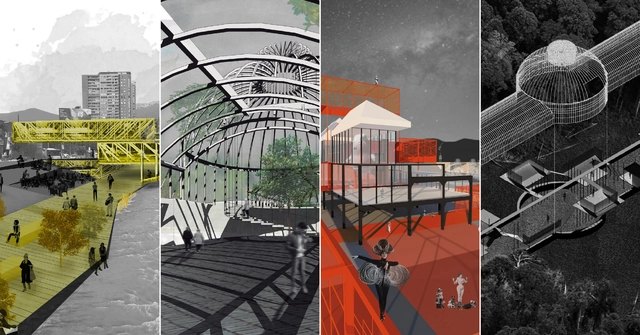
As part of Semana UTEM 2018 in Chile, the **Infraestructuras en Obsolescencia** (Obsolete Infrastructures - WIO) workshop brought together 21 teams from the Faculty of Architecture at the Universidad Tecnológica Metropolitana (UTEM). These teams developed design proposals to intervene in seven obsolete structures in Santiago, ranging from a currently closed pedestrian bridge to a dilapidated train station.
Featuring international guests Luis Tombé (Colectivo720, Colombia) and Walter Leone (Leone Arquitectura, Venezuela) —who also participated in the CONTRAPOSICIONES lecture series and delivered keynote addresses at the Colegio de Arquitectos de Chile—, each team comprised seven students from different years of the architecture program, guided by two faculty advisors.
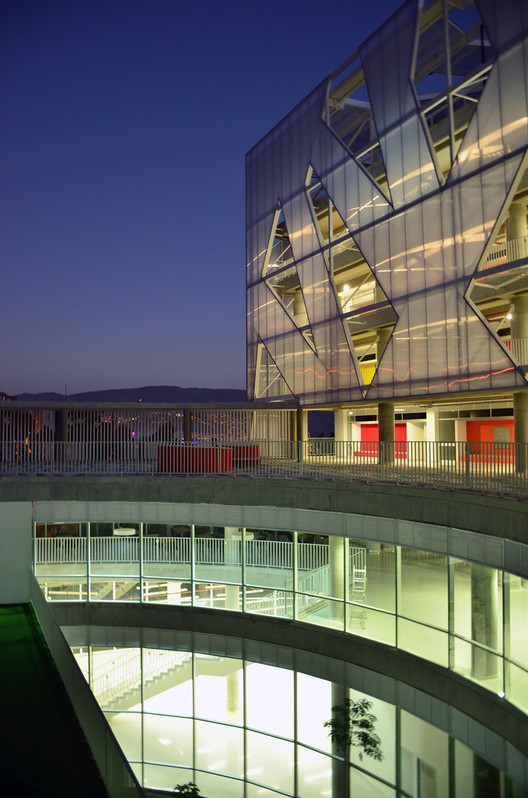
Our partner Vidrio Andino has shared valuable insights into the world of glass with us, helping us better understand how the material behaves and guiding us in choosing the right glass for our architectural projects.
From A to Z, read on to discover why thermal shock should be avoided, what solar factor actually means, and exactly what tempered glass is.
The es.BIM commission, responsible for implementing BIM methodology in Spain, has released the findings of the Fourth Report of the BIM Tender Observatory in Spain, following an analysis of public tender specifications that incorporate BIM requirements within their clauses to varying degrees.
On one hand, the report assesses the emergence of public tender documents with BIM requirements. On the other, it analyzes how BIM is integrated into these specifications through various indicators, such as the weighting of BIM in the evaluation criteria and the required levels of information.
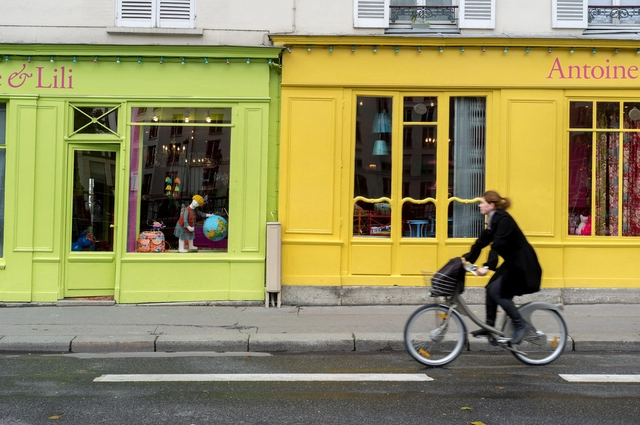
When one thinks of a “bicycle city,” Paris is certainly not the first to come to mind. Despite ongoing efforts to become more bike-friendly, the French capital is usually remembered for its efficient metro system and walkable streets. Since 2015, however, Paris has been tackling its latest challenge: becoming the “capital of urban cycling” by 2020.
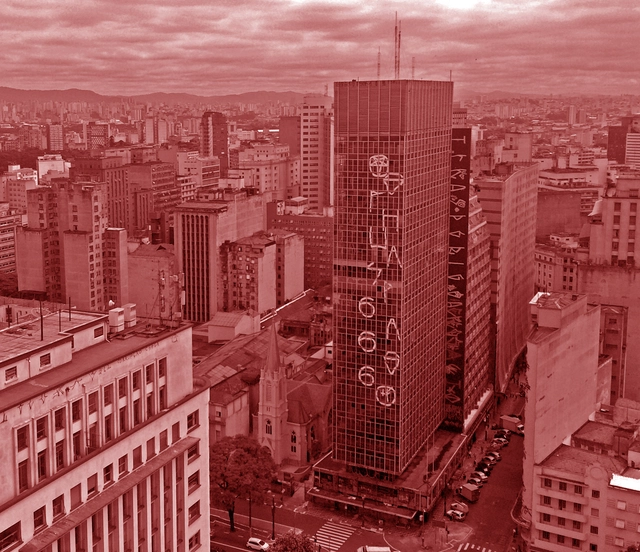
The Institute of Architects of Brazil - São Paulo Department (IABsp) stands in solidarity with the victims of the fire and collapse of the Wilton Paes de Almeida building. Beyond the tragedy this episode represents, it must be emphasized that we are facing systemic problems afflicting most large Brazilian cities—issues that demand discussions integrating urban development, housing, cultural heritage, and public asset management policies.
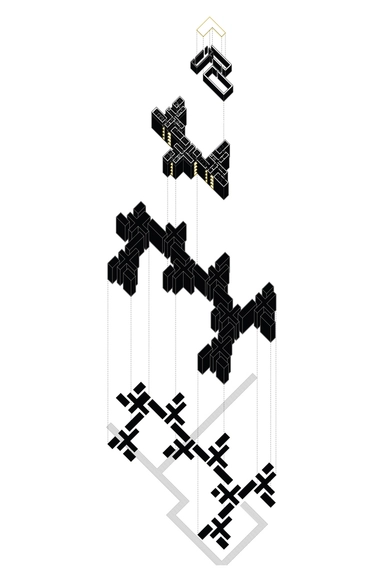
The international workshop and symposium “From the Villa to the Cell,” held at the School of Architecture of the Pontificia Universidad Católica de Chile between April 2 and 20, focused on social and collective housing, understood not only as vital to the city, but as an eminently architectural problem. The workshop featured local tutors Alejandra Celedón, Álvaro Arancibia, Tatiana Carbonell, and José Manuel Monge, alongside international guests Sam Jacoby (AA/RCA, London), Francesco Marullo (UIC, Chicago), and Max Kahlen (AA, London).
As the organizing team explains, "we questioned the definition of the word 'villa,' which has been used to designate very different kinds of architecture: from the 'Palladian villa' to the villa as a housing development, and the villa as a collective project; the workshop will build its own definition. Through the idea of the “cell,” the project sought to challenge the concept of “minimum housing,” viewing it no longer individually or as an isolated architectural object, but through the ideas of Karel Teige, who as early as 1932 proposed understanding this problem not as a scaled-down version of the dominant minimum-housing typology, but as a spatial transition toward a collective mode of habitation."
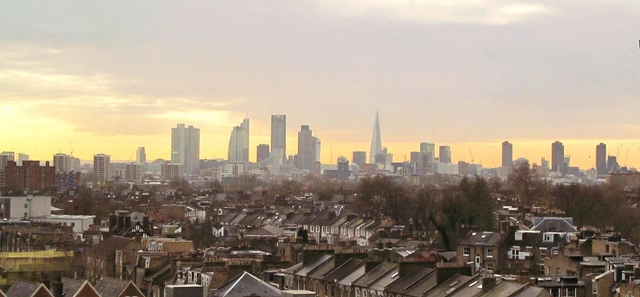
Much like in Brazil, British local authorities are also required to periodically publish and revise their master plans. Accordingly, London, under the leadership of Labour Mayor Sadiq Khan, recently released the draft of the new version of the London Plan for public consultation.
The plan's foundation is sustainable development (encompassing social, environmental, and economic advancement), followed by: principles of equal opportunity for Londoners; the reduction of income inequality; assessing climate change impacts; encouraging the use of the River Thames for passenger and freight transport; and identifying the resources available to implement the plan.

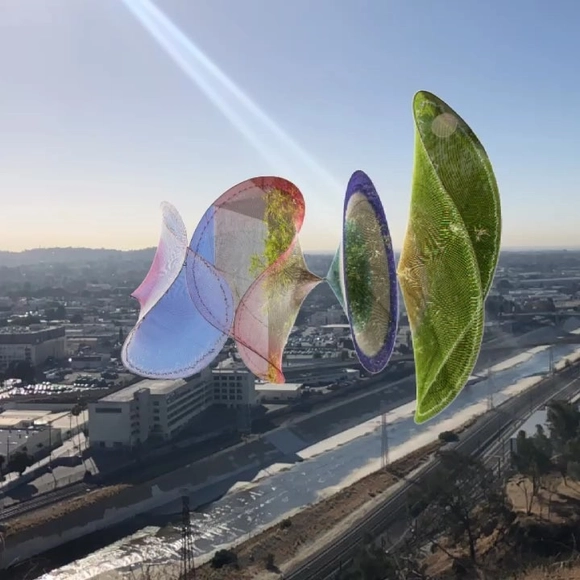
Colombian artists Carolina Caycedo and Gala Porras-Kim arrive in the United States with two augmented reality art installations. These projects seek to convey social, economic, and environmental issues through augmented reality.
These installations are part of the project “Defining line,” which leverages the reach of technology through a free mobile application, democratizing access and virtually bringing people closer to works of art.


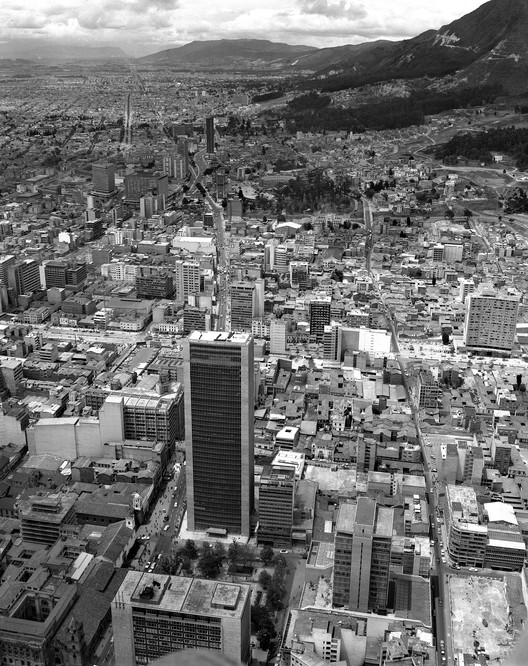
Driven by a shared interest in cities, architecture, and photography, the FORM+ research group at the Universitat Politècnica de Catalunya (UPC) and ArchDaily en Español established an editorial partnership in 2018 to showcase the research of FORM+, following the recent publication and exhibition Bogotá en la mirada de 10 fotógrafos held in the Colombian capital.
Through this collaboration, our Spanish-speaking readers discovered the work of pioneers of urban and architectural photography, drawing on research by curators María Pía Fontana (UdG), Miguel Mayorga (UPC), and Margarita Roa (USB, Cali), all members of the FORM+ group. "Photography is a form of intellectual and sensory mediation with the world, expanding our perceptual experience and renewing our visual sensitivity: an instrument to learn how to look, a resource for the creative imagination, and a means to recognize space and the built environment," the curators explained.
Below, we present the profiles of the 10 photographers featured in this editorial collaboration:


Walking through the streets, we encounter various shapes, colors, textures, sounds, and smells. Our senses are activated, and these stimuli connect us to the place we are in. Cities are often synonymous with exhaust fumes, engine noises and honking, and shades of gray. The scarcity of natural or built elements that convey a sense of safety, comfort, and aesthetic pleasure contributes to our ongoing discontent and frustration in the urban environment. These feelings fuel a lack of connection between people and places, a lack of empathy for others, and a detachment from the public realm.
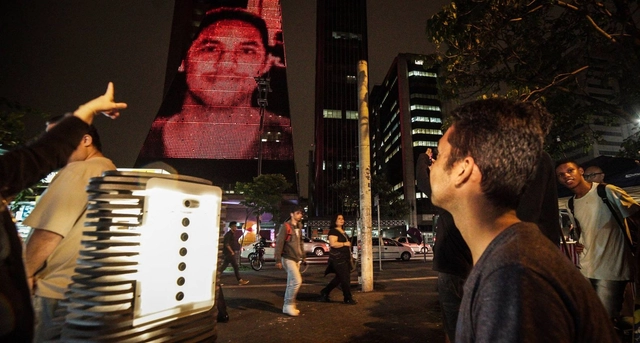
Among the images of protests along São Paulo’s Paulista Avenue that have circulated in recent years, the most recurring certainly featured as their backdrop the iconic 1979 Fiesp-Ciesp-Sesi building by architect Rino Levi, which fittingly displayed the Brazilian flag.
Since December 2012, this building has housed Brazil’s first "media facade", the Sesi-SP Digital Art Gallery, which showcases new forms of digital art expression across its immense urban screen.
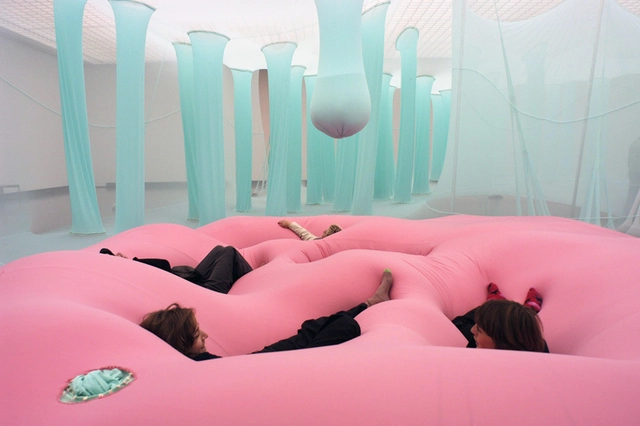
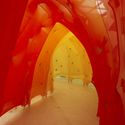
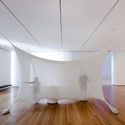
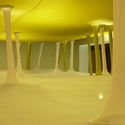
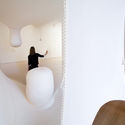
Large-scale sculptures shape spaces where viewers can immerse themselves in a vast sensory world. It is work that appeals to all five senses, inviting the public to explore mind and body through a journey where touch, color, scent, and different ways of inhabiting space form the essence of the artistic medium. The intersection where art merges with architecture creates a platform of interaction between visitors, their physical sensitivity, and the environment.
Ernesto Neto is a Brazilian artist born in Rio de Janeiro in the 1960s. He became interested in sculpture at an early age, and although he admits to having felt uncertain about his future as an artist at times, he has always remained dedicated to his greatest passion: exploring the senses and the diverse experiences that the natural world offers humanity through material form.
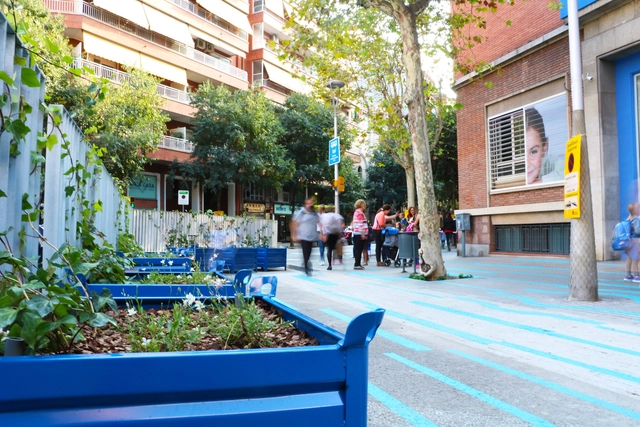
Although an internationally recognized urban planning benchmark, Barcelona's Eixample faces multiple challenges typical of a city in constant change—an urban landscape vastly different from the one envisioned by Ildefons Cerdà.
Against this backdrop, the Barcelona-based firm Leku Studio has developed a project to "humanize" several school environments in the Eixample. Through reversible urbanism, the firm is testing new uses and configurations that foster more humane, welcoming spaces, bringing the urban scale closer to children. "They must be community spaces, acting as extensions of the school; spaces for play, greenery, history, and the local life of the neighborhoods," explain Jokin Santiago Elorriaga and Marta Sola Páramo, co-founders of Leku Studio.


In this piece, architect Luis Bretón, from the ARKRIT Collective, presents an in-depth article on the life and work of the recently deceased architect Will Alsop.
On May 12, British architect Will Alsop passed away after a brief illness. He was the most polemical, controversial, and irreverent architect in the service of Her Majesty.
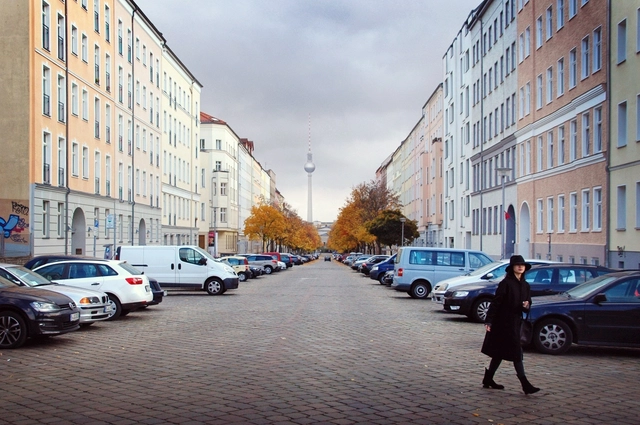

Fundación Arquia, along with architect Ana Asensio, invites us to reflect on how cities have been designed until recently—spaces of friction conceived without equal participation in decision-making, which consequently leads us to discuss feminism.
.jpg?1529271805&format=webp&width=640&height=580)
Brasília needs no defense. Its reality asserts itself above any discourse. As Paulo Leminski wrote in his Catatau: Brasília – the joy of maps.
In these dark times for our country, criticism has resurfaced regarding the untimeliness, or mistake, of transferring the capital from Rio de Janeiro to the cerrado of the central plateau. It is a conformist argument with avant-garde pretensions, attempting to draw a parallel between the dismantling of Rio de Janeiro and the relocation of the capital.
The dust of memory makes us forget the conflicts and revolts surrounding the relocation of the capital from Bahia to Rio, which was also considered a mistake at the time. Along with the move to the new and beautiful setting of Guanabara Bay came the slave-based system and the naturalization of violence implicit in its organization. A parallel can indeed be drawn between Rio-Brasília and Bahia-Rio. Neither architecture nor a new geographical setting inherently changes the way a society organizes or governs itself.
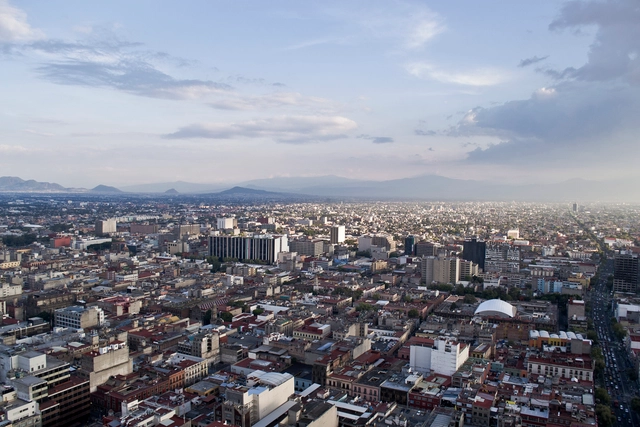
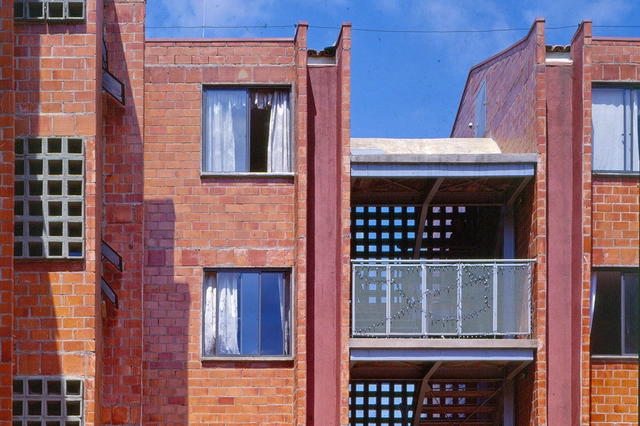
Many families working long hours spend more than they can afford on housing and transportation, leaving few resources for other essentials such as food and healthcare. This is a serious problem—one that is, in part, a consequence of public policies that favor expensive housing and transportation options over more affordable alternatives.

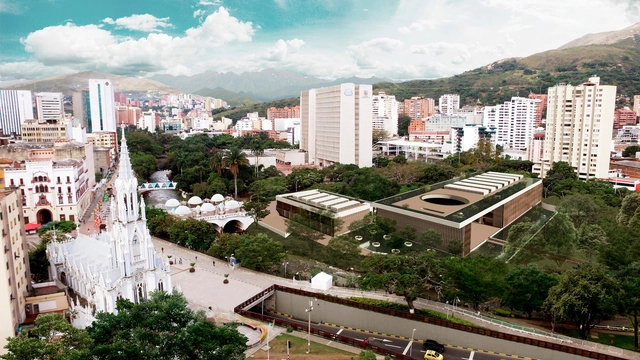

At the end of last November, we published the winners of the second call for graduation thesis projects in Colombia, which received 70 proposals from 14 cities and 29 universities. Ultimately, nine projects cleared all three evaluation stages, standing out for addressing pressing issues, presenting rigorous research, and proposing challenges for both urban and rural contexts, much like in 2016.
Here, we take an in-depth look at the Paseo Bolívar Cultural Integration Center, a proposal developed by Ángela Puerta Gaviria and Carolina Delgado Quintero, both graduates of the Universidad del Valle in Cali.

Marked by refinement and purity of design, Portuguese architecture historically maintains a sharp relationship between the built object and the territory in which it is situated.
Names like Álvaro Siza Vieira, Eduardo Souto de Moura, and Fernando Távora remain the primary references when considering Portuguese architectural production. However, beyond these great masters, a group of young firms established over the last ten years has demonstrated strength and relevance in shaping this new output. In this landscape, new attributes are emphasized: an aesthetic and constructive sensibility rooted in modern minimalism—yet questioned and renewed in accordance with contemporary social and philosophical parameters; the merging of hybrid fields, from art and product design to architecture and urbanism; and an increasingly collaborative process based on collective ideas.
By definition, architecture is the art and technique of planning, designing, constructing, and modifying the human habitat. However, my own professional career has constantly forced me to confront the same question: if you are an architect and you don't design, are you still an architect?

We have finally reached the last day of 2018, a year marked by a series of architectural trends, novel proposals presented in competitions, biennials, and architecture fairs, and above all, punctuated by a sea of projects reflecting the concerns of architects proposing new directions for the discipline. Now, after 365 days of many surprises for the world of architecture, it is time to celebrate and give thanks for another year—and what better way to welcome 2019 than to the sound of great music? With this in mind, our editorial team has curated a special selection: featuring the moving sounds of Coldplay and John Lennon, festive beats from Bruno Mars and Alok, and Brazilian classics by Elis Regina and João Gilberto.
Check out the full New Year's Eve playlist below.




.jpg?1542810627 "España Library Park / Giancarlo Mazzanti. Image © Diana Moreno")