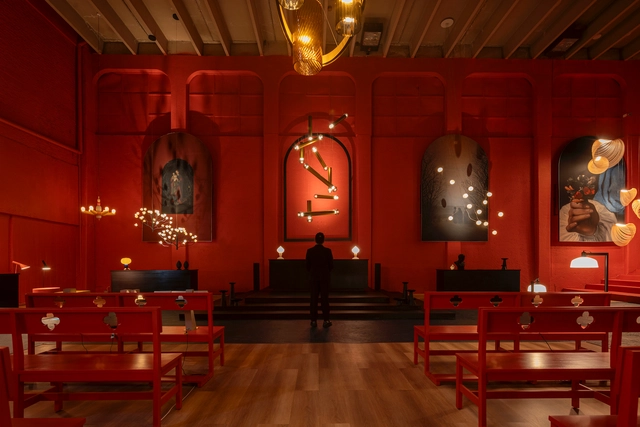
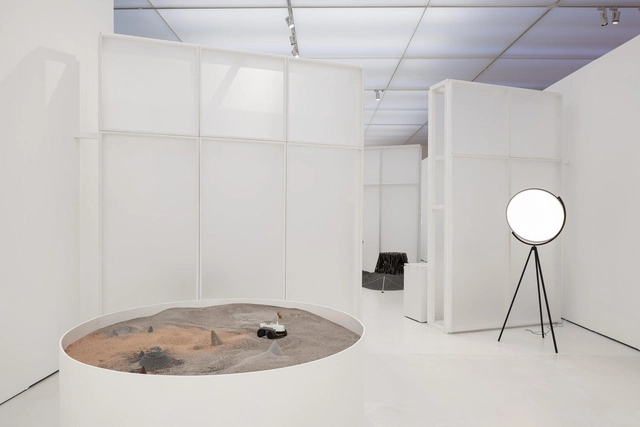
Yesterday, November 8, as it does every year, Diez Company presented the fifth edition of the Maison Diez Company project to both Mexican and international audiences. This space, dedicated to lighting design, brings together designers, creatives, architects, interior designers, business partners, lighting experts, and international brand representatives to celebrate light. Following the success of its previous annual editions since 2018, Maison Diez Company is showcasing its latest offerings in a historic mansion in the San Miguel Chapultepec neighborhood.
Architecture is a unique field that combines equally constant aesthetic and functional needs, while immersed in dynamic technological environments. At this juncture, design processes and buildings are becoming increasingly intricate, requiring architects to manage projects efficiently while fostering multidisciplinary and multi-level collaboration throughout workflows. Additionally, the new technologies and tools we employ in the process must evolve at the same pace —sometimes even faster— by embracing aspects such as sustainability and efficiency, all while keeping an eye on the future.
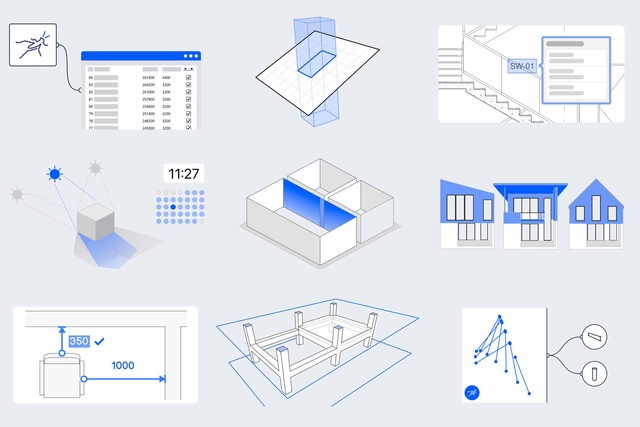
The tools available in the multidisciplinary architectural environment have evolved significantly quickly. Both students and experienced architects have now nearly completely transitioned from manual methods to computer-aided drafting software. Today, we find ourselves immersed in the era of architecture driven by technologies such as Building Information Modeling (BIM), artificial intelligence, and digital processes. At the same time, the fundamentals of BIM and its historical background trace back to the early days of computing, research, and new technologies, which sparked a rapid evolution within the AEC industry and among its professionals.
https://www.archdaily.com/1008860/bim-and-the-future-of-architecture-accelerating-design-processes-with-archicad-27Enrique Tovar
In 2021, the Government of Catalonia recognized Casa Gomis, designed by the architect Antoni Bonet Castellana for the Gomis-Bertrand family between 1949 and 1956, as a Cultural Heritage of National Interest in the category of Historical Monument.
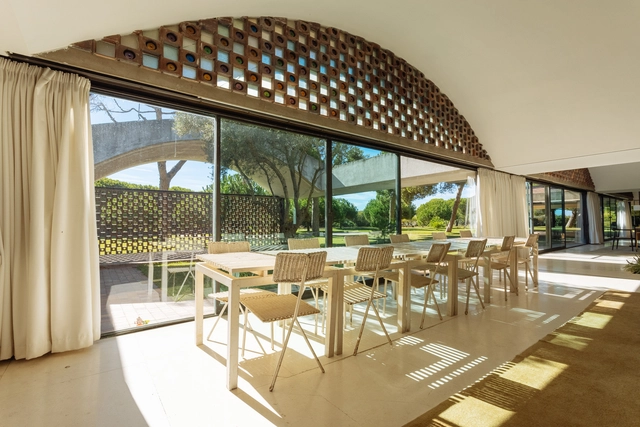
Designed from a distance in Argentina, 'La Ricarda,' as the residence is also known due to its proximity to the eponymous pond, which recently became the center of debate over the expansion of Barcelona Airport, stands out for its vaulted roof and glazed enclosures that engage with the surroundings of Prat de Llobregat.
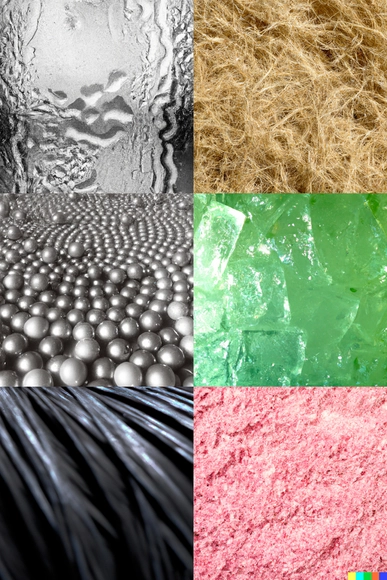
Image created using AI under the prompt: An emotive and detailed illustration of the texture of various types of architectural insulation. Image via DALL.E 2
Although more related to evolutionary aspects than to architecture itself, the inherent physical fragility of human beings has required, since prehistoric times, that we protect our bodies and our buildings from external elements. As an example, beginning with the primitive huts used in the earliest forms of domestic architecture, furs were employed as an exterior covering to restrict the flow of air and, consequently, regulate the interior environment.
Subsequently, we have observed an evolution that clearly shows advances in insulation techniques, going from vernacular materials such as adobe to an increase in the thickness of walls using stone or brick, finally reaching the cavity walls developed in the 19th century, which left a small air chamber between an exterior and an interior face of the wall. Its later popularization led to the introduction of insulation between both faces, a system that is widely recognized and used today and has laid the foundations for further developments in this field.
https://www.archdaily.com/1008656/a-glimpse-into-the-evolution-of-insulation-materials-in-architectureEnrique Tovar
As the climate emergency worsens globally, an ever-larger number of people are forced to flee their homes due to natural disasters, droughts, and other meteorological events. These displaced populations are often referred to as “climate refugees.” This humanitarian crisis demands immediate action, but first we must understand who these individuals are and how the international community can appropriately address this growing issue.
Today, most architects are used to the complex workflow of using multiple tools during the design process. These traditional legacy tools can be bulky and slow, hamper creativity, and often do not talk to each other nor let architects collaborate with their teams. This limits their ability to design, as they spend most of their time getting 3D models BIM-ready.
Snaptrude is aiming to solve these issues by establishing itself as a powerful, browser-based, collaborative 3D design tool. It combines smart, parametric modeling, live building information, easy real-time collaboration and strong interoperability with BIM tools like Revit. Below, a comprehensive list of how these features can make 3D modeling easier.
Architecture is a process-centered discipline. From the design phase that brings ideas to life and transforms them into detailed designs, to the creation of materials and products that shape spaces, processes are intrinsically present in various architectural manifestations, each contributing its own value. Although they may sometimes seem secondary, their relevance remains constant and indisputable.
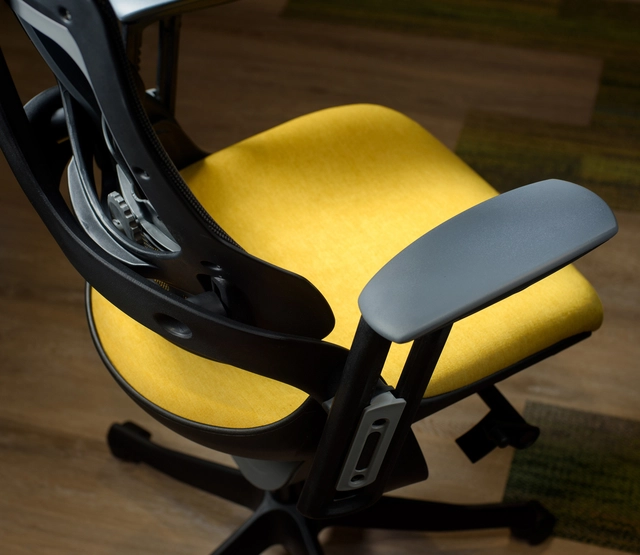
While manual processes remain relevant, the efficiency achieved through industrial technology has transformed our perception of workspaces, which now demand a greater balance between the aesthetic and functional qualities of furniture, as well as greater flexibility in spatial layouts. In this context, Mexican company PM STEELE® has integrated advanced machinery and infrastructure into its facilities to streamline the design process, enabling the manufacture of high-value products and making it possible to furnish office projects more efficiently.
https://www.archdaily.com/1136268/production-design-and-installation-the-importance-of-furniture-in-office-projectsEnrique Tovar
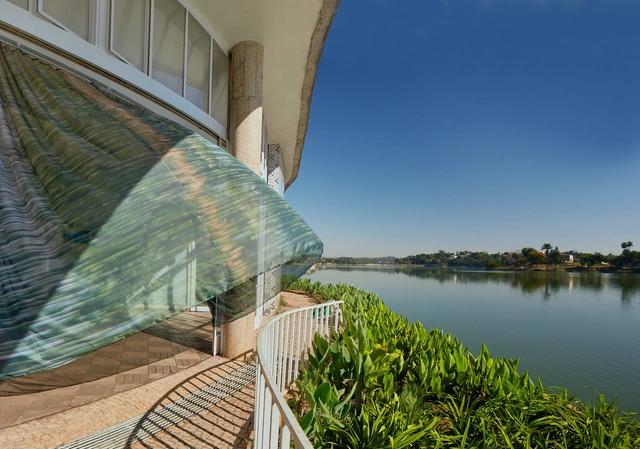
A mirage can refer to an optical phenomenon caused by the refraction of light on certain surfaces, creating the illusion of a liquefied appearance. It can also represent an illusion, where something appears to be different from what it actually is. Paul Clemence capitalizes on this dual interpretation in his photographic essay, Modern Mirage, which features Casa do Baile (now the Reference Center for Architecture, Urbanism, and Design), the Art Museum, and the Church of Pampulha. He captures these iconic structures as they are reflected in the water mirrors of the modern complex designed by Oscar Niemeyer in Belo Horizonte, MG.
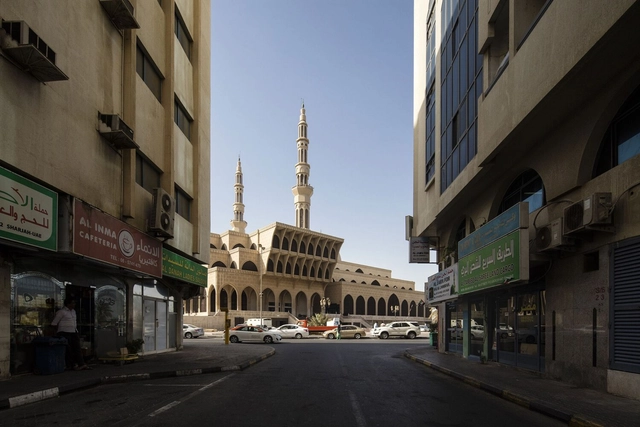
Sharjah, the captivating territory in the United Arab Emirates, is a cultural hub that blends tradition with contemporary modernity. Situated on the Arabian coastline, the city is known for its commitment to preserving its rich history, promoting the arts and culture, and providing a platform for creative and intellectual pursuits. In fact, the 2023 Sharjah Architecture Triennial (SAT) will take place from November 11, 2023, to March 10, 2024, under the theme "The Beauty of Impermanence: An Architecture of Adaptability." The Triennial is curated by Tosin Oshinowo, exploring innovative design solutions emerging from conditions of scarcity in the Global South.
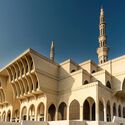
With a deep-rooted connection to its cultural heritage, the emirate is home to an array of museums that showcase a journey through multiple timelines, from Islamic civilization to traditional lifestyles. Now a hotspot for emerging designers, the city has taken a leading role as a patron of fine arts. In the contemporary city, attractions are designed by many architects, from Foster + Partners, Zaha Hadid Architects, 51-1 Arquitectos, to Hopkins Architects. In addition to this emerging cultural scene, old Sharjah is a valuable embodiment of historical tradition, having been transformed into useable attractions and art facilities. The old Sharjah also flaunts landmarks such as the modernist King Faisal Mosque, the Museum of Islamic Civilization, and the Sharjah Art Museum.
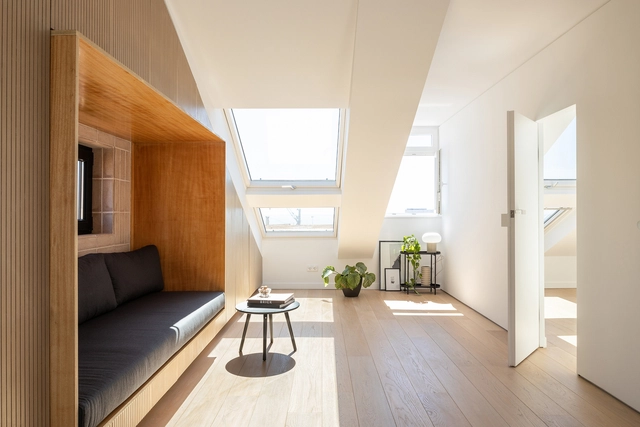
By converting the unused areas hidden in the roofspace, homeowners are able to add extra bedrooms, games rooms, or simply give themselves easier-to-access storage space, without having to move house or apply for planning approval. And with more of our lives now occurring under our own roofs, the additional space provided by an attic conversion is more popular than ever.
Without the ability to alter the roof’s pitch, however, the low-height areas of an attic room often remain unusable, and the resulting usable space is restricted by how low its functions can go. By positioning low-height features and activities in these nooks and crannies, attic rooms can make the best of the space they’re given.
The rights to reconstructKisho Kurokawa's iconic Nakagin Capsule Tower are currently sold on one of the largest NFT sites. While the tower’s demolition has begun earlier this year, the auction sells the right to rebuild the structure, in both the metaverse and in real space. The idea of recreating the Metabolic building in a virtual space seems natural. It could allow a larger community to explore an iconic piece of architecture and encourage them to experiment with it, an initiative in line with Metabolist ideals. On the other hand, the idea of reconstructing a demolished historical building in the physical world raises a different set of conflicting emotions. Architectural replicas are not the norm, but their existence raises questions regarding the identity and authenticity of works of architecture.
Frank Lloyd Wright first came up with the concept of the open-plan office in 1906, in the Larkin Building in Buffalo, New York, United States. The innovative nature of this approach, at the beginning of the 20th century, contrasted with the norm of closed offices and probably stunned those who first used it. Fast-forwarding to the 1950s, the concept of an open-plan office –Bürolandschaft or Office landscape– originated in Germany, with the objective of eliminating spatial hierarchy through shared spaces. The architects strategically designed the office layout to improve communication and teamwork, removing solid barriers and replacing rows of desks with work areas that were organized based on functions and workflows, with a mentality aligned with the precepts of the time, especially related to the European post-war reconstruction effort.
A few years ago, the architects at Studio Bark, in collaboration with Structure Workshop and Cut and Construct, began to develop the idea of a circular kit of parts designed so that anyone with reasonable DIY skills could build their own structure. This is U-Build, a modular system made of wood panels crafted with the precision of a computer-controlled cutting machine (CNC). The panels are delivered to the construction site in a compact box, ready to be assembled, stacked, and screwed to shape the walls, floors, and ceilings. Only a few tools are needed, such as a rubber mallet, a drill, a tape measure, and a level.
While this system allows the construction of various types of buildings, its high level of customization finds particular utility and effectiveness in housing projects of all scales. From a tiny house for a couple opting for simplicity to an off-grid cabin in the woods, a Georgian cottage extension, and a 3-bedroom efficiency home, U-Build has brought extraordinary prefabricated wooden homes to life.
Collaboration challenges happen in any construction project; with so many stakeholders and disciplines needing to be heard, agreeing on something and making it happen can be mired in delays, misalignment, and frustration. For architects, one of the greatest challenges involves dealing with inconsistent or lengthy inter-team workflow processes, overburdened staff and worries over litigation risks. It results in duplications, needless delays, and unclear communications, all of which risk the most important asset any architecture firm has: its reputation.
The term "rede" in Portuguese traditionally conveys the idea of an interweaving of wires. In a contemporary context, it takes on a broader meaning related to connection, collaboration, and integration, whether among ideas, people, or processes. Not coincidentally, these are the core principles of Rede Arquitetos, a collaborative architecture studio founded in 2011 in Fortaleza, Ceará, by architects Bruno Perdigão, Epifanio Almeida, Igor Ribeiro, and Bruno Braga. Presently, the team is led by Braga, Luiz Cattony, and João Torquato, with their main approach emphasizing collective work and valuing encounters over the domination of ideas as a strategy for achieving the best solutions.
Ever since humans first looked up towards the heavens, we’ve wondered what is up there. From 1923 when Edwin Hubble first discovered galaxies beyond our own, our hunger and obsession for knowledge of the cosmos has grown almost as quickly as the universe itself.
As our technology advanced throughout the 20th century, we realized that ‘space’ is, in fact, filled with a huge array of ever more colorful galaxies, gasses, and stars. And the world’s leading product designers were taking note.
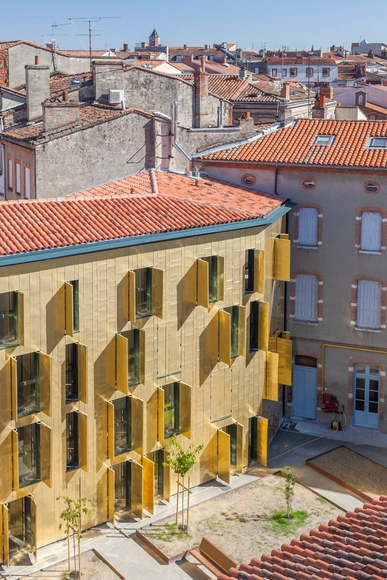
Few building materials stand the test of time as well as copper. Unlike other materials that have been replaced over the years –either due to lack of longevity, sustainability issues, or simple aesthetic preferences– copper can continue to be present in a huge variety of applications and its appeal has evolved over the years. Whether in façades and key building elements or in detailing and accessories, it continues to be a solid favorite for architects, designers and the public in general.
Through talks, anecdotes, gatherings, and visits, the 28th edition of the Latin American Encounter of Students of Architecture (ELEA), held in San Juan, Argentina, set out to address diverse themes surrounding resilience, new technologies, the circular economy, and sustainability, aiming to foster a shared community of ideas, knowledge, and experiences through collaborative, participatory work.
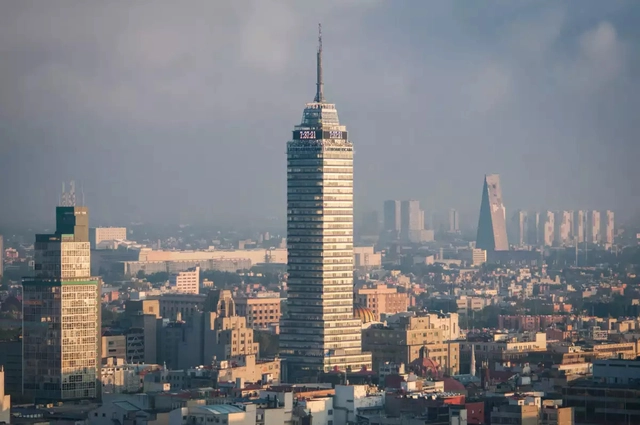
Amid the bustle and majesty of Mexico City, the iconic buildings that adorn its skyline boast not only imposing architecture, but also stories and secrets that spark curiosity. During this month dedicated to architecture, we bring you some of the curiosities and myths surrounding CDMX's buildings, which serve as the pillars of multiple narratives.
The terms resiliency and sustainability, although similar in meaning, refer to different design approaches in the context of architecture and cities. Sustainability involves the preservation of natural resources to uphold ecological equilibrium, while resiliency entails the ability to rebound, adapt, and persist in moments of adversity. These concepts greatly influence and complement each other, especially in cases of designing disaster-resilient buildings. Conventional design processes relating to resilient infrastructure have been based on principles of structural robustness and integrity as a measure against anticipated natural disasters. However, sustainable resiliency points at the opportunity of reinforcing buildings by embedding them in biological and ecological systems.
‘Carbon2Business’ utilization project at Lägerdorf cement plant, Germany. Image Courtesy of Holcim
We live in an increasingly urbanized world. Housing, hospitals, schools, and roads –the foundations of everyday life– require strong, durable materials. The AEC (Architecture, Engineering, and Construction) industry therefore relies heavily on cement, the main component in concrete, to build these elements. Yet for architects, the versatility and resistance of concrete don’t always go hand in hand with sustainability credentials.
Amid our ongoing battle against climate change, the need for authentic decarbonization strategies has never been more urgent. Professions, companies, and organizations worldwide face mounting pressure to integrate sustainable practices into their operations, particularly in response to recent climate challenges. The realm of architecture and urban planning is no exception. Phrases such as "sustainable architecture" and "green architecture" have gained widespread popularity, accompanied by various certifications, products, and advertising, all promising transformative advancements in the field that should align with our global aspirations for a sustainable future.
However, amidst this growing environmental awareness, another phenomenon has emerged: greenwashing. It refers to practices adopted by various sectors, especially those related to marketing strategies that present initiatives that convey a false impression or provide misleading information about how a company's products or projects are more environmentally friendly than they are when analyzed from a more critical and careful perspective.
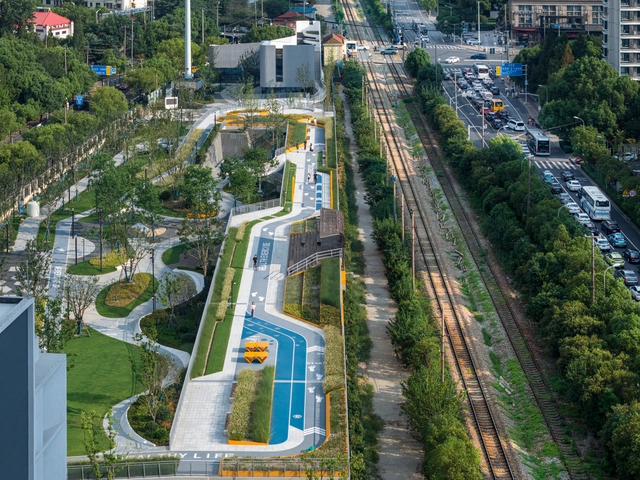
In the dynamic landscape of contemporary urban development, public architecture is an essential force in reshaping cities. In fact, this element of urban regeneration can revitalize economies and reactivate surrounding commercial schemes. In this transformative era, cities across China have evolved into financial hubs, attracting world-renowned firms and architects who are redefining these skylines. In turn, these metropolises become embodiments of future innovation and lifestyle.
China's cities have become centers of modernity as a result of its explosive prominence in the world economy. These cities have become magnets for architectural marvels that go beyond simple functionality, from Shanghai's ceaseless reinvention to Beijing's cultural renaissance and Shenzhen's undeniable emergence as a global center in technology, research, manufacturing, business, economics, finance, tourism, and transportation, complete with the Port of Shenzhen, the world's fourth busiest container port. Overall, these cities are a crucial gateway in understanding the developing dynamics in metropolitan environments.