Enter the unique realm of the "beautifully disturbing" with Project Senium, a new short film exploring the aging interiors of an abandoned mental hospital. Named for the Latin word for 'decay', the atmospheric film documents the asylum in breathtaking depth and detail, elevating material often dubbed "ruin porn" to a level of cinematic beauty.
Videos
This Video of an Abandoned Insane Asylum Will Mess with Your Mind
https://www.archdaily.com/635979/this-video-of-an-abandoned-insane-asylum-will-mess-with-your-mindPatricia Arcilla
#LoFab: MASS Design Group's Campaign For Local Building
"If I get a contract, so does the entire neighborhood."
https://www.archdaily.com/635977/lofab-mass-design-group-s-campaign-for-local-buildingRory Stott
Fictional Euro Banknote Bridges Brought to Life in the Netherlands
Did you know that the fictional bridges on the Euro banknotes were actually made a reality in the Netherlands? In Tom Scott’s latest “Things You Might Not Know” video, he tells the story of how the seven bridges came to be constructed in the town of Spijkenisse.
https://www.archdaily.com/635437/fictional-euro-banknote-bridges-brought-to-life-in-the-netherlandsKatie Watkins
Archiculture Interviews: Thom Mayne
"It's amazing how resilient our society is, and that resiliency includes architecture. It's resilient in terms of the society, it's resilient economically, and that's a really good thing."
https://www.archdaily.com/634346/archiculture-interviews-thom-mayneHolly Giermann
Video: Universal Everything Turns Sydney Opera House into "Living Mural"
Universal Everything has transformed the Sydney Opera House into a "Living Mural," as part of Vivid Sydney. Drawing inspiration from the early pioneers of animation - Len Lye, Norman McLaren and Walt Disney - the global animation studio first began to design their mesmerizing lightshow with a simple drawing. See it in fruition in the video above.
https://www.archdaily.com/633947/video-universal-everything-turns-sydney-opera-house-into-living-muralKarissa Rosenfield
Video: The Bicycle Snake / Dissing+Weitling
The Louisiana Channel recently paid a visit to one of the world's most bike-friendly cities to view what is dubbed "Copenhagen's new architectonic landmark," Dissing+Weitling Architecture's "The Bicycle Snake." "Strikingly slender" and boasting a simple orange track, the Bicycle Snake is a 230 meter bridge dedicated entirely to bikes. The steel bridge tries not to "be more that it actually is," unlike many other landmarks, connecting bicyclists to two main parts of the city by elevating them up to seven meters above the sea.
https://www.archdaily.com/633566/video-the-bicycle-snake-dissing-weitlingKarissa Rosenfield
Watch Herzog & de Meuron's 56 Leonard Take Shape in New York
Herzog & de Meuron's 56 Leonard is taking shape in New York. Due to top out this summer, the 60-story condominium has become known as the “Jenga tower” for its cantilevered glass facade. Upon its completion in 2016, the 821 foot-tall (250 meter) Tribeca building will be comprised of 145 residences and will feature a Anish Kapoor sculpture at its base. Check out the Rob Cleary time-lapse above to view the building's progress over the last year.
https://www.archdaily.com/632477/watch-herzog-and-de-meuron-s-56-leonard-take-shape-in-new-yorkKarissa Rosenfield
An Architect's Story: AIA Documentary Profiles Blind Architect Chris Downey
As part of their #ILookUp campaign to raise awareness about the importance of the architecture profession, the AIA has produced this short documentary about Chris Downey, an architect who lost his sight in 2008 and has gone on to become a pioneer in designing for the blind and visually impaired. Screened for the first time earlier today at the AIA convention in Atlanta, "An Architect's Story" takes a look into the life and work of Downey and one of his students, Sana Jahani, as they explain what architects can offer the world - and what the #ILookUp campaign means for an architect who is "without sight, but not without vision."
https://www.archdaily.com/631983/an-architect-s-story-aia-documentary-profiles-blind-architect-chris-downeyRory Stott
The Learn'd: A Film About the Poetry of Light and Space at KAAN Architecten's Education Center
The Learn'd, a short film directed by Victor Vroegindeweij (The Office for Nonfiction Storytelling, Hazazah Pictures), captures the poetry of light and space within KAAN Architecten's Education Center. Part of the Rotterdam academic hospital Erasmus MC, the center was once an abandoned atrium that was transformed into an "enlightened inner square" that united all the building's medical student programs under a single roof.
https://www.archdaily.com/629814/learn-d-a-film-about-the-poetry-of-light-and-space-at-kaan-architecten-s-education-centerKarissa Rosenfield
Archiculture Interviews: Roger Hart
In Arbuckle Industries' latest Archiculture interview, Roger Hart, an environmental psychology professor at New York’s City University, discusses the relationship between people and their surroundings. He analyzes the effects of environmental factors on both behavior and health, and advocates that the physical environment and its occupants be regarded as symbiotic entities. Additionally, Hart discusses the shifting relationship between environmental psychology and architecture, and explains how a closer collaboration between these disciplines in the design process can produce a healthier and more humanized built environment.
https://www.archdaily.com/627761/archiculture-interviews-roger-hartHolly Giermann
Incredible Color Video Shows Life in Berlin at the End of WWII
May 8th marks the 70-year anniversary of the end of World War II in Europe, when Germany’s Third Reich surrendered to the Allied forces. To commemorate the anniversary, Konstantin von zur Muehlen has released “Spirit of Berlin,” a short color film with historic footage showing everyday life in the German capital in July 1945 -- just two months after the end of the war.
Learn more after the break.
https://www.archdaily.com/628653/incredible-color-video-shows-life-in-berlin-at-the-end-of-wwiiNicolás Valencia
#donotsettle: User-Oriented Architecture Vlogging

The medium of film has long been employed to visualise, document and narrate architectural and urban space. Since the advent of more accessible devices to capture and record these journeys and explorations it has been used more frequently by practices and students in an attempt to develop new ways of experiencing built designs. #donotsettle, a YouTube channel established by two architects and urban enthusiasts while studying at TUDelft in The Netherlands, seeks to reconcile the disparity between film as architectural representation and as an experiential medium. Although not high in production value, their films are exciting examples of how user-oriented architectural 'vlogging' can uncover an entirely new way of understanding the world around us, imbued with a refreshing level of enthusiasm and authenticity.



https://www.archdaily.com/628533/donotsettle-user-oriented-architecture-vloggingJames Taylor-Foster
Video: House N by Sou Fujimoto
French architect and filmmaker Vincent Hecht recently revisited Sou Fujimoto's House N, seven years after its completion, as part of his ongoing Japanese Collection series. Nestled within a traditional Oita neighborhood, the renowned family home resembles "living among the clouds," as Fujimoto once described. A rich layering of space carefully eliminates the notion of distinct boundaries, allowing a subtle shift in program to place a heightened awareness on the spaces in-between.
https://www.archdaily.com/626020/video-house-n-by-sou-fujimotoKarissa Rosenfield
Video: Bjarke Ingels on Urban Hybrids and "Courtscrapers"
Bjarke Ingels has built a reputation for formulating new urban hybrids. From merging power plants with ski slopes to reintroducing nature to the workspace, Ingels' well-respected practice BIG is missioned to realize the fictitious world we all dream to inhabit by redefining conventional building typologies. An example of this is the Danish practice's New York "courtscraper" - W57, a clever union of the courtyard building and skyscraper that guarantees sunlight to all its inhabitants. Watch the video above to learn more.
https://www.archdaily.com/625546/video-bjarke-ingels-on-urban-hybrids-and-courtscrapersKarissa Rosenfield
Bêka and Lemoine's Mini-Series Captures OMA's Final Month of Construction on Fondazione Prada
Building up to the May 9 opening of OMA's Fondazione Prada, Italian filmmakers Ila Bêka and Louise Lemoine have released 15-video series that captures the rhythmic and somewhat "transient" nature of the project's last month of construction. Part of a long ongoing relationship between Prada and OMA, the highly anticipated venue will be an "unusually diverse environment" sculpted from a historic 20th-century distillery south of Milan's city center that will be used to exhibit art.
https://www.archdaily.com/624314/video-mini-series-captures-oma-s-final-month-of-construction-on-fondazione-pradaKarissa Rosenfield
How to Build Your Own Furniture Using LEGOs for the Formwork
Since its creation in the first half of the 20th century, the LEGO brick has come to be used for much more than its original purpose as a children’s toy.
We’ve seen LEGOs used to create replicas of classic architecture, urban interventions, virtual games and even an entire house. Now, a new video highlights the bricks’ potential as a formwork for creating furniture. The bricks' ability to be easily assembled and disassembled makes for an efficient and easy-to-create formwork, which when filled with concrete and left to set creates these incredible, textured nesting tables.
Watch the video above for a tutorial on making the tables -- does anyone dare try it themselves?
https://www.archdaily.com/623776/how-to-build-your-own-furniture-using-legos-for-the-formworkJosé Tomás Franco
1 Minute Series: Exploring 4 of Europe's Most Iconic Sensory Spaces
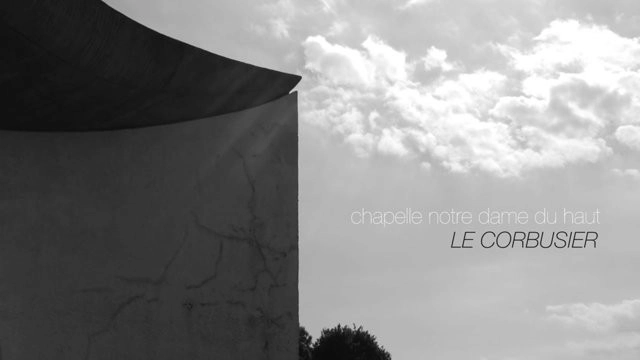
Fernando Schapochnik’s 1 minute series – a set of four videos of iconic buildings in Europe – aims to create a sensory interaction with the spaces. Filmed using only a cellphone, the videos rely on textures, sounds, rhythms and varying speeds to narrate the viewer's relationship with the spaces, letting the senses guide the experience. Journey through Le Corbusier’s Ronchamp, Antoni Gaudí’s Park Guell, SANAA’s Rolex Learning Center and OMA’s Kunsthal after the break.
https://www.archdaily.com/622172/1-minute-series-exploring-4-of-europe-s-most-iconic-sensory-spaces-2Katie Watkins
Video: Crane.tv Celebrates the Work of David Rockwell
.jpg?1429302554)
"In architecture, in buildings, in a restaurant for instance, we extract the story."
In the latest from Crane.tv, New York City is examined through a miniseries highlighting the work of David Rockwell in celebration of the Rockwell Group’s 30th anniversary. The retrospective collection visits the original Nobu restaurant, industrial Shinola store, innovative Chef’s Club, and groundbreaking Imagination Playground, while Rockwell shares his approach to creating spaces that are responsive to their occupants.
Watch all four short films, after the break.
https://www.archdaily.com/621054/video-crane-tv-celebrates-the-work-of-david-rockwellHolly Giermann