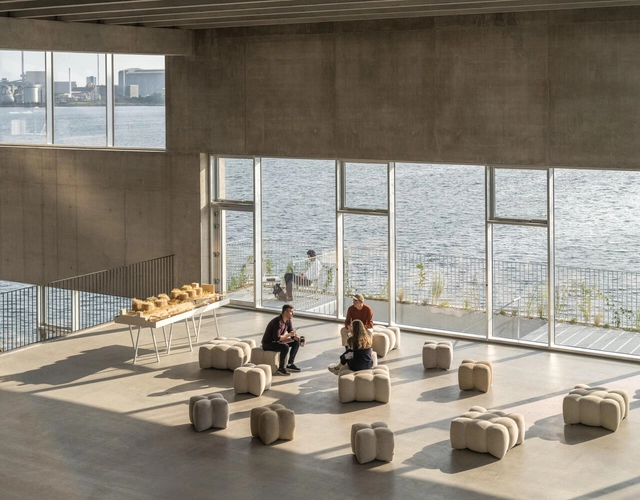
Surrounded by water and with a distinctly energetic vibe, Danish architecture studio BIG – Bjarke Ingels Group has based its new headquarters in Copenhagen's flourishing harbor district, Nordhavn. With its newly constructed office building, the design pioneers are striving to showcase the art of blending technology, innovation and creativity while also designing a space that nurtures inventiveness and fosters a sense of community in the workplace.
When we conceive an architectural project, it is crucial to transcend mere aesthetics and consider all aspects of our material decisions. The spaces where we live, work, and interact should not only be visually pleasing but also contribute to our safety and comfort. What if, in addition, they could improve air quality and reduce the amount of pathogens on surfaces? This is why the selection of materials plays a fundamental role, and architects and specifiers need to strive to acquire as much knowledge as possible about the materials and systems they incorporate into their projects.
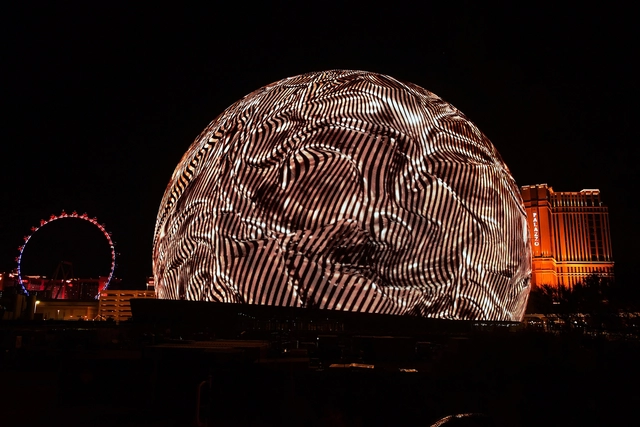
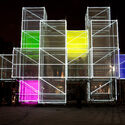
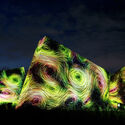
In July, Las Vegas unveiled an extravagant spectacle - a colossal LED-wrapped spherical structure, standing 366 feet tall and 516 feet wide. This entertainment event venue instantly captured the public's gaze, becoming a local landmark and attracting global attention through extensive news coverage. Similar spherical concepts have been proposed in London and at a smaller scale in Los Angeles. These massive display structures open up questions about facades as digital canvases. What role can architecture take as an urban canvas other than as a billboard? And what are different ways for architecture to engage the public through digital art besides gigantic LED spheres?
Within the shifts in architectural movements and styles, furniture design has also evolved throughout the years, transitioning from elaborate curvy lines and opulent materials to simple and functional layouts, and back again, in constant movement. As it continues to evolve, contemporary furniture design is often influenced by technological advances, exploring digital fabrication and user-centered design, while also responding to sustainable strategies. These innovations have elevated custom furniture design, crafting unique pieces tailored to individual needs, preferences, and space specifications.
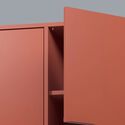
With the ability to adapt to each user, bespoke furniture design creates unique pieces crafted to meet individual needs, preferences, and space specifications. Delving into augmented reality (AR) and virtual reality (VR), Tylko creates customized, long-lasting, and sustainable solutions for sideboards, wall storage, bookcases, wardrobes and TV stands. Analyzing their tech-forward approach to creating endless possibilities of made-to-measure furniture, we showcase their design process experience, along with their intuitive online configurator and augmented reality app.
Lithuania's architectural narrative is a mosaic of diverse influences and styles, representing its historical evolution, cultural heritage, and resilience through changing times. Despite a focus on traditional craftsmanship, functional minimalism, and sustainable materials, the country's design language has been profoundly influenced by its geopolitical position and historical events, resulting in a blend of styles from different periods. A key factor that cuts across all expressions, however, is Lithuanian architecture's seamless connection with its natural surroundings.
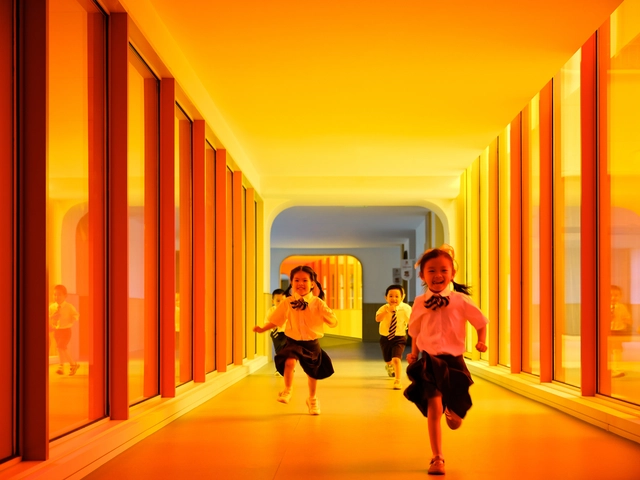
The role of a school is to prepare children for life. But with life-changing faster than ever, schools need to change just as quickly. Recent additions to school curriculums reflect the complexities of modern life, with environmental crises, societal injustices, and the dangers of social media now major parts of the syllabus.
Although it’s often said that long-term change begins at ground-level, change is never easy, wherever it starts. For example, a curriculum that responds to environmental issues is said to cause growing instances of eco-anxiety in children, one of a number of causes of another crisis, in children’s mental health.
Although considered common practice today, the concept of hand hygiene was not initially deeply ingrained in society. It wasn't until 1847 when the Hungarian physician Ignaz Semmelweis, supported by scientific evidence, proposed that hand washing was a hygienic measure with a direct impact on people's health. From this point on, the rest is history. Hand hygiene has become a widespread practice, ranging from washing to drying, accompanied by various accessories that play specific roles in the process.
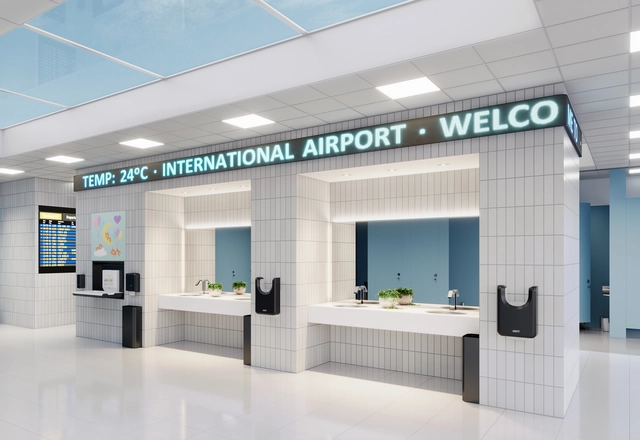
In contemporary environments, especially in the context of collective well-being, public restrooms have become a focal point. This shift in focus is, in part, a response to the post-pandemic emphasis on hygiene and the role of restroom accessories in these settings. Among the accessories available, hand dryers have garnered significant importance, even transcending their primary function. In light of this, Mediclinics has innovated by introducing a new hand dryer concept that places a strong emphasis on enhancing the user experience while offering innovative restroom equipment with a distinctive U-shaped design.
https://www.archdaily.com/1009500/hands-in-to-hands-through-a-new-generation-of-hygienic-and-aesthetic-hand-dryersEnrique Tovar
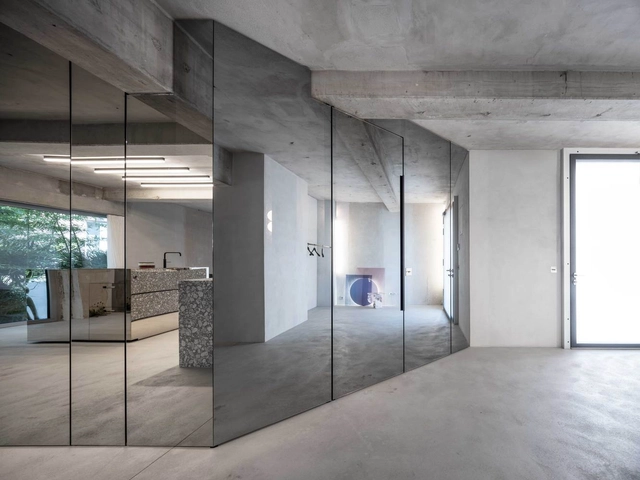
Humans have always been fascinated by reflections. Although they are no more than light bouncing back after striking a surface, there will always be something mystical and fascinating about them –whether it be a lake mirroring a beautiful landscape or a small hand mirror reflecting our face. This explains why some ancient cultures considered mirrors to be sacred objects with magical powers, while others associated them with portals leading to an unknown world. Since then, mirrors have evolved to adopt many valuable functions that are indispensable in everyday life, being found in cars, medical equipment and, of course, in countless architectural applications, especially in interiors. Experimenting with the reflection and perception of space has become an easy way for architects, designers and homeowners to transform any room. And when looking to maximize this impact, the power of exceptionally large mirrors is unparalleled. After all, the bigger the mirror, the bigger the impact.
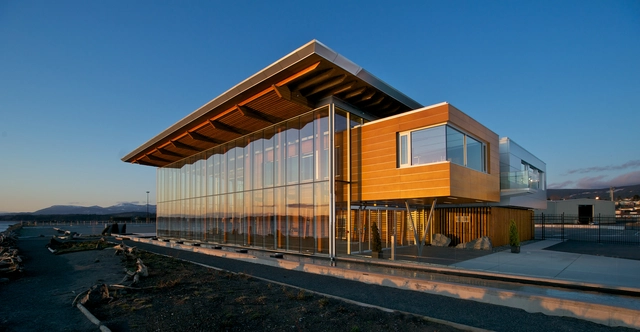
Nanaimo Cruise Ship Terminal. Image Courtesy of Checkwitch Poiron Architects & HA Photography
Design confidence is crucial to the team at Checkwitch Poiron Architects. If they can be confident in their design, then it becomes much easier to advocate for it with clients. The team builds that confidence with flexible software and cultural awareness.
Adhering to an Eastern philosophy of sustainable construction and the creative ethos of "renewing the ancient," Civil-Nova is dedicated to deconstructing and reconstructing traditional timber structures. Building on traditional Chinese craftsmanship, we employ contemporary thought and design methodologies to transform these structures into "new timber systems" integrated with modern aesthetics, production technologies, and functional demands—thereby rebuilding the connection between humanity and nature while advocating for a new way of living in the digital era.
More Than a Design Firm: Producers of Landscape and Cultural Spaces Civil-Nova’s projects are situated across China's diverse landscapes, spanning tropical and subtropical climate zones. Our practice encompasses the entire architectural life cycle: from R&D and design to intelligent manufacturing, construction, curation, operation, and recycling. We strive to leave a meaningful mark on the landscape and the earth.
More Than an Architectural Practice: A Diverse and Dynamic Ecosystem Initiated and led by architects, Civil-Nova brings together craftsmen, engineers, artists, and other creative minds. Through collaborative synergy and rapid iteration, we co-create and operate unique landscape and cultural space products.
Digital Nomadism & Creation: Supporting an Inspiring Lifestyle In addition to our main office on Wukang Road in Shanghai, Civil-Nova has established satellite workspaces in scenic destinations like Hainan and Anhui, offering creators a highly flexible working environment. We advocate for a digital lifestyle and site-specific creation, encouraging team members to immerse themselves in local cultures for inspiration. Here, you will hone your skills through hands-on, multi-dimensional experience across all project phases, and unleash your talent through frequent, high-caliber collaborations with like-minded peers.
If you share our vision of shaping the land with our ideals, we welcome you to join us!
Nowadays, we spend over 90% of our time indoors, and it is becoming increasingly evident that architecture has a profound influence on our brains and bodies. The interest in comprehending how the environment affects human well-being is on the rise, with a growing number of new studies on this subject emerging each year. Moreover, architecture firms are increasingly enlisting the expertise of researchers and human experience design consultants to explore and optimize these effects.
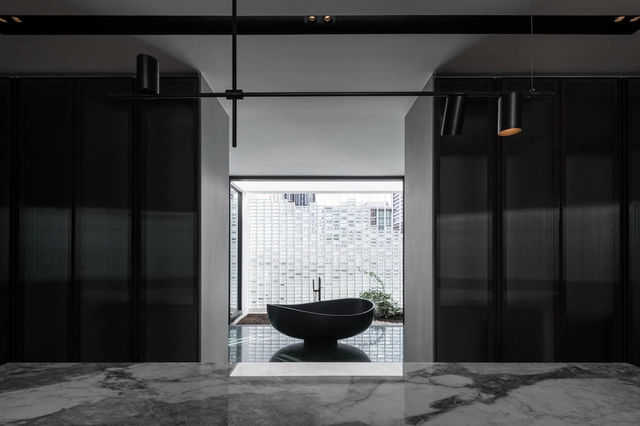
Synonyms for ‘dark’ read like a who’s who of negativity. Words like ‘gloom’, ‘murk’, and ‘despair’ are a world away from the light and airy interiors we’re told to covet by magazines and influencers. But for many people who look for tranquillity in the bathroom, there is comfort to be found in the dark.
Many of us tend to close our eyes while searching for peace and mindfulness. In turning off the sense of sight we can retreat inside of ourselves, and focus on our own self-care. These four dark bathrooms from the ArchDaily catalog use this theory of peaceful darkness to create calming bathrooms with low, ambient lighting; natural materials, and dark surfaces.
In the last three years, we have gone from asking ourselves how we will live together to doubting if we can ever live together.
Despite the end of the COVID-19 pandemic, the anticipated urban transformations resulting from it have yet to materialize. Global polarization and geopolitical unrest have us fixated on immediate issues, overshadowing our outlook for the future.
https://www.archdaily.com/1009691/the-supporters-newsletter-issue-number-6ArchDaily Team
Chris Bosse started LAVA, Laboratory for Visionary Architecture, with his partners Tobias Wallisser and Alexander Rieck the year Watercube, the Aquatics Centre for the 2008 Beijing Summer Olympics was completed. Bosse was one of the leading designers of Watercube when he worked at PTW Architects in Sydney. Now LAVA employs about 100 people in four offices in Ho Chi Minh City,Sydney, Stuttgart, and Berlin. There are also two satellite offices in Honduras and Parma, Italy, led by former associates. Projects range from furniture to houses and hotels to master plans, urban centers, and airports in the Middle East, Central America, Europe, Australia, and Vietnam.
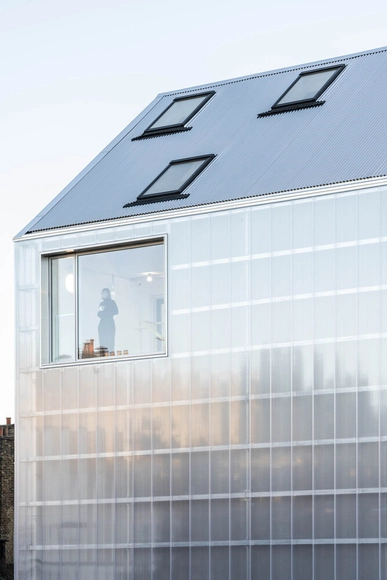
Bradbury Works / [Y/N] Studio. Image Courtesy of [Y/N] Studio
In the contemporary context, global warming has marked a turning point in the way we think about architecture. We are witnessing record temperatures on our planet and a challenging panorama in many large cities, characterized by heatwaves and, in some cases, more severe winters. These circumstances have triggered a cycle in which the demand for heating and cooling systems increases, which, in turn, translates into higher energy and operating costs for buildings.
Given this situation, it becomes imperative to design energy-efficient buildings to reduce both the environmental impact and the associated costs. One of the strategies to achieve this is to properly plan the facade, which, serving a function similar to the building's skin, can help reduce the energy required for heating and cooling. In this context, the polycarbonate panels developed by Rodeca contribute to the energy efficiency of buildings, in addition to their lightweight, slender construction, and translucent aesthetics.
https://www.archdaily.com/1009134/ecological-lightweight-and-slender-energy-efficient-architecture-with-translucent-polycarbonateEnrique Tovar
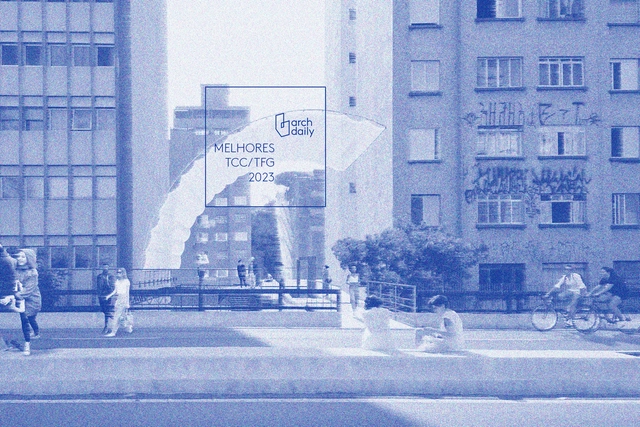
Photomontage created based on the work "Intentos por São Paulo: Ensaio Minhocão" by Julia Getschko
After at least five years of countless sketches, drawings, models, readings, and calculations, the time comes for Architecture and Urbanism students to present their final graduation projects—often referred to as TCC, TFG, or Final Graduation Projects. In choosing their topics, students highlight architectural, urban, or theoretical projects. Beyond demonstrating readiness for graduation, these works play a crucial role in sparking debate about the future of our cities, the built environment, urban infrastructure, mobility, and many other fundamental topics regarding how we inhabit space.
https://www.archdaily.com/1136454/the-best-graduation-projects-of-2023-submit-yoursArchDaily Team
Moving away from top-down approaches, contemporary practices embrace more inclusive and participatory models and design processes. Participatory planning, a notion that prioritizes involving the entire community in the decision-making process, has earned widespread recognition and popularity globally. Cities across the world have interpreted participatory planning to fit their unique needs, using technology and government resources to expedite and enhance the process.