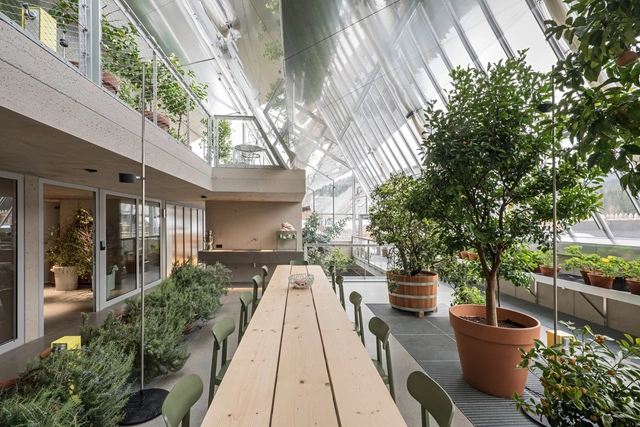
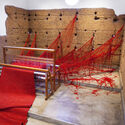
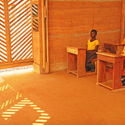
Applying neuroscience to architecture, specifically within the realm of neurogastronomy, provides a unique understanding of the intersection between human sensory domains and the built environment. It seeks to understand brain function in relation to eating, which has traditionally been viewed as a process limited to the mouth and stomach. Ultimately, it is the brain that eats. Accordingly, this article aims to consolidate scientific concepts related to neurogastronomy applied to architecture, examining the dining experience and architectural spaces, with a particular focus on active aging.
https://www.archdaily.com/1078810/neurogastronomy-applied-to-architecture-in-support-of-human-agingCiro Férrer Herbster Albuquerque e Paulo de Tarso Souza
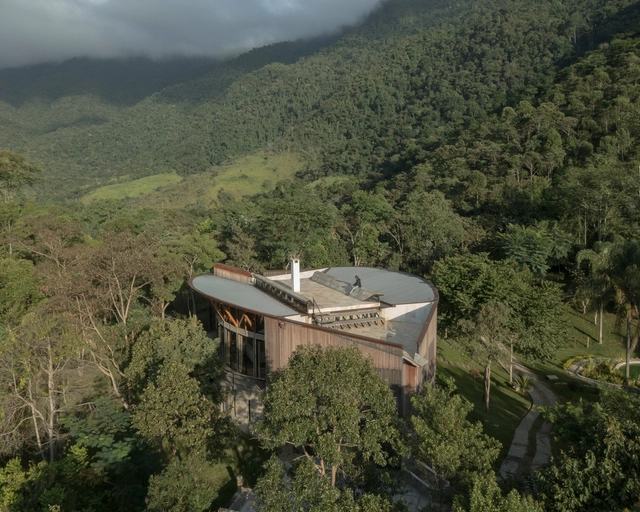
A 2020 Rio de Janeiro Botanical Garden study revealed that over 46,000 native species have been cataloged in Brazilian territory. Nearly half of them are endemic, meaning they occur exclusively in Brazil and nowhere else in the world in a natural way. This staggering number reflects the diversity of the flora found in the country.
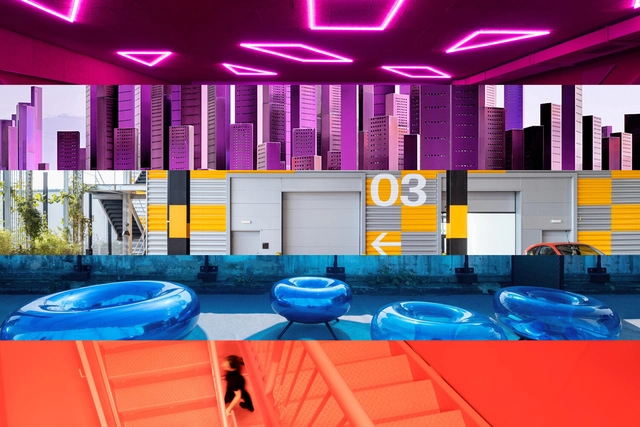
Known internationally as the world’s foremost voice on all things color, Pantone’s Color of the Year program has been predicting and even directing color trends for 25 years – reflecting the cultural environment across multiple creative sectors that use the language of color and color psychology such as branding, marketing, fashion, and product design to name a few, as well as architecture and design.
But color trends aren’t just about what’s hot and what’s not. Color plays an important role in stimulating the senses, evoking memories or feelings based on past experiences and collective influences around the world. In the color psychology of retail design, for example, specific hues have been found to alter consumers’ comfort and energy levels, ultimately dictating shoppers’ preferences and behavior. In medical environments, combining a neutral base with calming accent colors has been shown to reduce stress and anxiety.
ArchDaily's curation team strives daily to present our readers with the most significant, inspiring, and innovative projects, expanding the knowledge and repertoire of students and architects worldwide. From small renovations to projects designed from scratch, residential architecture is a constant in the daily practice of most firms. Year after year, we see the deep interest this typology sparks: it remains the most popular category among our audience.
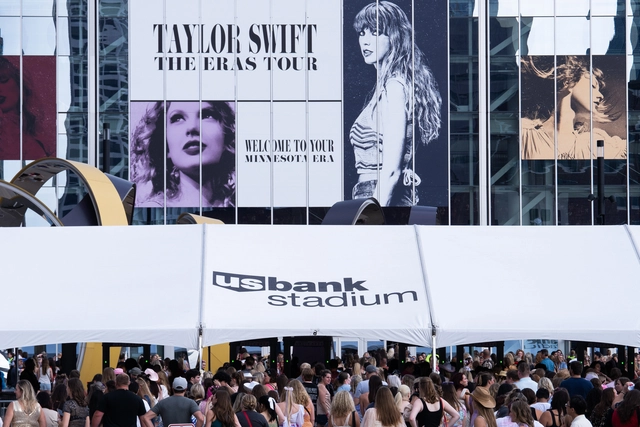
When internationally acclaimed music icons like Beyoncé, Taylor Swift, and Paul McCartney announce their global tours, the anticipation sparked by revealing the countries and respective host cities is met with thorough preparations. These preparations aim to adapt to the array of changes that will unfold in the urban spaces of these cities due to the impact of these events. These mega-concerts extend beyond the musical realm; they transcend the stage to mobilize significant financial figures and result in various transformations in the everyday urban life of these cities. Even though these events do not last long, they instigate alterations in diverse spheres and urban sectors, including tourism, hospitality, food, and transportation.
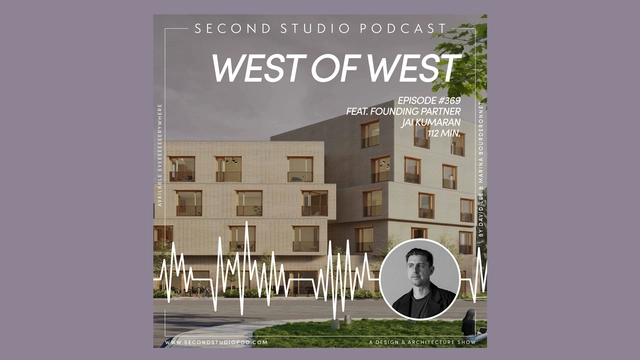
The Second Studio (formerly The Midnight Charette) is an explicit podcast about design, architecture, and the everyday. Hosted by Architects David Lee and Marina Bourderonnet, it features different creative professionals in unscripted conversations that allow for thoughtful takes and personal discussions.
A variety of subjects are covered with honesty and humor: some episodes are interviews, while others are tips for fellow designers, reviews of buildings and other projects, or casual explorations of everyday life and design. The Second Studio is also available on iTunes, Spotify, and YouTube.
This week David and Marina of FAME Architecture & Design are joined by Architect Jai Kumaran, founding partner of West of West to discuss his background; the influence his father’s work had on his career; attending architecture school; why he pursued a master’s degree; starting and growing an office; exploring project types; branding in architecture; and more!
Architecture has always centered on permanence and ephemerality. Defined by material conditions, how we build is closely tied to what we preserve and how we conceptualize the future. Furthering international cooperation in education, the arts, the sciences, and culture, UNESCO is an organization that continues to examine the relationship between history and growth, preservation, and change. As architecture, landscapes, and cities become threatened by the climate crisis and unrest, cultural context becomes paramount.
Illustration "Being a Woman on the Streets", digital collage technique, source: Luíza Chiarelli de Almeida Barbosa, 2022
Have you ever stopped to reflect on whether your city's downtown streets influence how you behave?
City centers are urban microcosms where women’s experiences, in particular, are both profound and silent. In 2022, an ethnographic exercise shed light on the dynamics lived by women navigating four locations in downtown Curitiba: the Guadalupe Terminal, the corner of Rua Pedro Ivo and Travessa da Lapa, the pedestrianized stretch of Rua XV de Novembro (between Rua Marechal Floriano Peixoto and Rua Monsenhor Celso), and Praça General Osório.
https://www.archdaily.com/1078789/being-a-woman-on-city-streets-a-philosophical-and-ethnographic-perspectiveLuíza Chiarelli de Almeida Barbosa e Aline Barbosa
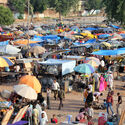
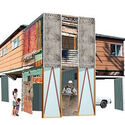
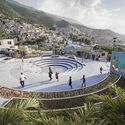
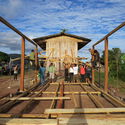
Informal architecture is the dominant mode of urbanization in rapidly growing and industrializing cities worldwide. In Delhi, the city with the largest population in India has half of its residents living in informal settlements. Lagos, with a population of over 22 million, also has 60% of its residents living in informal settlements. This pattern is also observed in Cairo, Johannesburg, Kinshasa, and other cities in the global south that face similar challenges of inequality and housing shortages. As their population grows and urbanization progresses, the exploration of informal architecture schemes to address the demand for affordable housing and basic services will only increase. While the primary purpose of design is to provide structure, lessons from informal architecture offer insights into how architects can respond to such schemes.
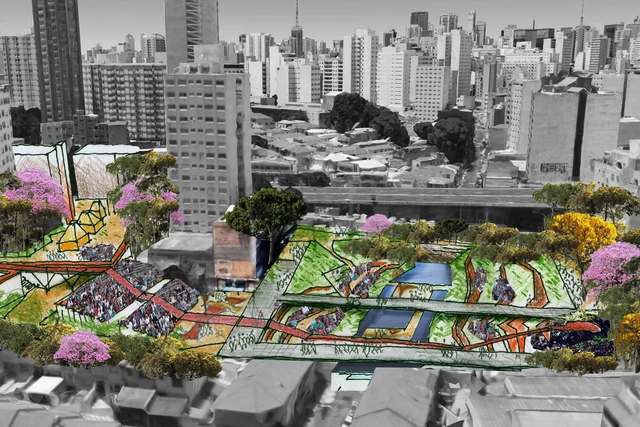
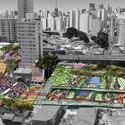
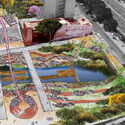
Bixiga Park project created by activists — Image: Courtesy
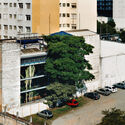
The city of São Paulo, characterized by its vastness and cultural diversity, is also frequently the stage for conflicts over the occupation of its urban space. Spanning more than four decades, the dispute over the plot adjacent to the Teatro Oficina, designed by Lina Bo Bardi in the Bixiga neighborhood, has finally culminated in the creation of a long-awaited public amenity: the Rio Bixiga Park. This milestone is not only a victory for the local and artistic community but also a remarkable achievement for the right to the city and public leisure in São Paulo, especially after years of confrontation with the Silvio Santos Group.
The sun’s influence on human life encompasses multiple dimensions, from biological and developmental aspects to religious-mythological connotations in civilizations such as the Egyptians and Romans. Moreover, this influence extends to its use as a natural resource within the realm of science. In scientific pursuits, the continuous search to harness the sun as an energy source has been a constant throughout the years. Within this context, the discovery of the photovoltaic effect and its application have paved the way in the history of solar panels, starting from the first observations of Becquerel to the initial prototypes of Charles Fritts in the 19th century.
Nowadays, the energy obtained from the sun through devices such as solar panels has become one of the most widely used sources in regions like North America and Europe, contributing to the efforts for a complete transition to clean energy. The momentum in this transition has motivated the development of new technologies, such as SolarLab facade systems, that challenge the preconceived idea of what a solar panel looks like and where it can be installed. These systems converge with architecture to integrate them as aesthetic elements, serving as cladding for both retrofit projects and new buildings.
https://www.archdaily.com/1011349/from-new-buildings-to-retrofit-projects-solar-facade-systems-for-a-circular-and-low-carbon-architectureEnrique Tovar
Play represents a key opportunity for children to acquire skills and knowledge in a natural and engaging way. Among the key innovations in early childhood and primary education, play stands out as a central axis of the learning process, serving as a fundamental pedagogical principle to achieve educational goals. Combining play with outdoor learning fosters exploration, experimentation, sensory stimulation, and motor development during childhood.
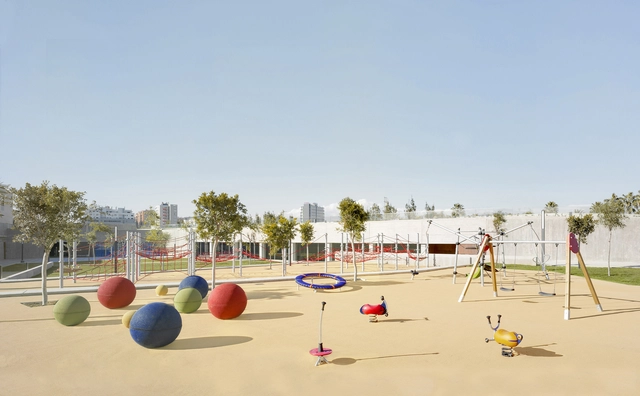
Featuring diverse materials, designs, and dynamics, the playground equipment represented by Urbanplay fosters open, spontaneous interactions, providing children with spaces to take risks, explore, and connect with nature.
Christopher Payne’s fascination with factories goes back decades. As an architecture student at the University of Pennsylvania in the 1990s, Payne had the good fortune to find a summer job with an agency inside the National Park Service called the Historic American Buildings Survey. “They sent teams of architecture students, historians, and photographers to document all kinds of projects,” he says. “We documented grain elevators in Buffalo, cast iron bridges in Ohio, a power plant in Alabama, and national parks in Utah. That experience instilled a deep appreciation for industrial architecture.” After graduation, he worked for several years as an architect in New York City before transitioning full-time to photography. His previous books include New York’s Forgotten Substations: The Power Behind the Subway; Asylum: Inside the Closed World of State Mental Hospitals; North Brother Island: The Last Unknown Place in New York City; and Making Steinway: An American Workplace. Last month, Payne gave the School of Visual Art’s Ralph Caplan Memorial Lecture, and shortly afterward I reached out to him to talk about his most recent book, Made in America (Abrams), his long love affair with factories, and the photographic process.
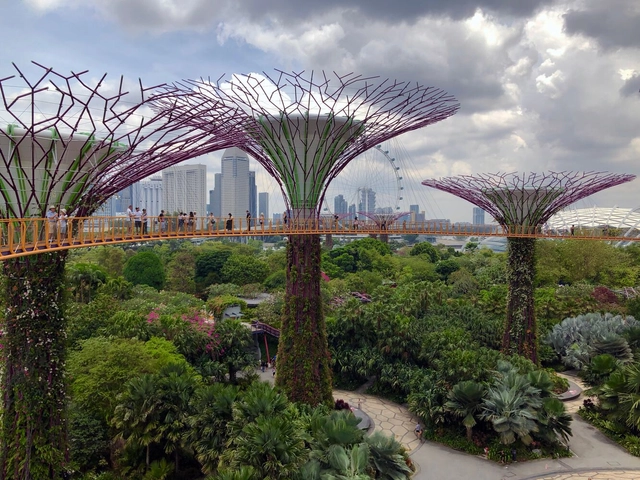
Marina Gardens, Singapore. Image by Nick Fewings Unsplash
For a long time, sustainability in the architectural field was synonymous with technology. Efficiency was directly linked to innovative technological devices that adorned buildings with gadgets. Nowadays, however, sustainability increasingly encompasses different strategies that also involve acknowledging vernacular techniques and local materials as crucial for creating sustainable and carbon-neutral buildings.
Nevertheless, regardless of the technique or materials employed, the common denominator is the pursuit of reducing the carbon footprint of our architecture, which demands changes in how buildings are conceived, constructed, and operated. In other words, whether returning to vernacular methods or utilizing cutting-edge applications, these strategies aim to reach the same destination and, therefore, are equally valid despite being vastly different.
It's fascinating to observe the current state of wood in the world of architecture. The material, once seemingly forgotten by modernity, has resurged with full force, facing significant challenges but also revealing promising opportunities. The aesthetic and architectural appeal of engineered wood, coupled with its intrinsic association with sustainability, has been a catalyst for the increase in wood-centric projects around the world.
Due to technological advancements and research into the limits and possibilities of this material, there has been a significant leap in the development of wood in construction. Buildings around the world are being erected with wooden structures, driven by the increasing interest in sustainable solutions based on renewable resources, a demand from both the public and architects and their clients.
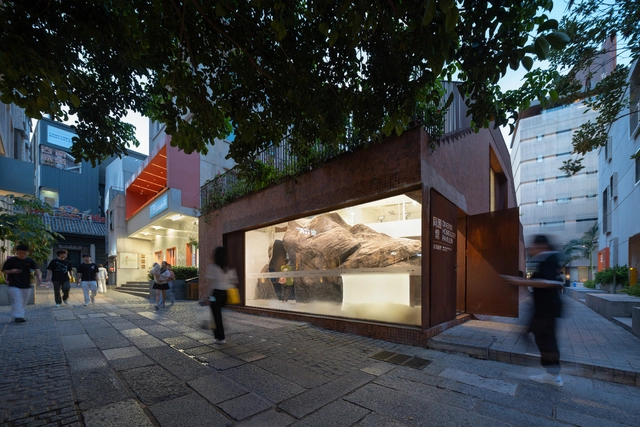
Project Positioning: Urban Renewal, Bay Area Cultural Landmark, Cultural Services for an Ancient Town's Historical Community Nantou Ancient City is located in the rapidly developing Nanshan District of Shenzhen. Situated on the eastern bank of the Pearl River Estuary, its history dates back nearly 1,700 years to the establishment of Dongguan County in 331 AD (the sixth year of the Xianhe era in the Eastern Jin Dynasty) [1]. With Shenzhen’s reform and opening up, the area has not only preserved the spatial layout of its historical village settlement but has also integrated industrial development and high-density housing, evolving into Shenzhen’s most unique “urban village” (chengzhongcun). In 2019, with the official launch of the Nantou Ancient City Protection and Utilization Project, two core questions emerged: how to unearth Nantou's historical context, and how to address the contemporary challenges of urban renewal through innovative design? These questions became the starting point for our team, Diameter Narrative Design (DND), in curating and designing the visitor experience for the “Shared Origins Museum Group” (Tongyuan Guanqun). Nantou's history dates back to 110 BC, when the Han government established the Panyu salt office here to oversee salt production along the eastern shore of the Pearl River Estuary. During the Eastern Jin Dynasty, the seats of both Dongguan County and Bao'an County were set in the Nantou area, extending Dongguan's jurisdiction from the eastern bank of the estuary to what is now eastern Guangdong. Subsequently, successive imperial dynasties established political, economic, and military administrative organs in Nantou. Consequently, Nantou is not only a witness to the shared roots of Shenzhen and Hong Kong but has also directly experienced the historical evolution of the Greater Bay Area. From its inception, the Nantou project aimed to become a cultural landmark for the Greater Bay Area, with the “Shared Origins Museum Group” serving as both a physical manifestation of Nantou's historical value and a hub for community public cultural services.
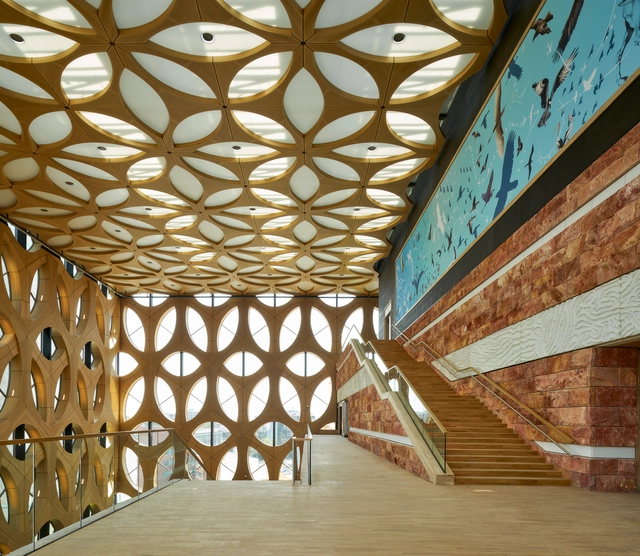
Naturalis Leiden - Naturalis Biodiversity Center, Netherlands | Fastmount™ Panel Mounting. Image Cortesia de Fastmount
Highly desirable in contemporary projects, seamless surfaces symbolize the search for a unified and uninterrupted visual experience, without any noticeable gaps or interruptions. This simple and clean aesthetic demands meticulous attention to detail, emphasizing precision in craftsmanship and execution to achieve an immaculate and flawless finish.
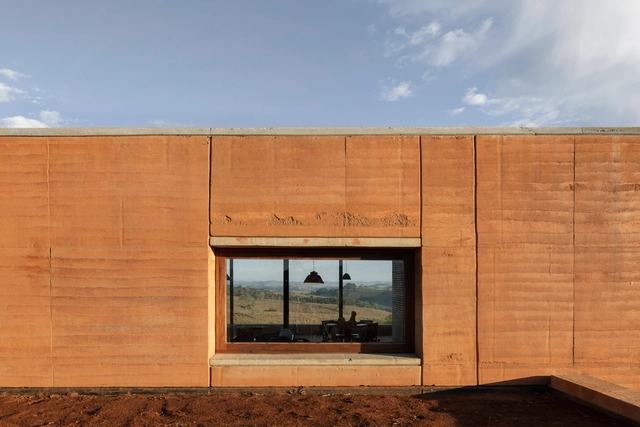
The historical journey of construction also tells the story of humanity. The enduring examples from the past reveal insights into their specific contexts, and the remnants that have survived the elements and decay narrate the development of human technology. In the early days of construction, the common (and often the only) practice available to humans was to use locally available raw materials. For many, this meant building with clay.