Every year since its establishment in 1970, Earth Day aims to bring into focus not only the increasingly threatening effects of climate change but also highlight the effective measures and adaptation efforts that can improve the quality of our environment. This year’s event comes after a report from the United Nations’ Intergovernmental Panel on Climate Change (IPCC) in March, which presented another warning on the magnitude of changes produced by human-induced global warming and its impact on people and ecosystems. The same report does offer some hopeful prospects as well, showing that adaptation measures can build resilience, but those urgent systemwide transformations are needed to secure a net-zero future. In response to these findings, the 2023 Earth Day is focused on the theme of “Investing in Our Planet,” as an encouragement for governments, institutions, businesses, and civil society to accelerate the change. Read on to discover several citywide initiatives aligned with these objectives of building resilience and a more sustainable future through legislation, civic involvement, and innovative systems.
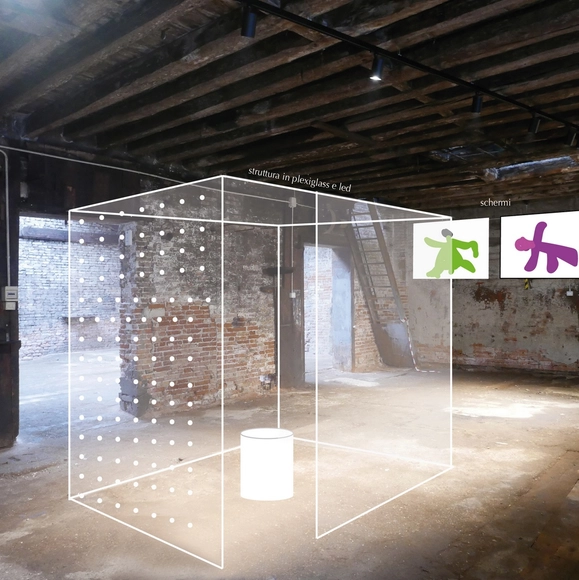
rendering for the Pavilion of the Republic of San Marino. Image Courtesy of Archivio Corsini
For this year’s annual architecture exhibition – La Biennale di Venezia, the Pavilion of San Marino will present the Hosting Guest project. Curated by Michael Kaethler and Marco Pierini, this intervention is an authentic co-design workshop focused on hospitality-related issues, part of an international and multi-year research project based on real places and needs. Representing the oldest Republic in the world, Artist Vittorio Corsini will participate in the pavilion with the help of a research team of students, designers, and researchers from San Marino, Venetian, and international universities.
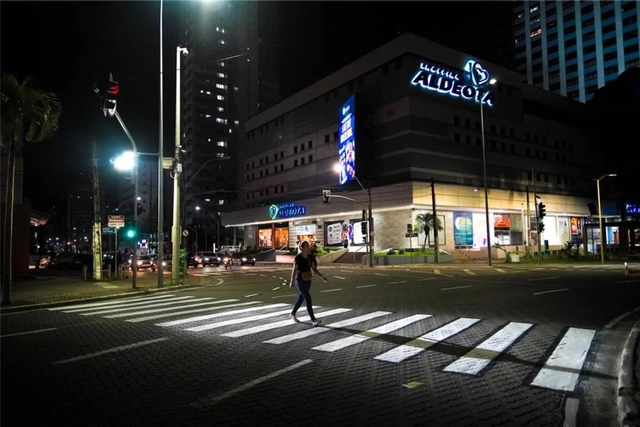
It is the first city in Latin America to implement the system. Photo: Daniel Calvet | Fortaleza City Hall
Fortaleza, the capital of Ceará, has just implemented an intelligent lighting model for crosswalks. Installed at the Praça Portugal roundabout, in the middle of the intersection of two of the city's major roads, the system could help reduce traffic accidents.
Powered by artificial intelligence, the system is capable of detecting human presence based on movement. When the dynamic lighting is activated, light beams track pedestrians from the start to the end of the crosswalk. The light improves driver visibility, especially at this specific location, where vehicles navigate a curve.
Situation in Rio Branco, capital of Acre. Photo: Pedro Devani | Secom
The past week brought chaos and despair to thousands of Brazilian families living in the country's North and Northeast regions. Heavy rains hit cities in Pará, Maranhão, Acre, and Amazonas, flooding hundreds of homes while others were completely destroyed by currents.
The system uses native aquatic plants to filter pollutants. Photo: Giselle Cahú | ARIES/CITinova
A nature-based solution to clean up a tributary of the Capibaribe River will be implemented in Recife, Pernambuco. Known as filtering gardens, the system consists of a group of native aquatic plants that will filter the mouth of the Cavouco Stream. Considered a sustainable and low-maintenance technology, the filtering gardens will be installed along the section where the stream flows through Caiara Park in the western zone of the capital, where about 10% of the polluted water flow will be treated.
https://www.archdaily.com/1135887/recife-to-build-a-7000-m2-filtering-garden-to-clean-up-a-streamArchDaily Team
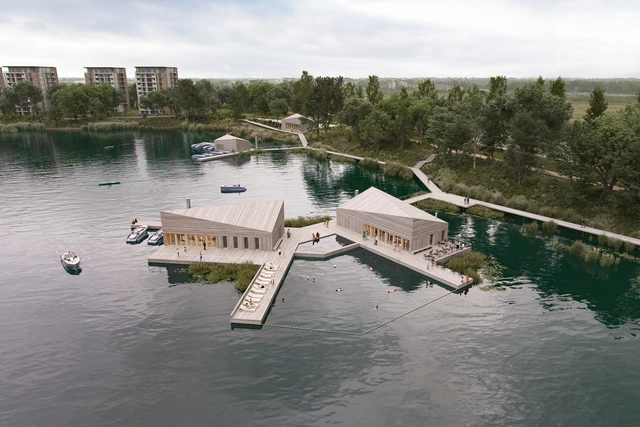
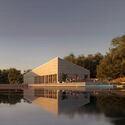
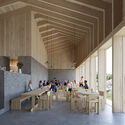
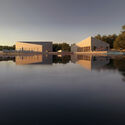
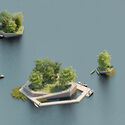
Danish Maritime Architecture Studio MAST, working together with the Municipality of Segrate, plans to transform a former sand quarry into a central park to reconnect the surrounding neighbourhoods and create a new destination for the residents of Milan, Italy. The abandoned quarry has left behind a unique landscape. The off]ice’s proposal includes a series of buildings along the lake’s perimeter linked by a public walkway and a cluster of islands in the centre of the lake. MAST is currently working with the Municipality of Segrate toward realising the project.
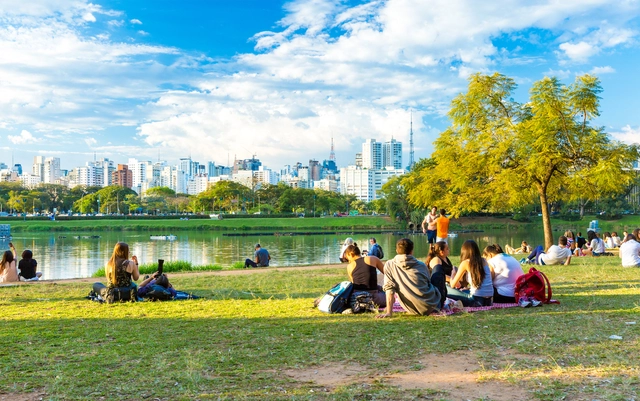
Earlier this month, the Viva o Verde SP project was launched. The result of a partnership between the São Paulo Municipal Government and UN-Habitat (United Nations Human Settlements Programme), the initiative is set to guide new municipal public policies aimed at improving the quality of green public spaces.
Initially, improvements will be proposed for 111 parks across the city of São Paulo. The goal is to achieve equity in the spatial distribution and accessibility of public green areas. “This will be an ongoing effort, not just to expand the number of parks. They will conduct diagnoses starting with ten main parks, followed by a batch of 80 parks, eventually reaching all 111 parks, identifying the specific improvements that need to be made,” said Mayor Ricardo Nunes.
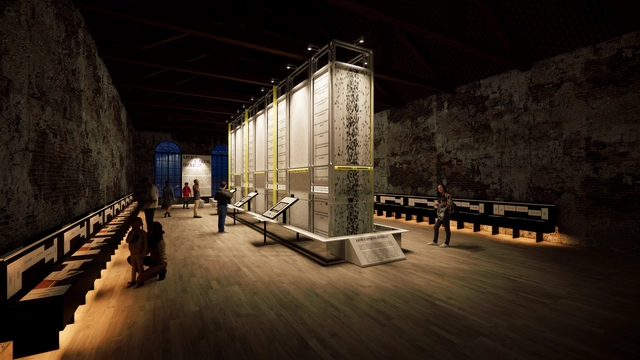
WHEN IS ENOUGH, ENOUGH, The Performance of Measurement. Image Courtesy of Singapore Pavilion
For this year’s 18th International Architecture Exhibition – La Biennale di Venezia, the Singapore Pavilion activates discussion on new methods of measuring and evaluating the intangible and asks explicitly: how much is enough? The exhibition explores a community’s interaction with its surroundings, suggesting that they are not currently measured within the same measurable, quantifiable and gradable standards that buildings and the built environment are designed and built to. Moreover, the pavilion suggests that connecting these two pillars of city architecture, it is essential to rethink innovation in design. The exhibition asks how architects can quantify the immeasurable values of architecture: agency, attachment, attraction, connection, freedom, and inclusion.
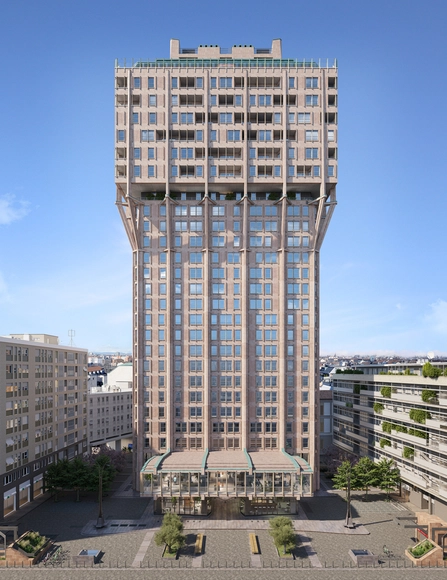
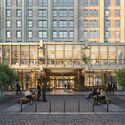
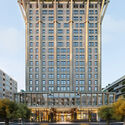
Torre Velasca, the renowned 1950s skyscraper by BBPR in Milan, Italy, is currently undergoing an extensive renovation process led by Asti Architetti and developed by Hines. After completing the work on the facades and with the extensive restoration of the interiors under way, the office has made public the project for the redesign of the Piazza Velasca, the square surrounding the tower. By turning it into a meeting and social gathering place, the architects hope to restore the status of the complex as a symbol of Milan’s architectural heritage. Pedestrian access to the building, and the renovation of previously disused adjacent spaces will open up the area for public access and will restore the original meaning of “piazza,” or square. The project is scheduled for completion by early 2024.
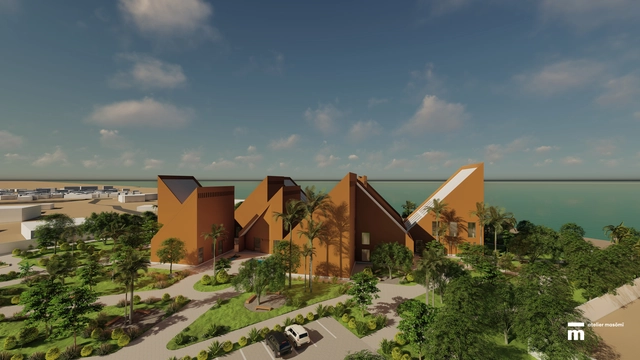
EJS Presidential Center. Image Courtesy of Atelier Masōmī
Atelier Masōmī has just revealed its design for The Ellen Johnson Sirleaf Presidential Center for Women and Development (EJS Center). President Ellen Johnson Sirleaf chose an all-female team to work on the project with lead architect Mariam Issoufou Kamara of Atelier Masōmī, exhibition's architect Sumayya Vally of Counterspace, and the local architect Liberian architect Karen Richards Barnes. The EJS Center, located in Liberia’s capital Monrovia, will provide digital access to former President Ellen Johnson Sirleaf’s personal and professional archives.
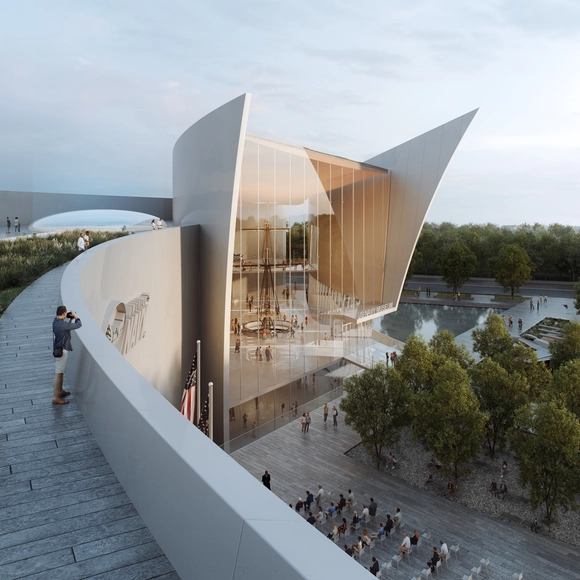
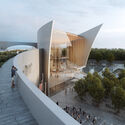
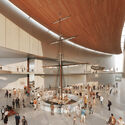
Perkins&Will has been selected as one of the five finalists in the nationwide artistic ideas competition for the design of the new National Museum of the U.S. Navy. The other finalists are DLR Group, Frank Gehry Partners, Quinn Evans, and BIG. Organised by the Naval Heritage History and Command’s (NHHC), the competition’s aim is to create a modern museum for Naval veterans and the public, a new building and ceremonial courtyard to reflect the Navy’s values and legacy. The campus would consist of approximately 270,000 square feet, with 100,000 square feet of gallery space. The Navy’s preferred location for the museum is on a site adjacent to the Washington Navy Yard.
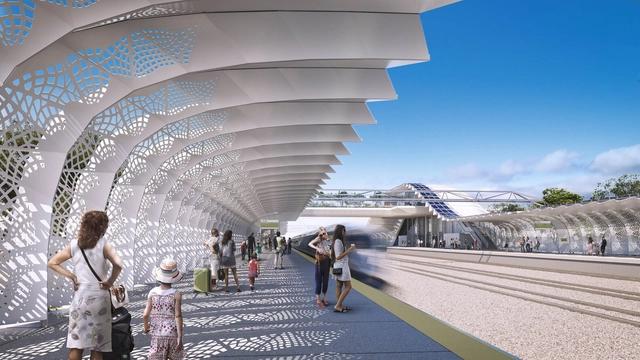
California High Speed Rail. Image Courtesy of Foster + Partners
Foster + Partners and Arup have chosen to work together to design the Merced, Fresno, Kings/Tulare, and Bakersfield stations that will service high-speed train passengers on the first 171-mile leg of California High-Speed train (CA HSR). The Central Valley stations will be the grand entrances to America's first high-speed rail stretch, marking an important step towards providing all Californians with sustainable, carbon-free transportation. Planning, architecture, and engineering for the four new stations, which will serve as design templates for stations planned for the whole 500-mile Los Angeles/Anaheim to San Francisco line, are being done jointly by Foster + Partners and Arup.
The California high-speed rail will connect the state's mega-regions, promote economic growth and a cleaner environment, foster job growth, and conserve agricultural and protected lands. With up to 200 mph speeds, the system can travel from San Francisco to the Los Angeles basin in less than three hours. The Authority is collaborating with regional partners to implement a state-wide rail modernization plan that will spend billions of dollars on local and regional rail lines.
Christophe Levy, Scientific Director at Holcim and Lord Norman Foster. Image Courtesy of Holcim & Norman Foster Foundation
During the 2023 Architectural Biennale in Venice, Holcim and the Norman Foster Foundation will announce the start of their Essential Houses Research Project. Through this collaboration, the Norman Foster Foundation created necessary housing to give displaced communities safety, comfort, and welfare while allowing them to live in temporary settlements for over 20 years. To make sustainable buildings accessible to everyone, Holcim constructed these necessary homes using various green products, such as Elevate Insulation Boards and ECOPact low-carbon concrete.
Part of the beauty of an architectural education is that it provides you with design skills that can be applied to a wide variety to jobs. So when it came time for Kharkov University Architecture School graduate Dinara Kasko to select a career path, she chose to pursue something a little bit sweeter: architectural pastry chef.
For the 18th International Architecture Exhibition – La Biennale di Venezia, the Lithuanian Pavilion will present an exhibition titled “Children’s Forest Pavilion”, curated by Jurga Daubaraitė, Egija Inzule, and Jonas Žukauskas. The intervention aims to become a playscape, acknowledging the unique perspectives through which children observe and interact with their environment. The project strives to explain the ecosystem of the forest, bringing together works and findings developed in parallel to outdoor activities held with children in the woodlands of Lithuania and Finland. Environmental educators, activists, architects and foresters will discuss the idea of forests as negotiated spaces where all actors play an important role. The Pavilion will be open from May 20th until November 26th, 2023.
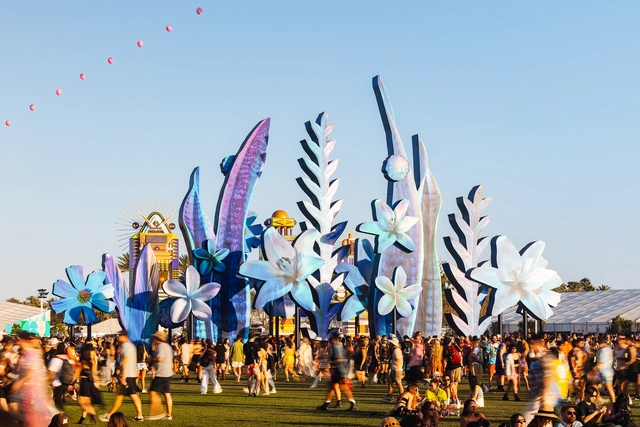
The Coachella Valley Music Festival, an annual music and arts festival held in the Colorado desert, opened on April 14th, 2023. Over the two weekends, April 14–16 and April 21–23, 2023, four emerging designers and artists worldwide will leave their stamp on the famous landscape. The festival will feature art installations made by a total of nine international designers, artists, and collectives. The newly-commissioned sculptural works by Kumkum Fernando, Vincent Leroy, Güvenç Özel, and Maggie West lend color, light, and alternate perspectives to the charged atmosphere and act as fresh, colorful, and architectural beacons that transform the iconic Coachella landscape at various times of day and night.
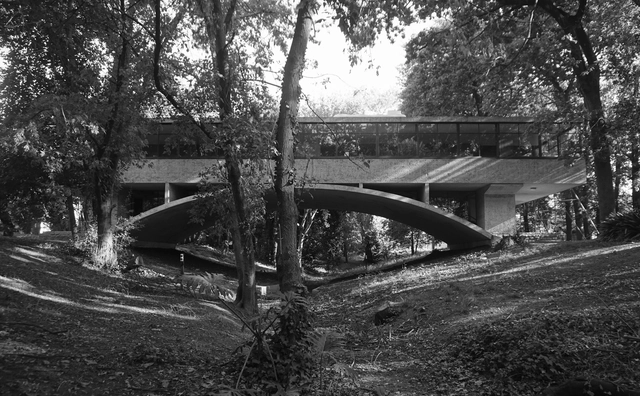
Mar del Plata is an obligatory reference to the Argentine modern movement. At the same time, it is the setting for many architectural classics that have been victims of neglect for years.
Magalí Marazzo, director of the municipality's Department of Works and Urban Planning and member of the National Monuments Commission, has taken charge of the situation by completing the restoration project of a paradigmatic work of 20th-century architecture: The House on the River.
MVRDV has joined the Van Gogh Homeland Foundation to develop the first Van Gogh Homeland Biennale to bring awareness to the challenges faced by the Brabant region. At the initiative of Midpoint Brabant, the experience strives to combine knowledge of architecture, landscape design, and sustainability to reignite enthusiasm for the Brabant landscape, Vincent van Gogh;s native Dutch province. According to the organisers, the region is facing a number of threats, including the increasing number of floods and the limited availability of space, but, through an orchestrated effort, the landscape that inspired van Gogh 150 years ago can become more sustainable and greener in the future.