The Municipality of Cascais, with technical support from the OASRS, launched the "Sommer Pavilion International Ideas Competition" in May of this year for the construction of a temporary intervention in Jardim da Parada, next to Casa Sommer, in downtown Cascais, Portugal. The project "Gravidade em Suspenso," by architect Inês Abreu Ribeiro and engineer Fernando Coutinho de Vasconcelos Pereira da Silva, was named the winner. Out of the 49 proposals evaluated, the jury considered that the winning entry stood out for its “stimulating approach to the competition theme, exploring different states of water in the form of a 'rain pavilion' and a 'fog pavilion' that relate to each other.”
The History Channel has released its first entirely Brazilian production. Titled Mil Dias - A Saga da Construção de Brasília, the series tells the story of the construction of the new capital from the perspective of four characters who built the city in the cerrado: a surveyor, an engineer, an architect, and a construction worker.
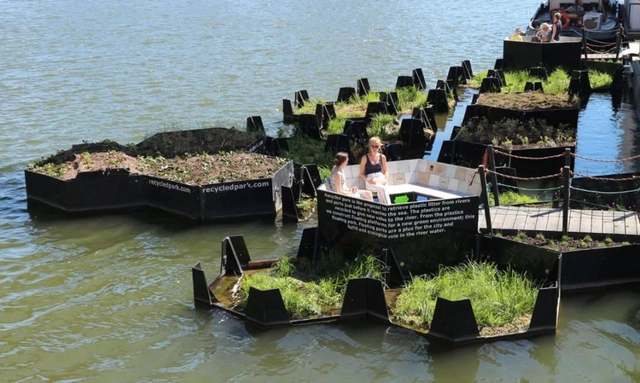
After nearly five years of design, plastic recovery, recycling, fundraising, and intensive collaboration, the first floating park made of recycled plastic has opened. The prototype was installed in the Port of Rotterdam, Europe's largest seaport, located in the second-largest Dutch city.
Measuring 140 square meters, the so-called “Recycled Park” demonstrates the potential of discarded materials. For this project, the Recycled Island Foundation collected plastics over a year and a half by installing “traps” in polluted rivers before they could reach the sea.
A few weeks ago, Sweden inaugurated a road that recharges commercial and passenger vehicle batteries while driving. Named the eRoadArlanda project, the two-kilometer route was built outside Arlanda Airport in Stockholm, the country's capital.
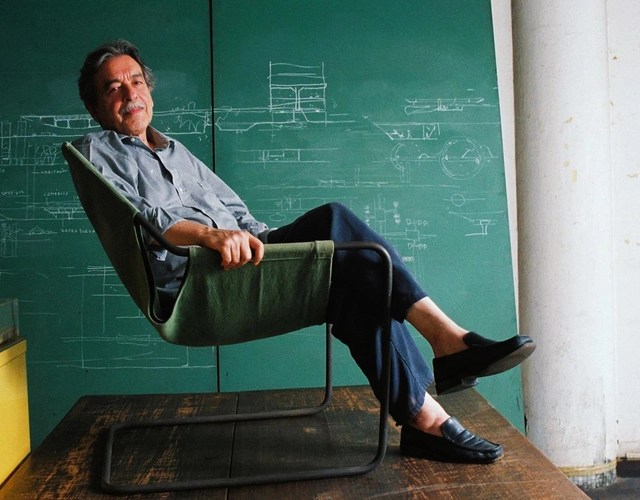
Nine of the architect's unbuilt projects, which have never been exhibited in Brazil and were only previously shown at the Venice Biennale in 2000, are featured in the exhibition, which opens in his honor a month and a half before his 90th birthday. In total, the show brings together 11 of his most radical and experimental works, which share common themes of water, nature, landscape, and territory beyond the architectural scale.
Last November, the Comptroller General of Chile ordered the halt of construction of the so-called vertical ghettos in the municipality of Estación Central (Santiago). In response, on Friday, December 14, a group of real estate developers filed a series of injunctions against the resolution, while the Chilean Chamber of Construction raised concerns regarding the suspension of projects, as reported by the Chilean newspaper El Mercurio.
At the same time, the Colegio de Arquitectos de Chile (Chilean Association of Architects), the Association of Architectural Offices (AOA), the Association of Works Directors and Municipal Works Department Professionals of Chile, the Association of Independent Reviewing Architects of Chile, and the National Association of Independent Reviewers issued a document obtained by El Mercurio. In it, they claim they "have seen [their] right to practice their profession with confidence affected [...] due to the legal uncertainty currently facing our field."
To streamline tree mapping, the Secretariat of Environment and Animal Welfare (Sema) is studying the development of an app to record information on tree species in the city's urban forest. If the study proves viable, the software is expected to be ready by the second half of this year.
The system, currently under study, is part of the Urban Forestry Master Plan, mandated by the Public Prosecutor's Office and launched in March of last year. The inventory is the most time-consuming phase of the project; however, the app will make it possible to map urban trees in certain areas of the city, collecting data such as geographical coordinates and tree health.
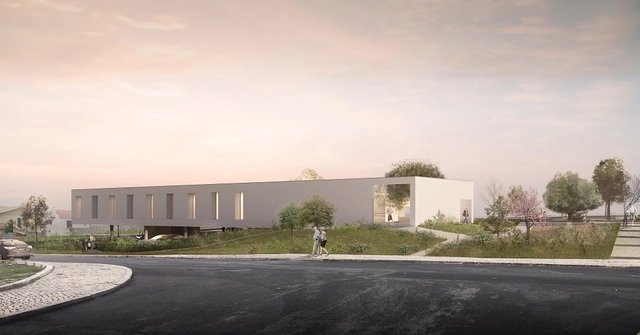
1º lugar. Image Cortesia de Ordem dos Arquitectos SRS
The results of the public design competition for the Santa Iria da Azóia Health Unit Project in Loures were recently announced. Organized by the Loures Municipal Council with technical support from the Southern Regional Section of the Order of Architects (OASRS), the team from LXM Studio, led by architect João Lisboa, was awarded first place. The jury, consisting of architects João Félix and Carlos Santos from the Loures Municipal Council and architect Victor Neves (appointed by OASRS), noted that of the 35 proposals evaluated, the winning entry stood out for its seamless integration with the surroundings, contributing to an effective visual and landscape revitalization of the adjacent space. The jury also noted that “the solution designed for the exterior openings is innovative and highly functional.”
Santa Iria de Azóia is a Portuguese town in the municipality of Loures, with an area of 7.52 km² and 18,240 inhabitants (2011 data). The site is located in the Pirescoxe area of Santa Iria da Azóia, where the built cultural heritage closest to the intervention area features two prominent buildings: the Pirescoxe Castle, classified as a Property of Public Interest, and the Pirescoxe Convent. The general objectives of the competition were:
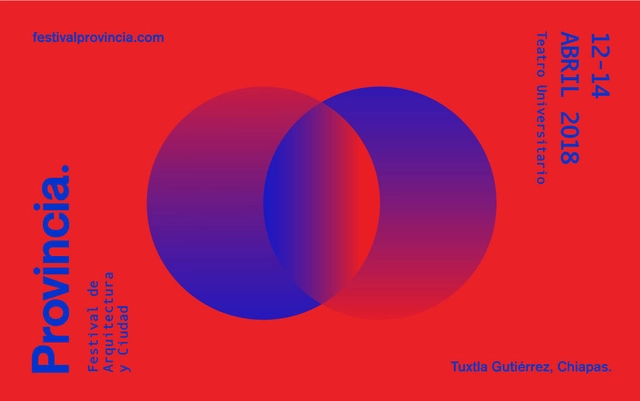
Provincia Festival aims to create an open space for dialogue and the exhibition of civic interest topics, emphasizing responsible participation in provincial architectural development.
The website Mobilize, Brazil's first platform dedicated exclusively to sustainable urban mobility, has published a list of 30 must-see documentaries on the subject. Divided into feature and medium-length films, the selected titles address urban mobility from various perspectives, ranging from mass transit and non-motorized personal transport to urban culture and the June 2013 protests in Brazil.
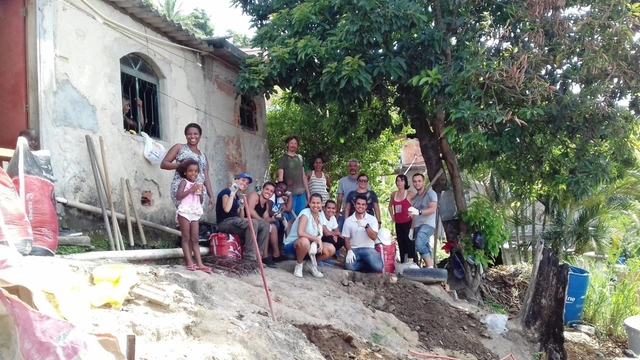
Jayana da Cruz's house (left) has already undergone some renovations with the help of the Arquiteto de Família project. Photo: ONG Soluções Urbanas
The NGO Soluções Urbanas launched a crowdfunding platform earlier this month to enable technical assistance, the purchase of materials, and renovation work in precarious housing. Named Arquiteto de Família, the tool was developed with sponsorship from CAU/RJ.
The platform's goal is to facilitate access to better housing conditions, and the funds raised through the tool can be combined with resources from other sources, such as microcredit and barter fairs.
The third edition of Hello Wood Argentina is approaching—the renowned timber architecture and design festival that aims to teach thinking with your hands and learning through experience.
From March 2 to 10, 2019, 10 selected projects will be built around this edition's theme: a space of containment, a space of CON-TENSION.
Discover the projects selected for Hello WoodArgentina 2019, described in the words of their creators, below.
The deck is finished, the beams and columns have already been painted, and construction is moving forward at a good pace at the Guarda Housing Complex in Perafita, Matosinhos, Portugal, which will very soon see the completion of Uma Casa de Brincar e Não Só… / Not Only a Playhouse, built as part of the second edition of “O Lugar de Partilha.” At the end of the first week on-site, there is still much work to be done for this Self-Construction Laboratory organized by Casa da Arquitectura (CA) – Portuguese Center for Architecture and curated by Roberto Cremascoli, but spirits are high, and by August 10th, everything will be ready for the local community to enjoy.
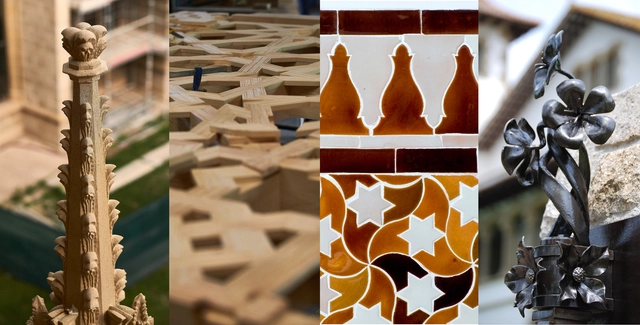
Galardonados Premios Richard H. Driehaus Artes de la Construcción . Image Cortesía de Premios Richard H. Driehaus
The winners of the second edition of the Richard H. Driehaus Building Arts Awards, which recognize leading masters in Spain's traditional building crafts, have recently been announced. With a total of 84 nominations received, the traditional building crafts were grouped into four categories, with each category presenting an annual award of €10,000 and a commemorative plaque.
The first category covers arches and vaults, vaulted staircases, stone carving, and other masonry and stone-cutting work. The jury selected Cantería Jaurrieta, from Olite (Navarra), run by Valeriano Jaurrieta and Agustina Rodríguez Orduña, to receive this award.
https://www.archdaily.com/1114268/the-ironwork-of-the-sagrada-familia-and-nasrid-tilework-among-the-winners-of-the-driehaus-building-arts-awardsJavier García Librero
Proposta de Denis Joelsons e Gabriela Baraúna Arquitetos. Image Cortesia de Escola da Cidade
The winners of the Vila dos Mellos Competition, promoted by Escola da Cidade, have been announced. Aiming to select five model single-family residential designs featuring rationalized construction for the Vila dos Mellos Condominium—a development that plans for the construction of 101 homes—the competition specified that each lot would receive one of the five winning designs, chosen at the discretion of the new owner.
Plazoleta Amo Torres is a project by Echauri Morales in collaboration with Corporación Planen.Located in downtown Guadalajara, Jalisco, Mexico, the intervention comprises a series of urban design gestures aimed at revitalizing the area along Hidalgo Avenue at its intersection with Santa Mónica Street, directly in front of the Corona Market.
Flooding in St. Mark's Basilica. Image: Procuradoria da Basílica de São Marcos, via El País
As Europe's second most visited built heritage site, behind only the Colosseum in Rome, St. Mark's Basilica in Venice receives over 5 million visitors annually. Yet, under the strain of this massive influx, the 11th-century Byzantine mosaic floors seem to be succumbing to the effects of the floating city's tides.
The undulations in the basilica's floor are visible to the naked eye—feet have not touched them for a decade, as visitors are only allowed to walk on synthetic carpet runners—and they have even cracked at the most critical points, especially in the center of the building. Currently, only 20% of the geometric marble and stone patterns are original; the rest has been restored over the last ten centuries by the artisans of the St. Mark's Workshop.
With the aim of "reducing response times and streamlining the processing of certificates, permits, and final approvals," Chile will launch a digital platform called DOM en Línea, as reported by the newspaper La Tercera.
Currently, every municipality, regardless of size, has a Municipal Works Department (DOM). This department is responsible for ensuring compliance with local urban planning and construction regulations. Consequently, the DOM is tasked with authorizing new construction projects through an in-person, paper-based process; therefore, the DOM en Línea platform will allow these procedures to be completed online.




.jpg?1535567635&format=webp&width=640&height=580)


.jpg?1533646991&format=webp&width=640&height=580)

.jpg?1538415823)
.jpg?1538415966 "© Carlos Díaz")