This article was originally published on the blog of the Chicago Architecture Biennial, the largest platform for contemporary architecture in North America. The blog invites designers, writers and other contributors to independently express their perspectives on the Biennial across a range of formats. The 2017 Biennial, entitled Make New History, will be free and open to the public between September 16, 2017 and January 6, 2018.
Some works of architectural writing can be taken at face value as stark manifestos for a new aesthetic. Keith Krumwiede’s Atlas of Another America is, instead, a constantly unfurling satire that offers layers upon layers of artfully imagined social commentary. Like McMansion Hell, my own long-form satirical project, Krumwiede’s “architectural fiction" sends up American ideas about economics, politics, and culture by picking apart our outrageous suburban housing types. The project will be on display at the Chicago Architecture Biennial this fall, delivering a sardonic vision of American architecture that comes out of academic theory, but has a potent message for anyone who has spent time in suburbia.
Courtesy of The United States Department of Housing and Urban Development (in public domain)
Immortalized through photographs, drawings, and stories, buildings that have been demolished or completely renovated exist in the realm known as “lost architecture.” Either for economic or aesthetic reasons, the old gets torn down for the new, often to the disdain of community members and architects. But demolished buildings tell a story about the ever-changing politics of preservation—and often, they tell it far better than buildings that were actually preserved ever could. As the architectural landscape continues to change around us, it is important to recognize our past, even if its traces have been eliminated from the physical world.
The 2017 Serpentine Pavilion, designed by Diébédo Francis Kéré (Kéré Architecture), was unveiled today in London. Conceived as a micro cosmos—"a community structure within Kensington Gardens"—the pavilion has been designed to consciously fuse cultural references from Kéré's home town of Gando in Burkino Faso, with "experimental construction techniques." The architect hopes that the pavilion, as a social condenser, "will become a beacon of light, a symbol of storytelling and togetherness."
https://www.archdaily.com/874091/diebedo-francis-kere-serpentine-pavilion-opens-london-will-come-alive-when-it-rainsAD Editorial Team
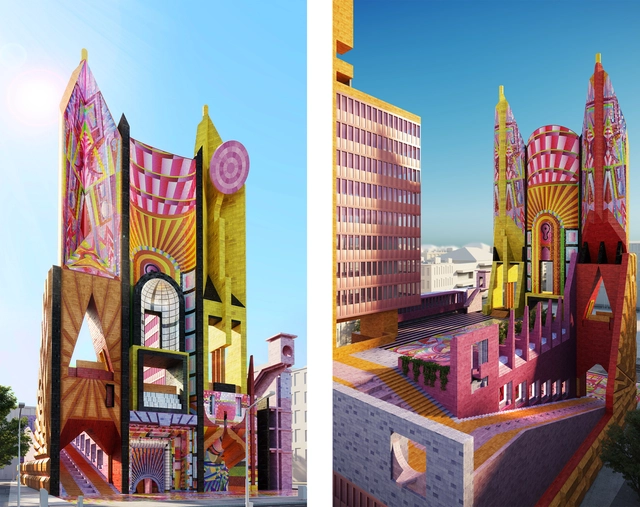
One Wall Street, before and after. Images: left, Via Wikimedia in public domain; right, Courtesy of Hollwich Kushner
The New York Timesrecently reported that over 40% of the buildings on the island of Manhattan wouldn’t be granted construction permits in 2017. Most of the culprits date back to the early 20th century when attitudes towards density, ceiling heights, column placement, and general living standards were different. This begs the question: what would modern iterations of New York’s signature structures look like today? Billed by the practice as “an obsessive-compulsive study of the city we love” HWKN’s New(er) York is a peculiar experiment that tackles this hypothetical.
Had the worst jury ever? Failed your exams? Worry not! Before you fall on your bed and cry yourself to sleep—after posting a cute, frantic-looking selfie on Instagram, of course (hashtag so dead)—take a look at this list of nine celebrated architects, all of whom share a common trait. You might think that a shiny architecture degree is a requirement to be a successful architect; why else would you put yourself through so many years of architecture school? Well, while the title of "architect" may be protected in many countries, that doesn't mean you can't design amazing architecture—as demonstrated by these nine architects, who threw convention to the wind and took the road less traveled to architectural fame.
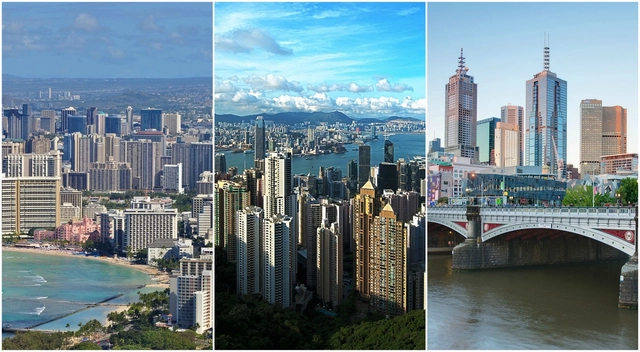
The Naomi Milhave Foundation have released OMA‘s first renders and drawings for their upcoming MPavilion which is set to take shape this fall in Melbourne, Austrailia. The counterpart to the Serpentine Gallery Pavilion in London, the MPavilion is now in its fourth year. Comprising static and dynamic elements, OMA’s proposal allows for multiple configurations that can generate unexpected programming, echoing the ideals of the typology of the amphitheater. Following the idea of the traditional amphitheater, OMA’s design will be “itself built to perform” as a space for public debate, design workshops, music and arts events.
Charles Thornton, one of the world’s preeminent structural engineers, once said that the greatest challenge facing the profession of structural engineering is that “I don’t think we have enough self-esteem and enough confidence in ourselves to believe that what we do is so important... Architects are trained to present, to communicate, to sell, to promote themselves, to promote their industry, and to take credit for what they do.”
As a structural engineer with over a decade of experience, I agree with Mr. Thornton—to an extent.
Despite the insistence of some, vinyl records haven’t undergone a resurgence because of their supposed superior sound quality. Instead, the impractical medium remains cherished for its quirk and ambiguity. As of late, the collage has made a has made a comeback as a representational strategy for the very same reason, sparking a recent debate around the potential emergence of "post-digital drawing."
Intentionally fantastical compilations empower architects to create clear narratives to supplement their work. In response to this growing popularity, a number of websites have popped up to bolster the trend. Image hosting hub ARTCUTOUT is a curated collection of meticulously detailed, public domain .PNGs nabbed from works of art that were “mostly created several centuries ago by European painters and cartographers.” Serving as a something akin to a “post-digital” version of famed render hub SKALGUBBAR, ARTCUTOUT has the potential to be a go-to resource for the next wave of designers.
Some unbuilt designs—the hopes they reveal and the reasons they stayed unbuilt—tell a powerful story. So it is with the home Frank Lloyd Wright designed for Marilyn Monroe and Arthur Miller. Or perhaps it’s what we think we know about Marilyn that makes it so poignant?
The union between a quiet-living intellectual and the world’s greatest sex symbol was baffling to the public, and the conflict between their aspirations and personalities seems to have played out in their plans for this Connecticut home. After moving into Miller’s country retreat, Monroe asked Wright to design a new house for them on this vast piece of land.
Imagine you’re part of a crew constructing a new office building: Midway through the process, you’re on-site, inspecting the installation of HVAC systems. You put on a funny-looking construction helmet and step out of the service elevator. As you look up, there’s a drop ceiling being installed, but you want to know what’s going on behind it.
Through the visor on your helmet, you pull up the Building Information Model (BIM), which is instantly projected across your field of vision. There are heating ducts, water pipes, and electrical boxes, moving and shifting with your point of view as you walk along the corridors. Peel back layers of the model to see the building’s steel structure, insulation, and material finishes. It’s like having comic book-style X-ray vision—and soon, it could be a reality on a construction site near you.
The 22nd ARCH Moscow International Exhibition of Architecture and Design was held in Moscow on May 24-28. ArchDaily joined the exhibition’s partners this year for the first time, and together with speech: media-project they presented a special exposition during Arch Moscow.
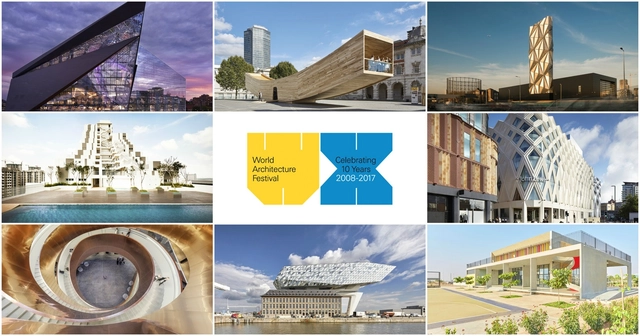
Featuring the buildings that received the ArchDaily Building of the Year award in 2017. The 16 sites that received the most votes this year from visitors of the ArchDaily website became the focus of this exposition designed by the architect Sergei Tchoban (together with the architect Andrei Perlich, and curator Anna Martovitskaya – chief editor of speech: magazine). In order to best show the sites’ photographs and drawings, the installation was designed in the form of 8 double blocks, whose shape and color reference the ArchDaily logo. Before us are snow-white rectangular blocks with the recognizable blue window-niches, and it is in these niches that the photographs of the best buildings of the year are displayed.
Once largely viewed as a fringe activity belonging to passionate extremists, protest is now—in the wake of a controversial new administration’s ascension to power in the US and a heightened interest in politics globally—a commonplace occurrence, with a much broader participant base in need of places to gather and move en masse. This revitalized interest in protest was perhaps most visible on one particularly historic occasion: on January 21st, 2017, a record-breaking 4.2 million people took to the streets across the US to exercise their first-amendment rights.
Women’s marches took place on the frozen tundra (we have photographic evidence from a scientist in the Arctic Circle) and even in a Los Angeles cancer ward. But for the most part, these protests happened in the streets. In the first few months of 2017, the streets of our cities suddenly took center stage on screens across the world. From Washington to Seattle, Sydney to San Antonio, Paris to Fairbanks, broad boulevards and small town main streets were transformed from spaces for movement to places of resistance. From the Women’s March on Washington to April’s People’s Climate March, protestors are looking for space to convene and advocate for the issues that matter most to them.
https://www.archdaily.com/873608/8-ways-we-can-improve-the-design-of-our-streets-for-protestGina Ford and Martin Zogran
A 24-storey residential tower—Grenfell House—in North Kensington, London, has been subject to a devastating fire and extensive subsequent loss of life. 200 firefighters in 45 fire engines attended the scene following reports of fire at around 0100 local time. The building, originally constructed in 1974, underwent a restoration by Studio E [at this time their website is not responding] "less than two years ago," reports the Architects' Journal.
https://www.archdaily.com/873635/london-kensington-residential-tower-grenfell-house-subject-to-devastating-fire-loss-of-life-questions-raised-about-refurbishmentAD Editorial Team
Early in the 19th century, an invention arrived that would change the form and function of cities for generations.
Like all new technologies, it started out rudimentary, expensive, and nearly ineffectual. But it caught many imaginations and developed dramatically, eventually reaching the point of mass accessibility. Soon enough, it took aim at the public realm, with consequences that were indirect and unintended yet profound.
It reconfigured streets. It influenced the height of buildings. It altered foot traffic. It recast the relationship between buildings and streets. It changed how people felt about their cities and changed their points of reference. It turned cities into abstractions and, in some ways, turned city-dwellers against each other. Its influence nearly complete by the close of World War I, the invention has remained fundamentally unchanged, and is still universally celebrated, to this day.
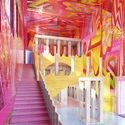
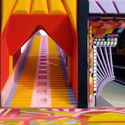
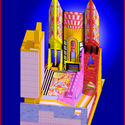
Millennial Pink has broken into the design consciousness of more than its named generation. Though hugely successful in fashion and pop-culture (and Instagram), the playful color has established a presence across design products and the built environment like never before. Colour is a fundamental tool in our perception of architecture, with architects like Ricardo Bofill and Luis Barragan having baptized pink into a high-impact contributor through their works. With that in mind, check out these 13 projects showing why pink is here to stay:
As the boundary that separates work and leisure in the 21st Century continues to be blurred by technology, architects Christoph Hesse and Neeraj Bhatia sought out to uncover a tranquil solution. The pair are co-curating an upcoming exhibition at the Kulturbahnhof Kassel in Germany as part of Experimenta Urbana in a show called “Ways of Life,” which opens July 5th.
This international initiative seeks to discover “a new nomaticism.” A gathering of 19 emerging architecture offices each presents a dwelling encompassed in nature. These buildings are often equal parts project and manifesto. The show’s overarching theme is the delicate balance of naturally induced relaxation and programmatically encouraged productivity. Each firm must additionally consider constraints that include limited square footage, integration of rapidly advancing information technology, and a strictly sustainable design.
In a recent blog post from the Solomon R. Guggenheim Museum, curator Ashley Mendelsohn explores unrealized design details from Frank Lloyd Wright’s iconic design in New York City, based on blueprints and drawings from the museum’s archives. From large-scale questions of form to material choices, the 16-year period between the commission and the completion of the museum saw many design iterations. Most notable of these are the circulation paths drawn by Wright in the 1953 blueprints that include a steeper circular ramp—in addition to the "Grand Ramp"—that would allow for expedited access to the floors. Though replaced later with a triangular staircase, the "Quick Ramp" demonstrates Wright’s exploration of overlapping geometries.