
-
Architects: Zanderroth Architekten
- Year: 2013
-
Professionals: Ingenieurbüro Leipold, herrburg Landschaftsarchitekten, Berlin


.gif?1442234568)
Penda's proposal for the New Bauhaus Museum competition features a transformable design that serves as an “extension of the city on one hand and as a connector to the surrounding park on the other.” The design features two rotating platforms that can open to connect the museum to the sculpture park during the day and close at night. Although not selected as the winning design, Penda's "Flexible Bauhaus" proposal was one of the finalists selected to participate in the second stage of the competition. Read more about their proposal after the break.
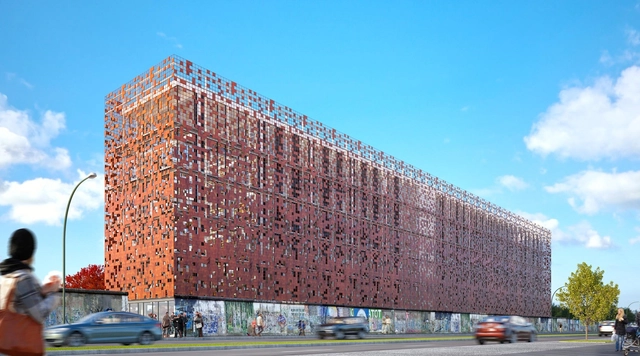
As the longest open-air gallery in the world, the East Side Gallery in Berlin is undoubtedly a popular destination for art enthusiasts, historians, and tourists alike. Covered in political artwork, the Eastern side of the largest remaining portion of the Berlin Wall has a strong historic as well as aesthetic presence. The other side, however, seems much more barren and abandoned.
With this contrast in mind, architects Emiliano Lareu and Marie de Testa have developed an idea to overcome the sense of desolation found on the opposite side of the wall. Though the designs are only a concept, they are easily imagined in the context of Berlin’s greater cityscape.
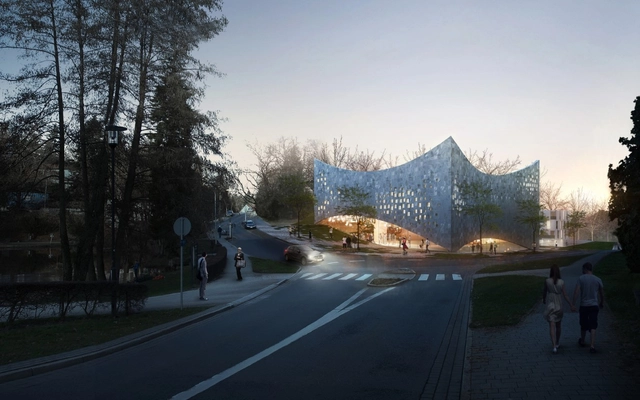
URBAN AGENCY, BEM Architects and bbz have unveiled their proposal for the Kronberg School of Music, in Kronberg, Germany, which includes a music chamber, music school and hotel. Developed as an invited competition entry, the project aims to enhance the area around the Kronberg train station and act as a new “gate” to the city, designed to blend into the forecourt of the station.
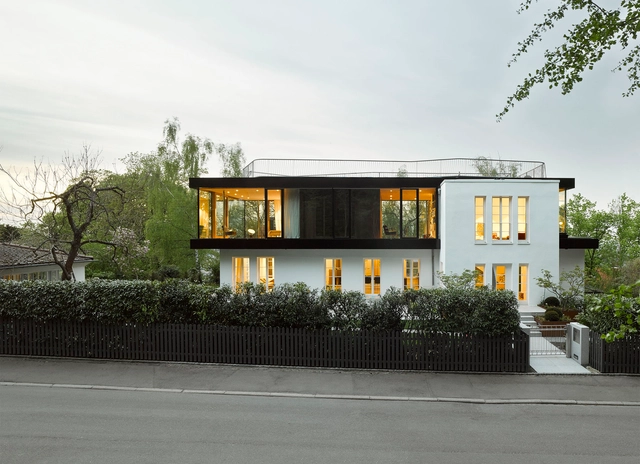
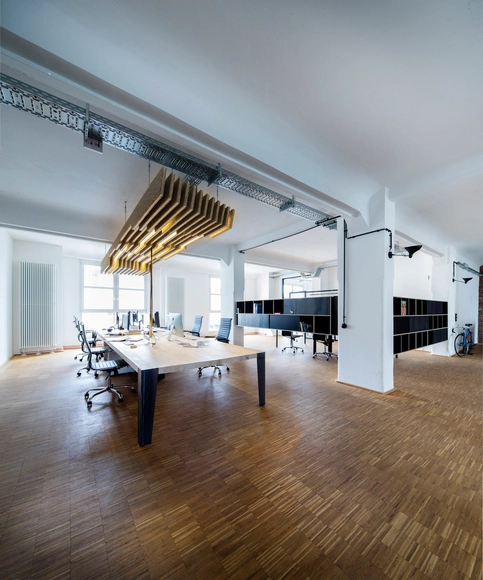
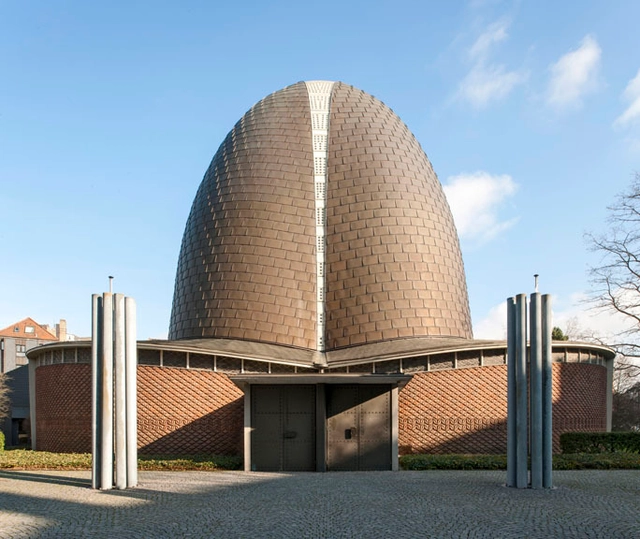
On 23 August, 2015 Paul Schneider von Esleben would have turned 100. With his projects he emphatically shaped the post-War architecture of West Germany until well into the 1970s. In North Rhine-Westphalia in particular he left behind a series of buildings that reflect the developments in architectural history in the first 20 years after the war. Von Esleben viewed buildings as gesamtkunstwerke, which he designed down to the last detail, be it art on the buildings or the furnishings inside.
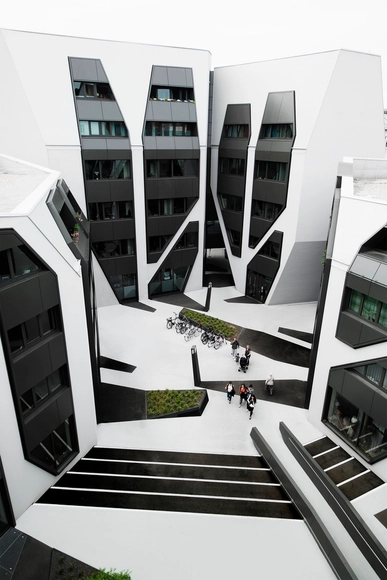
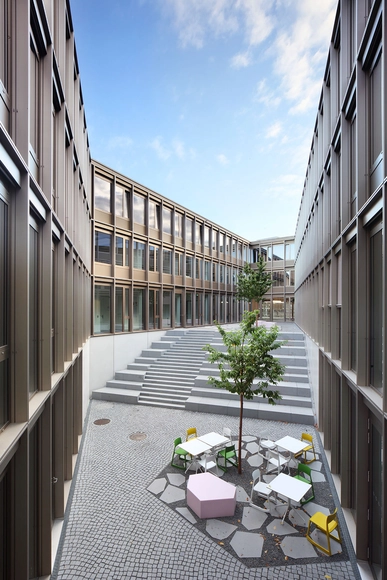
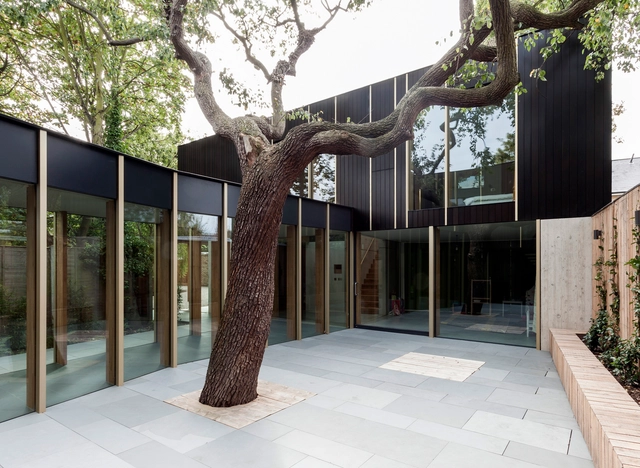
An exclusive architect-led, behind the scenes talk and tour of this RIBA London Award winning family home by Edgley Design. Discover the stories behind the building, what inspired the architect and what it means to have won this prize.

Argentine artist Leandro Erlich has created “Pulled by the Roots” – a massive construction crane carrying an entire house mid-air over the Karlsruhe Market Place in Karlsruhe, Germany. With a root system dangling from beneath it, the house takes its title literally. Read more about this sculpture installation after the break.

_copy.jpg?1442233088 "Exterior Rendered View. Image Courtesy of Penda")
_copy.jpg?1442233180 "Interior Rendered View. Image Courtesy of Penda")
.jpg?1442233330 "Model. Image Courtesy of Penda")
.jpg?1442232980 "Exterior Rendered View. Image Courtesy of Penda")
.jpg?1442232992)