.jpg?1472177279&format=webp&width=640&height=580)
.jpg?1472177169 "© Didier Boy de la Tour")
.jpg?1472177100 "© Didier Boy de la Tour")
.jpg?1472177324 "© Didier Boy de la Tour")
.jpg?1472177279 "© Didier Boy de la Tour")
.jpg?1472177279)
-
Architects: Architecture Patrick Mauger
- Area: 4228 m²
- Year: 2015
-
Manufacturers: ETHA, Gérard Ledreux, Joseph Ingénierie
-
Professionals: Bouygues Construction


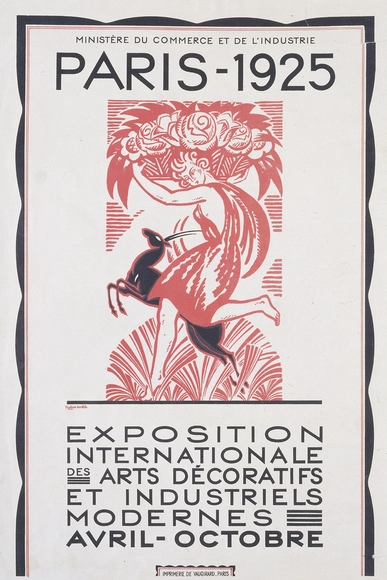
The end of the First World War did not mark the end of struggle in Europe. France, as the primary location of the conflict’s Western Front, suffered heavy losses in both manpower and industrial productivity; the resulting economic instability would plague the country well into the 1920s.[1] It was in the midst of these uncertain times that the French would signal their intention to look not to their recent troubled past, but to a brighter and more optimistic future. This signal came in the form of the Exposition Internationale des Arts Décoratifs et Industriels Modernes (International Exposition of Decorative Arts and Modern Industries) of 1925 – a landmark exhibition which both gave rise to a new international style and, ultimately, provided its name: Art Deco.

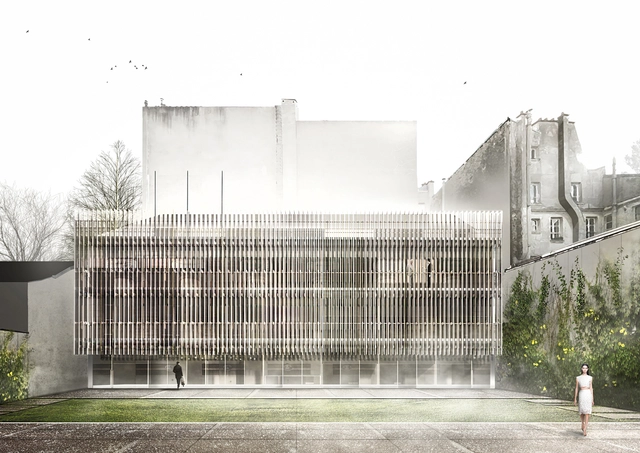
As part of an experimental ideas exhibition, Tomas Ghisellini Architects (TGA) have designed an extension to the Italian Institute of Culture in Paris. Nine Italian practices were engaged by a consortium of French and Italian institutions, and this cohesive union of cultures is mirrored in TGA's design. TGA's proposal plays with transparency and layering, with two large volumes of glass and steel referencing the "Parisian architectures of transparency," whilst displaying the excellence of Italian materiality and craftsmanship. The exhibition is being shown at the historical complex of the Hotel de Galliffet in Paris until December this year.

JulienLanoo_20151123_1108.jpg?1468313041&format=webp&width=640&height=580)
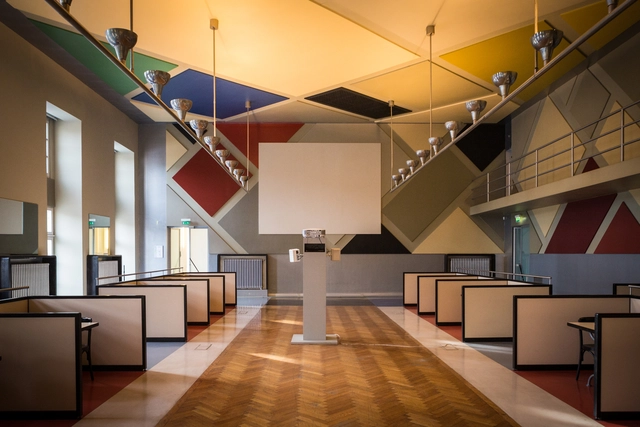
Concealed behind an 18th century Baroque façade in Strasbourg’s Place Kléber, the Café L’Aubette is a dazzlingly incongruous expression of the 1920s De Stijl movement. Designed by Theo van Doesburg, one of the movement’s founders and leading lights, the Aubette’s minimalist, geometric aesthetic was heavily influenced by the work of contemporary artists such as Piet Mondrian. In designing the café’s interiors, Van Doesburg sought to do more than simply place viewers before a painting; he wanted to envelop them in it.

















JulienLanoo_20151123_586.jpg?1468313181 "© Julien Lanoo")
Fr%C3%A9d%C3%A9ric_G%C3%A9monet_058.jpg?1468314660 "© Frédéric Gémonet")
JulienLanoo_20151123_940.jpg?1468312402 "© Julien Lanoo")
JulienLanoo_20151123_1127.jpg?1468312352 "© Julien Lanoo")
JulienLanoo_20151123_1108.jpg?1468313041)