Patrick is ArchDaily's News Editor. Prior to this position, he was an editorial intern for ArchDaily while working full time as an assistant for a watercolor artist. Patrick holds a B. Arch degree from Penn State University and has spent time studying under architect Paolo Soleri. He is currently based in New York City.
Videos
The Data Center being lowered into the water. A shot of the underwater data center. Screenshot via Microsoft
From giant squids to sunken treasure, the ocean has a way of hiding secrets better than any other place on Earth – so why not hide your personal information down there too?
That scenario may soon be our reality, as Microsoft has unveiled that, for the past year and a half, they have been testing a prototype data center that is completely submerged underwater. Devised by Microsoft engineer Sean James, the theory argues that placing the massive server farms underwater could dramatically reduce both construction and cooling costs, as well as provide a reliable source of renewable energy and even improve their performance.
For nearly 100 years, the JL Hudson's Department Store in downtown Detroit stood as a mecca of shopping – the 25-story structure at one point holding the record for world’s tallest retail building. Then in 1983, following a downturn of the Detroit economy, the department store was closed. Its implosion followed in 1998. In the years since, the important site has laid mainly vacant, save for an underground parking structure inserted into the store’s former underground retail levels. But now, plans have been revealed to return the site to its former glory.
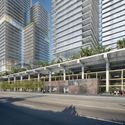
Announced yesterday by Detroit-based development group Bedrock, the site is set to receive a brand new 1.2 million-square-foot development designed by SHoP Architects and consisting of a nine-story retail podium and a 52-story, 734-foot tower that would claim the title of Detroit’s tallest building.
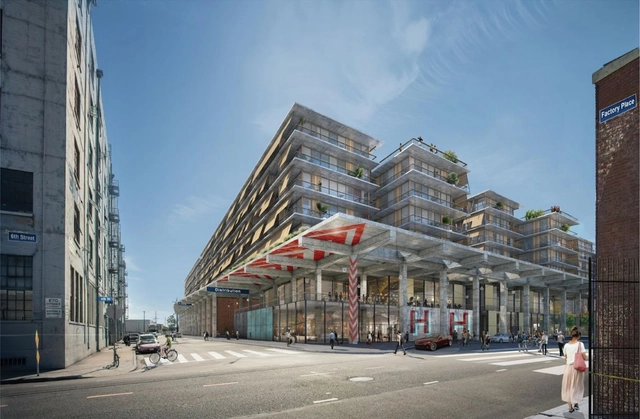
View from the street. Image Courtesy of Los Angeles Department of City Planning
The Los Angeles Department of City planning has released a new study surrounding Herzog & de Meuron’s 6AM mixed-use development planned for LA’s Arts District. Originally revealed last fall, the estimated $2 billion complex would constitute the Swiss firm’s first project in the Southern California city, and could play a major role in the revitalization of the downtown area.
Frank Gehry has been selected by online education platform MasterClass to lead an interactive architecture and design course on his creative process. The course will include 15 video lessons, and critique from the architect himself on select student work.
At a cost of $90, the lessons will cover Gehry’s career and architectural philosophy, illustrated with sketches and models from Gehry’s private model archive. Each lesson will offer a downloadable workbook with notes and assignments for the week. Students will then be able to upload videos for the opportunity to get feedback from the class and Frank himself.
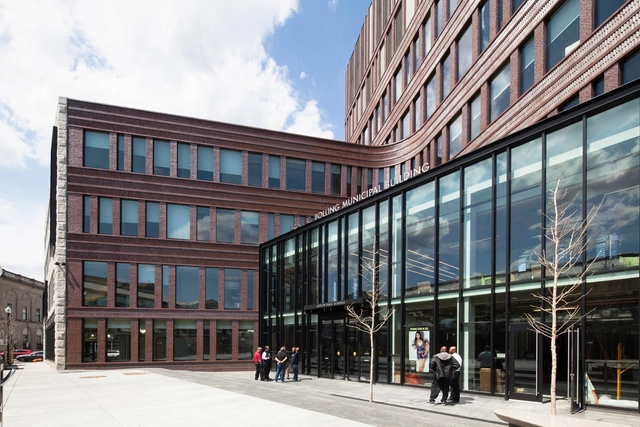
The Boston Society of Architects (BSA) has announced announced Mecanoo and Sasaki as the winners of the 2016 Harleston Parker Medal for their design of the Bruce C. Bolling Municipal Building. Awarded each year by the BSA and the City of Boston, the prestigious award honors “the single most beautiful” building or structure built in the metropolitan Boston area over the past 10 years.
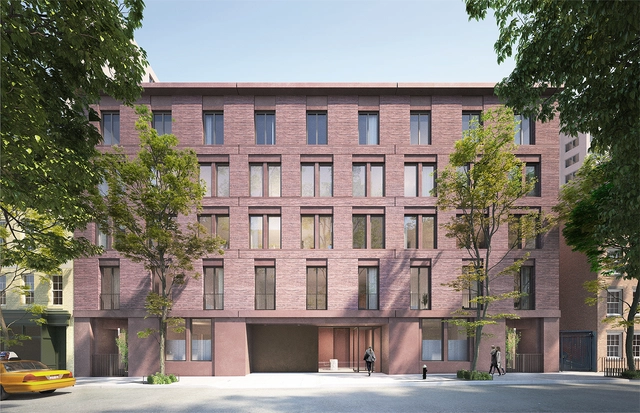
Rendering of the latest proposal. Image via LPC Review Materials
David Chipperfield’s West Village Apartment Building in New York City is finally getting off the ground. Following three rejected planning applications, originally submitted in July 2016, the city’s Landmarks Preservation Commission (LPC) has finally given the six-story building the go-ahead. Located at 11-19 Jane Street, the site sits within the Greenwich Village Historic District, designated as a historic preservation district by the LPC in 1969.
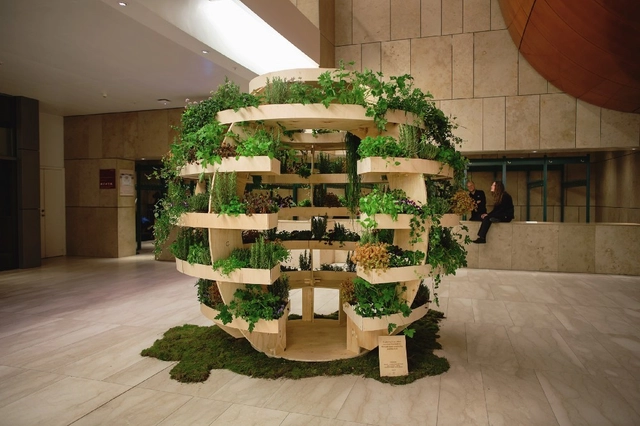
Fresh off winning the “Design of the Year” for their refugee housing solution, the “Better Shelter,” IKEA is again making waves for a pioneering, flat pack solution to societal needs. Developed by the IKEA innovation lab Space10 alongside architects sine lindholm and mads-ulrik husum, the spherical “Growroom” is a DIY garden structure intended to help people “grow their own food much more locally in a beautiful and sustainable way.” And now, plans for the structure have been made available online for free via Space10’s open source platform, giving anyone the opportunity to build their own 3-dimensional garden.
The World Architecture Festival has announced the launch of the 10th edition of the event referred to as the “Oscars of architecture” by launching the “WAF Manifesto,” which identifies key challenges the profession will face over the next ten years. Aimed at generated funding for architectural research, the manifesto outlines a range of topics where architects can use their influence to affect society as a whole.
One established 3D-printing technique is using laser to cure light-activated plastic, building up layers one at a time in a time-consuming process. But now tech start-up Daqri has discovered a way of speeding up that process: by using a 3-dimensional hologram.
The Glasgow City Council has selected a multidisciplinary team lead by MVRDV and Glasgow-based Austin-Smith:Lord to transform downtown Glasgow into a “more livable, attractive, competitive and sustainable center.” Titled (Y)our City Center, the strategy calls for a regeneration of the 400 hectare city center that would reorganize circulation and infrastructure while providing new residential options to support Scotland’s economic center.
The Naomi Milgrom Foundation has selected Rem Koolhaas and David Gianotten of OMA for the design of Melbourne’s 2017 MPavilion. The announcement comes after this weekend’s closing of the 2016 MPavilion, designed by Bijoy Jain of Studio Mumbai, which welcomed more than 94,000 visitors to over 287 free events in its 139 day run. Now in its 4th year, the MPavilion program invites architects who have yet to completed a project in Australia to design and construct their first structure in the country.
At Wednesday evening’s ceremony, the husband-wife team opened up about the conceptual ideas driving their yet-to-be-revealed design for the Obama Presidential Library. In a lively discussion with Vanity Fair architecture critic Paul Goldberger, the architects revealed the nature of their working relationship with the President and First Lady, and how their upcoming library may draw from what TWBT learned in designing the Barnes Foundation in Philadelphia.
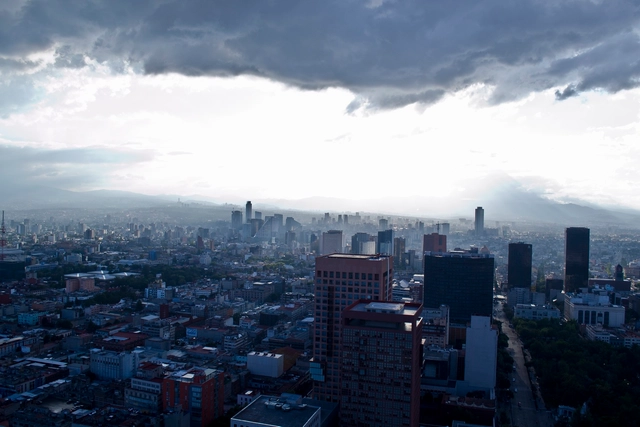
Contrary to some beliefs, climate change is not simply some unidentifiable threat perpetually on the horizon, but a phenomenon that has already had real impact on real world places. To illustrate the effects of our changing environment, the New York Times has launched a new multi-media series called “Changing Climate, Changing Cities,” written by architecture critic Michael Kimmelman, that aims to expose how climate change is “challenging the world’s urban centers.
The first installment takes a look Mexico City, where environmental issues that have already wreaked havoc for centuries, such as water shortage and ground subsidence, are beginning to see their effects multiplied by the city’s changing climate. The piece explains the root of these problems, and their effect of an already fragile infrastructure and social fabric.
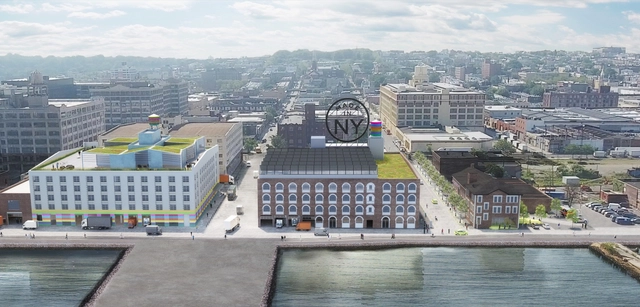
As rising rents have began to drive out historic garment companies from New York City’s storied Garment District in Midtown Manhattan, mayor Bill de Blasio has announced plans for a new development that would bring together the artistic fields into one creative hub in Brooklyn’s Sunset Park neighborhood. Conceived and designed by WXY architecture + urban design, the $136 million “Made in NY Campus” will provide the setting for film and television production, virtual reality tech offices, and a new home for New York’s fashion and garment manufacturing industry.
Looking to add a beautiful piece of art to your render to really sell your project? Look no further.
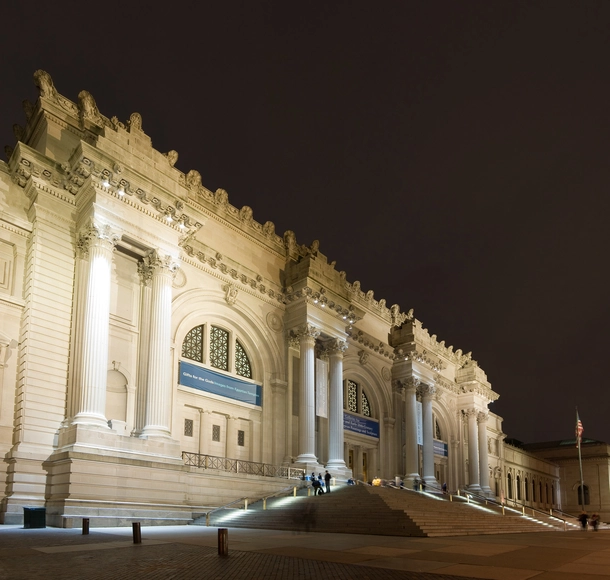
The Metropolitan Museum of Art has announced its new Open Access policy, which releases over 375,000 images of artworks from their expansive collection for free download, with absolutely no restrictions under copyright law – meaning you are completely free to copy, remix, or distribute any image for any use, including commercial.
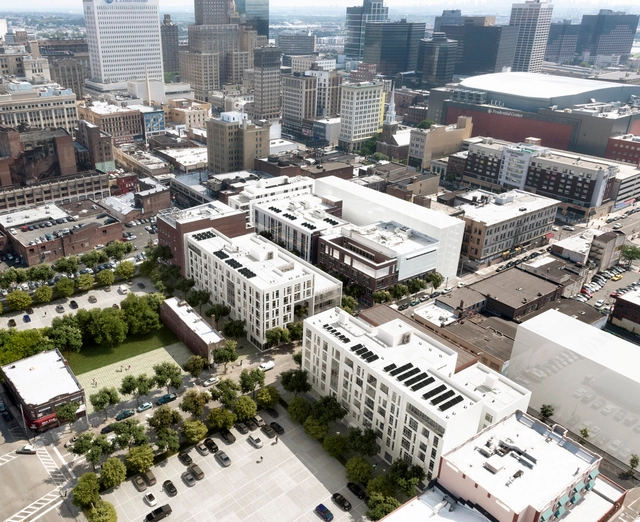
Richard Meier & Partners has completed 3 new mixed-use buildings as part of their “Teachers Village” master plan in downtown Newark, New Jersey. The development, led by RBH Group, centers around two Charter Schools completed by Meier & Partners in 2013, to provide a variety of retail spaces and 123 residential units marketed specifically at teachers.
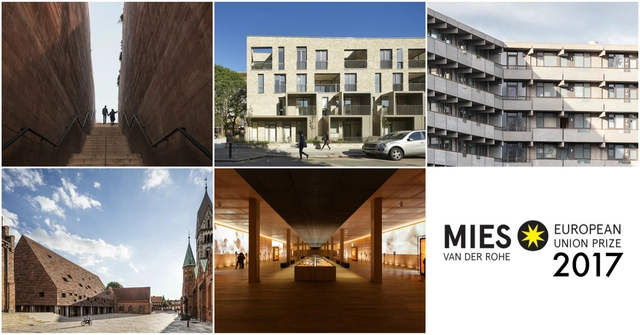
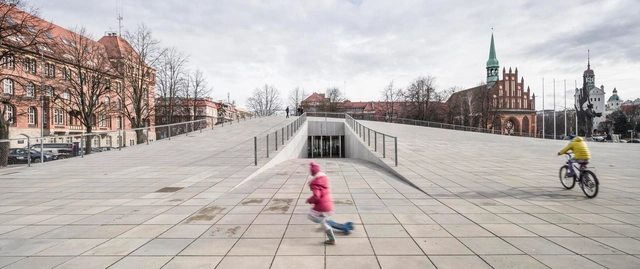
“Our instincts could be summed up by the words of Peter Smithson: ‘things need to be ordinary and heroic at the same time,’” said Jury Chairman Stephen Bates. “We were looking for an ordinariness whose understated lyricism is full of potential’.”
Through April, the jury members will visit each finalist project to evaluate the buildings firsthand and to see how they are used by the public. The Prize Winner will be announced in Brussels on May 16.














our_city_centre_map.jpg?1487608906&format=webp&width=640&height=580)
our_vibrant_Broomielaw.jpg?1487608889 "(Y)our Vibrant Broomielaw. Image Courtesy of MVRDV")
our_river_park_projects.jpg?1487608968 "(Y)our River Park Projects. Image Courtesy of MVRDV")
our_great_streets_and_spaces.jpg?1487609037 "(Y)our Great Streets and Spaces. Image Courtesy of MVRDV")
our_great_buildings.jpg?1487609017 "(Y)our Great Buildings. Image Courtesy of MVRDV")
our_city_centre_map.jpg?1487608906)
.jpg?1487368487&format=webp&width=640&height=580)