Fabian Dejtiar

Architect and Project - Team Lead at ArchDaily Instagram: @ fabe.de

BROWSE ALL FROM THIS AUTHOR HERE

"A city is made up of buildings like a screen of pixels: if there is one dead, the whole thing is ruined," our readers weigh in on aesthetics

Subscriber Access | 

Architects, designers, psychologists, and sociologists alike recognize that aesthetics and their underlying philosophy have the power to change how we perceive the world around us. Consequently, a deeper understanding of what is beautiful has the power to shift how people respond to their environment. Exploring the different meanings of aesthetics in architecture—from 'form follows function' to the new aesthetics of the metaverse—can help us understand the potential of our physical and virtual environments on the path toward a better world.

Much has been written on the subject, from Alberto Pérez-Gómez's Lo bello y lo justo en la arquitectura to Pablo Caldera's El fracaso de lo bello. However, we wanted to open the debate to our readers to share their views on what makes a building or a city beautiful.

After reading and compiling around 300 comments from construction professionals, students, and architecture enthusiasts alike, it was a pleasant surprise to find common ground regarding the importance of collective beauty, referencing both the urban and natural contexts.

BIMCABA: How is BIM being implemented in the government of the City of Buenos Aires?

Subscriber Access | 

Darío Emmanuel López is an architect from the University of Buenos Aires and a technical advisor on building systems at the Ministry of Health (GCBA). He is also the co-founder and chief operating officer of the BIMCABA team—which coordinates the implementation of the BIM (Building Information Modeling) methodology across all ministries of the Government of the City of Buenos Aires, allowing departments that manage projects, public works, and built assets to work in a unified and efficient manner.

He is currently focused on sharing the BIM initiatives taking place within the Argentine government, helping inform students, architects, and engineers who want to know what happens behind closed doors in the public sector and these "BIM Ministries." To that end, this interview with Darío Emmanuel López details how building information modeling is being implemented within the government of the City of Buenos Aires.

What will the new Valparaíso Regional Archive look like?

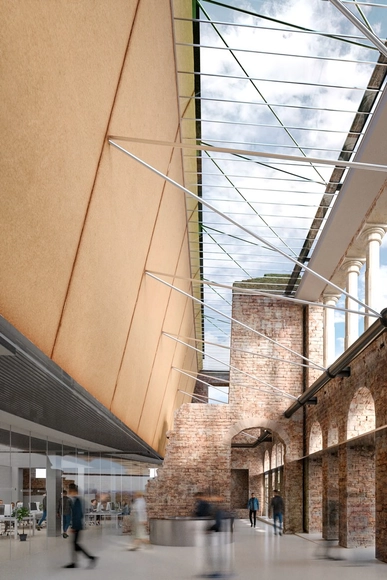
Earlier this year, the Ministry of Cultures, Arts, and Heritage, through the National Cultural Heritage Service (SNPC), launched the bidding process for the design of the Valparaíso Regional Archive. The future building not only aims to preserve historical documents and collections and promote research and access to information, but also represents a major opportunity to value and reactivate the ruins of the historic Palacio Subercaseaux in Valparaíso's Barrio Puerto, Chile. 

Following an evaluation of the 13 accepted bids, the winning proposal was submitted by architects Cecilia Puga, Paula Velasco, and their team. Their design defends and protects the urban profile, showing us how to connect the new with the old. Below, discover the winning project in detail, along with the other awarded entries.

Open question: what makes a building beautiful?

Subscriber Access | 

Architects and designers, as well as psychologists and sociologists, recognize that aesthetics and its underlying philosophy have the power to change how we perceive the world around us. Consequently, a deeper understanding of what is beautiful holds the powerful potential to alter how people respond to their environment.

Exploring the different meanings of aesthetics in architecture, from 'form follows function' to the aesthetics of the metaverse, can help us understand the potential of our physical and virtual environments on the path toward a better world.

Much has been written on the subject, from Alberto Pérez-Gómez's "The Beautiful and the Just in Architecture" to Pablo Caldera's "The Failure of Beauty." Now, however, we want to open up the debate and invite you, our readers, to share your perspectives on what makes a building or a city beautiful.

Share your thoughts in the form below. Selected responses will be published in an upcoming article.

It's time to democratize architectural knowledge (according to our readers)

Subscriber Access | 

"I'm an architect... now what?" must be one of the most common questions for any recent graduate with an architecture degree in hand. Over the years, many will find jobs in different industries that do not necessarily involve working in an office designing and constructing buildings.

Ugly, Dirty, and Bad: Contemporary Architecture in Latin America

Subscriber Access | 

Desde la periferia is an audiovisual project directed by José Luis Uribe, PhD in architecture and professor at the School of Architecture of the University of Talca, Chile. The project consists of three documentaries to be released progressively over the next two years, exploring various aspects associated with contemporary Latin American architecture. The first installment, Volume I: Ugly, Dirty & Bad: A Contemporary Architecture in Latin America, is an audiovisual essay that gathers some of the initial thoughts on its current state through the oral accounts of a group of architects in a hotel room in Asunción, Paraguay.

184 Spanish works selected for the CSCAE ARCHITECTURE Awards

To promote the key, transformative role of architecture in improving quality of life and contributing to a better world, the Higher Council of Colleges of Architects of Spain (CSCAE) is revamping the awards it has presented since 1981 with the launch of the first edition of the ARQUITECTURA Awards.

Gubbins Polidura Designs the New Municipal Swimming Pool of La Calera in Valparaíso, Chile

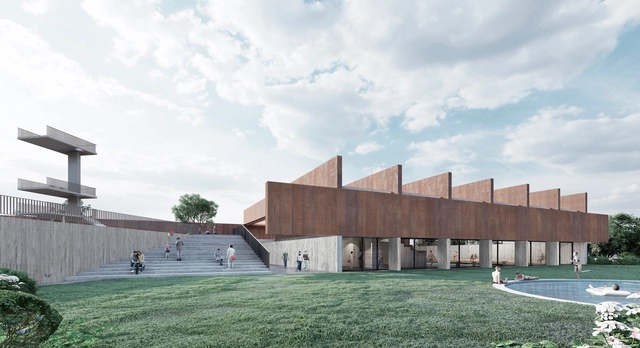
The New Municipal Swimming Pool of La Calera project in the Valparaíso Region is about to begin construction, as announced by the firm Gubbins Polidura Arquitectos on social media.

Interculturality and Inhabited Heritage: Photographs of Architecture and Territory in Chile

Subscriber Access | 

August 19 is World Photography Day. To mark this occasion, we present the winning entries of the recent photography competition "Interculturality and Inhabited Heritage" ("Interculturalidad y Patrimonio Habitado").

Climate Crisis: A Warning for Latin American Settlements

Subscriber Access | 

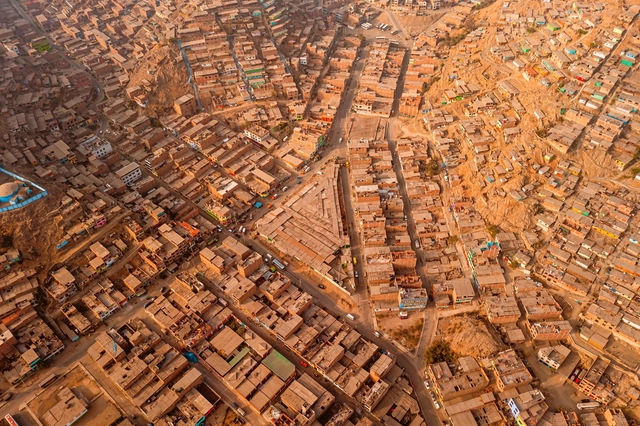
The IPCC has published its latest report on the environmental crisis, "Climate Change 2022: Impacts, Adaptation and Vulnerability." The latest findings warn that urgent priority must be given to action on the adaptability of the built environment, noting that, globally, the most rapid growth in urban vulnerability has occurred in informal and unplanned settlements, as well as in small to medium-sized urban centers in low-income countries with limited adaptive capacity. This is a recurring reality across Latin America.

Building of the Year 2022: The award for the best architecture in Spanish

Subscriber Access | 

This year we celebrate the fourteenth edition of the Obra del Año 2022 award—the highest recognition in the Spanish-speaking architectural world, where the winners are chosen by popular vote. Starting today, Tuesday, March 8, our readers will be responsible for determining which projects inspired us during 2021, faithfully representing the identity of our local contexts while shaping the way architecture is practiced around the world.

Over the next three weeks, the entire ArchDaily en Español network (Plataforma Arquitectura, ArchDaily México, ArchDaily Colombia and ArchDaily Perú) will serve as the platform to celebrate the best built architecture in Spanish-speaking America and Spain.

With nearly a thousand projects published in 2021, you can easily find your favorites by browsing through each category and using the search engine to filter projects by country and architecture firm. 

The 2022 Obra del Año Award is brought to you by Dornbracht, renowned for its design leadership in architecture, which can be found internationally in bathrooms and kitchens.


Common Cause: New Perspectives in Santiago, Chile

Subscriber Access | 

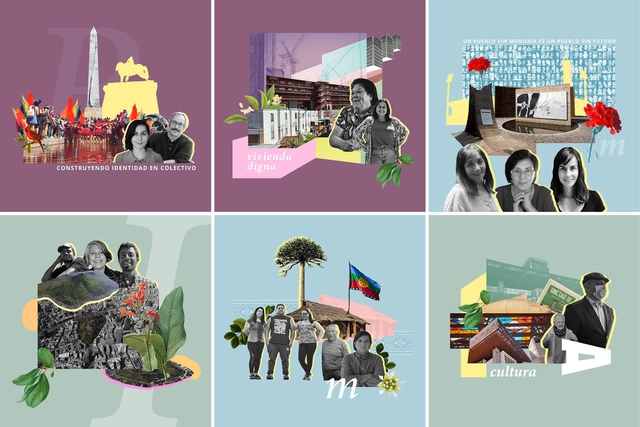
The fourth season of the podcast Causa Común—a co-production between Fundación Lepe and Fundación Aldea for the OH! Stgo festival, held in mid-January in Santiago, Chile—explores the past, present, and future of the capital, alongside the role of its inhabitants in prioritizing the common good and collaborative ways of making, inhabiting, and imagining our shared home.

Directed and coordinated by Francisca Cordero, Soledad Díaz de la Fuente, Magdalena Novoa, and Trinidad Piriz, the six-episode season examines the everyday stories, communities, monuments, and public spaces we inhabit from new perspectives. Featured topics range from the multiple identities of a public square, female leadership in housing projects, and the construction of urban memory, to island hills as socio-environmental opportunities, Mapuche urban dwelling, and the GAM building as an exponent of architecture and social change.

The right to decent housing advances in Chile's new draft Constitution

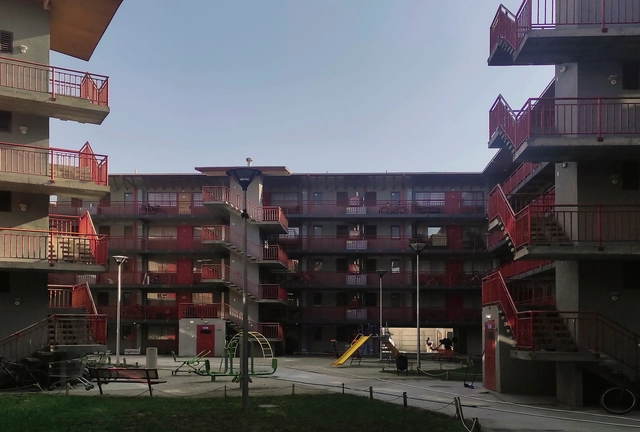
"Every person has the right to decent and adequate housing that allows for the free development of personal, family, and community life," states the provision that advanced to the draft of Chile's new Constitution. The draft is being prepared by the Constitutional Convention—a 155-member political body tasked with drafting and approving the proposal for a new agreement for the Republic, which was enabled by the October 2020 plebiscite and driven by the social protests that took place in the country in October 2019.

Mathias Klotz and SML Arquitectos design the CCU Limache Brewery Museum

The team led by Mathias Klotz and Sebastián Mundi of the architecture firms Klotz and SML has been unanimously selected in the open call for the heritage reconversion of the former CCU Brewery in Limache, the Chilean company announced today in a press release.

This project seeks to preserve the brewing heritage represented by the iconic building founded in 1883, through a museum open to the public. 

Lucerna: A Monumental Lamp at the Puríssima Concepció Monastery of Tortosa

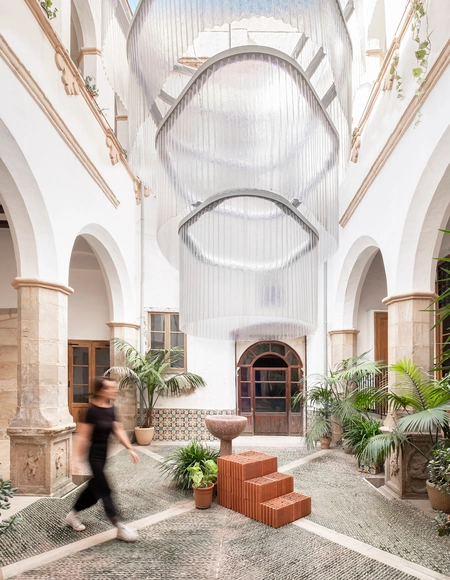
Manuel Bouzas and Santiago del Águila, the authors of La catenaria y el arco in the courtyard of Can Balaguer (by architects Flores & Prats) in Palma de Mallorca, present their urban installation ‘Lucerna,’ created for the A Cel Obert ephemeral architecture festival in Tortosa in October 2021.

This monumental lamp, standing over 6 meters tall and covering an area of 55 square meters, hangs from the main courtyard of the Purissima Concepció monastery, radically transforming this 17th-century building through light and color.

Keys to Understanding Modern Spanish Architecture

Subscriber Access | 

The Alejandro de la Sota Foundation has created a portal to showcase the leading figures and works of the pioneers of Spanish modern architecture. The reason? When discussing the Modern Movement, it often seems that only architects like Mies van der Rohe, Le Corbusier, or Walter Gropius are mentioned. But what was happening in Spain during those years? Which figures stood out, and what were their intentions when designing?

The 10 Best Architecture Student Projects in Latin America and Spain 2022

Subscriber Access | 

To showcase the valuable work emerging from Latin American and Spanish universities, this year we launched an open call inviting architecture students to submit their graduation projects completed in 2021.

After thoroughly evaluating 137 proposals, our editorial team has selected and highlighted 10 projects that demonstrate rigorous critical thinking in response to their self-defined challenges. The selection valued not only those projects that delivered the best possible architecture through efficient design tailored to their context, program, and users, but also those that paid significant attention to human scale, the environment, experimentation, and new ways of addressing architecture in cities.

"The future of architectural visualization will be more democratic, liberal, and decentralized," according to our readers

Subscriber Access | 

From NFTs and the Metaverse to the productive advantages of real-time rendering, this year offers a tremendous opportunity to discuss the latest trends in architectural visualization. To this end, we opened the debate to our readers around these questions: How much can we learn from other related industries like cinema, video games, and industrial design? How can architecture contribute to and advance the world of visualization?

After reading and compiling all the comments received—from construction professionals, students, and architecture enthusiasts alike—we agree that as technological advancements continue, the future of architectural visualization will likely be more democratic, liberal, and decentralized. Below, we share the most frequent viewpoints from our readers.