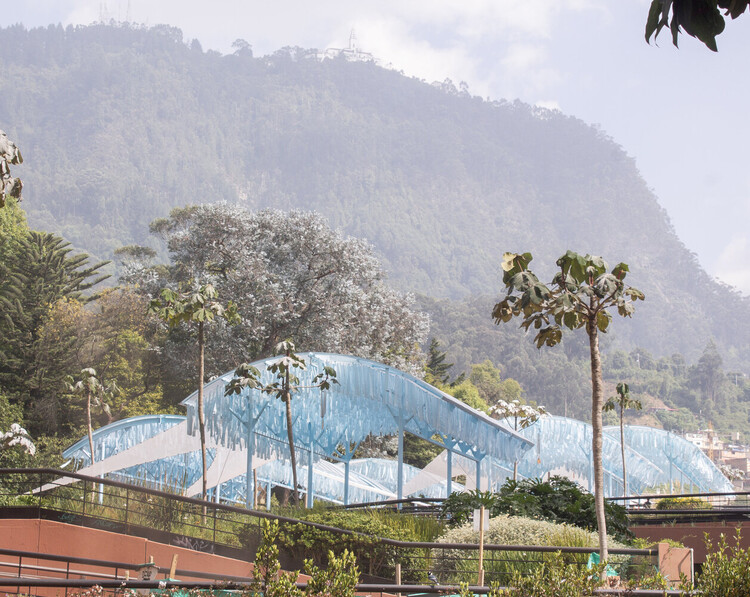
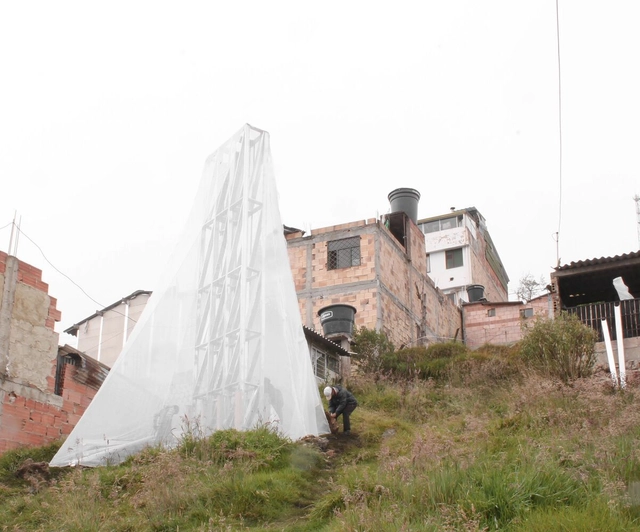
What do lightweight materials bring to public space with an ethical, ecological, and non-extractive design principle? Various textile textures offer a point of entry, being closer to the body than heavy conventional structural materials. Through its flexibility and responsiveness, it enables a form of soft enclosure rather than a fixed boundary in architectural space. Responding to minimal environmental stimuli, the fabric brings continuous movements into space. When layered or assembled, it produces gradations of density, depth, and enclosure, while recent innovative fabrication technologies extend the possibilities of its form and structural durability.
Semi-transparent materials further mediate the conditions of visual permeability and bodily experience of the space. By transmitting and filtering light, they blur clear separations between interior and exterior, solid and void, creating thresholds that are neither fully open nor fully enclosed, but constantly in negotiation. Reinterpreting structure in urban space through lightweight, translucency, and softness opens up alternative modes of spatial perception and bodily engagement.
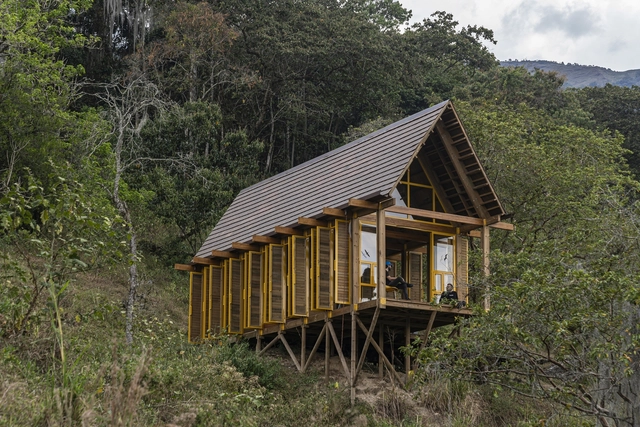
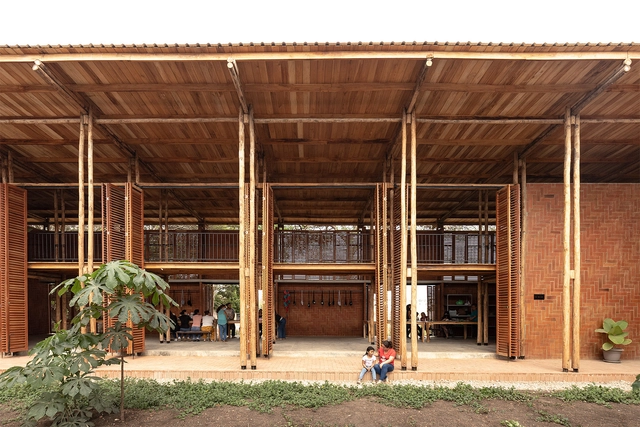
Across South America, architecture is increasingly being understood as a collective act. Rather than imposing external views, many studios and designers are building with and for communities, learning from their local practices, materials, and ways of inhabiting. These projects are repositioning the architect's role from an author to a facilitator, transforming design into a participatory process that centers collaboration, care, and mutual respect.
Alsar Atelier, led by Alejandro Saldarriaga, is an architecture and design studio based in Boston and Bogotá. Their practice focuses on the planning and creation of public facilities with an emphasis on social benefit, as well as small-scale residential projects. The studio employs a design approach that prioritizes the use of sustainable materials, cost-effective strategies, and active community collaboration.
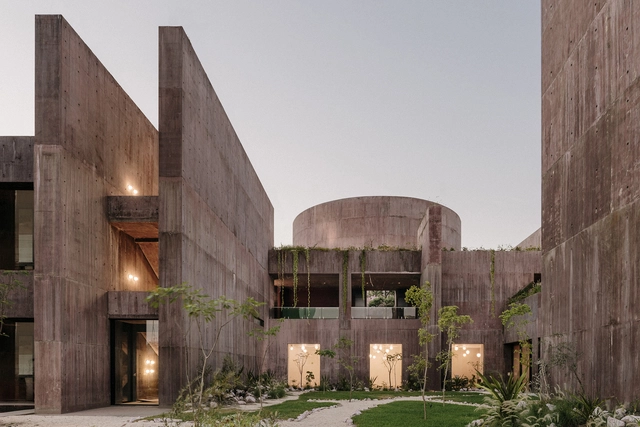
25 practices, sole practitioners, and startups from 5 continents and 18 countries have been chosen as part of the 2023 New Practices, the latest edition of the global annual survey by ArchDaily. Ongoing since 2020, the review detects and showcases those who are taking architecture in its new direction under unstable times and demanding challenges.