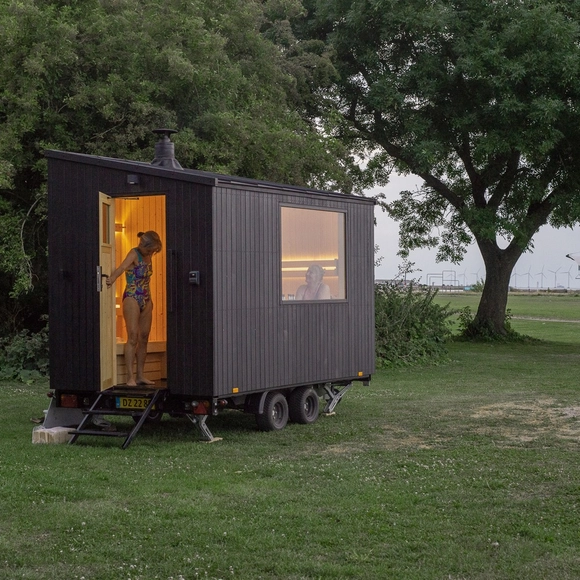
Saunas are inseparable from the culture of Nordic countries and they are increasing in popularity as a result of their many physical and mental health benefits. Their projects are usually quite archetypal, combining efficiency and sobriety.
We spoke with Jakob Gate, co-founder of Native Narrative & Scandinavian Sauna, who has been developing sauna projects that combine the flexibility of being transported anywhere, with the expertise and tradition of Scandinavian design. They work without electricity, heated by wood, while LED lighting is provided by a rechargeable battery. Learn more in the following interview:
The word “furniture” derives from the Old French, forneture, which means the act of supplying, from fournir. But it is only in the English language that this word is used to refer to elements of the house such as chairs, tables, shelves, etc. French and other Romance languages, as well as German, use variants of the word meubles, which derives from the Latin mobilia, meaning "things that move." While the English spelling impels a meaning of utility, languages that take the Latin root “mobilia” bring to the word a sense of freedom and possibility. But furniture does not always carry this versatility and flexibility in its creation, and generally, staticity and monofunctionality better characterize the furniture we know. The Gregory seating system is an example of how furniture can provide functionality, but also combine beauty and flexibility.
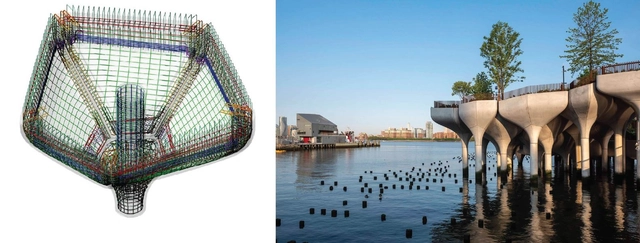
Pier 54 in New York has a history that dates back to the city's first inhabitants. After being severely damaged in 2012 with the passage of Hurricane Sandy, Barry Diller and the Hudson River Park Trust institution worked to create solutions to reactivate it and return the space to the public.
The final resulting project, Little Island Park, became an urban oasis of almost 10,000 square meters, which is structured on 132 pillars and houses amphitheaters, and several species of trees and other vegetation, in addition to other attributes. With the architecture developed by Heatherwick Studio and landscaping by MNLA, the work presented numerous difficulties, which required great innovation and collaboration between many professionals. Arup, a global company that develops consulting and engineering projects, was involved in the project from the beginning. We spoke with David Farnsworth, Principal at Arup’s New York office & Project Director of Little Island, about the challenges and learning involved in this process:
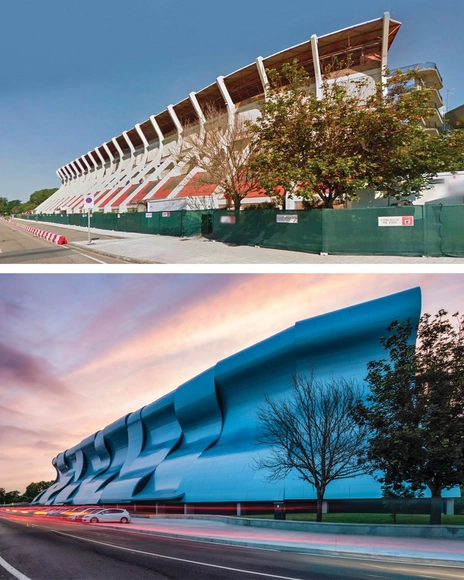
Estadio Municipal de Balaídos, Vigo, Spain / Pedro de la Puente Crespo. Image Cortesia de STACBOND
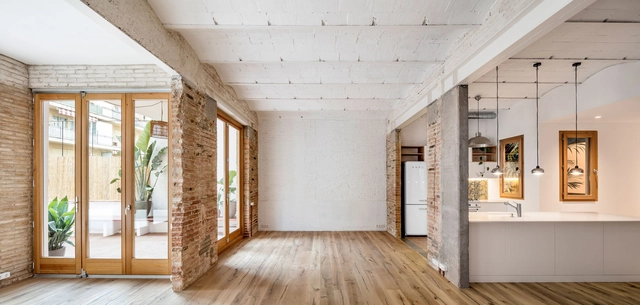
The task of rehabilitating buildings has been increasingly encouraged and celebrated for some reasons: first, by renovating and not demolishing, a large part of the material resources present are used, reducing the use and exploitation of raw materials and, in certain cases, the memory and the original urban fabric are preserved. A good rehabilitation also incorporates the modernization of the building to increase its energy efficiency, readjustment of facilities and the correction of pathologies, making it coherent with the demands of current users. For the building's owners and users, this means a better quality of life and, also very important, an appreciation of it. An element that plays a fundamental role in rehabilitation is the façade, which combines aesthetics and performance.
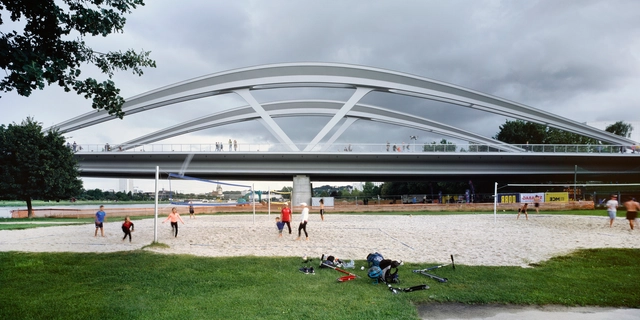
Whether figuratively or in an urban context, bridges are a strong symbol and often become iconic projects in cities. Building bridges can mean creating connections, new opportunities. But they are also fundamental pieces of infrastructure that solve specific issues in an urban context. As these involve highly technical equipment, with complex constructions and overwhelming bold structural requirements, they require projects that do not need full integration between architecture and engineering and, in many contexts, is a type of projects that architects are not so involved with. Marc Mimram Architecture & Engineering is a Paris-based office comprised of an architecture agency and a structural design office. In its project portfolio, there are several bridges, as well as various other project typologies. We spoke with Marc Mimram about his latest project in Austria, the bridge at Linz, photographed by Erieta Attali.
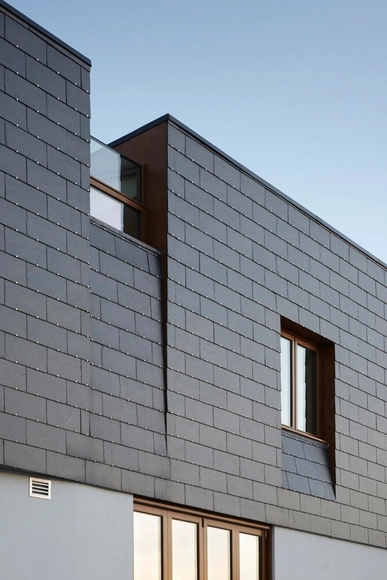
Slate is a metamorphic rock formed from the transformation of clay under high pressure and temperature. Very homogeneous and sober, with shades ranging from dark gray to black, it is commonly used in floors and roofs due to its durability and appearance. Slate also works very well for façades, combining the aesthetics of natural stone, shaped by nature for over 500 million years, with the thermal comfort and ease of installation of ventilated façades.
Josep Ferrando is an architect based in Barcelona. He is the Dean of the La Salle Higher Technical School of Architecture (ETSALS), as well as Director of the Obert d'Arquitectura Center of Barcelona and of the Department of Culture of the College of Architects of Catalonia (COAC). Combining his academic career and his frequent lectures, his office develops projects that explore different scales and materials, experimenting with constructive systems and innovative solutions. We talked with him about the importance of materials in architecture, and about the synergies he finds between practice and teaching.
It is difficult to find someone who never played LEGO as a child. What if, like LEGO's, we thought of buildings as great assembling games? U-Build is a modular wooden construction system developed by Studio Bark to be easy to build, pleasant to inhabit, and simple to deconstruct at the end of its useful life. The system removes many of the difficulties associated with traditional construction, enabling individuals and communities to build their own homes and buildings. The system uses precision CNC machining to create a kit of parts, allowing the structure of the building to be assembled by people with limited skills and experience, using only simple hand tools.
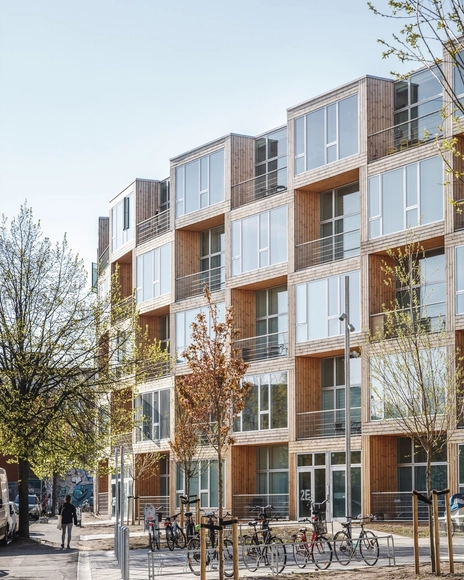
The concept of prefabrication in construction corresponds to elements, parts or entire buildings produced in a factory and transported to a construction site for a quick installation. This represents numerous advantages over traditional construction methods, such as speed, precision in execution, efficiency, cleanliness of the work and, in many cases, cost. Considering that housing is a primary human need, using industrial methods for the construction of affordable and good quality housing has always interested architects, whether to house growing urban populations or for temporary or emergency settlements, on the most diverse scales. After many attempts throughout history, the question remains whether the popularization of prefabrication in the construction field can be a solution to provide greater equity in access to housing.
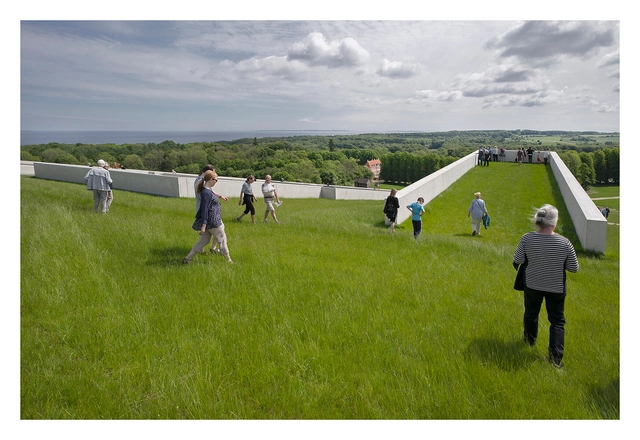
Researchers credit the Hanging Gardens of Babylon as the first examples of green roofs. Although there is no proof of its exact location and very little literature on the structure, the most accepted theory is that King Nebuchadnezzar II built a series of elevated, ascending terraces with varied species as a gift to his wife, who missed the forests and mountains of Persia, their local land. According to Wolf Schneider [1] the gardens were supported by brick vaults, and under them, there were shaded halls cooled by artificial irrigation of the gardens, with a much milder temperature than the outside, in the plains of Mesopotamia (present-day Iraq). Since then, examples of green roofs have appeared all over the world, from Rome to Scandinavia, in the most diverse climates and types.
Nevertheless, inserting plants on roofs is still viewed with suspicion by many, as they are thought to be costly and difficult to maintain. Others, however, argue that the high implementation costs are quickly offset with savings in air conditioning and especially that occupying the building's fifth façade with vegetation is, above all, a rational solution. In any case, the question remains as to how green roofs can really help with climate change.
The choice of Lacaton & Vassal to receive the 2021 Pritzker Prize was, above all, emblematic. Under the mantra “never demolish, never remove or replace, always add, transform and reuse”, the French duo built a career focused on renovating buildings, providing them with spatial quality, efficiency and new programs. Their approach contrasts with most of the architecture we are used to honoring: iconic, imposing and grandiose works. It also contrasts with the notion of the tabula rasa, of building and rebuilding from scratch, so well represented in Le Corbusier's Ville Radieuse, and which has fascinated architects and urban planners ever since.
Whether because of the sustainability demands currently in vogue, or simply because there are already enough buildings around the world, the task of rehabilitating spaces and buildings has been seen as an important driver of change. The focus is generally to center efforts on interior spaces, paying special attention to the environmental quality and comfort of the inhabitants, in addition to adapting the uses to contemporary demands. The main question revolves around how to update (and even automate) the buildings of the past to adapt to new needs for efficiency, sustainability and well-being.
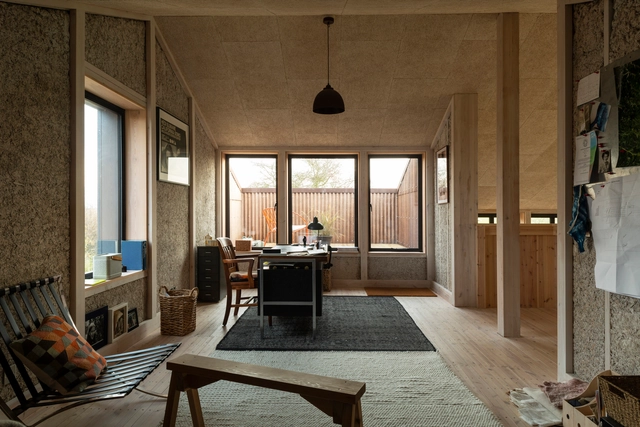
Every time we publish an article about Hempcrete, we get a lot of comments on social media - with a certain level of irony - about what would happen if the material caught fire. This is actually a legitimate question, as there is still a lot of confusion about the differences between marijuana and hemp, both of which come from the same plant species (Cannabis Sativa). But while marijuana has psychoactive effects due to tetrahydrocannabinol (THC), mainly present in the flowers of the plant, hemp-based building materials are produced from its stem, which contains small amounts of THC. To quickly answer the title question: no, the building won't be destroyed in the event of a fire. In fact, some tests have shown that these materials have excellent behavior against fire, dissipate flames, maintain structural integrity, and don't emit toxic smoke.
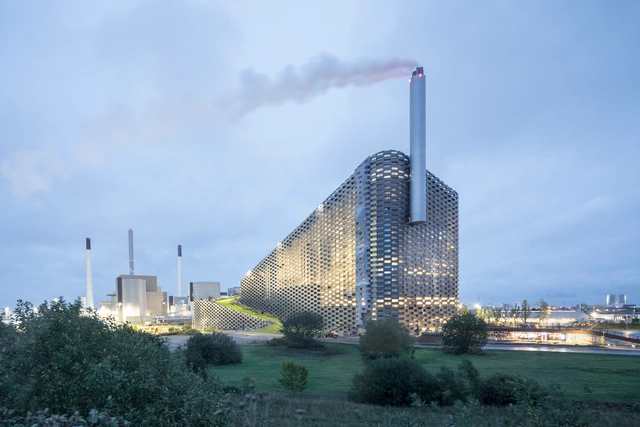
CopenHill Energy Plant and Urban Recreation Center / BIG
All human activities affect the environment. Some are less impactful, some much, much more. According to the United Nations Environment Program (UNEP), the construction sector is responsible for up to 30% of all greenhouse gas emissions. Activities such as mining, processing, transportation, industrial operations, and the combination of chemical products result in the release of gases such as CO2, CH4, N2O, O3, halocarbons, and water vapor. When these gases are released into the atmosphere, they absorb a portion of the sun's rays and redistribute them in the form of radiation in the atmosphere, warming our planet. With a rampant amount of gas released daily, this layer thickens, which causes solar radiation to enter and and stay in the planet. Today, this 'layer' has become so thick that mankind is beginning to experience severe consequence, such as desertification, ice melting, water scarcity, and the intensification of storms, hurricanes, and floods, which has modified ecosystems and reduced biodiversity.
As architects, one of our biggest concerns should be the reduction of carbon emissions from the buildings we construct. Being able to measure, quantify, and rate this quality is a good way to start.
The art of building a shelter made from blocks of ice is passed on from father to son among the Inuit, native peoples who inhabit the northernmost regions of the planet. The circular plan, the entrance tunnel, the air outlet and the ice blocks form a structure where the heat generated inside melts a superficial layer of snow and seals the gaps, improving the thermal insulation of ice. In a storm, an igloo can be the difference between life and death and perhaps this is the most iconic and radical example of what it means to build with local materials, few tools and lots of knowledge. In this case, ice is all you have.
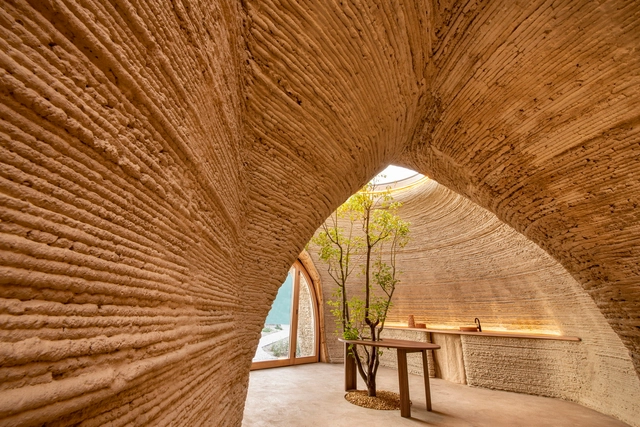
Taking advantage of abundant resources and local labor are key concepts for sustainable architecture, which are often overlooked at the expense of solutions replicated from other contexts. With new demands and technologies, the globalization of building materials and construction techniques, is there still room for local materials? More specifically in relation to 3D printed constructions, are we destined to erect them only in concrete?
Wood is an extremely versatile material. It allows for the construction of robust and strong structures, while it can also be used as the raw material for delicate objects such as musical instruments. Understanding all its particularities, properties, and behavior is a journey of knowledge that could take a lifetime. Basically, wood is made up of cellulose, hemicellulose, lignin, and mineral elements, and each species has its own unique characteristics. The history of Stradivarius violins, for example, is interesting to mention: they are still worth fortunes and experts argue that luthiers have never been able to replicate their timbre on newer instruments. Researchers point out that the differentiated sound is due to the wood in the body and arm, which went through a submersion process with a mineral solution that increased the decomposition of hemicellulose. The treatment made the wood absorb less moisture, making the sound brighter and more pleasant.
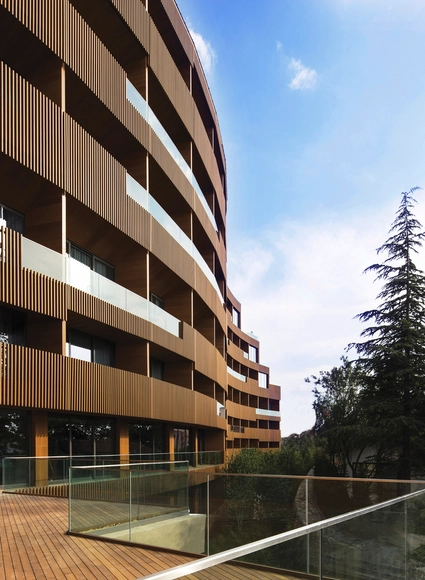
This shows how complex it is to work with a living material like wood. It can swell or shrink depending on weather conditions, how the tree grew or was cut down, etc. And, varying between wet and dry states, it can end up rotting. Such factors must be understood when we work with a natural material, but it can also be a nuisance when we look for the aesthetic appearance of wood while lacking technical precision and maintenance capabilities.
Claude Monet and Vincent van Gogh used the impasto technique extensively in their paintings. Both applied thick layers of oil paint over the canvas, usually one shade at a time, and it was up to the viewer's brain to mix the colors and create the desired effects. When dry, the paint forms reliefs and textures on the canvas, evoking a sense of movement. Even without being able to touch the screen, the texture of the brushstrokes gives a three-dimensionality to the painting, something that can only be fully observed by seeing the artwork live, looking at it from more than one angle and actually experiencing it.
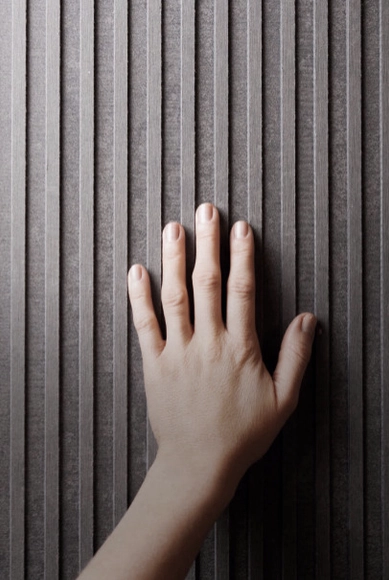
In his famous book “The Eyes of the Skin: Architecture and the Senses,” Juhani Pallasmaa points to "a predilection in favor of vision and in detriment of the other senses in the way architecture was conceived, taught and criticized, as well as the consequent disappearance of sensory and sensual characteristics in arts and architecture." According to the author, "an architectural work is not experienced as a series of isolated retinal images, but in its fully integrated material, corporeal, and spiritual essence."
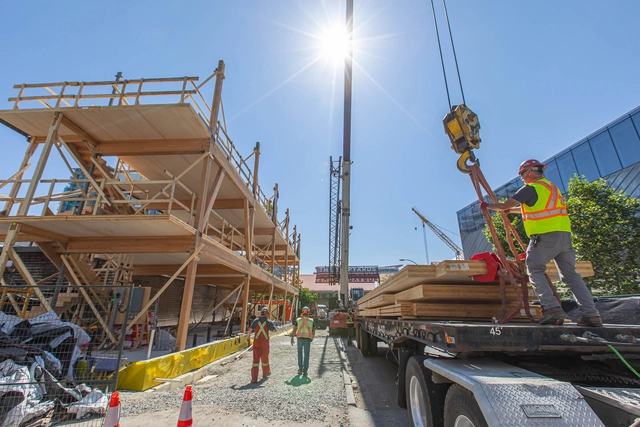
Mass timber components for this project were prefabricated offsite which not only aids in the ability for on-site assembly but also aids in the disassembly of projects in the future if needed. Timber's versatility allows it to be disassembled and then reassembled into other buildings and furnishings, sequestering carbon for longer so long as it stays out of the landfill. Photo: PH1 construction by Naikoon Contracting, KK Law. Image Cortesia de naturallywood.com
The first Shikinen Sengu was held in the year 690, in the city of Ise, Mie Prefecture, Japan. It consists of a set of ceremonies lasting up to 8 years, beginning with the ritual of cutting down trees for the construction of the new Ise Shrine and concluding with the moving of the sacred mirror (a symbol of Amaterasu-Omikami) to the new shrine by Jingu priests. Every 20 years, a new divine palace with exactly the same dimensions as the current one is built on a lot adjacent to the main sanctuary. Shikinen Sengu is linked to the Shinto belief in the periodic death and renewal of the universe, while being a way of passing on the ancient wood construction techniques from generation to generation.
The idea of creating a building that will have an expiration date is not a common one. In fact, the useful life of a structure is often given little consideration. When demolished, where will the materials go? Will they be disposed of in landfills or could they be reused in new projects? There are certain construction methods and materials that make this process easier. Others make reuse unfeasible, due to several factors.
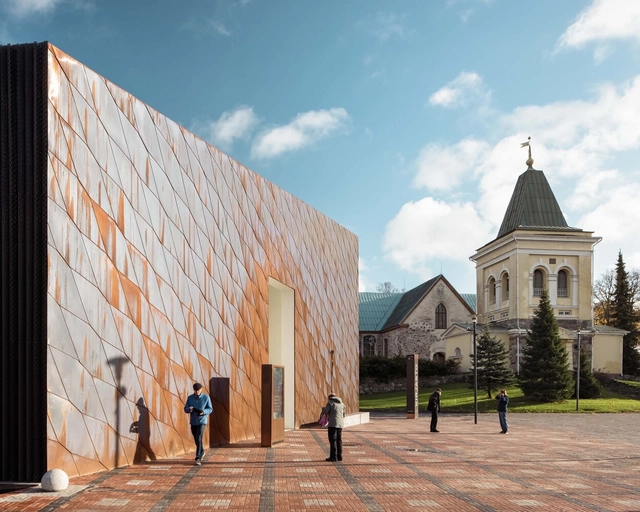
It is believed that copper was the first metal to be found by men and used in the manufacture of tools and weapons. This occurred in the last period of prehistory, more than 10,000 years ago, in the so-called Metal Age, when groups, until then nomadic, started to become sedentary, developing agriculture and starting the first urban settlements. Copper has since been used in diverse ways. Used for decorative objects, jewelry, automotive parts, electrical systems, and even for dental amalgams, the material has had huge demand. In architecture, copper coatings are greatly appreciated for their aesthetics and durability. But a factor worth mentioning is that copper can be recycled infinitely, practically without losing its properties.