Archtober, a New York City-based platform that promotes the discovery of architecture and design through experiences and content, will celebrate the next installment of its annual Festival from October 1–31, 2023.
ArchDaily and VELUX have joined forces to provide you with an exclusive coverage of the highly anticipated UIA World Congress of Architects 2023. Watch the discussion panel on the future of next-generation homes, moderated by David Basulto, founder and editor-in-chief of ArchDaily. Get to know more of the world of next-generation homes as the panelists delve into innovative approaches, cutting-edge technologies, and sustainable solutions that are reshaping the way we live.
Shifting from an exploitative to a restorative and circular design ideology is fundamental in changing architecture and the built environment to become more sustainable. We look at strategies for a new resourcefulness in architecture and discuss how to bring the built environment back inside the planetary boundaries.
This session is a keynote dialogue moderated by Connie Hedegaard. The UIA World Congress of Architects 2023 keynote dialogues are designed as a series of dialogues between trailblazing architects and experts from science, business and politics. All keynote dialogues are moderated by Connie Hedegaard.
ArchDaily and VELUX have joined forces to provide you with an exclusive coverage of the highly anticipated UIA World Congress of Architects 2023. Watch Ambra Gugletti from KOMPAS VC and Lucas Carstens from Modulize explain how data-driven offsite construction can help reduce construction waste up to 90%
C40 and VELUX presents the panel discussion "Healthy Buildings at the Time of the Energy Crisis" at the UIA World Congress of Architects 2023.
The panel discussion will focus on the role of healthy building principles in addressing the ongoing energy crisis through accelerated retrofits while simultaneously promoting environmental sustainability, job creation, and social equity.
There is a general agreement that our built world should become climate neutral. But, how construction will have to change to make this future a reality is still uncertain. At the same time, the economic and social framework for construction and especially for housing construction are changing. Components, building products, and building systems are being reused, and this is accompanied by a new ethic of design and construction and a new aesthetic of architecture.
ArchDaily and VELUX have joined forces to provide you with an exclusive coverage of the highly anticipated UIA World Congress of Architects 2023. Watch Sebastian Peck from KOMPAS VC and Liz Gilligan from Material Evolution explain a revolutionary low-carbon cement produced from industrial waste, and how can it help to decarbonize architecture by reducing a building's carbon footprint by 85%.
ArchDaily and VELUX have joined forces to provide you with an exclusive coverage of the highly anticipated UIA World Congress of Architects 2023. Watch the unveiling of the next International VELUX Award and a captivating presentation showcasing the past winners.
The Design Educates Awards, the awards that annually recognize the best projects that respond to complex social and environmental contexts and carry educational value, have just announced the results of the 2023 edition. The awards look for what will have a lasting impact on users and the environment and showcase the world's best ideas and realizations that can educate.
After two weeks of voting in our 14th edition of the Building of the Year Awards, our readers have narrowed down over 4,500 projects to just 75 finalists across 15 categories, casting over 100,000 votes. This year's awards celebrate the very best in design, innovation, and sustainability from around the globe, with the shortlist featuring an exceptional range of projects, from a house in a favela to cutting-edge cultural centers and innovative public spaces that are sure to impress. As a crowdsourced award, we are proud to say that your selections are a true reflection of the state of architecture, and this year's finalists are no exception.
It has been a vibrant first week of voting for the Building of the Year Awards. With more than 50,000 votes, gathered up till now, this prize has shown to be, one of the most relevant and democratic in the architecture community.
Until February 15th at 00:01 (EST), you have the chance to reward the architecture you love. It is your collective intelligence that will filter over 4,500 projects down to just 75 finalists.
In hospitality, first impressions count. Corian® Solid Surface – an exclusive product of Corian® Design, a division of DuPont company – has become a more and more regular guest in hotels over the past decades as designers and architects look to create highly hygienic and adaptable interior designs. designboom and ArchDaily concluded its three-part webinar series with the material producer, this time to explore the future of hospitality design. Leading architectural and design experts joined the live conversation, including TBI Architecture & Engineering, JOI-Design and Ultraspace – watch above.
Quay Quarter Tower (QQT), designed by 3XN has been declared the World Building of the Year 2022 at the fifteenth annual World Architecture Festival (WAF), held in Lisbon.
The 206-meter tower, located close to the Sydney Opera House, is an office building arranged as a vertical village, creating a sense of community and providing spaces that focus on collaboration, health, well-being and external terraces.
ANNA Stay (Model 2022) by ANNA. Image Courtesy of World Architecture Festival
Atelier TAO+C, Weston Williamson + Partners, OHLAB and JC Architecture are among the award category winners announced on the second day of the World Architecture Festival in Lisbon. The festival’s judges recognized a diverse array of completed, future and interior projects across over 20 categories.
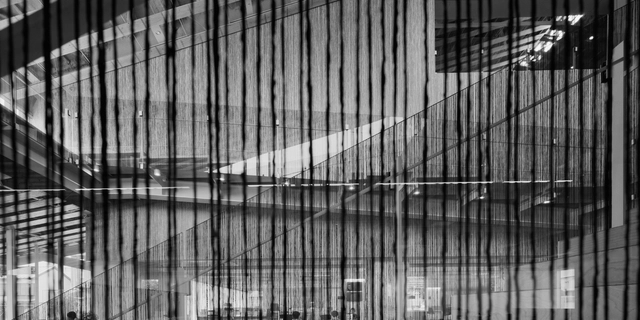
Whether glass and sky, asphalt and sand, steel and trees: the merging of architecture and landscape has always been an inevitable factor in building. In particular the buildings made of glass, steel and concrete have had an immaterial connection to their natural surroundings since the 19th century. The superimposition of structures, reflections, filters and transparencies becomes an important design element and fascinates with its ambiguous representation of reality.