Former Head of Content. Prior to assuming her role at ArchDaily, Becky worked as an editor for leading architecture firms OMA/AMO, BIG (Bjarke Ingels Group) and Reiser + Umemoto. She also worked as an editor for Princeton University School of Architecture and Harvard University's Graduate School of Design. She holds degrees from Princeton University, Harvard University and the School of Visual Arts.
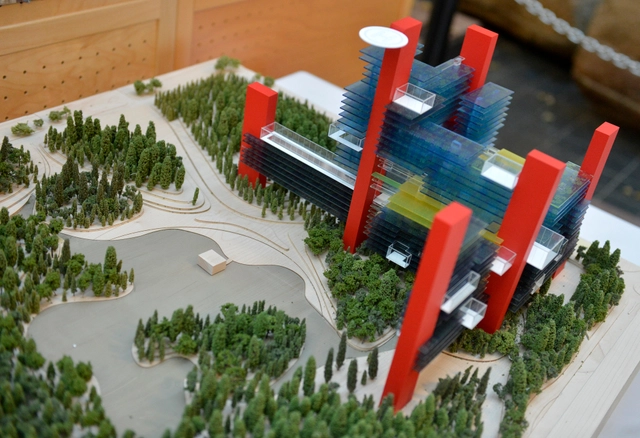
Norwegian energy corporation Statoil has revealed proposals for a new corporate headquarters from the five architecture firms that were shortlisted last October: OMA, Foster + Partners with Space Group, Snøhetta, Wingårdhs, and Helen & Hard with SAAHA. The competition--announced in September of 2013--called for a project that would "take into consideration a number of new measures in the region regarding public transport, parking, roads and other types of infrastructure." The winner will be announced in April/May.
Statoil hasn't disclosed which project belongs to which firm, but the ArchDaily editors have had some fun trying to put a name to each model. What do you think? Let us know your guesses in the comments!
OMA's De Rotterdam, a project 15 years in the making, is designed to maximize the number of functions possible in 44 floors. In addition to shops, hotels and office space, this "vertical city" also contains apartments that use transformable furniture to pack a variety of uses into small spaces. Chairs double as wall art and sofas flip into beds, showing that a 60 square meter apartment is more versatile than we think.
Developer Wim De Lathauwer explains, "Why would we only think in quantity of bedrooms and square meters, while many of these spaces are used only sporadically?...In The Netherlands we are simply not used to this way of thinking. De Rotterdam is the ideal project when it comes to maximizing the joy of every square meter. We deal with an audience who understands this and yearns for this extra quality. Even in the large apartments the office, wardrobe- and guest room are combined in one space. Actually, it is very logical.” You can see the dynamic furniture, designed by Clei Italia, in the video below.
Read more about The Netherlands' largest building here.
Though few details have emerged, developers Tishman Speyer have confirmed that they have selected Chicago-based architects Studio Gang to design a skyscraper in San Francisco. Gang's tower will be one of three Tishman Speyer projects in the city. We'll be sure to update you as more information becomes available. Via SFGate.
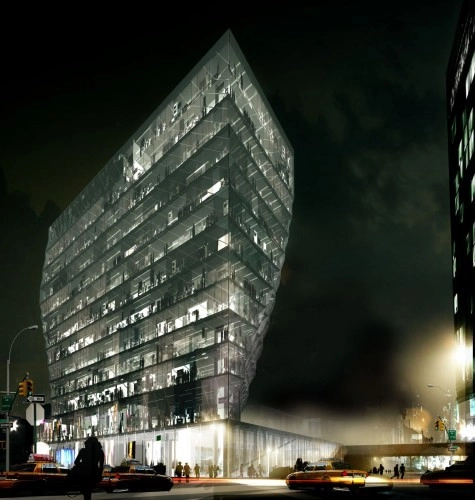
The developers behind Studio Gang's Solar Carve have withdrawn their request for a zoning variance that would have allowed for an increase in the tower's rentable space. The Board of Standards and Appeals rejected the solicited exception, despite the developer's claim that the expensive pilings necessary for the sandy, non-bedrock site adjacent to New York's High Line posed a "financial hardship."
Studio Gang's 213 foot tower was slated for completion in 2015. Although "the bid for additional floor has been dropped from the application," said the project's land use attorney, a hearing for special permitting that will allow for a modified setback is scheduled for March.
Last night, another pamphlet launched its sixth issue, DEFAULT!, at New York's Printer Matter, Inc. With contributions from CODA'sCaroline O'Donnell (winner of the 2013 MoMA PS1 Young Architects Program), critic Sylvia Lavin, Urtzi Grau and Cristina Goberna (of Fake Industries) and others, this installment tackles the presupposition that "design inherently denies the default, and that the default is by definition un-designed." Copies of DEFAULT! are available through their website. More information after the break.
The Shenzhen Bi-City Biennale of Urbanism/Architecture, which enters its final weeks, has already welcomed more than 120,000 visitors. The Value Factory offers a jam packed program to conclude a very inspiring UABB 2013. From now until the end of February, visitors can enjoy tours, workshops, exhibitions, performances and debates. Check out this month's full program after the break.
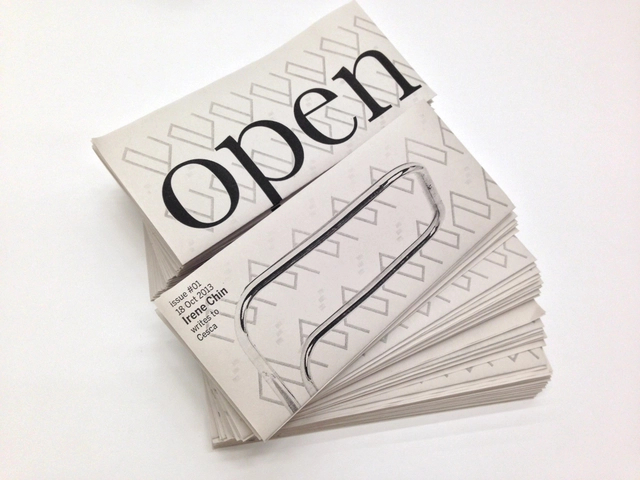
Launched in September 2013 by students at the Harvard Graduate School of Design, Open Letters is a print experiment that tests the epistolary form as a device for generating conversations about architecture and design. The project stems from an earnest curiosity about what people have to say to each other about architecture, landscapes, cities, ideas, history, practice, experience and learning.
New issues are released every other Friday, each presenting one open letter, i.e. a letter addressed to a particular party, but intended for publication, about any topic relating to the design disciplines. Past correspondents have written to mentors, chairs, trees, mystical creatures, those in need of advice and to NCARB. All issues can be read online.
Courtesy of ArchitectureBoston, Boston Society of Architects
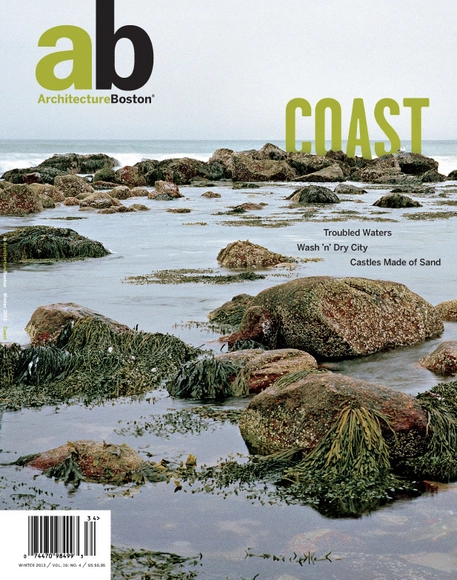
The new issue of ArchitectureBoston magazine, Coast, focuses on the thin border of continental crust that is home to 45 percent of the world’s population. The issue examines how architects and urban planners can mitigate or accommodate sea-level rise and storm surges associated with climate change. Coast promotes debate and offers answers and opportunities surrounding a problem that will inevitably affect most of the world’s urban residents in years to come.
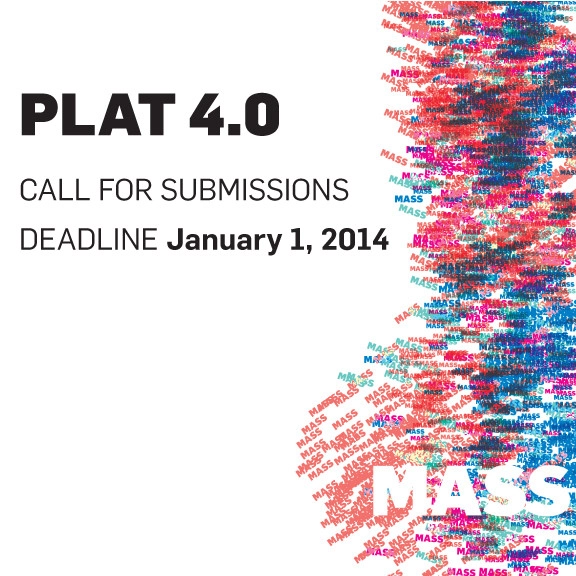
PLAT Journal invites content for its forthcoming issue, Mass. At once a spatial and social practice, architecture produces mass: an accumulation that, given momentum, projects a social attitude. Mass is assertive—whether through a tactful manipulation of scale, an astute engagement of its context, or a specific formal legibility, it speaks plainly but with conviction.
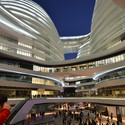
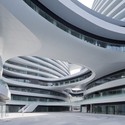
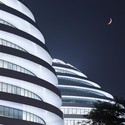
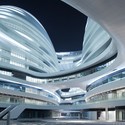
The list of architects that have collaborated with Zhang Xin’s development company, SOHO China, reads like the roster of an architectural dream team (which includes Zaha Hadid, Yung Ho Chang, Bjarke Ingels, Kengo Kuma, Kazuyo Sejima, Herzog & de Meuron, Thom Mayne, David Adjaye, Toyo Ito and others). So it’s no surprise that the self-made billionaire lectured to a packed house at Harvard University’s Graduate School of Design last Thursday. Xin spoke about her commitment to and love of design, explaining that her company’s mission is to bring a variety of architectural languages to China. And though SOHO’s projects are certainly experimental, Xin contends that her developer mindset actually helps meliorate the architect’s propensity to take the experiment too far—all without sacrificing the impressive and iconic forms of SOHO’s building portfolio.
WatchZhang Xin link her practice in real estate to larger global issues and catch a glimpse of two Zaha Hadid-designs currently under construction: Wangjing SOHO and Sky SOHO.
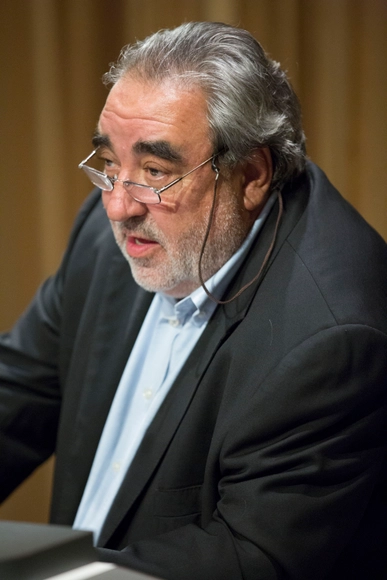
ArchDaily got the chance to briefly speak with Pritzker-prize winning Portuguese architect Eduardo Souto de Moura when he (along with the Porto Metro Authority) received the Veronica Rudge Green Prize in Urban Design at the Harvard Graduate School of Design earlier this month. His design for the Metro system in Porto, Portugal garnered high praise from the jury, with member Rahul Mehrotra explaining that the project “shows generosity to the public realm unusual for contemporary infrastructure projects.” Upon receipt of the award, the head of the Porto Metro, João Velez Carvalho, thanked Souto de Moura for his efforts in this “urban revolution” and touted Porto as a destination in which people actively and enthusiastically seek out the architecture of Souto de Moura and fellow Portuguese architect Alvaro Siza.
Souto de Moura spent a few moments with us to describe both the challenges and rewards of working on a project that saw the completion of 60 new stations constructed in 10 years within the sensitive fabric of the city of Porto—a UNESCO World Heritage site.
ArchDaily: What is your opinion of architecture prizes?
Eduardo Souto de Moura: I won’t be modest, I like describing my opinion about them because the profession is so tough and difficult that is it complicated to achieve a high level of quality. So when you’re awarded a prize it’s like a confirmation of your effort. But the other thing is that a project is not the act of an individual, it’s a collective act. When there’s a prize, the press and the people, the “anonymous people,” go see the project and talk about it, critique it. That’s what gives me the motivation to continue in the profession. And every time it gets more difficult.
Sociologist Saskia Sassen's researches and writes about the social, economic and political dimensions of globalization, immigration, and networked technologies in cities around the globe. Her books and writings—published in over sixteen languages—have sustained the interests of architects and planners who seek to better understand the city via the systemic conditions that find expression in the reality of urban space.
Now actively involved in teaching Columbia University, we caught up with Sassen at the Arquine Congress in Mexico City, where she shared some interesting views on the role of architects, her contemplations on the future of the city, and her thoughts on the impact of the internet on the city.
Check out a full transcript of our interview with Sassen after the break.
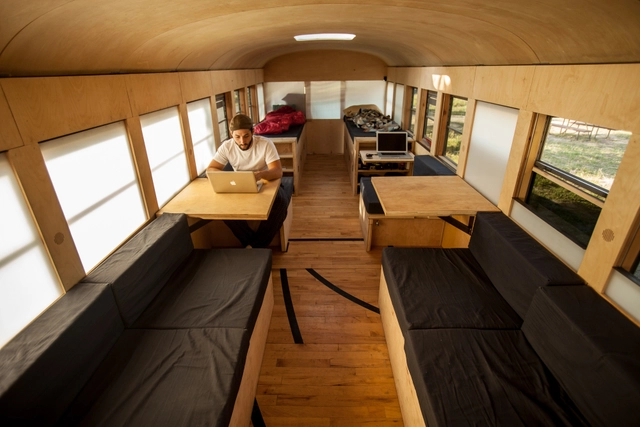
Like many architecture students, Hank Butitta was frustrated. Frustrated that the projects he and his fellow classmates were painstakingly, time-consumingly crafting at architecture school resulted—almost always—in nothing. But Hank Butitta, unlike many architecture students, decided that, for his thesis, he would buy an old school bus and turn it into a flexible living space. The result: a 225 square foot mobile home—complete with reclaimed gym flooring and dimmable LED mood lighting.
On his website (www.hankboughtabus.com), Butitta says, “This project was a way to show how building a small structure with simple detailing can be more valuable than drawing a complex project that is theoretical and poorly understood.” Since the project (which was envisioned with a nod to the tiny house movement) was picked up by the media last week, fans and commenters have flooded the site, asking Hank how he resolved certain problems and where he sourced the materials.
"I have always harbored the naïve idea that architecture brings people together – that its effects, however dependent on special expertise, move us in direct and elemental ways. The anxious crowds from the film Independence Day, like speakers of Esperanto, share a hope of solidarity beyond parochial or national interests in the face of an overwhelming alien presence. However clichéd this ‘Family of Man’ scenario is, it never ceases to fascinate; for it becomes clear that architecture, especially good architecture, is, like the aliens– alien. Indeed it is otherness, indifference as opposed to any humanist impulse, that illuminates something universally shared and felt, which paradoxically is more fully human than those ‘humane’ projects delivered with the best of intentions."
This paragraph, by Jesse Reiser of Reiser + Umemoto, is the first of an excerpt from O-14 Projection & Reception (AA Publications 2012). Through exhaustive documentation of O-14's design and construction, the book delves into the complex interrelationships between technology, expression and politics in the context of the ‘nowhere place’ of the global city. Both an account of a design’s realization and a manifesto, Projection & Reception contains Jesse Reiser’s explanatory and theoretical texts on the tower as well as critical essays by Brette Steele, Sanford Kwinter, Sylvia Lavin and Jeffrey Kipnis. Read the rest of the chapter "Independence Day" fromO-14: Projection & Reception after the break...
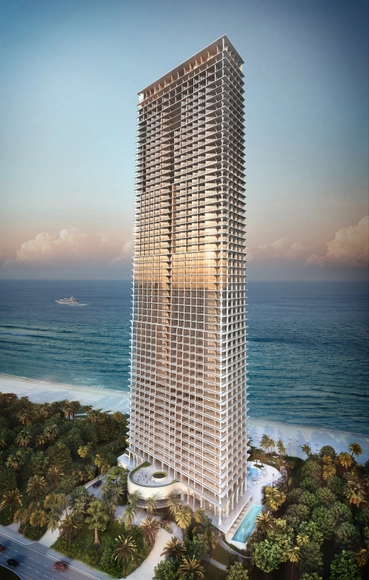
Fortune International has released images of a 57-story, Herzog and de Meuron-designed residential tower in Miami. With interiors by Parisian firm PYR and landscape by Raymond Jungles, the Jade Signature promises to bring high design to Sunny Isles, Florida. Described as “contemporary houses in the sky,” units will feature ample outdoor terrace space and large windows to frame views of the horizon. Six Sky Villas feature double height living areas and the two Signature penthouses each boast 360-degree views and a large terrace pool.
More images of Jade Signature and a video after the break…



_Sally_Ryan_Photography.jpg?1393871858&format=webp&width=640&height=580)