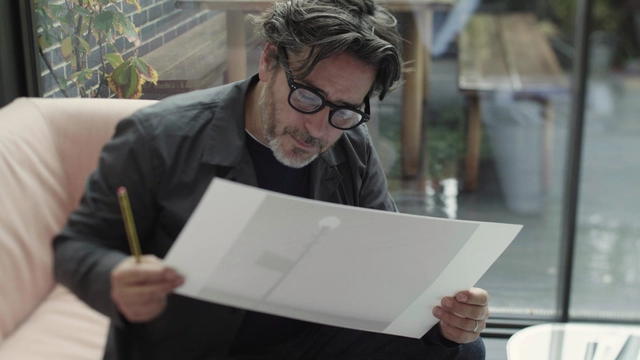
Jorn Utzon’s name is, for most people, tied inextricably to his most famous work: the Sydney Opera House. Completed in 1973, the project was named a World Heritage Site in 2007, making Utzon only the second architect (after Oscar Niemeyer) to receive such an honor in his lifetime. The project is arguably the most recognizable and significant works of architecture of the 20th century and remains a work ahead of its time. But the uncompromising detail and futuristic design of Utzon’s work left many of his projects unrealized or unknown by the time of his death in 2008.
https://www.archdaily.com/907488/utzon-unbuilt-competition-to-shed-new-light-on-the-danish-masters-works-and-invites-the-public-to-take-partKatherine Allen
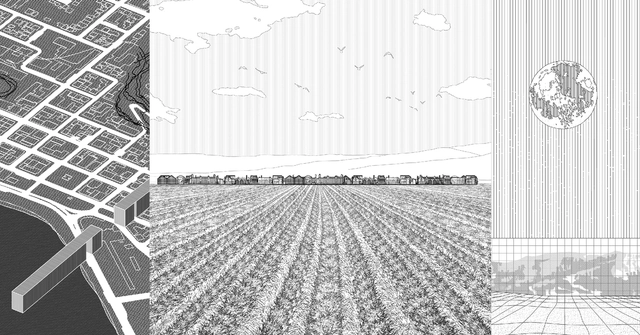
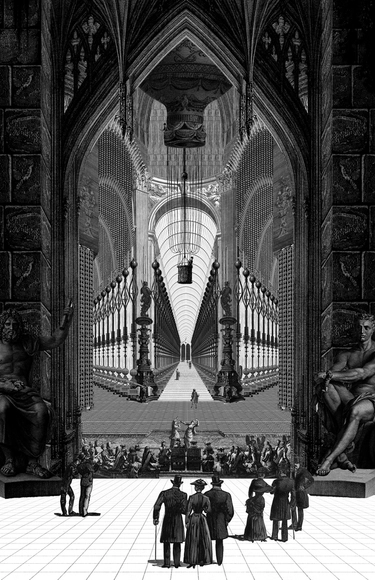
As imaginative and hypothetical as their work may seem to some people, many visionaries have created admirable artwork that look beyond the ordinary and rethink architecture and urban spaces. Xinran Ma, the New York-based architectural designer and illustrator has visualized his architectural fantasies, and created numerous series of drawings, two of which were entries for Fairy Tales 2016 and 2017 by Blank Space."
Drawing inspiration from Italian artist Giovanni Battista Piranesi, known for his imaginative etches of Rome, and the collaborative works of Alexander Brodsky and Ilya Utkin, who produced avant-garde depictions of cities and landscapes, the illustrator has once again shared his creations with Archdaily, expressing his passion “to vision architectural fantasies that transcends time through graphic narratives”.
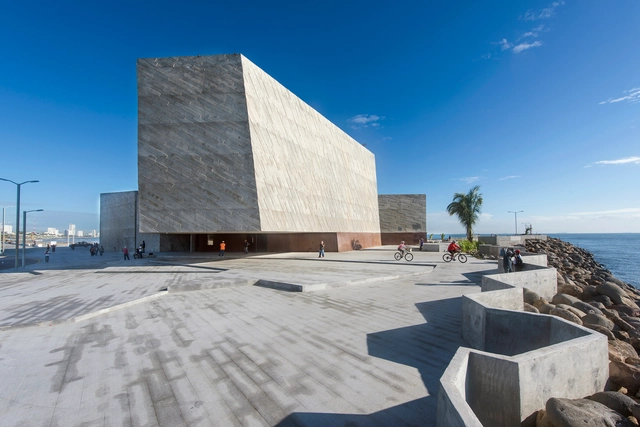
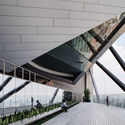
The year 2018 has been filled with achievements and surprises for the architectural community. As the year draws to a close, we reflect on the crucial role competitions play in reinforcing the global image of each region or country. Mexico was no exception, securing nearly 18 international recognitions (including grants, competitions, nominations, etc.) that showcased its key interests and goals for the coming years to the rest of the world. This selection highlights the prominent participation of Mexican architects Frida Escobedo and Rozana Montiel—both invited and recognized on multiple occasions at some of the industry's most prestigious events—as well as outstanding projects like the Teopanzolco Cultural Center by Isaac Broid + Productora, which received several national and international awards.
On the surface, designing a new art museum for Harvard University is a brief so straightforward that it sounds like part of university curriculum itself. The program lends itself to the type of light and airy spaces architects dream of creating; the campus site promises both steady and engaged traffic. But, for all the apparent advantages, the road to realizing Harvard’s Art Museums was a deceptively complex one - one that ultimately took six years to see realized.
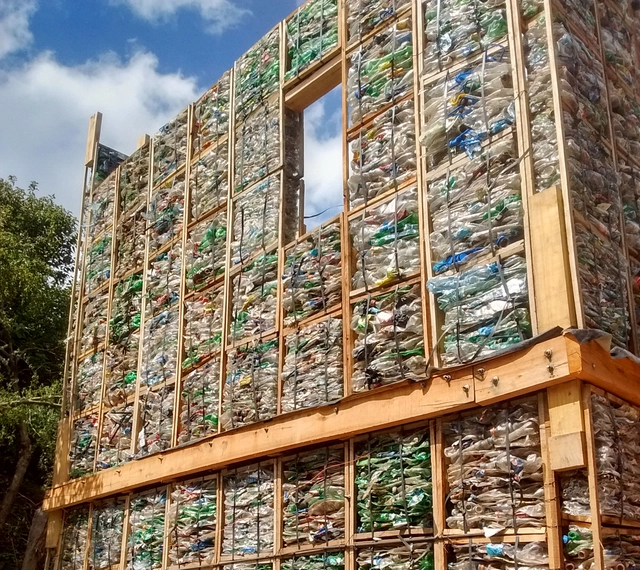
The team at '3 Construcciones' has developed a sustainable housing construction system based on frames and recovered plastic modules, aiming to establish a mass-scale, low-cost, and low-energy method to address Argentina's housing deficit.
'Tis the season of holiday cheer, and with that comes the creative greetings from offices, museums, photographers and collaborators around the world! See our favorites below (or check out our best reader-submitted cards).
The waters of the Gowanus Canal in Brooklyn, New York, still do not smell good, although the problem was once much worse. They carry the remnants of years of industrial pollution and untreated sewage.
The area, which in the 19th and 20th centuries was primarily industrial, has undergone revitalization in recent years through federal investment (see here). New green spaces were created, and service-oriented businesses moved into the neighborhood. Residential property prices also rose, ultimately displacing long-time residents.
If asked about comfort, what is the first thing that comes to mind? Luxurious finishes, plush chairs and sleek interiors? Few would think of their office, and the likely culprit is a fundamental ignorance of an alternative definition of comfort. When defined as a state of physical well-being derived from the provisions that are necessary for occupants to perform space-specific tasks, it’s apparent that architects play a key role--and that comfort is not just about spaces that are comfortable for leisure activities.
Architects and designers are responsible for the visual, thermal and acoustic qualities of spaces, not to mention the indoor air quality of our offices and homes. This is fundamental considering that the typical 21st century urbanite spends an average of 90% of time indoors. We constantly experience physical, psychological and physiological consequences of the balance (or imbalance) of indoor environmental design .
With this in mind, thermal comfort seems obvious (and it is) but unfortunately comfort as a holistic goal of architecture has not been taken seriously enough. Beyond measuring the acoustic and visual aspects of a built space, architects must have a solid understanding of the underlying concepts that drive the best practices. A solid grasp on how material selections will affect qualitative assessments of conferences rooms, homes, theaters, etc. can improve basic tectonic decision making that can, in turn, create more comfortable spaces.
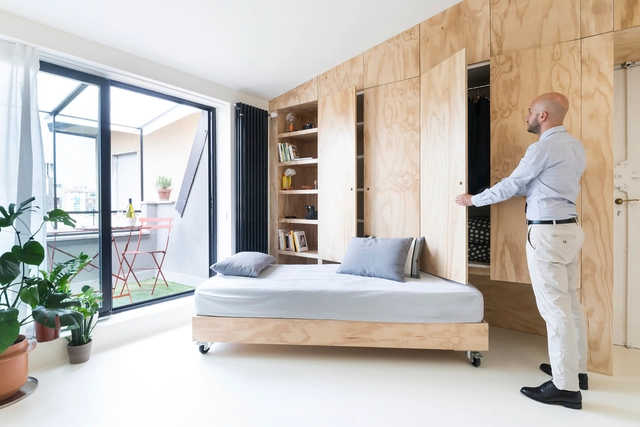
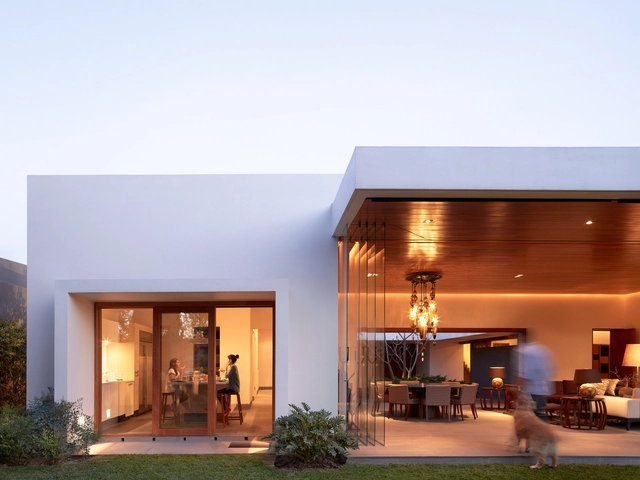
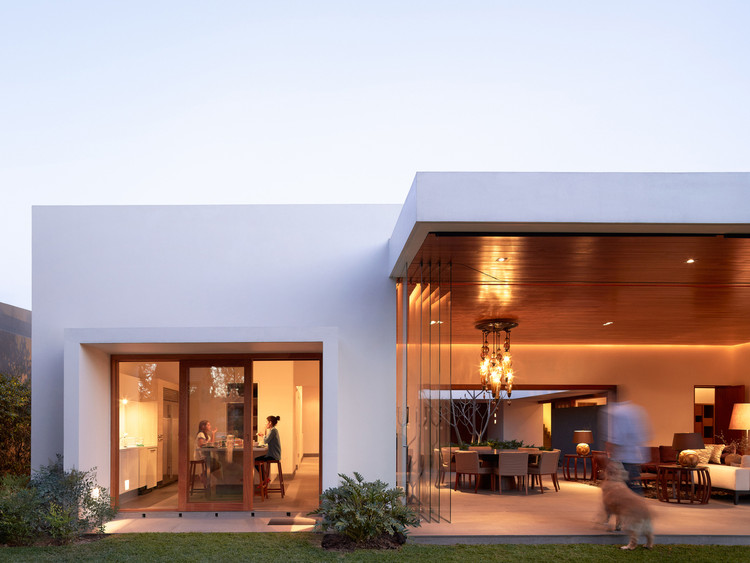
When the time comes to separate or close off spaces, it's important to keep in mind solutions that will adapt and cater to your project. In this step, it's important to define, not only the materials needed to complete the project, but how the final product will interact with the people who will use it. Some of the most highly recommended solutions are foldable, collapsable, stackable, or hanging mechanisms that allow interiors and exteriors to be integrated without completely losing their individual functions.
If you're looking for help or inspiration for this process, take a look at 6 projects that effectively utilize these versatile building systems.
In a recent article in the New York Times, writer Allison Arieff poses the echoed question that the architectural community keeps asking itself, "Where are all the female architects?" No longer an issue of uneven gender ratios in architectural schooling, the persistence of dwindling numbers of women principals at the top of firms simply does not resonate. She postulates, that perhaps more significant than the statistics, the real problem lies in the definition of success.
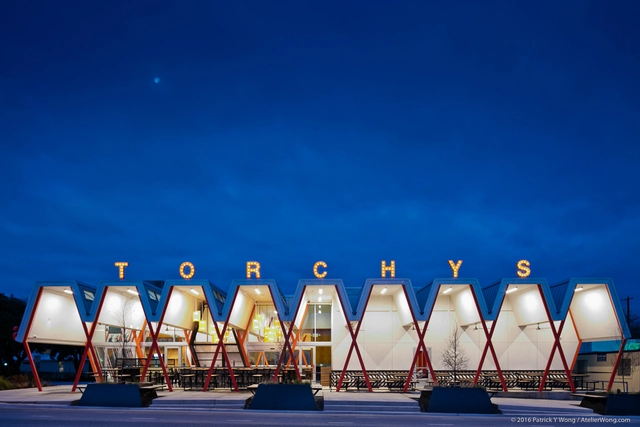
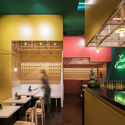
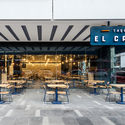
A quintessential characteristic of Mexican culture — in addition to its architecture and rich pre-Colombian identity — is its gastronomy. In 2010, UNESCO's Intangible Cultural Heritage list inscribed Mexican Traditional Cuisine. The foundation remarked that "their knowledge and techniques express community identity, reinforce social bonds, and build stronger local, regional and national identities." However, from Mole to Birria and Pozole to Cochinita Pibil, the most iconic, versatile, and tasty meal is the taco.
In honor of Mexico's rich history, tradition, and food, take a look at 7 taquerias that can inspire your next project.
Human beings are “seeing machines.” Except for those who lack this faculty, our eyes are our greatest generator of information. The brain then interprets these images accordingly… We must not confuse "looking" with the act of "seeing" something. Looking, an automatic and passive response, must become the act of seeing—of processing all those bits of information into something concrete and tangible. Sherlock Holmes observed an earlobe to deduce kinship; Proust, the hem of a dress or the nape of a neck to understand a woman profoundly… Where is the sign hidden? How do we know, in any image—whether verbal, visual, or auditory—which is the signifying part and which is the neutral, empty background, the noise to be discarded?
While our eyes capture and absorb this information, and our brain processes and translates it, it is photography—more specifically, our camera—that manages to retain it, freezing it in a photograph so that once our eyes have stopped looking, they can begin to see. As Le Corbusier simply put it, “one must see what one looks at.”
Located 2,600 meters above sea level is the so-called “green lung” of the city of Bogotá. This is Simón Bolívar Central Park, recognized as the most important and largest in the Colombian capital. Geared toward recreation, sports, and cultural events, this space is located in the locality of Barrios Unidos, making it easily accessible to most residents and tourists. On this day, December 15, 1991, its official inauguration took place.
Over the last twenty years, the world has never been so connected. At the turn of the century, the digital realm seems to have invaded analogue layers, redefining standards, lifestyles, interactions, and the way we connect and use spaces. This social redefinition is strongly attributed to Generation Z—the cohort born during the transition from the 20th to the 21st century, between the 1990s and 2010s. But do you know the defining characteristics of this group?
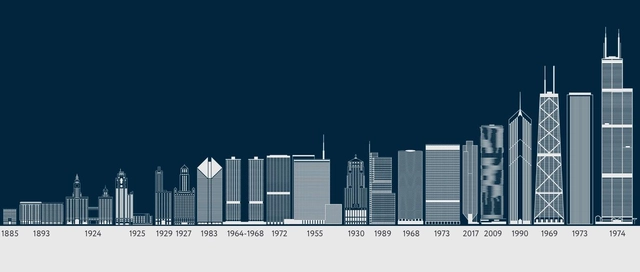
Mud City, the Windy City, the City of the Big Shoulders... If there is one thing we are certain of, it is that Chicago is the birthplace of exceptionally tall buildings.
To celebrate the city's ongoing innovations in soaring skyscrapers, Orbitz has illustrated 20 of Chicago’s most iconic sky-high architecture.
View the republished content from Orbitz' list complete with an interactive timeline of Chicago's tallest buildings.
An active ArchDaily collaborator, architect and doctor Rogelio Ruiz Fernández, has emerged as a great enthusiast of cinema, architecture, cities and landscapes. He expresses his love for visual arts, architecture, and culture through his drawings. In these moments, he documents trips, his favorite locales, and project ideas that will later become works of architecture.
Below, Ruiz Fernandez explains his creative process and the importance of sketches in his work.
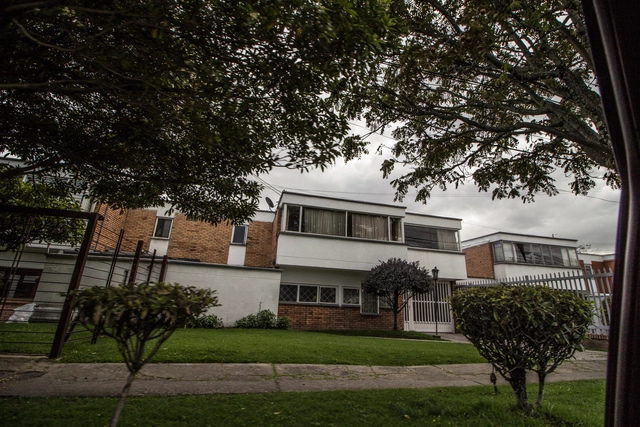
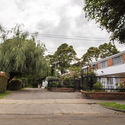
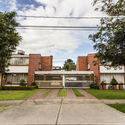
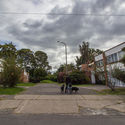
Walking the streets of Bogotá, one is inevitably captivated by the mix of artistic currents across every block. The diverse constructions reflecting history, the passage of time, and the survival of houses and buildings in the face of the city's imminent spatial shifts create a sort of architectural palimpsest—where some structures are repurposed and spaces are renovated, yet the imprint of history endures.
Indeed, the Niza Antigua neighborhood was one of the districts declared a cultural heritage site. Designed by architect Willy Drews in the 1960s, its location—at the time far from Bogotá's financial and commercial center—prompted a series of shifts in the lifestyles of its residents, while the absence of fences and the proximity between houses fostered a strong sense of community among neighbors.
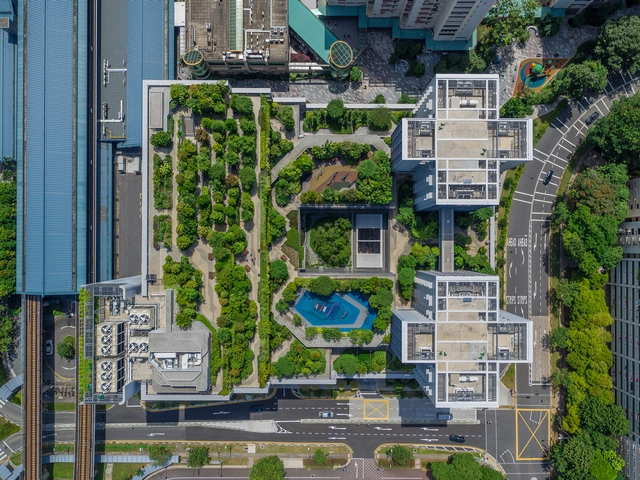
Though seemingly opposite environments, cities are a lot like rainforests. At ground level, the world is dank, dark, and full of predators. Inhabitants seeking fresh air, sunshine, and privacy have only one direction to go: up.
So in the urban jungle, it’s only natural to build a “canopy” in the form of rooftop architecture. The popularity of rooftop amenities across residential, commercial, hospitality, and even health-care projects shows that’s exactly what’s happening.
Building your own home. This is perhaps one of the greatest aspirations for many people—not only architects, but anyone who wants to see the vision of their dream home come to life. Others, however, approach it from a perspective more focused on legacy: sentiments like “my great-grandfather built this house” serve as their driving force. It is about preserving memory in the form of a building.
Nevertheless, one must consider the challenges of being your own developer, of not relying on a real estate agency. It is a difficult path. Consequently, many people abandon this dream to avoid the complications, ultimately opting to buy an apartment or a house.
In a year packed with headlines, you’d be forgiven for occasionally letting them pass you by. But even within the mass of project proposals, awards, competitions, and events, a few trends emerged in 2018 - trends that both tell us about the year past and suggest where things might be heading. These trends, below:
https://www.archdaily.com/907875/the-architectural-trends-that-dominated-news-stories-in-2018Katherine Allen
Oxford-born designer, Jay Osgerby has achieved virtually everything there is to achieve in the world of design. Together with his partner Edward Barber, Osgerby runs the internationally renowned Barber & Osgerby design studio. From diverse designs for well-known manufacturers such as Vitra and B&B Italia to the official torch for the 2012 Olympic Games in London and a two-pound coin commemorating the 150th anniversary of the London Underground, Osgerby and his partner have been almost restless in their creation of numerous icons. “I find it quite difficult to not think about work. I’m always thinking about what’s next. I’m terrible at stopping and just thinking.”
https://www.archdaily.com/907271/jay-osgerby-of-barber-and-osgerby-good-design-is-the-answer-to-a-very-difficult-questionSponsored Post
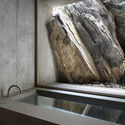
With the right configuration of materials and shapes, small enclosure, such as bathrooms, have unending design potential. Progressively, architects and designers are striving to make washrooms more welcoming and attractive places for its users. Often times we will hear clients ask for their bathroom to be somewhat of a personal spa. This week we have compiled 10 compelling images of bathrooms from all over the world. Bathrooms whose materials, patterns, colors, shapes, and textures begin to tell a story. Below, photographs by Peter Clarke, José Hevia, and Erieta Attali.
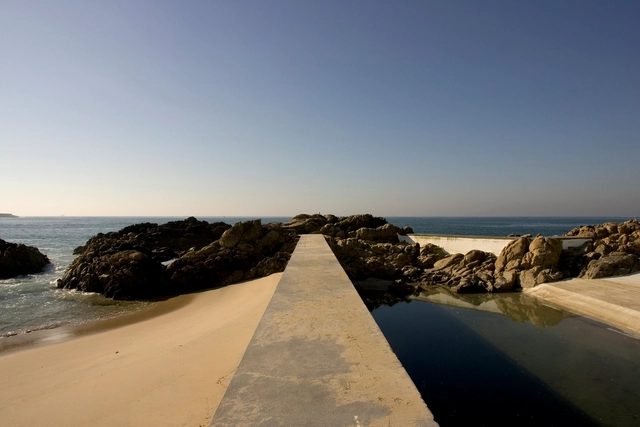
Dealing with the context of a project’s site is an essential part of architecture, be it by denying or incorporating preexisting elements and the environment’s conditions in the design. However, understanding what lies around as an active agent of the decisions and space organization goes beyond simply considering the good views, natural ventilation, solar orientation, etc; it is about seeing these conditions as co-authors.
These cases are most notable when practices think of the architecture's surrounding environment as an active agent.
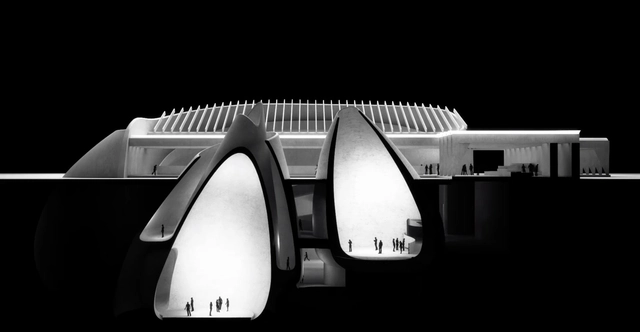
The third edition of the EA USS Workshop, organized by the School of Architecture at Universidad San Sebastián (Chile), featured Belgian architect Kersten Geers, founding partner of OFFICE KGDVS. In addition to participating in a series of discussions with workshop attendees, Geers held a public conversation with Enrique Walker and delivered a keynote lecture presenting his work and architectural reflections.
The 2018 edition brought together 14 teams, 11 of which represented domestic architecture schools, while 3 came from international institutions in Peru, Argentina, and Costa Rica—totaling 96 participants, including students and faculty advisors. To foster the development of projects capable of driving debate, each day of the workshop addressed a distinct theme, beginning with strategies led by Ernesto Silva, Director of the Santiago campus of EA USS, followed by the materialization of the project, led by Albert Tidy, Dean of the USS Faculty of Architecture.
To conclude, on Friday, October 26, an exhibition of the work produced by the teams was held, alongside an engaging conversation between Enrique Walker and Kersten Geers. The event wrapped up with a social gathering to celebrate the meeting of the schools and the high quality of the projects.







.jpg?1545830119&format=webp&width=640&height=580)
.jpg?1545830295 "© Laurian Ghinitoiu")
.jpg?1545830180 "© Laurian Ghinitoiu")
.jpg?1545830625 "© Laurian Ghinitoiu")
.jpg?1545830360 "© Laurian Ghinitoiu")
.jpg?1545830119)

.jpg?1545322183&format=webp&width=640&height=580)










.jpg?1545014447&format=webp&width=640&height=580)