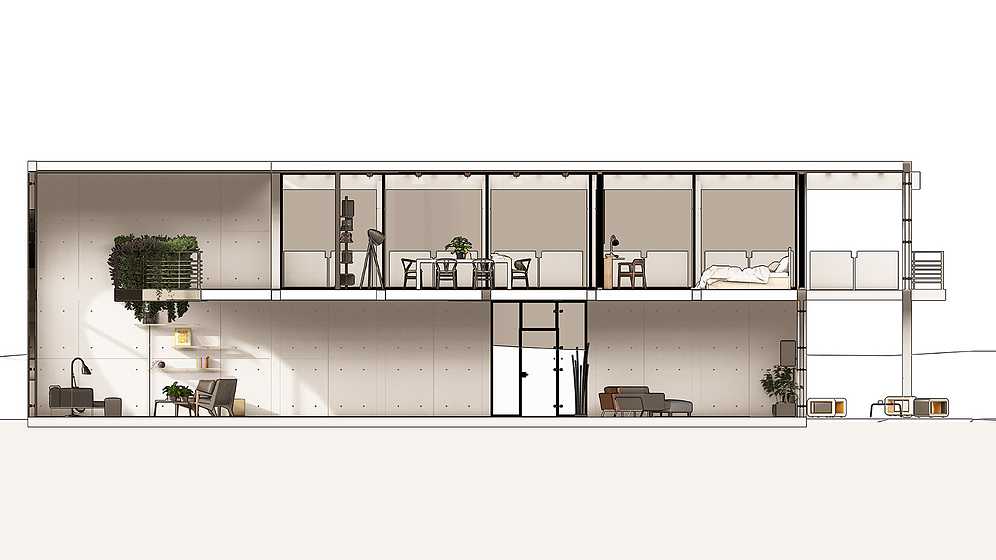
Produce personalized presentation boards that distill complex concepts into simple visual representations with a few helpful tools and effects.


Produce personalized presentation boards that distill complex concepts into simple visual representations with a few helpful tools and effects.

Interiors is an online film and architecture journal, published by Mehruss Jon Ahi and Armen Karaoghlanian. Interiors runs an exclusive column for ArchDaily, analyzing and diagramming films in terms of space.
The rise of the director in music videos came in the early 1990s, when MTV started crediting directors alongside artists and song titles. The influx of visionary directors such as Michel Gondry, Spike Jonze and David Fincher emphasized that music videos were becoming an auteur’s medium, much in the same way as film. The shift from stylized and performance-based music videos into narrative-based works, however, came much later, as the medium became more “cinematic” in its look and narrative structure.
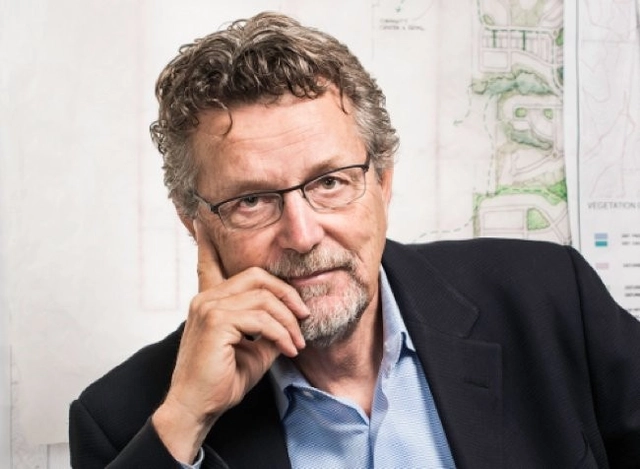
This article originally appeared on Metropolis Magazine's Point of View Blog as "Q&A: Peter Calthorpe."
The titles of Peter Calthorpe’s books trace the recent history of urban design in its most vital and prescient manifestations, starting in 1986 with Sustainable Communities (with Sim Van der Ryn) and followed by The Regional City: Planning for the End of Sprawl (with Bill Fulton), The Next American Metropolis: Ecology, Community and the American Dream, and Urbanism in the Age of Climate Change.
A founding member of the Congress for the New Urbanism and a past winner of the Urban Land Institute’s prestigious J.C. Nichols Prize for Visionaries in Urban Development, the Berkeley-based architect and planner has been at the forefront of urban design for more than three decades. In recent years, in addition to his firm’s continuing work in the United States, Calthorpe Associates has increasingly turned his attention to a country urbanizing at a pace unprecedented in world history: China.
Here Calthorpe talks about China’s unique planning process, the future of high-speed rail in California, and Architecture 2030’s new 2030 Palette, after the break...

“Increasingly we experience cities mediated by digital technology — whether that's via smartphone maps, digital transit signage, or texting a friend that you've arrived at a destination. How our city is built to support residents, businesses, and visitors [...] is now part physical and part digital.”
John Tolva, the Chief Technology Officer for the City of Chicago, is on a mission: a mission to bring the physical and digital worlds into conversation.
To embed more and more digital information into the physical world, a growing number of digital specialists are beginning to embrace the worlds of architects, planners and urbanists. But, so far, it has not been a two way street to make the digital leap.
Find out why architects should be at the forefront of the digital/spatial overlap, after the break...

A recent study by the Real Estate Board of New York (REBNY) concluded that by preserving 27.7% of buildings in Manhattan, “the city is landmarking away its economic future.” REBNY is challenging the Landmarks Preservation Commission, arguing it has too much power when it comes to planning decisions, and that by making business so difficult for developers it is stifling the growth of the city.
Yet not three days before releasing this study, president of REBNY Steve Spinola said in an interview with WNYC that “if you ask my members, they will tell you [the twelve years of Mayor Bloomberg's tenure] has been a great period of time for them”. The conclusion of WNYC is that the past decade has actually been a period of increased growth for developers, rather than a period of stagnation.
It would be easy to echo the opinion of Simeon Bankoff, executive director of the Historic Districts Council, who believes the actions of REBNY come down to greed, even comparing its members to Gordon Gekko, the anti-hero of the film Wall Street. But is greed really what’s behind this attack on the Landmarks Preservation Commission? Find out after the break.
.jpg?1373988741&format=webp&width=640&height=580)
ArchDaily is looking for some awesome, architecture-obsessed Interns to join our team for Fall 2013 (August 19th – December 6th)! If you want to research/write about the best architecture around the globe – and find out what it takes to work for the world’s most visited architecture website – then read on after the break…

Dharavi - Asia’s largest slum of one million with an average density of 18,000 residents per acre - is amidst a heated debate between its people, the government and private investors as it sits on some of India’s hottest real estate in Mumbai. While the government is grappling for solutions on how to successfully dismantle the low-rise slum and relocate its residents to a high-rise podium style typology, the investor’s profit-driven approach has placed residents on the defense, “rendering Dharavi a perfect storm of contested urbanism," as architect, urban designer and author William Hunter describes.
In light of this, we would like to direct you to an interview by Andrew Wad of Polis in which discusses Dharavi’s dire situation and the motivation behind Hunter’s new book, Contested Urbanism in Dharavi: Writings and Projects for the Resilient City. Read the interview in its entirety here and read a recap on Dharavi’s situation here.
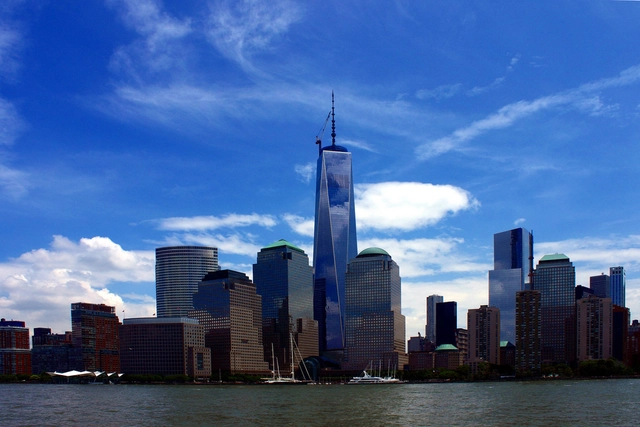
NYC Mayor Michael Bloomberg's twelve years in office will leave an undeniable impression on the physical landscape of the city for future generations. The new and revised policies of this administration have encouraged unprecedented growth of New York City and its outer boroughs in the years following 9/11. According to a new series called The Bloomberg Years by WNYC and this article by Matthew Schuerman, Bloomberg's three consecutive terms have made New York City's skyline taller, have made the city more attractive and in turn, more expensive.
Join us for more after the break.

The Museum of New Art, in cooperation with the Union of Estonian Architects and Pärnu City Government, announced an international architectural competition on 1 July, to establish the Baltic Sea Art Park in Pärnu. The objective of the competition is to find the best vision in terms of architecture and planning to further develop the art park of the Baltic Sea countries. The deadline for entries is 10 October 2013, and the winners shall be announced on 15 October 2013. The competition prize fund is EUR 12,000.

This article, by Linda Hales, originally appeared on Metropolis Mag as "Clear Line of Sight"
The new dormitory at Gallaudet University exudes raw energy. Rough wood planks, exposed steel, polished concrete, and gleaming bamboo unite to provide architectural muscle. But the real power comes from a barely detectable dynamic. That energy doesn’t come from how the structure looks on its historic Washington D.C. campus, but how the building functions for the people inside. “It’s about how buildings structure and frame human interaction,” says David J. Lewis of LTL Architects. “The basic conditions of architecture were brought to the fore.”
The glass entry door slides open with a soft whoosh. Students ignore it as they crowd through the gap in a jumbled dance of elbows, hands, arms, and animated faces. Gallaudet is the preeminent liberal arts institution for youth who are deaf or hard of hearing, and most of its 1,821 students communicate with the expansive gestures and expressions of American Sign Language (ASL). That the students can make their way into the building without using their hands to open the door—thus halting the flow of the conversation—is cause for celebration. Here, at least, architecture has gotten out of their way.
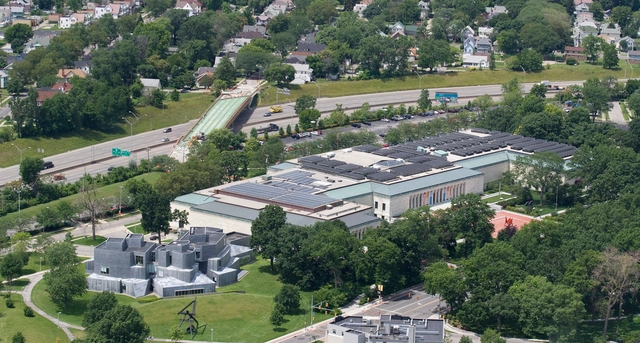
The 101-year old historic building that houses the Toledo Museum of Art in Ohio has gone off grid, reports Candace Pearson of Architectural Record. Through a series of upgrades that began in the early ‘90s, including covering 60% of the roof with solar panels, the Toledo Museum has gone from purchasing 700,000 kW of electricity a month to returning energy back to the grid - making it an exemplar of adaptability and sustainability in century-old public buildings. Find out how they did it at Architectural Record.
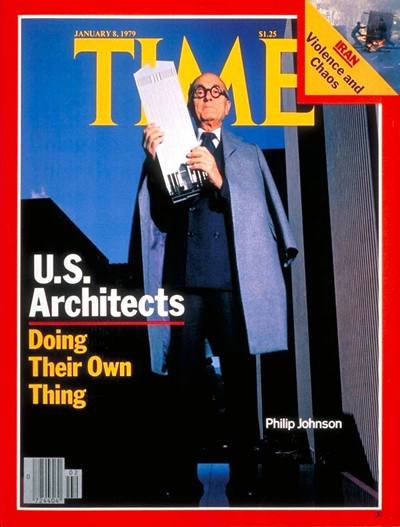
Is the word “starchitect” really denigrating to architects? Is it really a problem for the profession? Really? It depends on how you look at it.
And, yes, as it was pointed out to me, “This question itself is a rehash.” Well, the issue of labeling architects has been a rehash since the sixteenth century so we might as well trot it out one more time.
It’s a rehash principally because the way we label architects has implications for the profession’s bottom line. It drives fees up for a few and down for everybody else. It makes some firms busy and others less so. Or does it even do anything but put contemporary architecture on the minds of the general public, the broader client base?
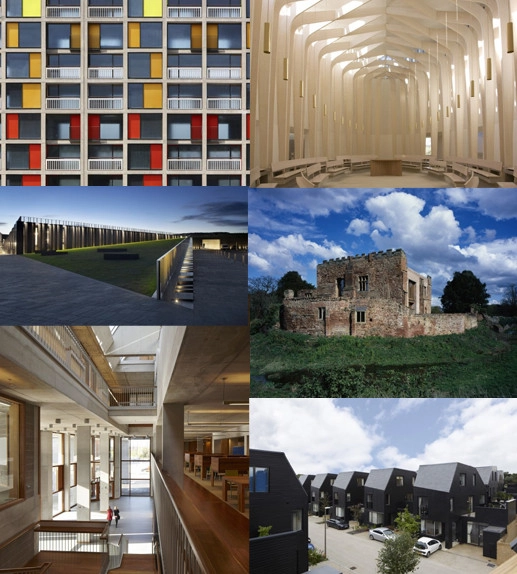
Most critics agree that this year's shortlist for the Stirling Prize is more "modest" than in past years - which is not to say that they didn't have plenty to say on RIBA's selection. Check out the critical responses from The Financial Times' Edwin Heathcoate, The Guardian's Oliver Wainwright and The Independent’s Jay Merrick, after the break...

When the $1.9-billion project is completed next year, the 2,073-foot Shanghai Tower will become the world’s second-tallest building. The state-of-the-art, spiraling form, which is engineered to help it withstand typhoons, pays tribute to the city’s dynamic rise as a leading commercial center.
The super-tower also symbolizes the ascension—and resilience—of the firm that designed it. With 3,500 employees, Gensler operates 43 offices in 14 countries. Last year, the company worked on some 6,700 projects for about 2,200 different clients, reporting a record-breaking $751 million in revenue. This year, the company projects its revenues will be closer to $800 million—astounding figures considering the industry is emerging from one of worst economies since the Great Depression. “It’s been a serious downturn and a slow recovery,” says Kermit Baker, chief economist of the AIA. “From 2008 to 2011, architecture firms’ gross firm billings dropped 41 percent. Now, most firms are inching back, but very slowly.”
In a landscape still riddled with fallout, Gensler has managed to weather the recent economic storms. After cutting about 30 percent of its workforce in a nine-month period between 2008 and early 2009, the firm has rapidly rebuilt and now employs more staff and generates more revenue than ever before. Many in the industry today are scratching their heads: What’s Gensler’s secret?

IE School of Architecture & Design through its unique combination of design, innovation and management, expands the boundaries of traditional architectural education. IE welcomes students who seek challenges and aspire to become leaders in the dynamic world of architecture and design.

This article, which originally appeared as "Clients for Life: 6 Tips to Generate Leads and Build New Business" on Autodesk’s Line//Shape//Space publication, is by Ken Micallef; it features the advise of John Beveridge, a 30-year veteran in the management-consulting industry.
“Like most small businessmen,” Beveridge says, “I too am a small-business guy trying to compete with bigger companies, trying to generate leads.”
To that end, Beveridge stresses the importance of Internet marketing. But creating a business website is only the first step.
See Beveridge's 6 tips to building business, after the break...
And this week's "punniest" title award goes to Fast Company (there was no contest, really). Beside the pun, of course, the article itself is pretty cool, outlining how Google Street View has followed-up on their latest intrepid capture of the Burj Khalifa with the 1889 classic: the Eiffel Tower. Read the article here and check out the fun video above!
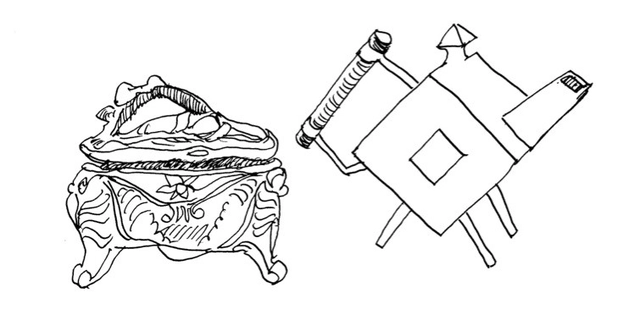
This figure was published on April 2013 in the article “How Modernism Got Square” co-authored with Michael Mehaffy. It has been reproduced several times when reprinting the original article, and in essays by other authors who discuss our ideas.
And yet, the above figure subsequently re-appears with a new accompanying caption that completely reverses the facts and switches our original message. Well-meaning editors and authors chose the new caption “From Artisan to Industiral” (first here, and then again on ArchDaily), which conforms to the modernist orthodoxy on the evolution of historical design styles. They are in no way pushing modernism (being interested instead in my criticism of modernist design): it’s simply that the dogma is so pervasive in our civilization that the mislabeling becomes automatic, a conditioned response.

This article, by Alexandra Lange, originally appeared on Metropolis Magazine as "Architecture's Lean In Moment."
“Women are the ghosts of modern architecture, everywhere present, crucial, but strangely invisible,” writes historian Beatriz Colomina in “With, Or Without You,” an essay in the Museum of Modern Art’s 2010 catalog, Modern Women. “Architecture is deeply collaborative, more like moviemaking than visual art, for example. But unlike movies, this is hardly ever acknowledged.”
Colomina goes on to chronicle the history of modernism’s missing women, acknowledged, if at all, as working “with” Mies van der Rohe, Le Corbusier, Alvar Aalto, or Charles Eames. To put yourself in the shoes of Lilly Reich, Charlotte Perriand, and Aino Aalto, simply watch the cringe-worthy video of the Eameses on the Home show in 1956; Ray['s] introduced as the “very capable woman behind him” who enters after Charles has bantered with host Arlene Francis.
This spring, these ghosts came back to haunt us: Arielle Assouline-Lichten, a student at the Graduate School of Design at Harvard, read excerpts from an interview with Denise Scott Brown in which she mentioned her own absence from partner Robert Venturi’s 1991 Pritzker Prize. “They owe me not a Pritzker Prize but a Pritzker inclusion ceremony,” Scott Brown said. “Let’s salute the notion of joint creativity.”
Read all of Alexandra Lange's essay, after the break...
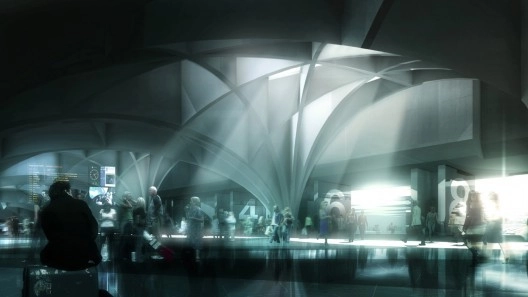
In recent years the use of CAD and simulation programs has resulted in a new understanding of light in architecture. The drawing board and its lamp have given way to the self-illuminating monitor. The result is that concepts in architecture are now made of light from the very first mouse click. In the visualisation process, luminous space now predominates.
However, this begs the question: has the luminous impression (part and parcel of the perfect, rendered setting) become more important than the engineering or architectural concept itself? With the improved interplay of shades, contrast, and brilliance, can lighting actually obscure the point of a realistic simulation?
More Light Matters, after the break…

Gentrification has been a running theme in the social and economic fluctuations that occur in cities. Between housing booms and busts, the revitalization of small manufacturing and the shifting populations cities grow and change organically, subject to a variety of trends. In an article in Business Insider, Tali Arbel traces urban revival by following the successes of craft breweries that have sprung up in desolate and blighted neighborhoods. Brewers have found a home in cities full of abandoned warehouses and factory buildings where real estate is available and affordable. As these neighborhoods become more affluent, rising in trendiness and popularity, they are beginning to price out these same businesses that helped establish them. Where are these businesses to go and how can gentrifying neighborhoods protect social and economic diversity?
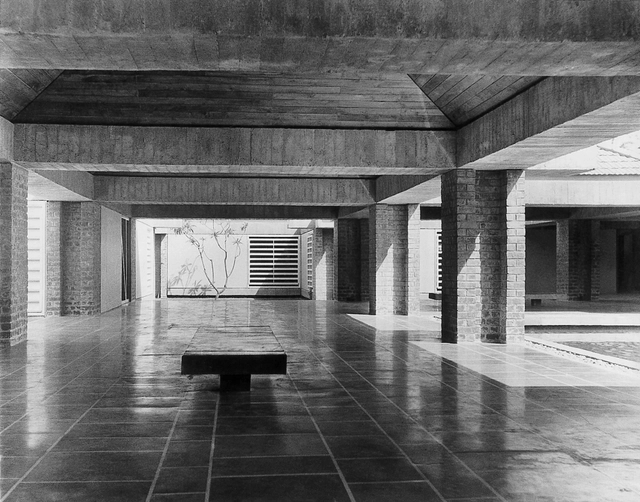
Charles Correa, considered one of India's greatest architects, is celebrated for his post-war work in India in which he connects modernism with local traditions. Digital magazine, uncube, has dedicated a full issue to this renowned architect and includes reviews of the RIBA exhibition currently on view in London, a look at his most influential architectural projects, assesses his role as urbanist and planner, and an interview in which Correa reflects on his own career.

With the rise of urban dwellers comes the rise of urban waste. And, although the hidden life of garbage is still ignored by many, there is no way of escaping one of modern societies most pressing issues: unsustainable waste management. Though many plausible and obvious solutions have already been suggested and are ready to be implemented, some experts are proposing radical solutions that may one day be a reality.
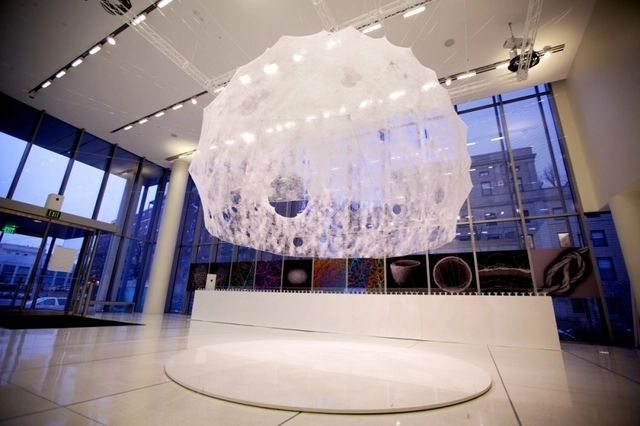
I get most of my knowledge about the current trends and interests of architects through social media and various websites. My Facebook newsfeed constantly shows an array of pictures, articles, and videos of things ranging from new buildings to data algorithms to bacteria evolution to (usually confusing) romantic, poetic statements about architecture.
They all share one thing in common: they are posted on Facebook by architects and architecture students. To me, this shows the current disarray and lack of focus in the field. Architecture publications and websites only confirm my thoughts further. And nothing reaffirms this more than my daily experiences at MIT.
Read more, after the break...
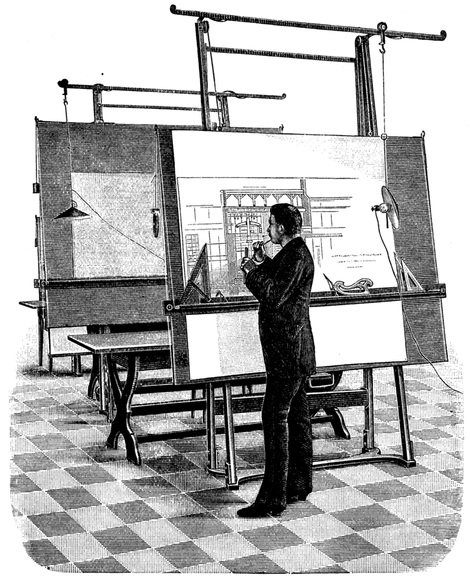
Earlier this week we received an impassioned request from one of our US readers. Architect Stephan Jaklitsch requested that we refrain from referring to architects as "star architects" or "starchitects." Not only did we agree to retire this problematic and shallow descriptor of some instrumental members of our profession, but we wanted to reprint his letter here.