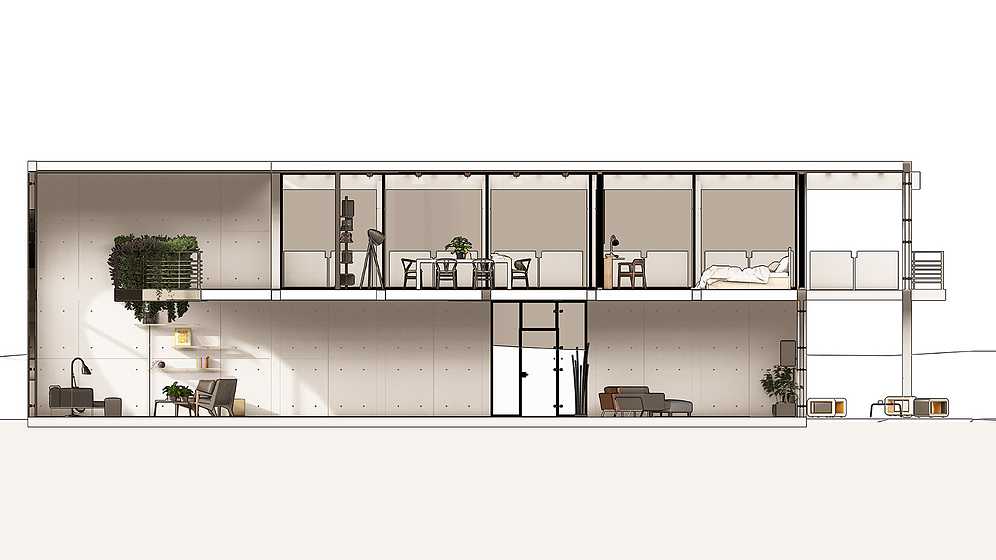
Produce personalized presentation boards that distill complex concepts into simple visual representations with a few helpful tools and effects.


Produce personalized presentation boards that distill complex concepts into simple visual representations with a few helpful tools and effects.
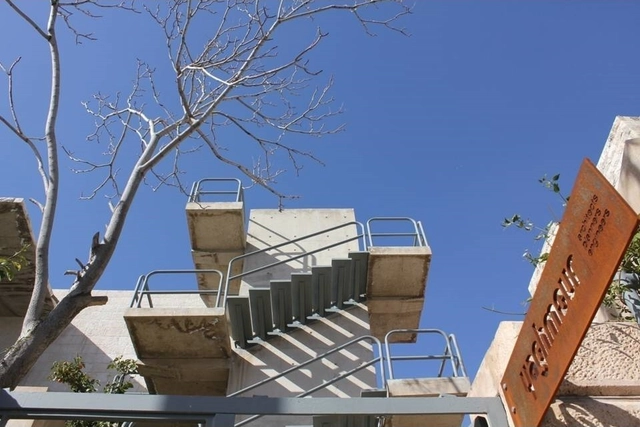
Let yourself be silently drawn by the stronger pull of what you really love.
To the bewilderment of many friends, this quote by Rumi adorns the cover of my portfolio. It justifies my pursuit of a career in architecture instead of a more stable field. Although I teasingly explain that “architecture is chronic,” the quote still holds some truth.
As an architect, I thought I did my due diligence: working long, underpaid hours and late nights to build a solid portfolio. But, despite the recognition one’s work may receive, underpayment and employment uncertainty are considered part of the job. On the other hand, the diversity inherent to the profession promotes creative thinking and an aspiration to incite meaningful change; thus, it continues to ignite the imagination.
That’s why, when the opportunity presented itself in the summer of 2014, I took leave from work to visit the Middle East. Yes, that is correct. Having the opportunity to grow up in the East and then to live in the West, I know better than to submit to the media’s fear-inspiring propaganda. I figured that speaking the language and being a seasoned traveler would come in handy. So I set out on an expedition that not only reconnected me to architecture, but also led to one of the most meaningful projects I have worked on.
The benefits and capabilities of building information modeling in large-scale architectural practices are well known. But is BIM really necessary for smaller firms? Many small firms have been operating using traditional CAD methods for some time now, and switching technologies can seem a daunting task, especially for companies that operate on small budgets and without the specialized personnel of large international firms. But this is 2016 and the economic landscape has changed, with more and more expected from architects all the time. Time is more valuable now than ever. Where BIM software programs were once seen as simply nice to have, their large range of benefits have now made BIM an essential part of the design process. And as the following reasons show, BIM is just as important a tool for small offices as it is for larger ones.
This month's interactive 3D floor plan shows a simple and beautiful steel frame structure designed by Charles Eames and Eero Saarinen. The Case Study House Program, initiated by John Entenza in 1945 in Los Angeles, was conceived to offer to the public models of a low cost and modern housing. Predicting the building boom after World War II, Entenza invited renowned architects such as Richard Neutra to design and build houses for clients, using donated materials from manufacturers and the building industry.
Entenza was the editor of the monthly magazine Arts & Architecture, in which he published the ideas of the participating architects that he had invited. Two of those architects were Eero Saarinen and Charles Eames, who for Case Study House number 6, Entenza commissioned to design his own home. The house was built just a few meters away from Charles and Ray Eames’ house which the duo also constructed as part of the Case Study program.

In this video, one of Jean Prouvé's famous 1944 demountable houses - in this case a 6-meter by 6-meter variation - is rapidly constructed on a beach, showing off the design's ruthlessly efficient structural system and sequence of construction. The video is one of a series in recent years, almost always published in a time-lapse format, that show off how quickly this early example of mass-produced, temporary social housing could be put together.
The video, as with others before it, is an interesting look at such an early example of small-scale modular buildings - but with the advances made in material and manufacturing technology in the 70 years since its design, the building is hardly a revelation in how to create buildings quickly and cheaply. So what's behind all this interest in the Prouvé demountable house?

From architecture to music, directing and production, Portuguese photographer Ricardo Oliveira Alves worked in several different creative industries before combining his two biggest passions and starting his own architectural photography studio, Ricardo Oliveira Alves Architectural Photography, in 2010.
Alves captures emblematic national architecture projects in addition to work by prominent architects worldwide, “fusing the vision of the architect” with that of the photographer. He is also known for his “Archilapse” videos, which feature timelapse montages of architectural works.
Read an interview with Alves and view a selection of his images after the break.
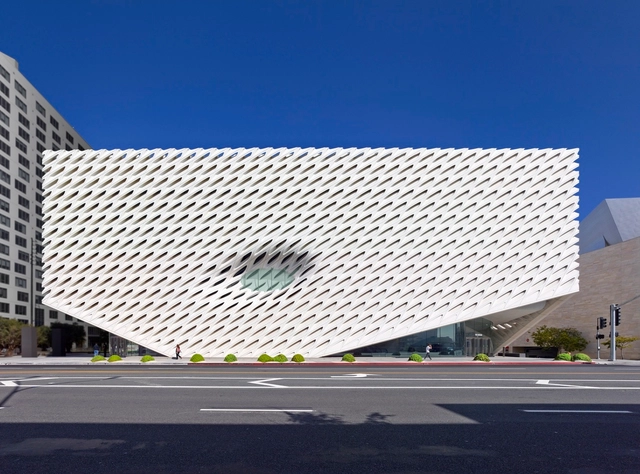
Unlike most American cities, which spent the 20th century radiating out into suburbia, Los Angeles befuddles outsiders because it doesn’t really have a definite center. The phrase “LA” is loosely used to refer to a collection of small yet distinct cities across the Los Angeles basin that grew together over time. Traditionally, a handful of these localities have been the cultural centers and tourist destinations (Hollywood, Santa Monica, Beverly Hills, Silverlake, etc). While these districts thrived, “downtown” sat largely neglected; its financial towers and retail spaces had severe occupancy issues for much of the 90’s and 2000’s. Ten years ago, downtown street life outside of working hours was virtually nonexistent.
That fate was largely the result of poor urban planning. The tragic destruction of the vibrant Bunker Hill residential neighborhood in the 1960’s created a series of vacant freeway-flanked “superblocks” intended for ugly, efficient modernist towers - many of which never reached fruition. To this day, the area is still plagued with empty lots. Developers and architects have considered downtown as a risky return on investment ever since.
DTLA wasn’t just the butt end of jokes (Family Guy: “There’s nothing to do downtown!”) it was treated with disdain. Even Frank Gehry said on record that he wished the Walt Disney Concert Hall had been constructed 12 miles away in Westwood (near UCLA). He went on to add that he felt the current attempted revitalization of downtown was: “both anachronistic and premature.” Ouch.
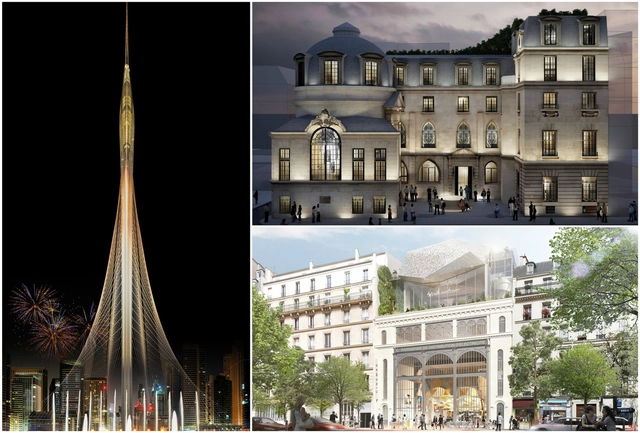
Recent weeks have seen a period of big plans in the architectural world, with Dubai planning another show-stopping skyscraper, this time by Santiago Calatrava, and Paris looking to “reinvent” itself with a variety of entries to its government-led design competition. Naturally, such big proposals attracted the attention of ArchDaily’s commenters - read on to find out what they had to say.

"Pardon my face," says designer Daniel Voshart in the opening to his latest blog post on Medium, "I’ve been throwing things into DeepArt’s algorithm for a few hours and the results are surprisingly good."
DeepArt is an online service created by Leon Gatys, Alexander Ecker and Matthias Bethge, Łukasz Kidziński and Michał Warchoł. It uses a neural network algorithm to combine the subject of one image with the style of another. It seems particularly adept at applying striking, abstract art styles to photographic images, which means that many of the twentieth century's most celebrated architect-artists are perfectly suited to it. So, if you've ever wondered what your portrait (or indeed anything else) might look like when drawn by Le Corbusier, Lebbeus Woods, or Daniel Libeskind, now might be the perfect time to find out. Voshart has kindly shared his examples of what DeepArt can do - read on to see more.

Last week, ArchDaily unveiled the 14 winners of this year’s Building of the Year award. Selected by ArchDaily readers from a pool of over 3,000 candidates, these 14 projects represent the best designs published by ArchDaily in the past year, as determined by an unbiased network of 55,000 voters who took part - each of them a judge in one of the world's most democratic architecture awards.
Representing a diverse field of architects, locations and project types, each design has a very different story about how it came into being, how its design responds to its context, how it fits into an architect's oeuvre, or what it says about the direction which architecture is traveling in. But despite the many different types of story represented, each of the stories behind the Building of the Year winners is a fascinating architectural tale. Here are those 14 stories.

For decades, architectural competitions have been recognized as a great way for architecture firms to get their big break, or to make a name for themselves in the types of projects they might not have been considered for before. However, competitions come with a downside: it’s not always easy for firms to build them in to their culture. Design competitions take time, often don’t translate to billable hours, and aren’t always clear pathways to strengthening the firm’s balance sheet, and as a result they have seen something of a backlash in recent years.
Still, as the architecture profession evolves, it’s important we never lose sight of the remarkable value design competitions can bring to architects, firms and design culture. Regardless of their type, scale or structure, design competitions are key creative opportunities that can enrich our efforts personally and professionally, and as design leader of CannonDesign’s New York City office, I’ve worked with my colleagues to embed them into our work. We see numerous ways in which they can add value to our work, our firm and our clients – and they could do the same for you too.
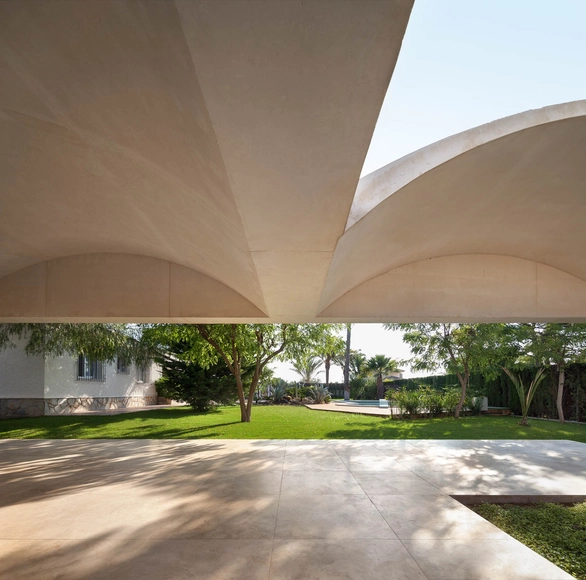
Starting in 2016, ArchDaily's projects team - the editors responsible for selecting the projects we publish on ArchDaily - will be selecting one exceptional project every month. We hope that this will shine a light into our selection process by allowing us to highlight projects that motivate and inspire us. Whether it’s a project that demonstrates an outstanding relationship to its context, or a building whose materials emphasize the power of architecture, these “Projects of the Month” should be seen not only as valuable architectural references, but also sources of inspiration and knowledge.
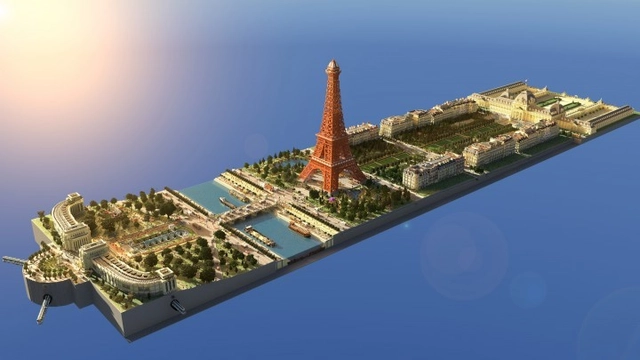
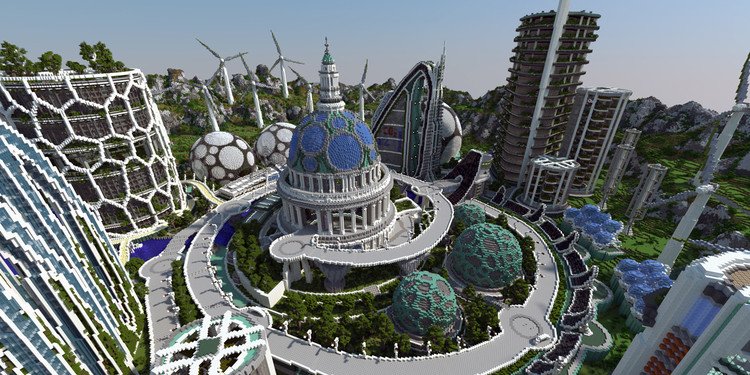
With more than 70 million copies sold worldwide, it would be unfair to refer to Minecraft as just a simple game of textured boxes in a pixelated 3D world. After acquiring the makers of the game (Mojang) in 2014, Microsoft announced on Tuesday, January 19 that it also acquired MinecraftEdu, the official educational version of Minecraft, which is used as a creative tool in more than 10,000 classrooms in 45 countries around the world.
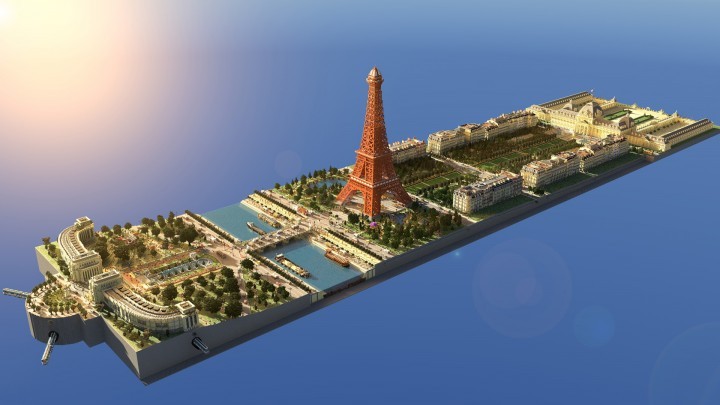
The infinite possibilities that the game offers have led millions of people around the world to make and share their greatest creations: cities, buildings and even the reinterpretation of historical structures. Minecraft's impact was recognized in 2015 when the Centre Pompidou dedicated an exhibition to its creative potential for children and adolescents.
We've rounded up 15 of the best models created on the platform. And if you use Minecraft, you can download most of them (via an external link provided by the creator) to add to your own account.

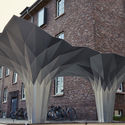
The advent of parametricism has brought architects many new design capabilities; form finding, sun shading and visual texturing are just a few of the ways the technology has impacted structures. But perhaps its most noble function is its ability to optimize structure, especially through the folding of thin, rigid materials. This is the function that architect Tal Friedman has chosen to explore in his Origami Pavilion.

After NASA’s discovery of water beneath the surface of Mars earlier this year, and the subsequent critical and popular success of the movie The Martian, it's safe to say that the planet named after the God of War is all the rage. Those revelations have led to speculative looks at how our neighboring planet could be colonized from numerous designers, such as Norman Foster.
Many of those plans, including those of SpaceX founder Elon Musk, involve dumping Earthen construction materials onto the alien surface, potentially starting an inclination for pollution of our new world before it is even occupied. Spanish architect Alberto Villanueva of IDEA Architecture Office saw this as an opportunity for design to intervene. Using Martian soil and the fungus mycelium, Villanueva proposes a strategy utilizing 3D printing and bioluminescence that has gained the attention of both NASA and the European Space Agency.
In this tutorial, originally published on the Sketchfab blog as "Sketchfab Archvis workflow based on Vray baked textures," Tarek Adhami guides you through the full workflow required to take your 3D Model, render it with Vray and upload to Sketchfab.
In this article I will be talking about my workflow to create a real time rendered 3D scene in Sketchfab based on Vray realistic lights and textures.
It does not matter what software you use to model your objects since what I am going to show you can be applied to other applications that Vray (or any similar rendering plugin) can support. In this example I used 3ds Max and Marvelous Designer for modeling and Vray for lighting and texturing.
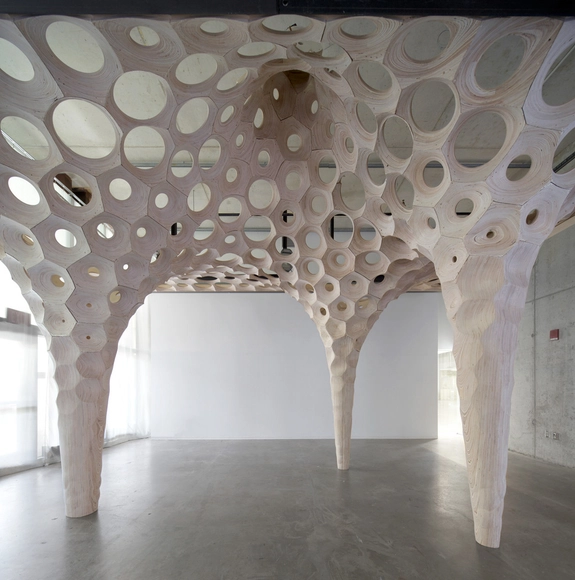
Craftsmanship is one of those topics which it seems almost everyone has a strong opinion. But while many lament the fact that traditional craft practices have been in decline since the industrial revolution, today a new generation of architects and designers have set about redefining and updating the notion of craft to include the most modern design and fabrication techniques around. In this article, originally published on Autodesk's Redshift publication as "5 Ways Architects and Postdigital Artisans Are Modernizing Craftsmanship," Jeff Link explores some of the traits that connect these pioneers to the craftsmen and women of a bygone era.
Craftsmanship in the digital age is hard to define. For some, craftsmanship evokes a purity of style, a preference for the handmade over the machine. For others, it recalls the Craftsman architecture of early-20th-century homes: overhung gabled rooflines, wide sheltered porches, detailed handiwork, and an ineffable Norman Rockwell sense of bygone Americana.
But regardless of one’s intuitive understanding of the term, the notion of craftmanship is evolving. Increasingly, the age-old knowledge of woodcarvers, masons, and other craftspeople is embedded in an intelligent design process using geometric computer models and machine fabrication to develop new crafts and architectural métiers—from gravity-defying furniture assemblies to complex workflows for robotic automatons. These innovations have helped place architects alongside craftsmen at the center of a revival in “maker” culture, which, for example, is in vivid display in handmade marketplaces such as Folksy and Etsy.
So what exactly is digital craft? And what does it look like in the work of top designers? Here, innovative architects identify five things postdigital artisans are doing to transform craftsmanship.

.jpg?1455117467)
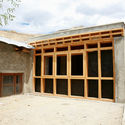
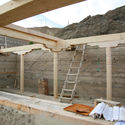
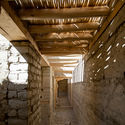
Located high in the Himalayan Mountains, the sparsely populated region of Ladakh is one of the more remote places on Earth. At over 3500 meters above sea level, the region includes terrain consisting of steep cliffs and wide valleys, and an extreme climate to match: temperatures often reach +30 degrees celsius in the summer months and drop to -30 degrees celsius in the winter. Severe weather patterns such as these typically require durable construction materials and technologies - yet with the region’s difficult-to-reach location and a construction season lasting only four to six months, importing materials becomes a costly, if not impossible task. Luckily, with help from Czech architecture firm Archide, residents were able to find that the best material for the job was one found right outside their doors: rammed earth.

Virtual Reality technology is changing rapidly - from Google Cardboard to more immersive models, headsets are now available at nearly every price point. Yet there remains one quality all of these devices fail to offer: portability. In our modern fast-paced lives, being able to take technology with you on the go is nearly as important as its functionality. But now, there may be a new wearable tech to meet that need.
Created by design office Stimuli, 2VR is the first headset that will fit in your pocket, making it possible to tap into the virtual world, no matter where you are in the world. The sleek device fits most standard smartphones and is operated hands free, allowing the user to feel fully immersed in the VR environment. Learn more about the product over on Kickstarter, where the first 50 backers can purchase 2VR for just $15.
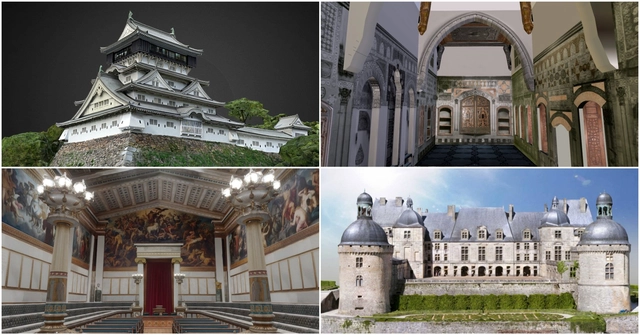
At ArchDaily, we've said before how sharing 3D models online has the potential to change architecture for the better, allowing viewers to explore a design for themselves rather than being presented only the most flattering views via photographs. At the forefront of this 3D-sharing revolution is Sketchfab, a platform which allows users to upload their model and view it directly in their browser.
In this new series, ArchDaily is joining forces with with Sketchfab, to present the best architectural models featured on their platform, as selected by staff members at Sketchfab. In this first installment, we're taking a look at some of the best scans of historical buildings - and don't forget, all of these models can be viewed in virtual reality for the maximum architectural experience!

.jpg?1454592553&format=webp&width=640&height=580)
Thanks largely to its status as a hotbed of contemporary design innovation, the city of Copenhagen has become one of the most desirable places in the world to live. Yet, as has been seen in places like Manhattan, increased desirability can come at a cost to local residents. Due to rapid growth and a successful university system, Copenhagen has fallen upon a shortage of both student housing and land available for traditional development. The only open, affordable land in the city is located within ports – but it is currently zoned to be protected from any permanent construction projects.
Enter Danish company CPH Containers and architect Søren Nielsen, a partner at Danish firm Vandkunsten Architects. By creating a structure of shipping containers, the team has created a student village that acts a temporary complex, able to vacate the land upon short notice with its close proximity to existing transportation infrastructure.
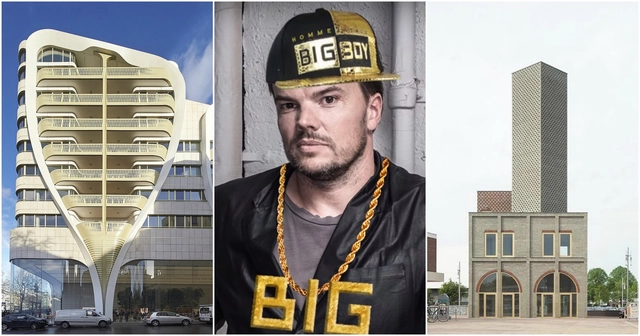
In the past two weeks, the topics of discussion in the ArchDaily comments section have been incredibly diverse: from a debate over a light-hearted approach to getting the architectural job of your dreams, to a serious argument over the exploitation of young workers in the industry; and from criticism of a Zaha-like “melted yellow cheese” design to a favorable analysis of an intellectual postmodernist landmark. Read on to find out what our readers had to say.
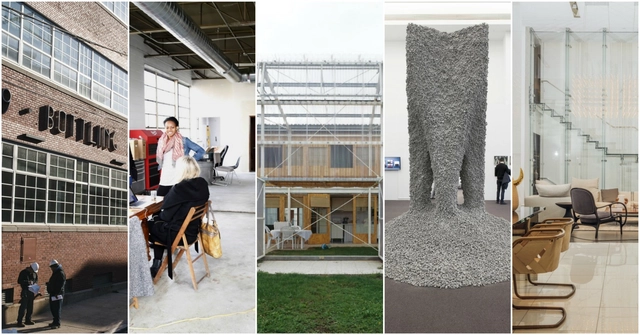
Metropolis has released their list of five design thinkers leading the world in innovation for their 2016 Game Changers issue. The Metropolis Game Changers issue was created in 2011 to showcase transformational changes that are national in scope, but global in impact, and can be awarded to individuals, firms, projects or ideas within the various spheres of design. Past nominees from the realm of architecture include Michael Maltzan, MASS Design Group, Edward Mazria, Vincent Scully, SOM’s Great Lake Century Project, and former SHoP Principal Vishaan Chakrabarti.
With two architectural firms, an architecture curator and a co-working space driving urban renewal all making the five-strong list, this year's Game Changers issue offers plenty of interest for architectural readers.

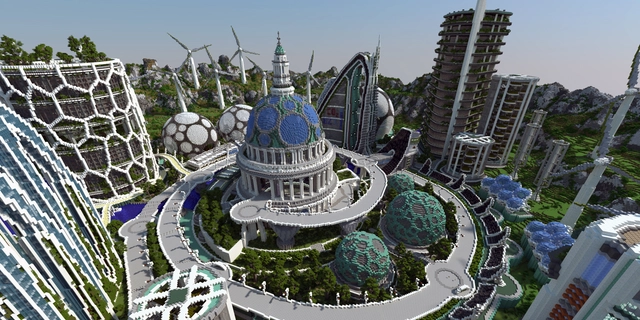
For many architects, an obsession with design came at a very young age - often, an architectural career begins with toys such as wooden blocks or that old classic, LEGO. In recent years though, a new contender has emerged to inspire young architectural minds: Minecraft. In this article, originally published on Autodesk's Redshift publication as "Minecraft Architecture: What Architects Can Learn From a Video Game," Kim A O'Connell looks into the growing influence of Minecraft in architectural design and education, including the growing presence of the global "Blockworks" team.
Since it burst onto the gaming scene in 2009, Minecraft has become one of the world’s most popular video games—so much so that Microsoft bought the game and its parent company for a whopping $2.5 billion in 2014.
Today, the world-building platform has also garnered the attention of architects and designers. Could a video game actually change the way architecture is taught and practiced?

There are many good reasons to build a house: shelter, economics, or self-expression. But spite? In this article, originally published on Curbed as "Spite Houses: 12 Homes Created With Anger and Angst," Patrick Sisson delves into the "small but ignoble tradition" of people who constructed houses to enrage their neighbors, family members or the authorities.
What's not to love about a building called a "spite house?" In an essay in the New York Times, writer Kate Bolick discusses her dream of owning the Plum Island Pink House, a forlorn, decaying structure in Newbury, Massachusetts set in the middle of a salt marsh. The romantic, reclusive home stands alone for a reason; built by a recently divorced husband for his ex-wife as a condition of their separation, it's an exact duplicate of their shared home, just uncomfortably moored in the middle of remote wetlands and constructed without any running fresh water. The square loner is part of a small but ignoble tradition of spite houses, buildings created for malice instead of comfort meant to irritate or enrage neighbors, or occasionally piss off anyone unfortunate enough to be dwelling inside. Normally built to block a neighbor's light or access, they can be found as early at the 18th century. Here are some examples of homes or apartment that were built, or painted, out of anger.



















.jpg?1455117386 "Courtesy of Archide")
.jpg?1455117467)

.jpg?1455023580 "Courtesy of Stimuli")
.jpg?1455023569 "Courtesy of Stimuli")
.jpg?1455023619 "Courtesy of Stimuli")


.jpg?1454592553)