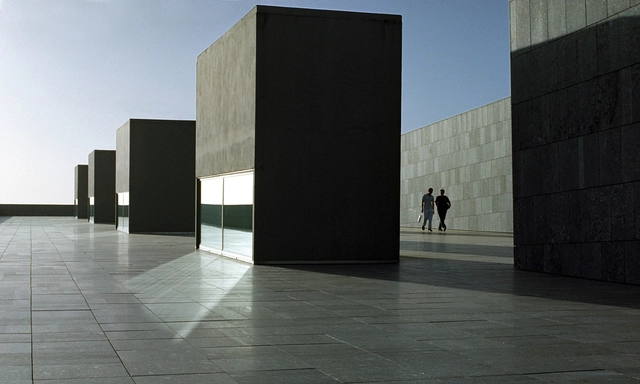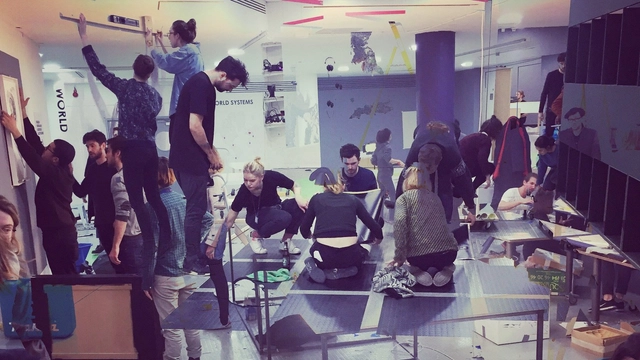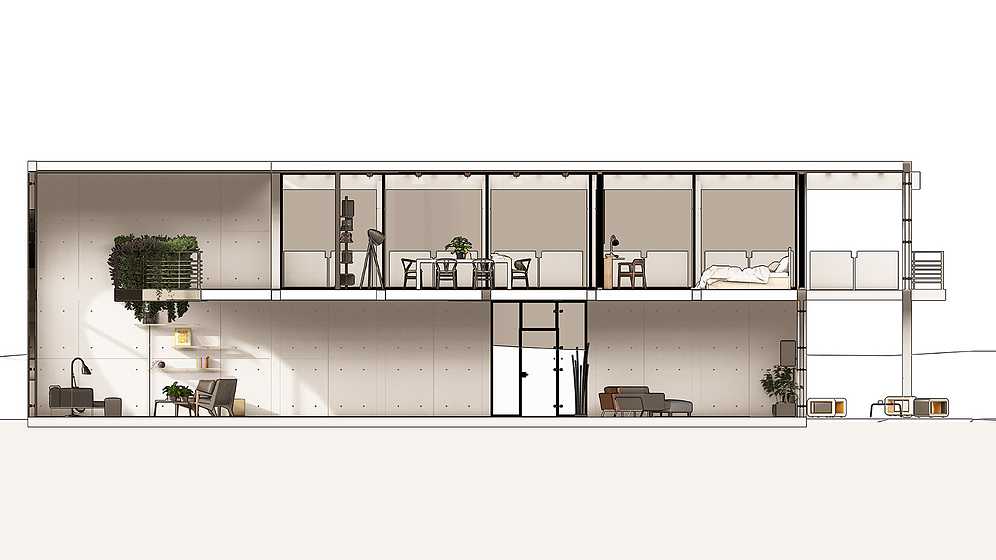
Produce personalized presentation boards that distill complex concepts into simple visual representations with a few helpful tools and effects.


Produce personalized presentation boards that distill complex concepts into simple visual representations with a few helpful tools and effects.
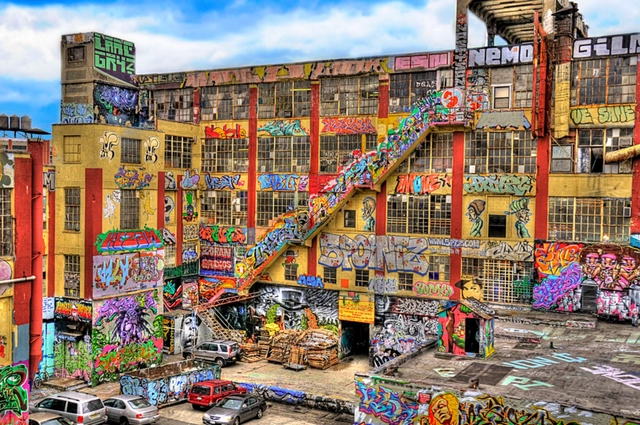
It happened in the middle of the night: the stealth whitewashing of 5Pointz, Long Island City's unofficial graffiti museum. In 2013 owner Jerry Wolkoff, of G&M Realty, wanted the building razed in order to erect new luxury condominiums, and the artists sued to preserve their work. A judge denied the artists' request and Wolkoff had the murals destroyed under cover of darkness, ostensibly to prevent them from attaining landmark status. Though graffiti was born as a subversive act, these artists had painted with Wolkoff's permission since 1993 and had turned the warehouse into “the world's premiere graffiti mecca” and the largest legal aerosol art space in the United States. This was a serious betrayal.
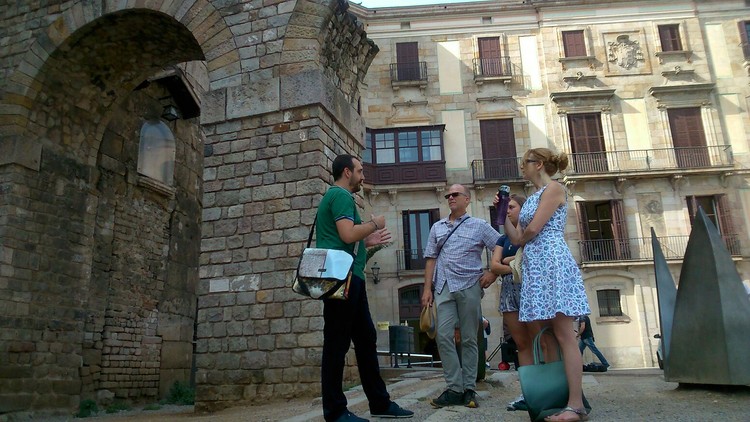
Barcelona is an amazing city. With its vast amount of cultural offerings, the number of places to visit is almost infinite. If there is one thing that really sets Barcelona apart from other big cities is its architecture. Like in so many other cities, the best way to intimately get know a new place is to simply take a walk through its streets. This is what Barcelona Architecture Walks is all about, a specialized route hitting all the architectural must-see spots of Barcelona.
This is a series of urban walking tours organized by architects which allow you to discover the city through the buildings and lessons of their great masters. They are a must for every tourist who wants to do something different in Barcelona, while still getting the real Barcelona experience. Of course, if you're an architect, you have no excuse. Through six differently themed walks, you can experience firsthand these examples of architecture that often get lost in the tangle of tourists taking selfies.



This article was originally published by Archipreneur as "The 10 Most Important Lessons Learned in 25 Years of Architecture Practice."
The article is an expansion on one part of Archipreneur's interview with Craig Applegath, Founding Principal of DIALOG’s Toronto Studio. The architect spoke from his experience of running a 150-person practice and listed 10 tips for archipreneurs interested in starting their own business. Archipreneur shares that list here.
When I first started my own practice I thought everyone wanted to run their own practice. It turns out not. Most people just want to work in a great practice run by someone else. But for those who are real archipreneurs – and you know who you are – there is nothing so thrilling and fun as starting your own business; and nothing so scary and anxiety producing as starting your own business! They are the flip side of the same coin. But in terms of general advice for people starting their own practice or business here are ten key lessons I have learned over the past twenty-five years of practice:

This article was originally published by Common Edge as "Building Madness: How the Boom and Bust Mentality Distorts Architecture."
Architects are economically bipolar; for us it is either the best or the worst of times. And it’s not just architects. The entire construction industry is tuned to these extremes, but only architects are psychologically validated by booms and crushed by busts. All professions have a larger source of dependency—medicine needs insurance, law needs the justice system—but the construction industry has a starker equation: building requires capital.
Contractors tend to react to market flows in purely transactional ways. Booms mean more work, more workers, more estimates, business expansion. For architects, a boom means life validation. Every architect wants to make a difference, and many want to offer salvation, like the architect Richard Rogers, who once said, “My passion and great enjoyment for architecture, and the reason the older I get the more I enjoy it is because I believe we—architects—can affect the quality of life of the people.” But salvation can only be earned if buildings are created.


This article originally appeared on Curbed as "How air conditioning shaped modern architecture—and changed our climate."
During a conversation with the New Yorker, a window washer who worked on the Empire State Building says that some of his toughest moments have been cleaning the trash that tenants toss out the windows. In his many years working on the Depression-era skyscraper, he’s wiped numerous half-empty coffee cups off window panes, and even scraped 20 gallons of strawberry preserves from the building’s facade. Tossed out in the winter, it stubbornly clung to the outside of the skyscraper.
Cracking a window open in a skyscraper seems like a quirk, especially today, when hermetically sealed steel-and-glass giants offer the promise of climate-controlled comfort. But ever since Chicago’s Home Insurance Building, considered one of the first skyscrapers, opened in 1884, the challenge of airflow, ventilation, and keeping tenants cool has been an important engineering consideration shaping modern architecture.
The great commercial buildings of the modern era owe their existence, in many ways, to air conditioning, an invention with a decidedly mixed legacy.

YAC – Young Architects Competitions – and Marlegno s.r.l. announce the winners of Castle Resort, the international architectural competition launched last November in cooperation with the Italian Government. The aim of this contest of ideas was to convert a medieval fortress into an exclusive tourist facility combining architecture and nature in order to enhance the historic and landscape value of this dream location in Roccamandolfi, in Southern Italy.
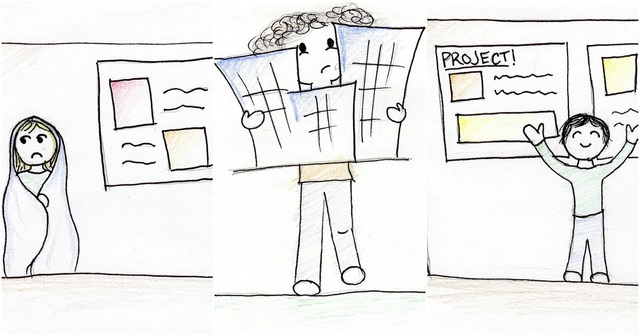
Architecture school is a long haul and we all know it. Whether you get a 5-year professional degree or choose to take on a few years of graduate school (or both), it’s a grueling process. However, most would hopefully agree, it’s worth it for the knowledge you gain throughout those years (not to mention the friendships you form in the close quarters of the studio). Architectural education is about more than learning to design great spaces and whether or not you realize it at the time, architecture school is also a great teacher of other life lessons. All the skills below are those you’ll likely attain incidentally during your tenure in architecture school, but which will be an asset outside of academia as well.
Instagram is an app. Instagram shows images. Instagram is a verb. Instagram it! Instagram has 600 million users. Numbers are very important. These days, they are an exact expression of what one is, or isn’t; by the way, how many followers do you have? Instagram is the great equalizer.
I don’t think Instagram is about news. Instagram is about influence. It is that very moment when the old order is changed; the moment when the recent graduate changes the established practice. Instagram is space. Have you seen @archiveofaffinities? It is better than any school library. It is the space to spend your most important time. It is a spa.
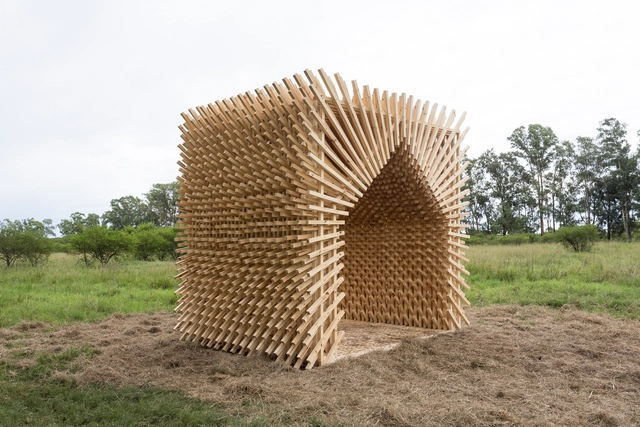
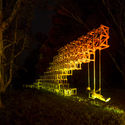
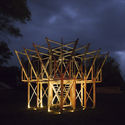
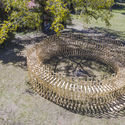
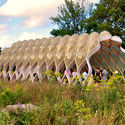
For the past seven years, Hungary-based Hello Wood has been gathering participants from across the globe for its summer camps to engage in a week-long curriculum about creating spaces, networks, and knowledge. However, this year the event has expanded its borders even further; organized with partners MANDARINA and TACADI, Hello Wood Argentina was the first local Hello Wood summer camp, drawing a group of 150 students, architects, and designers. Hello Wood focuses on socially-engaged concepts and turning architectural theory into practice with collaborative week-long design-build projects. As a complement to traditional university education, students get the chance to work and learn alongside famous international architects to bring their concepts to life.
The theme of Hello Wood Argentina’s first summer camp was "Con-Tacto" (Contact), located in Ceibas, Entre Ríos. Curator Jaime Grinberg selected applicants with strong concepts to generate spaces that encouraged connection, whether traditional, functional, utopian, or idealized. Concepts also needed to be simple, natural, and feasible for a team of students to produce in a week. Hello Wood’s educational platform focuses on achieving social benefits and improving the quality of life through architecture and design. See below for photos of the projects built at Hello Wood Argentina.

This article was originally published on Monograph's Blog as "Architect's Guide to SEO — Part 1."
More than likely you've heard the term SEO, but, for the uninitiated, SEO literally means Search Engine Optimization— technical jargon for a set of methods used to boost your website's rank in Google's search results.
Now, why should you care? Well, according to this article put out by the SEO gurus at MOZ, the top 3 positions in Google's search results account for a whopping 55% of organic clicks, with the number one spot alone netting over 30%.
Think about that, over one third of visitors click on the first result they see. Naturally, everyone wants to be number one, so we've outlined below 5 steps you can take to help boost your website's ranking.

For the past fifteen years, global headlines have depicted, through harrowing imagery, the effects of war on cities across the Middle East. An inevitable fracturing of law and order leads to an explosion of crime which we imagine could not be tolerated in a region at peace. However, when cities in war zones are set aside, an overwhelming yet underreported narrative emerges – 86% of the world’s most dangerous cities are in Latin America and the Caribbean.
The Bailey house—one of Richard Neutra’s four Case Study designs for Arts & Architecture—forms one of five Bluff houses, standing high above the ocean. The brief was to create a low-budget home for a young family, with just two bedrooms, but offering the possibility of expansion as time went by (which did in fact transpire; additional Neutra-designed wings were later built).
Neutra employed the same indoor-outdoor philosophy that can be seen at work in his unbuilt Alpha and Omega houses, using large sliding glass doors to create light and a visual sense of space, as well as ensuring that the house physically opened up to, as he put it, “borrow space from the outdoors.” With this sunny Californian ocean-view setting, it made perfect sense to use the back garden and terrace as living and dining room.

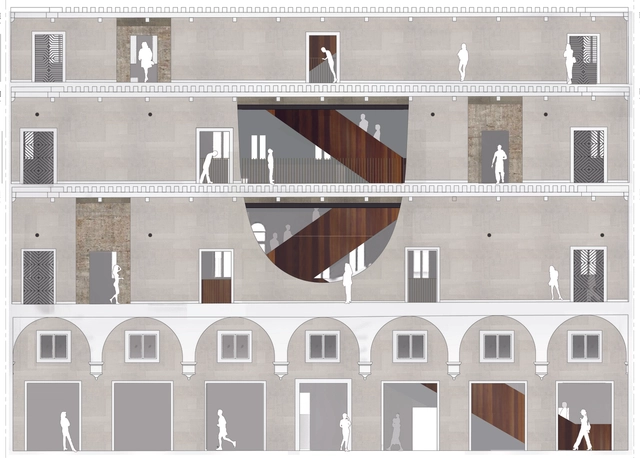
The representation of architecture is important in the absence of tangible space. Throughout a lifetime, even the most devoted, well-travelled design enthusiast will experience only a small percentage of architectural works with their own eyes. Consider that we exist in only one era of architectural history, and the percentage reduces even further. Many architectural works go unbuilt, and the buildings we experience in person amount to a grain of sand in a vast desert.
Then we consider the architecture of the future. For buildings not yet built, representation is not a luxury, but a necessity to test, communicate and sell an idea. Fortunately, today’s designers have unprecedented means to depict ideas, with an explosion in technology giving us computer-aided drafting, photo-realistic rendering, and virtual reality. Despite these vast strides, however, the tools of representation are a blend of old and new – from techniques which have existed for centuries, to the technology of our century alone. Below, we give five answers to the question of how architecture should be depicted before it is built.
.jpg?1494051634)
What did Pritzker Prize winner Frank Gehry get when he designed the Stata Center, an exuberantly whimsical academic complex for MIT? A very large check, plus a major lawsuit, alleging negligence and breach of contract due to rampant leaks, mold, cracks, drainage problems and sliding ice. Sometimes the most inspired designs can go awry. And when they do, some clients lawyer up. Here are 9 fascinating examples.
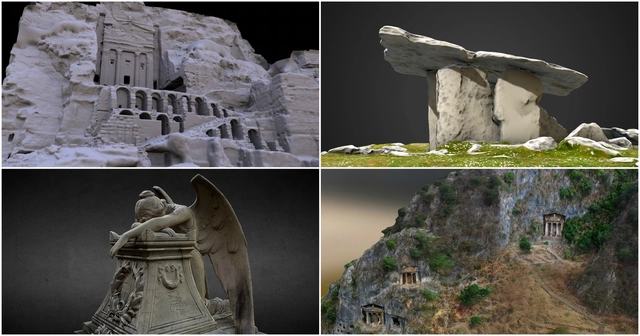
In most architecture projects, the input of the end user of the space is an important consideration; but what if those users are no longer living? Memorial architecture for the dead is a uniquely emotional type of design and often reveals much about a certain culture or group of people. Especially in the case of ancient tombs, archaeologists can learn about past societies’ customs and beliefs by examining their burial spaces. The personal nature of funerary spaces and monuments conveys a sense of importance and gravity to viewers and visitors, even centuries after the memorials were created.
The list of 3D models that follow, supplied by our friends at Sketchfab, explores memorial spaces and artifacts that span both space and time, representing a variety of cultures and civilizations.

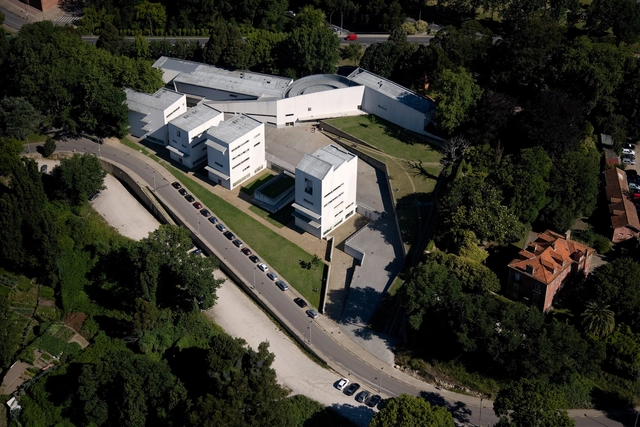
This week we present the Faculty of Architecture of the University of Porto through the lenses of Fernando Guerra. Here we share a complete series from the photographer of this iconic work, along with a brief text on the subject. The University of Porto plays a major role in the world's architectural landscape, always among the highest in rankings and boasting great architects like Eduardo Souto de Moura (Pritzker 2011), Fernando Távora and Álvaro Siza Vieira (Pritzker 1992).
The interplay of tantalizing eroticism continues within Christian Grey’s luxury tower in the recently-released film sequel, Fifty Shades Darker. In the first film, Grey’s plush apartment played an integral role in undressing the personas of Anastasia Steele, who liberates herself from her chaste existence, and Christian, who exposes the seething and fiery carnal desires and fetishism behind his glorified masculine beauty, charm, and appearance.
Grey's penthouse, which resonates with his unyielding and intimidating Heathcliff undertones in the first part of the trilogy, turns over a new leaf in the sequel. There is ambient warmth in the penthouse; nevertheless, the high level of sophistication prevails in his penchant for singular tastes and fastidiously-selected objects and it remains unapologetically lush.

Last year I had the opportunity to visit Studio Gang, one of the most prestigious and inspiring firms around led by architect Jeanne Gang. I was able to talk with her team about the workspace, some of her projects, about the future of architecture, the role of women in the profession and even about the inspirations behind the United States Embassy in Brasilia.

This article was originally published by The Architect's Newspaper in their April 2017 issue and on their website titled "As the American Dream dies, we must rethink our suburbs, homes, and communities." It is part of a series of articles that mark the AIA National Convention in Orlando that took place at the end of April.
Americans define themselves through work; it builds character, or so we believe. The American Dream is premised on individual achievement, with the promise that our labor will be rewarded and measured by the things we collect and consume. For many, the sine qua non of the dream, our greatest collectible, is the single-family house. Of all our products, it is the one we most rely upon to represent our aspirations and achievements.


American graphic designer Peter Dovak is passionate about urban transportation. He has creates colorful designs that represent transit systems in a much more instructive way so that people can interpret them more easily.
One of his last projects, called 220 Mini Metros, was based on metro and light rail networks from 220 cities of the world.

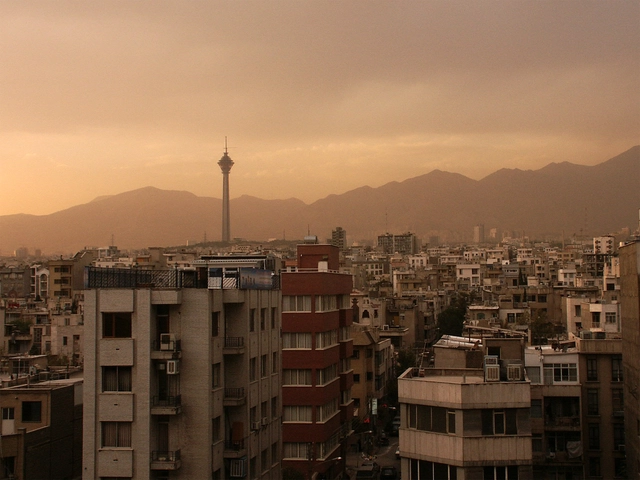
Taking a taxi from Tehran Imam Khomeini International Airport into the city, one cannot help but look at the seemingly random distribution of buildings along the road; an array of mismatched concrete blocks, worlds away from the images of Sheik Lotfollah Mosque that typically adorn the covers of Iran travel guides. “My observations about architecture in Iran are like that of many other countries that have changed in terms of architectural characteristics; Iran has changed too,” says Tehran-based architect, M. Reza Karfar. “Now we are in a time where everything is mass produced and we are just using and using, but not making memories with anything. That sense of belonging will, of course, go away. You see a 50 or 60, or 200-year-old house that just gets demolished and replaced by a 4 or 5-story building, and in 5 years they will demolish that 4 to 5-story building too.”
Not to say that Iran should be an exhibit for tourists, only consisting of beautiful tiled buildings, but this fear of memories fading in disappearing public spaces is one that, despite the numerous historical sites preserved around the country, is noticeable in Iran’s big cities. And while the subject is particularly pertinent in Iran, as Karfar points out this phenomenon is not unique to just one country. As a result, Iran might offer something of a case study for other countries around the world.
Whether architecture is a form of art or not has often been a controversial topic of conversation within the architecture world. If one goes by the general definition of the word "art," architecture could potentially fit within the umbrella term: "the expression or application of human creative skill and imagination, typically in a visual form such as painting or sculpture, producing works to be appreciated primarily for their beauty or emotional power." As anyone involved in the architectural discipline probably knows, there is an abundance of varying definitions of the word "architecture," so whether its primary purpose is to achieve beauty or to organize space is evidently up for discussion.
Ask Jay A. Pritzker, founder of the Pritzker Prize, and he may say that "architecture is intended to transcend the simple need for shelter and security by becoming an expression of artistry." Ask The Guardian's Jonathan Jones and he may tell you that "architecture is the art we all encounter most often, most intimately, yet precisely because it is functional and necessary to life, it's hard to be clear about where the 'art' in a building begins." But this ambiguity is part of what makes the field of architecture challenging and exciting. To celebrate this complicated aspect of architecture, below we have collected a list of just some of the works that could be seen as art, architecture or both, depending on who’s looking, to provide some context to those blurry boundaries.