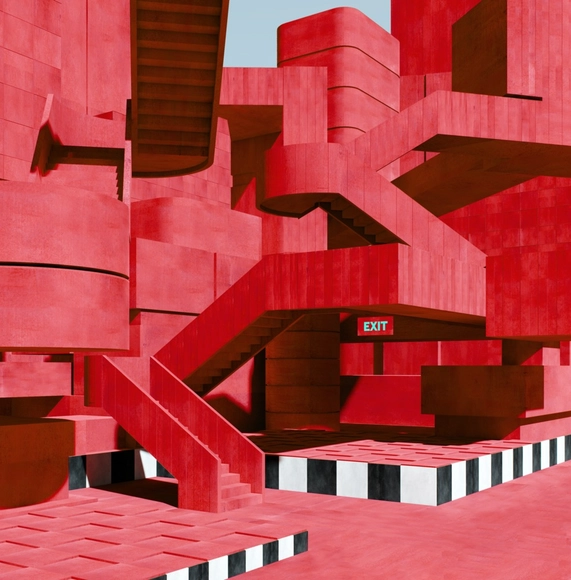
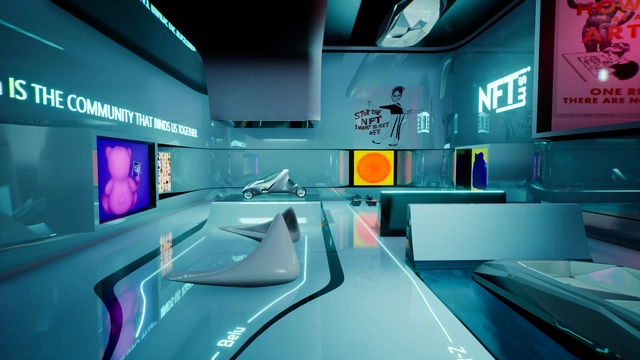
Beyond hyper-realistic renders and accurate depictions of what projects look like once completed, visualizations have become tools to communicate atmospheres and emotions portrayed by architects. The use of mixed media, combined with architectural compositions, art, lighting, and oftentimes music, have generated a new genre of architectural storytelling, one that combines reality with imagination. And as the world immerses in NFT's and experimenting with cutting-edge technologies to create digital environments, visualizations might soon become "the new reality".
ArchDaily had the opportunity to talk to Visual Artist Ceren Arslan about branching out from the architecture practice, how she describes her creative process, her latest project EXIT, and what the future holds for architectural visualizations.
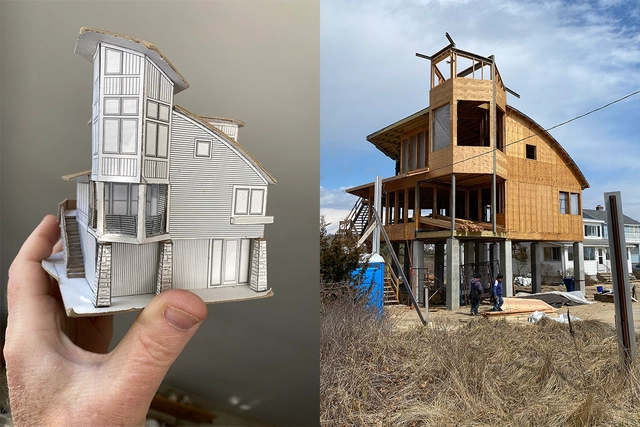
Model and Photograph. Image Courtesy of Duo Dickinson
We deal with buildings every day. We sleep in them, work in them, live our lives using their accommodation. But like a song or a painting, a person usually helps create them, with those who use and build them, then the world receives that work. But before they are built, buildings are just ideas.
What is the purpose of strategic planning? Why should we care as practice owners and what is the function of this effort? Perhaps we can begin to answer this question by defining strategy. Put simply, strategy is a set of goal-directed actions a company can take to gain and sustain a competitive advantage. A competitive advantage, however, is always relative. It defines the best way for a firm to create value for its internal and external stakeholders. Relativity is important. In the practice, profession, and business of Architecture, there are no absolute advantages. To paraphrase Simon Sinek: “Business is an infinite game in which the competitive landscape is always in flux.”
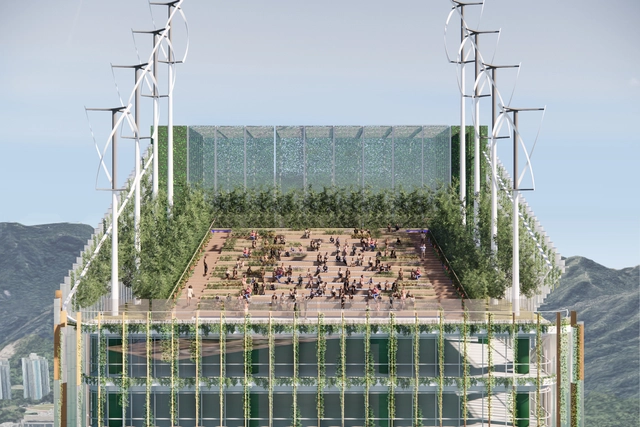
Torre Taikoo Green Ribbon / ARUP. Image Cortesia de ARUP
Discussing carbon neutrality in architecture should not only be based on local materials and new technologies, since there are many aspects that impact the construction production chain. From design to construction, without losing sight of the context and economic system of our society, the construction industry is responsible for a considerable part of the energy consumed worldwide. In order to interfere in this reality, it is necessary to expand the fronts of action, questioning the place of construction in our society.
The International Contemporary Furniture Fair (ICFF) and WantedDesign Manhattan will take place at the Jacob K. Javits Convention Center in New York from 15 to 17 May, 2022. Image Courtesy of ICFF
In the early days of the pandemic, MOMA curator Paola Antonelli and London-based design commentator Alice Rawsthorn started an Instagram Live series called Design Emergency. It documented the more phenomenal design solutions emerging from the Covid crisis – those tackling pressing health and societal needs with unprecedented focus, clarity and speed, often in a very local way. May sees the launch of the book that evolved from the conversations they had with the problem-solving protagonists and moves those conversations on to the next focus for the design world: how to build on the experience and be the agent of change. It’s apt then, as New York’s design shows, the International Contemporary Furniture Fair (ICFF) and WantedDesign Manhattan return to their regular springtime slot from 15 to 17 May, at the Jacob K. Javits Convention Center, that Antonelli’s is a voice we will hear in the key talk 'Design Emergency: Building a Better Future'.
Founded in 1997, the São Paulo architecture firm Andrade Morettin Arquitetos Associados began with a partnership between Vinicius Andrade and Marcelo Morettin, which later included the architects Marcelo Maia Rosa and Renata Andrulis. Today, the office has more than two decades of history and a wide range of activities.
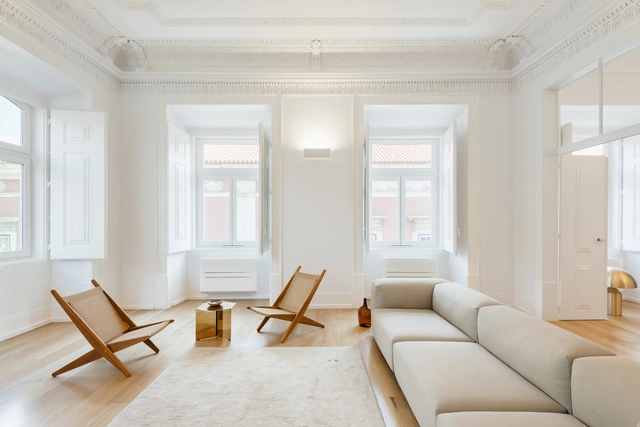
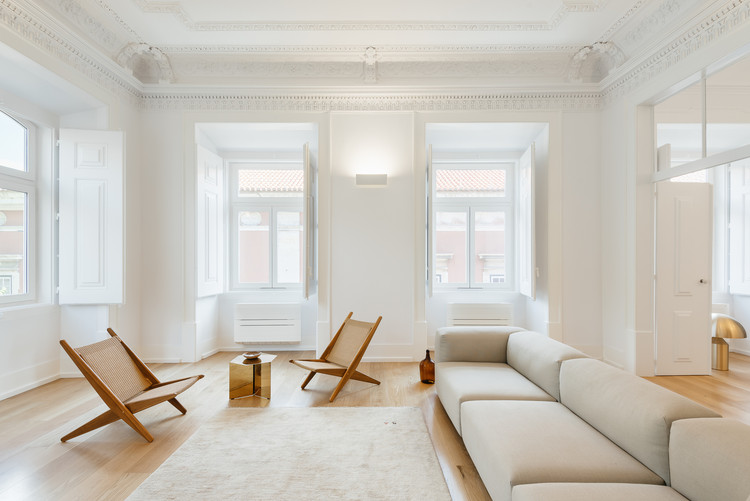
Furniture has a direct impact on the quality of interior design projects. Among other features, its presence blends with the function of the spaces, setting a boundary between them.
An internal space with neutral colors, for example, might highlight certain furniture that, beyond fulfilling their function, also assumes a contemplative profile. These pieces of furniture have become iconic by their design, which, in some cases, were created by great names of architecture that explored this field and drew pieces that represented their style.
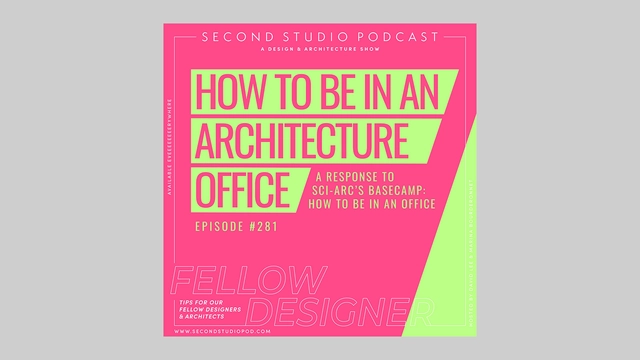
The Second Studio (formerly The Midnight Charette) is an explicit podcast about design, architecture, and the everyday. Hosted by Architects David Lee and Marina Bourderonnet, it features different creative professionals in unscripted conversations that allow for thoughtful takes and personal discussions.
A variety of subjects are covered with honesty and humor: some episodes are interviews, while others are tips for fellow designers, reviews of buildings and other projects, or casual explorations of everyday life and design. The Second Studio is also available on iTunes, Spotify, and YouTube.
This week, David and Marina break down SCI-Arc's controversial panel "Basecamp: How to be in an office" and share their own advice on "how to be in an office”. The two discuss choosing the right office to work at; why the idea of committing to an office is right, but also wrong; why side hustles are not the solution to low fees and/or low pay; why just ‘getting shit done’ is not enough; why being underpaid is not just a ‘personal choice’; why the profession is struggling with low pay and long hours; and the nuances of SCI-Arc’s panel discussion.
https://www.archdaily.com/980293/the-second-studio-podcast-a-response-to-sci-arcs-basecamp-how-to-be-in-an-officeThe Second Studio Podcast
By digitizing architecture services, German firm baupal seeks to democratize sustainable and customized architecture, making design, energy assessments, permitting and cost evaluations more accessible and straightforward for private builders and smaller construction projects. Baupal is an online building application service that takes advantage of digital processes and efficient team structures to streamline design, planning and permitting processes for a range of small-scale projects.
Selected as one of Archdaily's Best New Practices of 2021, Baupal is a Berlin-based start-up co-founded in 2020 by Constantin Schmidt-Thomé, Justus Menten, and Max Schroeren with the purpose of "simplifying design and building application for everyday homeowners and their contractors. "With backgrounds in finance, entrepreneurship and architecture, the team set out to transform the design and planning approval process into a customer experience through digital and transparent workflows. The firm specializes in conversions, extensions and new single-family houses, while also providing building application services to construction companies.
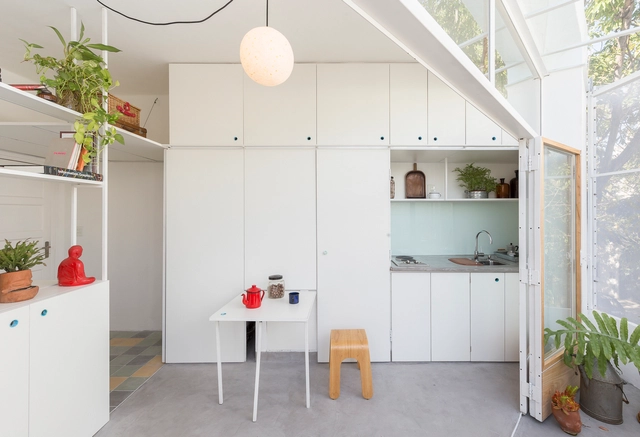
Regardless of the design adopted for kitchen spaces, for some years now and with increasing frequency, many architects have been deciding to design kitchens by integrating them into other rooms in the home. Free of dividing walls or joinery, integrated kitchens are implemented with the aim of leaving the activities that take place there in full view of everyone, encouraging interaction and communication between the inhabitants.
When the estimable Blair Kamin stepped down as architecture critic of the Chicago Tribune in early 2021, it left the city without a daily critic at any of the local news outlets. That sad state of affairs was partially corrected recently, when the Chicago Sun-Times announced that Lee Bey would begin a monthly architecture column. The writer, historian, photographer, and critic brings a wealth of experience to the task: he was architecture critic for the Sun-Times for five years in the late 1990s, served as deputy chief of staff for planning and design in Mayor Richard M. Daley’s administration, directed governmental affairs at SOM, and taught at IIT. His most recent book is Southern Exposure: The Overlooked Architecture of Chicago’s South Side. Last week I talked to Bey about the new role, how the city has changed since his last stint as a critic, and the unique importance of architecture to the city.
Cladding systems have important functions in buildings. They can confer thermal insulation, protect internal spaces from the weather and–just as important–give the building a "face", improving its appearance and clearly identifying the element of design. "Cladding" refers to the components that are linked to the structure of a building to form non-structural external surfaces. While in the past wooden cladding was the only option, there are currently multiple possibilities of materials, colors, weights, textures, anchoring systems, and many other variables available. Below, we outline some of the main materials used for façade cladding, and the projects that use them in a remarkable way:
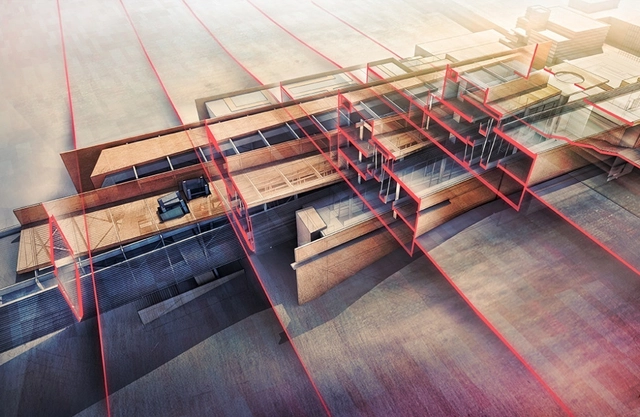
Drawings and visualizations are architecture in their own right. As means to reconsider what we see or what could be, drawing styles are as diverse as the mediums through which they are produced. For transparent drawings, observation and imagination go hand in hand. Not only does this unique style require critical examination, but also an ability to conceptualize new possibilities.
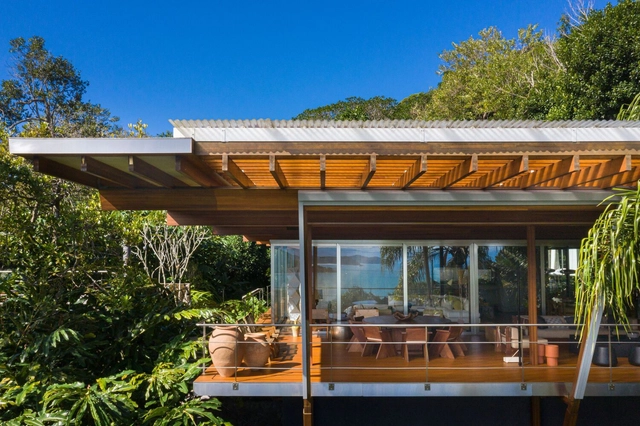
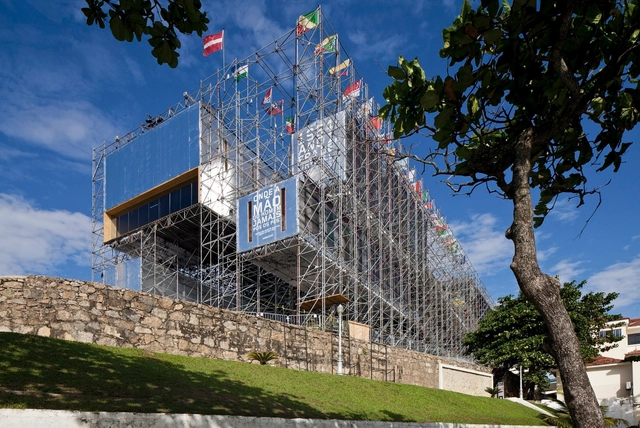
Technical precision combined with environmental concern and exploratory and investigative character make Carla Juaçaba one of the great representatives of Latin American architecture today. Carioca, born in 1976, Carla Juaçaba attended the University of Santa Úrsula and attributes much of her experimental and interdisciplinary style to this educational institution. It is not by chance that during her academic training her great inspiring masters were the architect Sergio Bernardes and the visual artist Lygia Pape, insinuating her interest in the multiple disciplinary branches that can compose architecture. In this sense, while still at graduation, Carla worked together with architect Gisela Magalhães, from Oscar Niemeyer’s generation, in scenography and expography projects.
As the world of Architecture finds itself on the edge over the recent Metaverse and NFT hype, Zaha Hadid Architects is at the forefront of innovation showing us exactly how to utilize Web 3 and its socio-economic opportunities for architects, globally.
The topic has become especially relevant at the beginning of this year, with more and more platforms publishing about it. All the recent hype forces us to evaluate our role as architects and whether or not we want to consider servicing the digital realm.
After my recent interview with Gensler’s Director Harry Ibbs on Leveraging Technological Advancements to Bring Workers Back to Office I decided to cover the topic of a post-covid practice workplace culture from a completely different angle. In search of a more intimate approach, I looked into AL_A, a RIBA 2009 Stirling Prize-winning studio founded by Amanda Levete with directors Ho-Yin Ng, Alice Dietsch and Maximiliano Arrocet. The diversity of the leadership team and their 30+ person workforce brings a richness of thinking and possibility that’s played out in their culture, practice and through their designs.
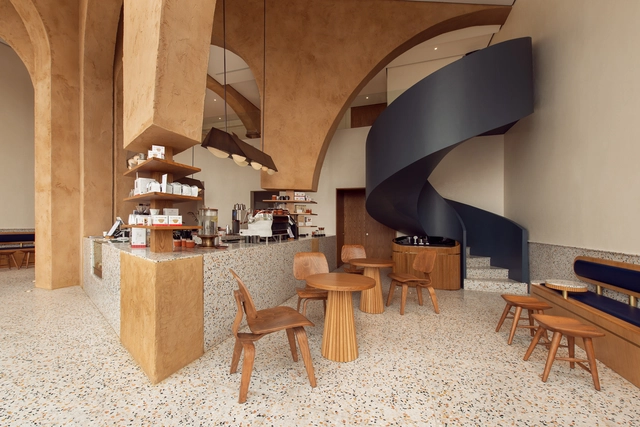
Coffee shops have always been popular gathering spaces among coffee lovers, but with the rise of remote working, especially post-pandemic, they have become a hotspot for remote workers and students as well. One of the many reasons why they are such a popular hangout spot, other than the fact that they serve one of the most globally-adored drinks, is because of their well-designed interior spaces that promote comfort, relaxation, and productivity simultaneously. After all, it's always been said that architects and coffee go hand in hand. In this interior focus, we explore how different design elements shape the user experience of a coffee shop, and look at how architects have employed them through 17 examples.
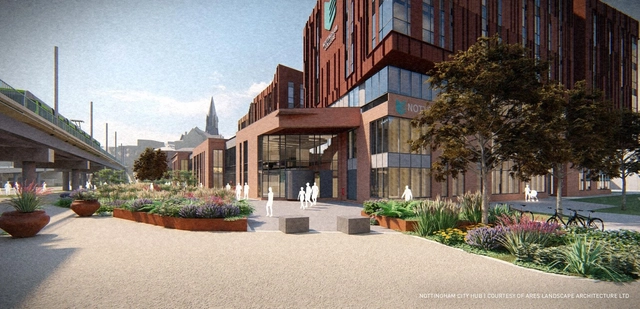
Nottingham City Hub. Image Courtesy of Ares Landscape Architects Ltd.
The noticeable shift from 2D CAD in landscape architecture is in part due to external pressures, such as the UK’s requirement for BIM level 2 framework on government-procured projects. Even where there’s no BIM mandate, there’s inherent pressure to deliver BIM files when working with consultants who’ve already matured their workflows with BIM.
What would a project be like if user emotions were part of the program? Planning environments that can accommodate different sensations is, according to Pinterest Predicts 2022, one of the decoration trends for the coming years. More and more people have been looking for ways to set up rooms that provide the apotheosis of their feelings, no matter if the goal is to be more calm, express their anger, listen to music or a leisure activity, the focus of the so-called "emotional decor" is on make emotions flow freely and safely.
Iconic, technological, ecological: mudra opens a new chapter in the history of the shell chair. A poetic chair that explores new boundaries while resting completely in itself. Image Courtesy of Brunner
Certain chairs make such a strong first impression that they immediately take a place in our consciousness. Some are powerful, solid and deliberately down-to-earth. Others because of their playful lightness and elegance. mudra, the new universal chair by Brunner and Diez Office, definitely belongs to the latter category. The sculptural chair acts like an inviting gesture that brings the formal and ecological possibilities of shaped wood technology into the present.
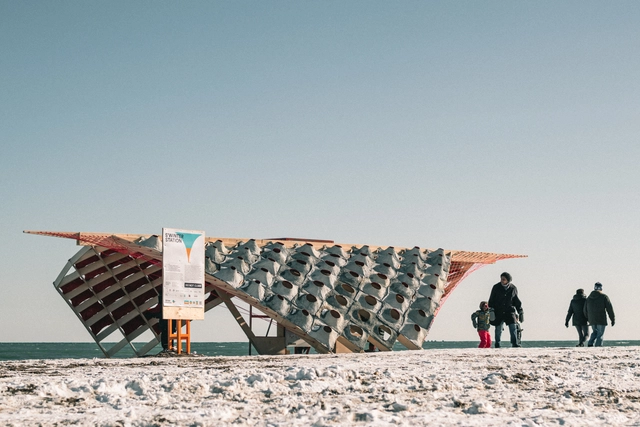
Cortesia de S'Winter Station - Ryerson University – Department of Architectural Science
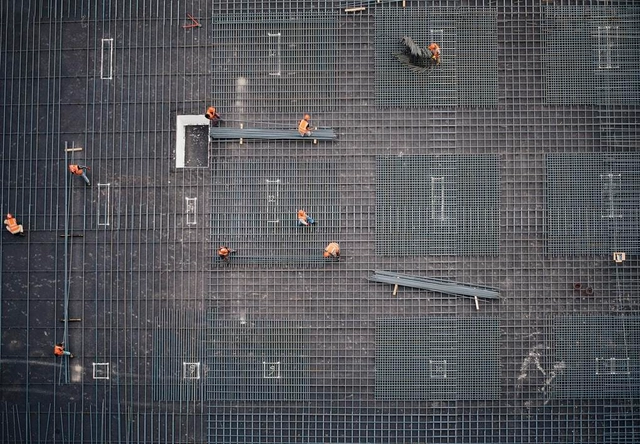
The construction industry has experienced severe changes in recent decades. Historically, it counted on abundant labor and a false notion that natural resources were infinite, but nowadays the sector has struggled to find innovations that will allow it to become more sustainable, especially considering its enormous impact and importance in the world. In addition, the recent Covid-19 pandemic changed several factors and dynamics, demanding creativity from designers to overcome challenges. In some cases, the design process itself became subject to changes. The S'Winter Station project, developed by students and teachers of Ryerson University's Department of Architectural Science, is one of these examples which relied on existing visualization and manufacturing technology for its completion.
Since the beginning of the 20th century, automobiles have been shaping cities and architecture, demanding specific spaces to move and be stored.Cars and motorcycles dictated the organization of spaces and the consequent urban and rural landscape of entire countries. However, with the climate crisis and the recognition of the problems that this development model brings to cities and to the planet, every day more initiatives are perceived that seek to eliminate individual and motorized cars powered by fossil fuels, while at the same time we also perceive the need to give new meanings to spaces that were previously dedicated to cars. In addition to the streets and public spaces, this transformation is also felt in the houses and residential buildings that are beginning to see garages as a more dynamic space.
The stage is set in one of the most iconic “end of the world” movie scenes: Citizens of New York City are scrambling on top of taxis, quickly attempting to escape the slow-moving giant tsunami heading their way. In the rear-view mirror of a bus, a giant wave can be seen rushing up the narrow city grid. Searching for higher ground, the main characters, Sam and Laura, run up the famed stairs into the famed New York Public Library, and just as the revolving doors shut behind them, the pressure of the water smashes the windows, and water begins to rise. Without seeing it, we know that New York City and its iconic architecture will soon be destroyed.



















.jpg?1648076854 "Casa Santa Teresa / Carla Juaçaba. © Federico Cairoli")

.jpg?1649865999&format=webp&width=640&height=580)