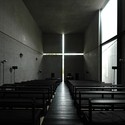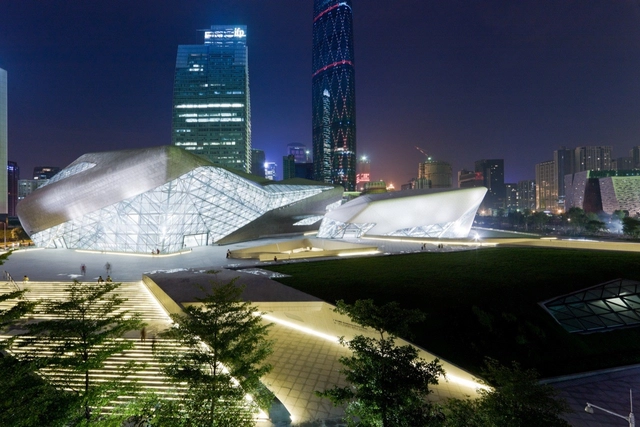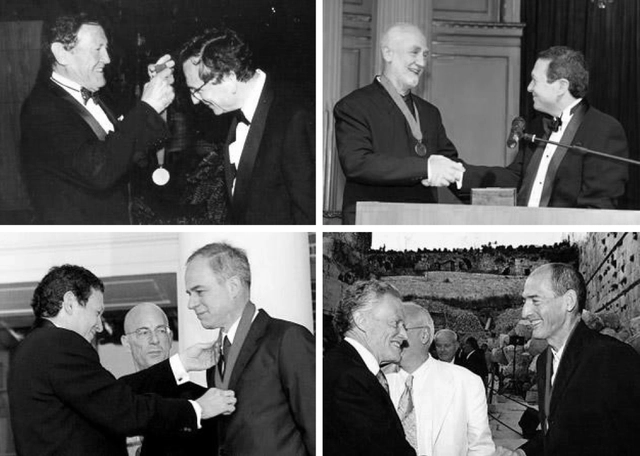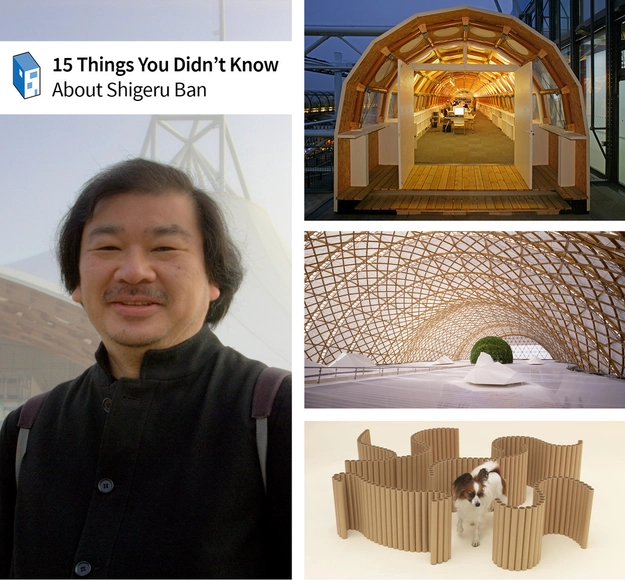
Wang Shu receiving his Pritzker Award in 2012. Oddly, his wife and co-partner, Lu Wenyu, was not acknowledged.
The Pritzker Prize had idealistic beginnings: recognising achievement within architecture, a profession that had long lost its status in public opinion. Pritzker 'seamed' this fragmentation, celebrated the architect and broadcast this stellar contribution to society, as a creative, a singular author whose uniqueness set him/her apart from a field of practitioners.
The Prize has since assumed a role of gatekeeper to the 'starchitect' it once helped define. While it is inspiring that architecture as a profession has reaffirmed its status and cultural significance, The Pritzker places itself on an archi-centric proscenium, running the risk of being consumed by a synthetic reality within the profession. If Pritzker and other similar models of recognition are to evolve, they must illuminate widespread transformations in practice and emphasise the changing of the guard within the profession.
Firstly, Denise Scott Brown should be recognised retrospectively. Opinion does not change facts.
Read more about the (d)evolution of the Pritzker Prize, after the break...
London is engrossed in a vigorous debate over recently unveiled plans for the South Bank Centre, the cluster of Brutalist concrete buildings on the River Thames including the Queen Elizabeth Hall (QEH) and Hayward Gallery.
Today, the Centre has as its neighbour one of the city’s biggest tourist attractions – The London Eye – and this, with the addition of retail and other leisure-led developments in and around the South Bank, has refocused both commercial and cultural attention on the complex.
Last month, British architects Fielden Clegg Bradley Studios (FCBS) unveiled their vision for a “Festival Wing” on the site, focussing on the QEH and the Hayward Gallery. It isn’t the first time an architect has been asked to look at these buildings in recent decades. However, it is the most likely to come to fruition.
Read more about the Southbank Centre and its future development, after the break...
ArchDaily’s Architecture App Guide will introduce you to web and mobile apps that can help you as an architect: productivity, inspiration, drafting, and more.
A year ago we introduced you to The Morpholio Project a web and mobile app based portfolio, created by architects, for the entire creative industry. A few months later they released iPad App: Morpholio Trace, a layered drafting tool that gained traction among architects and designers. This feature was just the beginning of what evolved into Morpholio 2.0 (free download from the App Store ) part of a series of new tools that turn the portfolio app into a flexible workspace where designers, architects, fashion designers, 3D artists, photographers, automotive designers, and everyone in the creative industry can interact and evolve ideas through feedback.
It builds on research into human-computer-interaction to deliver innovations like a tool for image analytics called "EyeTime" and virtual "Crits" where collaborators can share images, and comment on each other’s work via notes or sketches. Human behavior data-mining is essential to offering these forms of powerful feedback, letting you know how your followers are interacting with your work.
Learn more about the 7 new tools Morpholio 2.0 offers to the creative world:
Architectural discourse has gradually become incoherent with the social and ethical needs of the contemporary city. With the relationship between theory and practice strained, lack of social relevance in design is ubiquitous. Practising architects frequently regard theory as esoteric and non-transferable, whilst many theorists do not manifest their ideas into reality and build. With the connection gripping the precipice by its fingers, this paper is conceived; written to persuade, motivate and encourage that there is real value in instigating ideas put forth in this paper. Concepts proposed are not only applicable to the city of Lincoln but are relevant and adaptable to all cities. Inspired by the architecture which has not yet manifested, it hopes to ignite the spirit needed to eradicate social inequities in urban design.
As Albert Einstein said: “If the facts don’t fit the theory, change the facts”. In order to palpably grasp an understanding of what it is truly like to be physically disabled in Lincoln, I rented a wheelchair for one day to see for myself whether the facts fitted the theory.
Read more of Sophia Bannert's prize-winning story, after the break...
Imminent domain has a new justification and it's called the Olympic Games. Once again, the anticipation of the Olympics brings to light the slew of human rights violations that are permitted by countries as they prepare to host the games. So what is the real cost of hosting the Olympic Games? We posed this question on ArchDaily last year in regards to Rio de Janeiro's pick for hosting the 2014 World Cup and 2016 Olympic Summer Games. http://www.archdaily.com/214726/rio-de-janeiros-favelas-the-cost-of-the-2016-olympic-games/ And here we are again, looking at the controversies that surround building the site of the 2014 Winter Olympics in Sochi, Russia which has been preparing for the games for six years now since it won its bid in 2007. If Brazil's practices with the favelas struck a nerve with human rights groups, Sochi's is sure to spark more controversy. Every time the International Olympic Committee sits down to choose the next host city, cities all over the world jump at the opportunity to impress, hoping that they will be chosen for the global celebration of human feats and accomplishments. As spectators, we are assured that cities can only benefit from being chosen to host the events. They bring tourism, new architectural projects, and global recognition. They encourage city infrastructure to develop and upgrade. They inspire measures that clean up a city, make it "presentable"; and eventually they raise the standard of living for residents. However, they also have the capacity to infringe on the rights and dignity of the very people whose land is being leased to this global event. The massive buildings that host the events have to be built somewhere, and often they are built in the disadvantaged neighborhoods that haven't the political leverage to fight against imminent domain. We've seen this happen in different versions to varying degrees, and we're seeing it now in Sochi as neighborhoods are destroyed, homes are razed, and life becomes unbearable for those still living among the construction and pollution with no means to relocate. The global community looks on in horror as reports like Anna Nemtsova's for ForeignPolicy.com (http://www.foreignpolicy.com/articles/2013/04/11/russia_s_olympic_city) reveal the treatment of citizens to make room for the infrastructure that supports the Olympics. Nemtsova gives some insight into the status of these projects and their affects on communities: The rising concrete wall (set to be 12 feet high upon completion) is about to cut off Acacia Street's view of the mountains -- and, indeed, of the rest of the world. During rainstorms, bulldozers push mud into residential courtyards, where the dirty water floods residents' basements, destroying floors and furniture. Mold is creeping up the walls in homes, filling the air with a rotten-garbage smell. Last month, Sochi City Hall filed a lawsuit against Acacia Street inhabitants who haven't been willing to demolish their own outhouses, kitchens, and water pumps that happen to be in the way of the construction of a new federal highway. But what happens here is not just a human rights issue that leaves people disenfranchised. This otherwise idyllic get-away city has been transformed by the massive construction undertaking and in some cases has become an ecological disaster as well. Greenpeace an World Wildlife Fund have both expressed concern over the construction that is poisoning the lakes which are a crucial ecological site for migrating birds. And community protest and activism in regards to their own condition has gone unregistered by President Putin, according to Nemtsova. The Atlantic (http://www.theatlantic.com/infocus/2012/12/sochi-2014-an-olympic-preview/100422/) posted some progress photos from the construction late last year. These images are bittersweet. On the one hand they show growth, construction, progress and the majesty and grandiosity that we associate with this celebration. On the other hand, we see photos of demolished, scattered rubble, and construction sites where there once were neighborhoods. It's sad to think that this global celebration has so many casualties. Is this something that was always the case, the unmentionable part of the Olympic Games? Or has it become more acceptable to bulldoze neighborhoods for the sake of the games and declare imminent domain without regard for the people or the place? And what can we do differently next time? While the global community watches and comments, it largely turns a blind eye to these developments, permitting them to perpetuate year after year.
Inspiration is a funny thing: when you need it is nowhere to be seen, and just when you're not expecting it, it can blindside you in the least convenient of places. Here's ten inspirational TED talks for architects (in no particular order) from people with broad and unique views on architecture. Some might enlighten, educate or even enrage you - at the very least they should get those creative juices flowing a little better.
Last Sunday James S. Russell, architecture critic for Bloomberg News and a former editor for Architectural Record, mused on his personal blog about the possible influence Paul Rudolph’s Brutalist University of Massachusetts campus in Dartmouth may have had on Dzhokar Tsarnaev, the younger of the two Boston Marathon bombers who was also a student there.
Mr. Russell describes the campus as “a gigantic eerie, dozen-building concoction of grim ribbed-concrete hubris….” This is the sort of description that drives right to the heart of urban alienation. It’s Edvard Munch’s The Scream. This ability to sum up and drive the nail home is one reason he is the architecture critic for Bloomberg News. No side-stepping here.
Most parking is free - but that doesn’t mean it doesn’t have a high cost. A recent podcast from Freakonomics Radio examined parking in US cities, investigating the “cost of parking not paid for by drivers” - a cost paid not just by the government, but by the environment - due to congestion and pollution caused by people searching for kerbside parking. For example, in a 15 block area of Los Angeles the distance traveled by drivers looking for parking is equivalent to one trip across the USA per day.
One potential solution which they discuss is a San Francisco project called SF Park, which makes use of sensor technology to measure the demand for parking in certain areas of the city and adjust price according to demand. In theory, this would create a small number of empty spaces on each block and dramatically reduce the time that many drivers spend cruising for parking spaces.
Though the idea is certainly an intelligent approach to the problem of kerbside parking, unsurprisingly all this talk of supply, demand and pricing sounds very much like an economist's answer to a problem. But what can designers do to help the situation?
Perhaps, from the designer’s point of view, the real problem with kerbside parking and surface lots is that they are always seen as a provision “coupled with” a building or area of the city. There have been a number of attempts by architects – some successful and some tragically flawed – to make parking spaces less of a rupture in a city's fabric and more of a destination in themselves. Could these point to another way?
Read about 3 examples of parking’s past, and one of its potential future, after the break...
Architecture has changed irreparably in the past decade, but those who know how to adapt just might find themselves in a far better place in a few years. It has now been 8 years since construction peaked in 2005, nearly 6 years since the subprime meltdown, and close to 5 years since the big meltdown that really kicked off the Great Recession.
Today, it appears that construction is finally beginning to pick back up, but it's too late for architecture as we knew it. Here are seven reasons why...
To become an architect is to learn to fall in love with clean lines, pure functionality, and minimal simplicity. Which is why it’s so hard for us to understand why the majority of clients remain so tied to their “traditional” homes. You must understand that, for the typical home-buyer, a modern home seems “cold” and “austere” - even “clinical.”
https://www.archdaily.com/362861/the-benefits-of-modern-designSponsored Post
You have to admit it, Hollywood really seems to have a thing for John Lautner; his designs are continuously cropping up in tv-shows, films, cartoons, music videos and even video games. The occasional despondent college professor aside, his exuberant mansions are usually typecast as the bachelor-pads of various flamboyant psycho-paths, pornographers or drug-smugglers. Curbed Los Angeles have compiled this excellent video of the various Lautner-featuring scenes, so we thought that we'd take a closer look at some of his buildings, which tend to pop up in all manner of unexpected places.
Read more about Hollywood's love affair with Lautner after the break...
It is a building, a building in New York City, a building erected in the dust of 9/11, a building that upon completion signaled hope for larger reconstructions, a building that presents itself to the world through the intricate patina and pocking of white bronze. White bronze. This alone conjures something alchemic, ancient, timeless.
But buildings are not timeless. They have their time. As architects we memorialize each one that resonates with the thoughtfulness of capital “A” architecture—in part because we understand what it takes to realize them.
Despite this, the Tod Williams and Billie Tsien-designed American Folk Art Museum may ultimately be doomed to the brutal translations of administrative efficiency, cruel syllogisms, that as Barry Bergdoll, chief curator of MoMA's architecture and design department notes, are “painful.”
While other architecture students spend their summers strolling the streets, seeing the sights, and contently sketching, you could be getting your hands dirty, turning your designs into reality, and making a difference in a community that needs you.
Every summer, Global Architecture Brigades (GAB) activates student volunteers to work with a community in Honduras, helping them alleviate needs in health and education. The program isn’t a lesson in a charity; it’s a hands-on experience of the community-entrenched work of a designer of the 21st century.
Read more about Global Architecture Brigade’s work in Honduras, and how you can get involved, after the break...
This article, written by Arizona-based architectWendell Burnetteof Wendell Burnette Architects, recounts the story of Paolo Soleri's 'The Dome' in the desert.
A glass house in the desert? Was it an architectural caprice, a folly, or was it a solution to the problems of desert living whose appropriateness is still not recognized? Having had the experience of living in The Dome for a full year, through all the seasons, I felt it incumbent upon myself to take a fresh look at this remarkable work of architecture.
Paolo Soleri, its designer, was born in 1920 in Turin, received a PhD in architecture from the Torino Politecnico, and in 1947 came to America to study with Frank Lloyd Wright, remaining with him for just over a year. Mark Mills, who assisted Soleri in the construction of The Dome, was born in 1921, received an architectural engineering degree from the University of Colorado, and studied with Wright for four years. It was at Taliesin that Soleri and Mills became friends. In 1948, when they and two other apprentices were working on an experimental structure at Taliesin West, which became what is known as the Sun Cottage, there was a misunderstanding with Wright that led to all four of them leaving. Soleri and Mills went to work with a developer, providing design work for some condominiums at the base of Camelback Mountain, below the north face in Paradise Valley. Soleri developed a scheme that involved a tower element supporting a hex form canopy and he and Mills built a mockup of Camelback out of concrete block and wood. It was shortly after this that “the Cli,” as she was fondly called, came along.
ALL THE BUILDINGS IN NEW YORK is a blog, a book, and, above all, illustrator James Gulliver Hancock's love letter to New York City.
As his website reveals, Hancock "panics that he may not be able to draw everything in the world… at least once." Since Kindergarten, he's been obsessed with drawing in meticulous detail (or, as he tells the Atlantic Cities, with a mix of "technicality and whimsy"), a characteristic this native Australian brought with him when he moved to Brooklyn, New York.
What began as a blog, All The Buildings In New York, to keep track of his many sketches of New York's architecture (particularly the brownstones), is now a book (All The Buildings in New York: That I've Drawn So Far - which includes about 500 drawings). Organized by neighborhoods, it features New York architectural icons from the past and present, including the Chrysler Building, the Flatiron, Apple's 5th Avenue store, as well as the everyday buildings that make up New York's unique cityscape.
See more images from All the Buildings in New York, after the break...
Screenshot of Frank Lloyd Wright's Marin Center in the film Gattaca. Courtesy of Columbia Pictures.
You would think that of all film genres, Science Fiction would be the one least likely to feature real buildings. It stands to reason that production designers would want to avoid connections with things so grounded in reality. But in fact, there is somewhat of a tradition of using modern architecture as a foundation for the creation of fictional film worlds.
Science fiction relies on an audience believing in the world they are presented with. Clever camera work, perspective design, and temporary materials can only do so much. What often tips the balance in favour of using real, Modern buildings - rather than a temporary set - is the authenticity and atmosphere they provide the Science Fiction genre.
Read about Modern architecture in Sci-Fi films Blade Runner, Gattaca, Aeon Flux, and more, after the break...
Having been involved in the creative industries education for over decade now, one of the most common questions students ask in interviews (and parents ask on open days) is about ‘getting a job’ at the end of the course. As if a graduating student can simply go and trade in their degree certificate and swap it for a ‘good job’. If only employment was this easy.
‘Getting a job’ in the Arts has always been a difficult undertaking; with no boxes to tick it can be a complicated process finding an appropriate vacancy - and so ensues the hellish time of resume writing and job interviews.
A drastic [most revolutions are] but more appropriate approach to this situation is not to think of ‘getting a job’ as ‘getting’- the mere word suggests a degree of affordance, of being gifted employment - but rather as ‘creating a job’. ’Creating’ is about being pro-active and entrepreneurial; it involves going out, attending events, talking to people, doing internships and apprenticeships – essentially increasing your exposure. After all, how will employers know they need you in their firm if they only see your skills in a nice little list on a sheet of A4? You must make yourself indispensable, and for that you don’t need a resume. You need guts.