Driven by the hyper-density of the city-state from which they operate, WOHA have emerged as Singapore's quintessential architects. Combining a locally-specific approach to climate control and spatial planning with an international approach to form and materials, their work holds lessons that can be instructive to architects in all climates. In this interview, the latest in his “City of Ideas” column, Vladimir Belogolovsky speaks to WOHA founders Wong Mun Summ and Richard Hassell about their environmental approach and the future of our global cities.
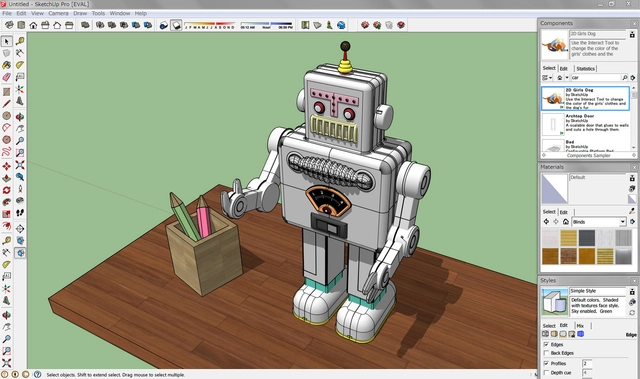
After the success of its 6th edition in 2007, Sketchup became one of the world's most widely used 3D modeling software products. This is thanks to its intuitive toolbar, interdisciplinary use within the creative industry (not just architects) and having a free version that doesn't use watermarks.
Its open source library helped the software to provide a wide range of 3D objects, while hundreds of users developed their own plugins not only to solve the problems of each version but also to exploit the potential of their tools.
We’re going to introduce you to 10 of the plugins shared by Sketchup Tutorials Facebook page using their demonstrative GIFs. If you don’t know how to add a SketchUp plugin, don’t worry! You can learn in this video also posted by them.
Today we live in a rapidly aging society. The shift in the population pyramid means that traditional healthcare systems need to be reimagined in order to efficiently support an increasing senior population. This added pressure on healthcare is significant--the number of older adults in the US alone requiring long-term healthcare support is set to increase from 15 million to 27 million by 2050. By partnering with designers, healthcare providers can create valuable responses to address these growing needs.
One building typology that expresses this designer-provider partnership are centers for healthy living (CHL). CHLs help to bridge the gap between the senior living and healthcare sectors, and go beyond simple clinic or exercise spaces. Taking a more holistic approach, they seek to become accessible destinations for programs that nurture wellness while providing a sense of place and community.
In a new downloadable report, Perkins Eastman have explored this typology in great depth by investigating existing CHLs. Through spatial and market research, case studies and user surveys, their findings identify strategies for improving upon the CHL model in the future. Read on for our summary of their discoveries.
Freelancing can be a great option for architects looking for more autonomy and freedom in their work. Although there are drawbacks to this kind of work, there are specific strategies that you can use to overcome the challenges and uncertainties of going solo.
It is easy to look down on freelancing. Those who are employed by a traditional company or firm see freelancing as an inferior work model that automatically implies less financial security and suggests to employers a loose definition of responsibility. People often imagine freelancers as slumming it in their pajamas doing just a few hours of work per day, or as Jacks-of-all-trades, overworked and constantly chasing new commissions. While data from recent studies and surveys show that freelancers do indeed work fewer hours than those in traditional employment, the rising number of freelancers proves that this trend is not waning. In fact, according to recent reports, increasing numbers of US and European workers are choosing to go freelance.
https://www.archdaily.com/799876/freelancing-as-an-architect-the-pros-the-cons-and-tips-for-successLidija Grozdanic for Archipreneur.com
Starting an architecture firm may sprout from one’s love for and interest in the discipline, but running a competitive business requires more than just a tendency to enjoy the work. BIM could be the edge a firm needs in order to stand out from the crowd. There are many ways a firm can make use of BIM to become more profitable on their projects and successful in winning those projects in the first place; read on to find out more about six of them.
https://www.archdaily.com/799864/6-ways-bim-can-make-your-architecture-firm-more-competitiveAD Editorial Team
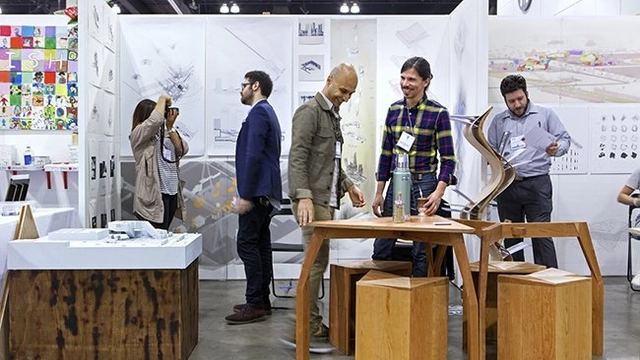
Virtual 3D Modeling has for decades been increasing in its popularity, yet hand-made models are far from extinct. Perhaps a reason for this is that despite the "3D" in "3D modeling," viewing those models on a screen or print is still, effectively, two-dimensional. A physical model of course can be held in your hand, examined and understood spatially in a way that a CAD model can’t. It can also be used as a quick and intuitive 3D sketch to get some ideas going. Whether it's for a client or a professor, models are almost always necessary in order to produce a complete understanding of the relationship between spaces in your design. To make the most use of this tool, read on for tips on how to improve your modeling:
Students at Woodbury University School of Architecture. One of Woodbury's graduate professional practice courses, focused on the Los Angeles region and the state of California, was named one of seven exemplary courses in sustainability-centered design. Image Courtesy of Woodbury University
For many years now, climate change has been a major concern for architects and engineers— and with good reason. After all, the built environment contributes to over 39% of all CO2 emissions and over 70% of all electricity usage in the United States. Several architecture and design-based initiatives aim to guide architecture away from environmentally harmful practice and towards a more sustainable approach. Architecture 2030, one such initiative, believes that to incite design change we must begin at its source: architectural education.
https://www.archdaily.com/799721/the-7-best-sustainable-design-courses-in-the-united-statesGretchen Von Koenig
Humanity is at a key moment in a larger story, one in which we are willfully manipulating both our global environments as well as our human bodies. The first is changing the makeup of the physical spaces we occupy and the second, the very body that perceives that space. At this intersection are the physical boundaries that define architectural space. Both our environments and our bodies are therefore open for design, and architecture has swerved in a new direction.
Created in response to these changes is a new podcast, “Night White Skies” w/ Sean Lally: A podcast about architecture's future, as both earth's environment & our human bodies are open for design. The podcast is about conversations with designers, engineers, and writers on the periphery of the architecture discipline, engaging in these developments from multiple fronts. Though the lens of discussion is architecture, it is necessary to engage a diverse range of perspectives to get a better picture of the events currently unfolding. This includes philosophers, cultural anthropologists, policy makers, scientists as well as authors of science fiction. Each individual’s work intersects this core topic, but from unique angles.
A 10-year project in the making, the gargantuan cultural beacon is made of biomorphically curved concrete walls that wind together like a knot of arteries, creating an otherworldly experience for arts patrons. It’s every bit the landmark project you’d expect from 2013’s Pritzker Prize Laureate, but its rapidly approaching completion triggered a vital question: Where to go from here?
Architecture depends on its time. It is the crystallization of its inner structure, the slow unfolding of its form. – Ludwig Mies van der Rohe
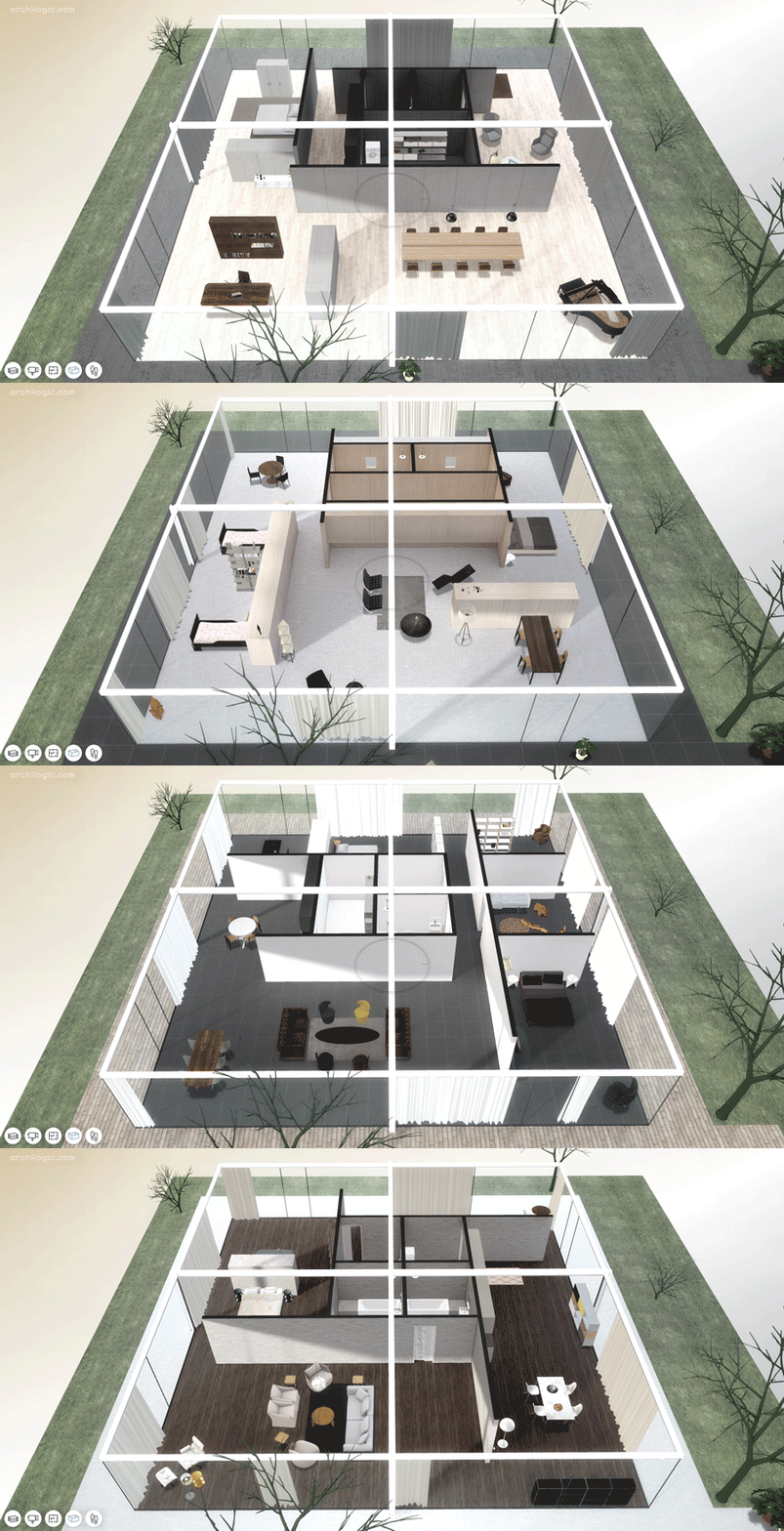
In 1951, Mies van der Rohe designed the Core House, a participative design structure which could be completed by its inhabitants.
This flexible model challenged certain architectural concepts, explored new industrial technologies, and proposed a modular system to improve the quality and affordability of housing.
"Gang style" bathrooms, in which rows of stalls are installed opposite rows of wash basins and designated only for males or for females, have been de rigueur in educational facilities for the last hundred years. They involve predictable plumbing, mechanical exhaust, and fixture costs. Short doors and divider walls allow for the passive monitoring of behavior.
Relinquishing this traditional bathroom model is daunting, since individual toilet rooms can significantly increase costs through additional plumbing, ductwork, ventilation, partitions, doors and hardware. These designs many times require additional space, trigger further ADA compliance, and invalidate some USGBC LEED points. Moreover, school districts typically have limited budgets, established facilities, and deep-rooted social practices.
https://www.archdaily.com/799401/how-to-design-school-restrooms-for-increased-comfort-safety-and-gender-inclusivityJoAnn Hindmarsh Wilcox and Kurt Haapala
Update: We've added links to help you find these books for purchase and, in 5 of 8 cases, tracked down a way you can read them online for free!
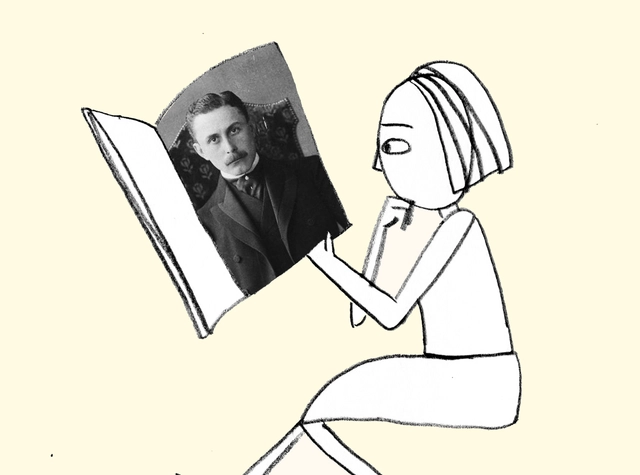
Quality over quantity, so the saying goes. With so many concepts floating around the architectural profession, it can be difficult to keep up with all the ideas which you're expected to know. But in architecture and elsewhere, the most memorable ideas are often the ones that can be condensed textually: “form follows function,” “less is more,” “less is a bore.” Though slightly longer than three words, the following lists a selection of texts that don’t take too long to read, but impart long-lasting lessons, offering you the opportunity to fill gaps in your knowledge quickly and efficiently. Covering everything from loos to Adolf Loos, the public to the domestic, and color to phenomenology, read on for eight texts to place on your reading list:
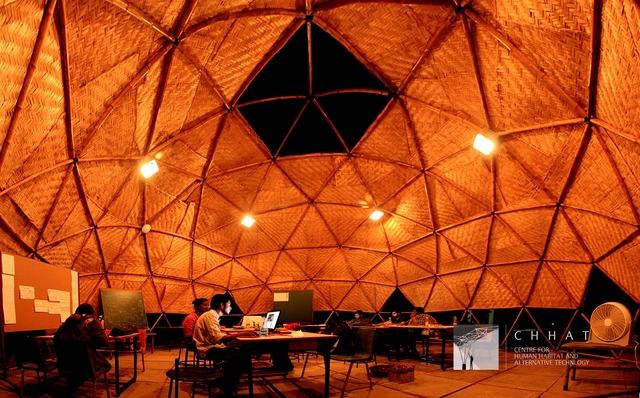
Launched in 2007, The Buckminster Fuller Challenge has quickly gained a reputation for being what Metropolis Magazine once called “Socially-Responsible Design’s Highest Award.” This year, for the first time, a Student Category was reviewed separately from the general applications, however still based upon the same criteria: comprehensiveness, feasibility, replicability, ecological responsibility, and how verifiable and anticipatory the project is. Students from the Centre for Human Habitat and Alternative Technology (CHHAT) claimed the prize with their adaptable and lightweight modular domes, made from natural, local or recycled materials.
Geography and climate are two important conditions that determine how people can live in a certain environment. When we add to this the cultural characteristics of a region, what appears, as Carl Sauer would say, is a "cultural landscape," a result of humankind’s settlement and adaptation to the territory. When architecture adopts a sensitivity to these conditions, and concerns itself with what the environment offers, living conditions take on a quality of lasting comfort.
Mental Canvas is not the first software that attempts to save the act of sketching--we have seen 3D "sketching" tools such as SketchUp, as well as applications that simply simulate sketching on paper, such as Morpholio's popular range of sketching apps. But what makes Mental Canvas revolutionary is that you have the ability to sketch freely in a three-dimensional space without the constraints of traditional CAD modelling; it’s what Julie Dorsey, founder of Mental Canvas, calls a "graphical media"; not fully flat but not fully 3D. The software will be released later this year on Microsoft Surface devices, including the recently announced Surface Studio, working with the hardware of the Surface computers and the Surface Dial to provide a natural sketching experience on a virtual canvas.
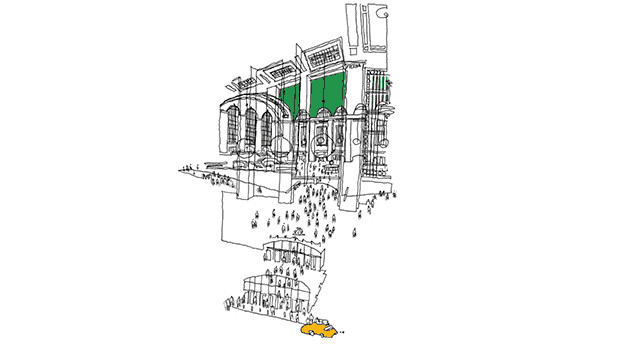
Maybe with the sole exception of railway stations, public space is generally understood as outdoor space. Whether in the United States or in Europe, especially now with heightened concerns around security, there seems to be this determined way of privatizing everything that is indoors, even as we are increasingly aiming to improve access to public space outdoors. But in the layered systems of our cities of the future, we will need to focus on the public spaces that are found inside buildings—and make them accessible.
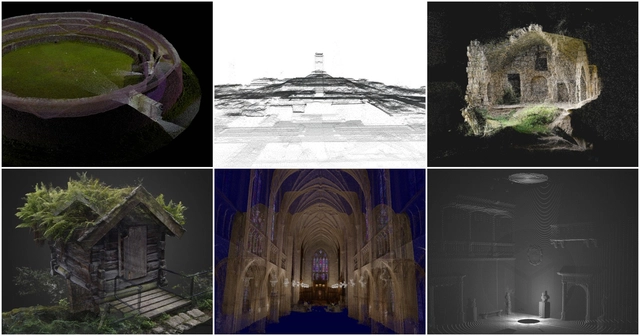
Traditional 3D models made up of surfaces have for a long time aided us in visualizing buildings and spaces, but they often come at a cost: large models require a lot of storage and processing power, and can become incredibly complex to the point where they are difficult to navigate. As a part of our Selected by Sketchfab series, Sketchfab has their eye on a more efficient, increasingly common method of capturing architectural spaces; namely, point clouds. Point clouds are made up of a set of points located in a three-dimensional coordinate system, that when put together merely give an impression of the surface of an object, or the façade of a building.
The method is fairly simple. The collection of data points is generated by a 3D scanner that rotates while emitting a laser that measures the distance to points on surrounding surfaces. This data can then be converted into a polygonal model that can be rendered like any other 3D model. However, the advantages of keeping the scan in point form are what makes it great; the file sizes are much smaller, and the porosity of the point clouds make it possible to see through walls and surfaces, accessing "hidden" spaces and uncommon views of seemingly familiar surroundings. Read on to find out more about the possibilities and advantages that come with point cloud modelling.
The strength of Dutch Design Week (DDW), held annually at the end of October, lies primarily in product design. Although the event has expanded over the past five years to incorporate more fashion, graphics and architecture, small-scale industrial design has retained its preeminence. Many of the designers on show in this year's edition, however, have embraced the challenges of other design disciplines and allowed them to feed into their work. But where does product design meet architecture? Building materials and, most notably at the 2016 event, some really nice bricks. Rotterdam-based architect Alison Killing guides us through her top installations.






.jpg?1479760771&format=webp&width=640&height=580)



.jpg?1479723306)














.jpg?1478776420&format=webp&width=640&height=580)