The usefulness (and, at times, unintended hilarity or abhorrence) of Google's autocomplete function is nothing new. The screenshots, listicles and articles dedicated to exposing humanity's curiosity, bias and, alas, stupidity have circulated the interwebs since the "Search Suggestion" feature was launched in 2008. As you type a query, topic or name into the the search bar, you are served search predictions, which the company describes as "related to the terms you’re typing and what other people are searching for."
This article was originally published on TiP, Balmond Studio and is republished here with permission.
When an atrocity occurs how do we unpack the truth, using the learnings of architecture, science and art to seek justice?
Dealing with this complex issue is architect Eyal Weizman, founder of the ground-breaking research group, Forensic Architecture (FA) at Goldsmiths University, of London.
His team of architects, filmmakers, designers, lawyers, scholars and scientists are hired not by the State, but instead work with international prosecution firms, NGO’s, political organisations and the UN, to investigate ‘crime scenes’ – like forensic detectives.
Since 1998, Google has been manipulating their iconic logo to celebrate holidays, anniversaries and the lives of famous artists, pioneers and scientists, creating what they call Google Doodles. Since the very first doodle (used to indicate founders Larry Page and Sergey Brin’s attendance at Burning Man that year), Google has produced over 2000 fun, colorful drawings to inform their users about the important milestones that fell on that date.
The physical properties of glass are invaluable and unequaled when it comes to the architect’s material palette. From the time of the cathedrals and the the brilliantly colored stained glass that served a functional and didactic purpose, to the modernist liberation of the floor plan and the exquisitely-framed horizontal views provided by ample windows, architects have turned to glass to achieve not only aesthetic but performative conditions in their projects.
Today, Architects face an increasing array of choices in specifying and designing with glass for building facades, as glass manufacturers propose a greater variety of colors, textures and patterns than ever before. A wider range of coatings and treatments has also been developed, allowing for a finer selection of glass panes with a combination of light transmittance, reflectance and absorption to meet the needs of outstanding architectural projects. These options affect the aesthetics and energy performance of the glass, and therefore of the overall building.
Thanks to advanced calculation tools, energy performance can now be anticipated accurately, but the graphic representation of glass is still a challenge, and yet a crucial need for architects.
https://www.archdaily.com/797724/how-physico-realistic-rendering-helps-architects-choose-the-right-glass-for-facadesSponsored Post
Stories have a way of clinging to places, charging buildings and spaces with an effect only perceptible to those who know what they once staged. Film is the most visual storytelling medium, and their environments often play memorable and vital roles in creating the movie's character and identity. The popularity of film tourism is testament to this phenomena. While the bulk of film tourism stems from blockbuster movies and their exposure and celebrity, the blog Filmap takes a more humble approach in highlighting the stories of everyday places.
For the past three years, the blog has laboriously tracked the locations of hundreds of movie scenes using Google Streetview, pairing stripped-back street views right next to their cinematographic counterparts. The resulting contrast elevates the everyday while also grounding fiction to our very streets, a reminder of the built environment’s role as a vessel of imagination.
A selection of Filmap’s posts are shared below – how many movies can you recognize from their real-life settings alone?
Mrs. Jane Jacobs, chairman of the Comm. to save the West Village holds up documentary evidence at press conference at Lions Head Restaurant at Hudson & Charles Sts. (1961). Public Domain
My introduction to Jane Jacobs was completely ordinary. Like many, many architecture students since its publication in 1962, I read The Death and Life of Great American Cities for an introductory course in urbanism. Jacobs was a joy to read, whip-crack smart and caustically funny, and she wrote in impeccable, old-school sentences that convinced you with their unimpeded flow. She explained her ideas in utterly clear and simple language. Planners are “pavement pounding” or “Olympian.” There are “foot people and car people.”
Why were we reading her? I expect it was to encourage us to look harder at the city, and to imbibe some of her spirited advocacy for experience over expertise. It was a captivating message and delivered at the right time. Today it seems as though everybody interested in cities has read at least part of Death and Life and found personal affirmation in it. Michael Kimmelman wrote, “It said what I knew instinctively to be true.” For David Crombie, “she made it clear that the ideas that mattered were the ones which we understood intimately.”
This quality was important, and one of the reasons that Jacobs endures in our culture is the facility with which we can identify with her. She is one of “us,” whoever that is—not an expert, more like an aunt than a professor. Her speciality was the induction of rules from patterns discovered by individual observation, like a 19th-century gentleman scientist. Her work gave seriousness to reactions that might otherwise be dismissed as taste, ignorance or prejudice.
The following essay by Pierre Cutellic was first published by Volume Magazine in their 49th issue, Hello World! You can read the Editorial of this issue, Going Live, here.
The relevant revolution today is the current electronic one. Architecturally, the symbol systems that electronics purveys so well are more important than its engineering content. The most urgent technological problem facing us is the humane meshing of advanced scientific and technical systems with our imperfect and exploited human systems, a problem worthy of the best attention of architecture's scientific ideologues and visionaries.
—Robert Venturi, Denise Scott Brown, Steven Izenour, Learning from Las Vegas
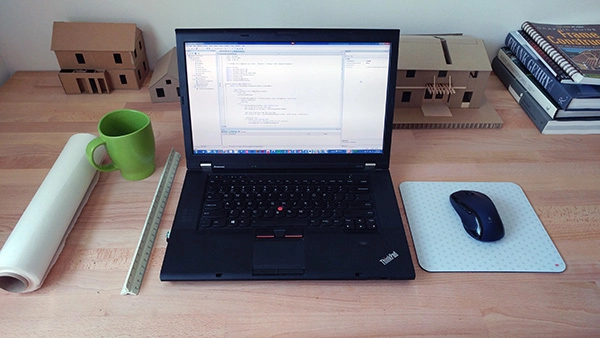
Macros are one of the easiest ways to Automate Revit. They let you get under the hood of your software and put it to work for you. Macros do not require any additional software other than Revit and are a great way for beginners to learn programming.
So what exactly is a macro? A macro is a user-created command that is coded using Revit’s API. Macros are run directly inside of Revit and are saved in the project file. Other applications, like MS Office, provide the ability to record macros directly from your actions on the screen. Unfortunately, Revit does not have this functionality. You must code your Revit macros directly.
Marketing is not simply an expense reserved for already established architecture firms. Small businesses in particular can benefit from a smart marketing strategy by aligning their operations with some of marketing’s most basic premises and concepts.
Architects in general have a tendency to underestimate the importance of marketing in creating and running a successful business. Even those who claim to understand the role of marketing in acquiring clients and building relationships often fail to fully utilize its potential. Principals of small architecture firms often get caught up in trying to keep their practices afloat and end up treating marketing as a luxury that they will be able to afford once they achieve stability--thus missing the true role of marketing as being a catalyst for growth. Architects need to apply marketing to their practices from the onset and treat it with the same amount of dedication as they do with their floor plans, sections and 3D models of their building designs.
https://www.archdaily.com/797558/architecture-marketing-101-how-basic-concepts-can-help-your-practiceLidija Grozdanic for Archipreneur.com
Team Rambo, also known as Ramboland, is a project born from the need of Ron Rambo, born with Cerebral Palsy, for a home that can support his disability and increase his quality of life. However, Ramboland doesn’t just stop there. LEED Fellow Max Zahniser, has used his experience with Green Architecture to combine Ron’s social vision with an environmental one that can benefit the entire community. The meeting of these objectives has been defined by the goal “to design a project that will actually increase the vitality of life and life-support systems in every way possible,” using architecture to make a difference.
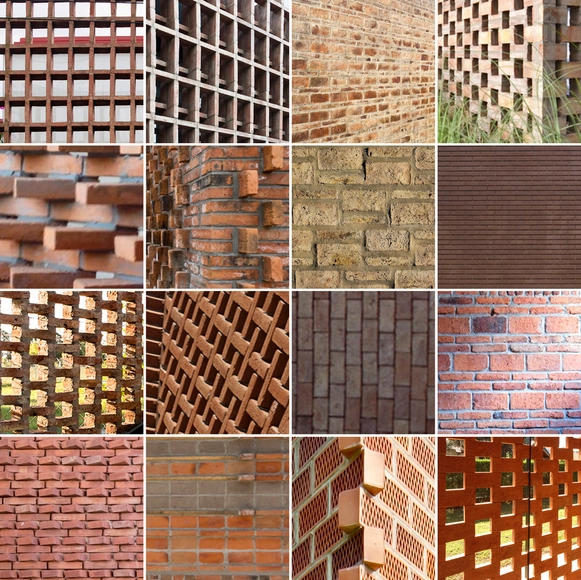
The wide range in which pieces of masonry can be arranged allows for multiple spatial configurations. Born in a furnace, the brick adorns and reinforces, protects and—to various degrees—brings natural light into spaces that need slight, natural illumination.
Throughout history, traditional brick-laying consisted of predetermined arrangement of parts, and lines of rope to guide the consistency and placement of each individual brick. But there are many other ways to exploit this multi-faceted, timeless material, so we've selected 16 projects that demonstrate the potential of the humble brick.
Below find 16 construction details from projects that use bricks in ingenious ways.
This article originally appeared on guggenheim.org/blogs under the title "Nine Guggenheim Exhibitions Designed by Architects," and is used with permission.
Exhibition design is never straightforward, but that is especially true within the highly unconventional architecture of Frank Lloyd Wright’s Guggenheim Museum. Hanging a painting in a traditional “box” gallery can be literally straightforward, whereas every exhibition at the Guggenheim is the reinvention of one of the world’s most distinctive and iconic buildings. The building mandates site-specific exhibition design—partition walls, pedestals, vitrines, and benches are custom-fabricated for every show. At the same time, these qualities of the building present an opportunity for truly memorable, unique installations. Design happens simultaneously on a micro and macro scale—creating display solutions for individual works of art while producing an overall context and flow that engages the curatorial vision for the exhibition. This is why the museum’s stellar in-house exhibition designers all have an architecture background. They have developed intimate relationships with every angle and curve of the quarter-mile ramp and sloping walls.
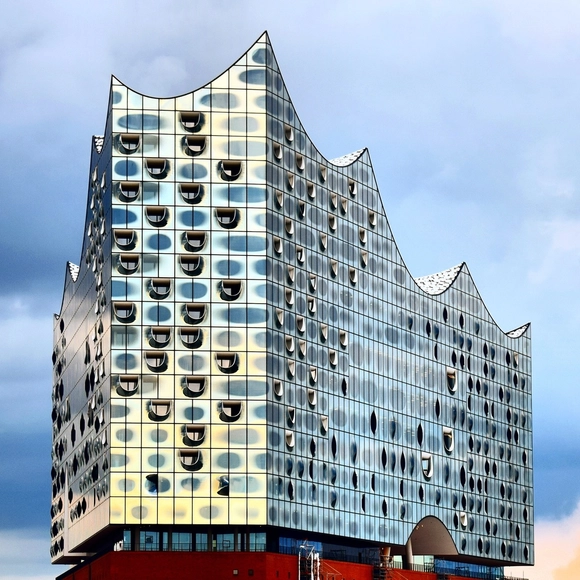
Even as modernism promoted the transparency of glass architecture, many within the movement were conscious of the monotony of large glass facades, with even Mies van der Rohe using elements such as his trademark mullions to break up his facades. But in the years since, countless uniform structural glazing skyscrapers have emerged and bored urban citizens. In response to this, unconventional reinterpretations of facades have gained interest.
Accompanied by the belief that light and brilliance could help in creating iconic architecture and a better human world, glass and metal have been innovatively transformed to create crystalline images. As a result, the locus of meaning in architecture has shifted from the internal space-form towards the external surface.
If you’re a sole-practitioner architect, you’ve probably already thought long and hard about the pros and cons of working solo, and don’t feel the burning desire to work in a bustling office environment with large-scale projects and constant collaboration. There are plenty of upsides to running your own practice. “I have it pretty good as a sole practitioner,” says Portland, Oregon architect Celeste Lewis. “I love the flexibility it provides with having a child, parents who are ill, and my passion for being involved in the community.”
But along with the benefits come challenges. One of the biggest is proving you’re worth your salt in a competitive marketplace alongside larger, bigger-reputation firms. Here are eight tips to help sole practitioners—who make up nearly 25 percent of AIA-member firms—build credibility.
“Writing about music is like dancing about architecture”
This well-known quote, most often attributed to comedian Martin Mull, compares attempting to explain music’s complex auditory intricacies with words to trying to interpret architectural forms through the motion of the human body – the underlying implication, of course, that it’s fruitless.
But take a closer inspection of the analogy. Music and writing may be media for disparate senses, but, at their height, dance and architecture share a realm of space and light; both perform as formal exercises that relate to the human proportion of the body. Must dancing about architecture truly be an exercise in futility?
A year after premiering at the 2015 Chicago Architecture Biennial, last week Steven Holl and dance choreographer Jessica Lang’s “Tesseracts of Time” made its New York debut at the City Center mainstage. The 21-minute performance, designed as a part of Holl’s ‘Explorations of IN’ project, explores the relationship between performance and environment through four phases, which the designers liken to the passing of the four seasons.
Well-known architects are easy to admire or dismiss from afar, but up close, oddly humanizing habits often come to light. However, while we all have our quirks, most people's humanizing habits don't give an insight into how they became one of the most notable figures in their field of work. The following habits of several top architects reveal parts of their creative process, how they relax, or simply parts of their identity. Some are inspiring and some are surprising, but all give a small insight into the mental qualities that are required to be reach the peak of the architectural profession—from an exceptional work drive to an embrace of eccentricity (and a few more interesting qualities besides).
One of the ways that architecture must be integrated into its natural context is by maintaining the sensory experience of the place itself. This can be achieved by assigning value to a site's spatial qualities, textures, and even by generating contrasts, to enhance and differentiate existing elements from man-made ones.
This month we want to highlight Secondfloor Architects, who turn their focus towards the interior of their project and invite us to experience the natural environment as something that is above architecture. They do this not only by designing a building that is settled in the plot, but also by creating a central element which relates to the verticality of the existing trees, while the building's horizontal elements offer a powerfully contrasting material expression.
https://www.archdaily.com/796696/project-of-the-month-yellow-submarine-coffee-tankAD Editorial Team
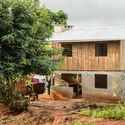
Architecture firm Ingvartsen Architects has turned their gaze towards “cultural exchange architecture”—not with the aim of exploring identity or experimenting with aesthetics, but with a practical purpose in mind: to minimize the spread of diseases. The Magoda Project combines Asian elements with traditional rural African building methods in the village of Magoda, in the Tanga region of Tanzania, taking shape in the form of eight prototype homes. The design goes to show that cultural exchanges in design and architecture can make great contributions towards problem solving for a humanitarian purposes, not only to improve health and hygiene, but also comfort and happiness.




.gif?1477071831)