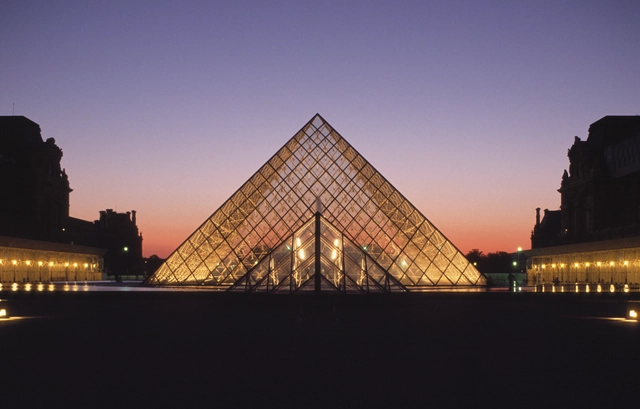
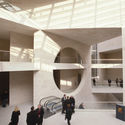
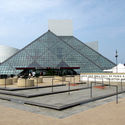
Although the Louvre pyramid, often recognized as his masterwork, created a luminous icon for presenting culture, IM Pei’s early museums were characterized by the harsh shadows of brutalism. Project by project, the Chinese-American master developed a sophisticated, open architectural language. Pei’s holistic approach for welcoming museum visitors comprises powerful symbols which utilize sunlight to its fullest during the daytime, while employing the magical glow of illumination in the evening.
Whereas most assessments of the Louvre have praised the achievements of the luminous pyramid as seen above the ground, the actual design challenge laid underground, in offering visitors a successful underground space. Later, Pei transferred his language to multiple other museum projects, where light was always a key factor in defining museum experiences. In a year of celebratory events such as “Rethinking Pei: A Centenary Symposium,” which begins tomorrow at the Harvard Graduate School of Design, an examination of Pei’s use of light in museums can contribute an important cultural emphasis.
The following article, originally published by the self-titled "Portfolio Queen," Stephanie Gleeson, gives you an insider's perspective into what recruiters are looking for when they open your portfolio. Gleeson, a Senior Consultant at boutique recruiting firm Bloomfield Tremayne & Partners, offers her top tips on everything from hierarchy tips, software and formatting, and how to present your portfolio in the interview.
When it comes to individuals pursuing architectural or interior design there is the added concern of the portfolio.
Your portfolio can tell a potential employer so much about you as an individual:
Are you organized?
Do you understand the progression of your own projects?
Who are you as a designer?
We want you to ace the portfolio, so here are my top hacks from having gone through the grueling process myself and what I’ve seen as a recruitment consultant. And trust me – I’ve seen a lot.
Love it or hate it, online job interviews are becoming more and more common. Especially given how the architecture job search process is no longer limited to your immediate area.
I worked abroad for many years and I have experienced applying from both the U.S. and Europe. I learned a few tips and tricks along the way that should be helpful if you are faced with this interview type.
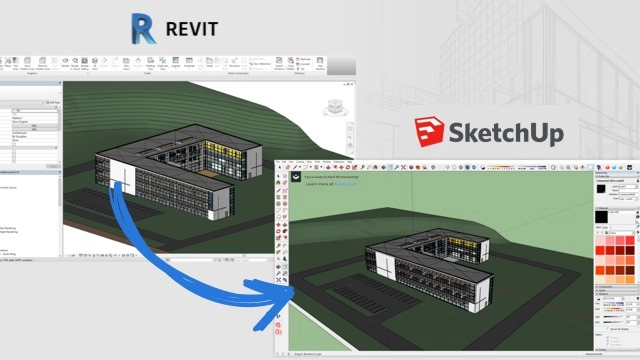
Are you a SketchUp user? Don’t let Revit hold you hostage! Break free with rvt2skp and get back to your beloved tool. The rvt2skp plugin enables the Autodesk® Revit® to SketchUp export option in Revit — conserving the geometry, materials, and linked models of your 3D model. It’s now available on the Autodesk App Store and supports Revit 2015, 2016, 2017, and 2018, including Revit Architecture, Revit Structure, and Revit MEP.
We are accustomed to seeing photographs in which architecture is recorded without any occupants, or perhaps captured only with models who give scale to the spaces shown. However, in recent years architectural photographers have increasingly decided to humanize the houses they document, presenting not only their architecture, but also those who inhabit these buildings. In this week's best photos, we present a selection of 15 houses captured by renowned photographers such as Luc Roymans, Adrien Williams and Fernando Schapochnik.
This article was originally published by KatariMag, a blog that explores the history of contemporary culture in its most sophisticated and fresh expression. Follow their Instagram and read more of their articles here.
Brutalist architecture responds to a specific moment in history. As WWII was coming to an end, a new form of State was rising from the ashes, along with a global order that would include and increase the relevance of peripheral nations. Brutalist architecture was born as a response to the ideas of the robust nations that would lead the masses. Critic Michael Lewis said, "brutalism is the vernacular expression of the welfare state."
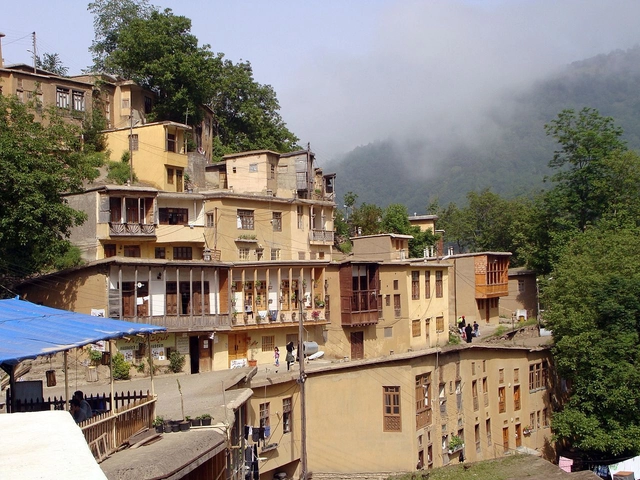
More than a thousand meters above sea level on the slopes of the Alborz mountain range in Gilan, northern Iran, a remarkable village dating back to 1006 AD bustles with life. The unique ochre-brown structures of Masuleh follow the slope of the mountain that the village nestles on—or rather, grows from—giving the village its most unusual quality: the roofs of many of the houses connect directly to, or even form a part of, the street serving the houses above.
This article was originally published on the blog of the Chicago Architecture Biennial, the largest platform for contemporary architecture in North America. The 2017 Biennial, entitled Make New History, will be free and open to the public between September 16, 2017 and January 6, 2018.
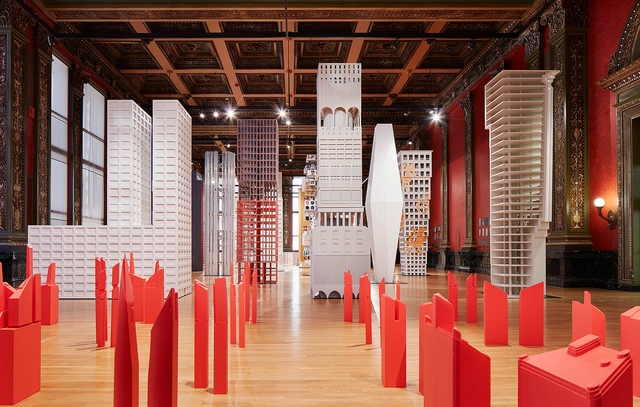
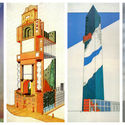
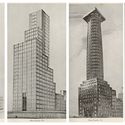
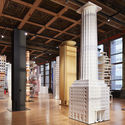
The Tribune Tower has stood at the heart of Chicago’s cultural heritage for almost a hundred years. Like the spire of a secular cathedral, it still symbolizes the rise of the “city of big shoulders” and its defining role in the American Century. But the building is more than a Chicago icon. The story of its origin has proved to be one of the most enduringly influential narratives in 20th Century architecture, key to understanding the skylines of cities all over the world.
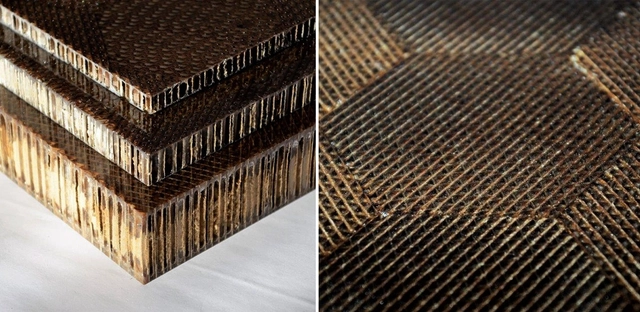
Contemporary designers are recycling waste materials into useable and well-crafted objects, and it’s easy to get the impression that this burgeoning realm of fabrication is destined only for the craft fair. A quick survey of Blaine Brownell’s new guide Transmaterial Next: A Catalog of Materials That Redefine Our Future turns up a half-dozen Etsy-ready art and furniture curios. There’s jewelry made from coffee grounds, bowls made from plastic bags, and a chair made from artichoke thistle fibers (the “Artichair”).
But these items don’t demonstrate the necessary capacity for heavy lifting and mass-market applicability for an age of climate change and dwindling resources. To grasp the kind of architectural upcycling that can divert trash from landfills and carbon from the atmosphere on a mass scale, it pays to step out of the design gallery and into the laboratory, where architects are inventing a new breed of modular building materials.
Dimensions of Citizenship graphic by Project Projects.
Chicago—The School of the Art Institute of Chicago (SAIC) and the University of Chicago jointly announced today their selection by the U.S. Department of State to serve as co-commissioners of the United States Pavilion at the 2018 Venice Architecture Biennale. As co-commissioners, the two institutions will organize Dimensions of Citizenship, the exhibition they proposed as the official United States contribution to the 16th International Architecture Exhibition, on view from May 26 through November 25, 2018.
What do a lot of recent architecture college grads have in common besides their degree? Student loans and disillusionment (see point 1 in Megan Fowler’s 11 Things You Learn at Your First “Real” Architecture Job to understand what we mean by "disillusionment"). But with the emergence of the digital age and “side-hustle economy,” millennials are learning how to monetize their passions, and now 1 in 4 Americans are making money digitally. Side-hustling has become so popular that there is even a school for it. The difference between a side-hustle and a second job is that side-hustles aren’t just about giving yourself a raise. Your side-hustle is something you truly love to do, and would probably do anyway, but now you get to share it with the world and make a little extra cash in the process. So what side-hustle is right for you? Here is a list of side-hustles which suit the skillset of architects and designers.
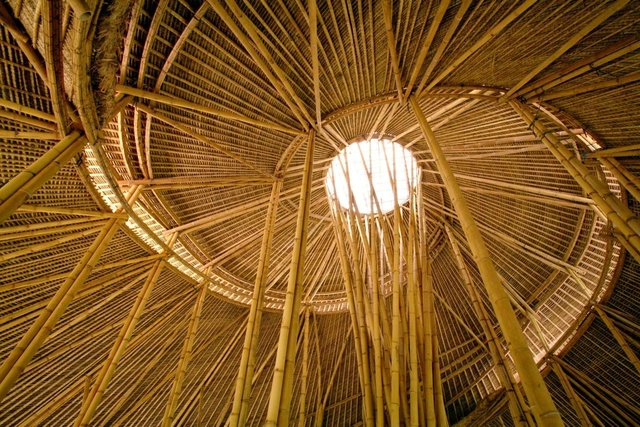
Bamboo has been used by man as a construction material since ancient times. The amazing thing about bamboo, besides being a totally natural material, is that it is sustainable, lightweight, flexible, and inexpensive. Although not widely used in the construction world (at least not when compared to materials like timber), the use of Bamboo enables original and attractive results. This week we have made a selection of 17 photos from well-known photographers such as Julien Lanoo, John Gollings, and Pasi Aalto.
Believe it or not, architects are just like everyone else! They love a shortcut in their tool belt to accomplish a task. Whether it's in the office or out in the field, all architects have a handful of tricks up their sleeves. The following are ten measuring hacks you can introduce to your daily routine. You can thank us later.
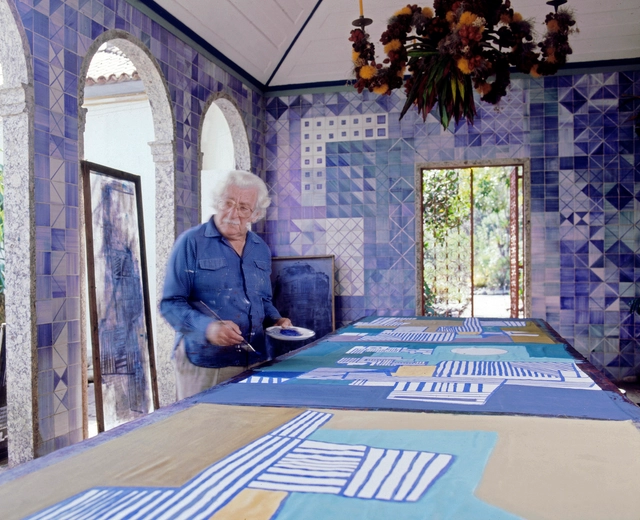
There wasn’t much in the way of art that Roberto Burle Marx couldn’t do. He was a painter, print-maker, sculptor, stage designer, jeweler, musician, tapestry-maker and one of the leading landscape architects in the 20th century. Marx’s passion for art, in all forms, strengthened his ability to design landscapes.
The fourth house in Arts & Architecture’s Case Study program departed from the trend with a noticeably more introverted design. Intended for a modestly sized urban lot, rather than the dramatic and expansive canyon or forest locations of so many other Case Study homes, it couldn’t borrow drama from the landscape, nor would the residents welcome curious glances from their close neighbors—so the house looks entirely inward.
Rapson called his design the “Greenbelt House” for the glass-covered atrium that divides the living and sleeping areas. In his original drawings and model, as in Archilogic’s 3D model shown here, this strip is shown filled with plant beds in a striking geometric pattern. However, Rapson imagined that it could be put to many uses, according to the residents’ tastes: a croquet court or even a swimming pool could find their place here. This “brings the outdoors indoors” rather more literally than, for instance, Richard Neutra’s expansive, open-door designs.
A city is smart when it makes better decisions, and there are only two types of decision: strategic and tactical. Strategic decisions determine the right thing to do. Tactical decisions choose the right way to do it. SMART technology is not smart technology if it causes us as citizens to confuse strategy with tactics. In other words, there are many decisions about the operation of a city that we may delegate happily to technology. But there are questions of governance, of determining our fate, of deciding what is the right thing to do as populace, that if we delegate—we abdicate. “To govern is to choose,” John F. Kennedy once said.
If I were to have believed the many consultants and emissaries of large technology companies that came to see me when I was the Chief Urban Designer of New York City, the SMART city they promised me was a place where the traffic lights always turned green and the elevator doors always awaited our arrival. They promised a city that would anticipate our needs at every turn, given tantalizing form in the recent present of our connected personal devices and the apps that seem to know us better than we know ourselves. Now, with the advent of the internet of things on the near horizon, we are set to make SMART cities a reality. Imagine the awesome power of an entire city synchronized to our taste and movement!
After the first series of photographs revealing Madrid's architectural geometries, Joel Filipe shared his work with us again; this time the Into the Fog series. In these photographs, Filipe presents, through a layer of mist, well-known projects featuring the skyline of the Spanish capital.
Videos
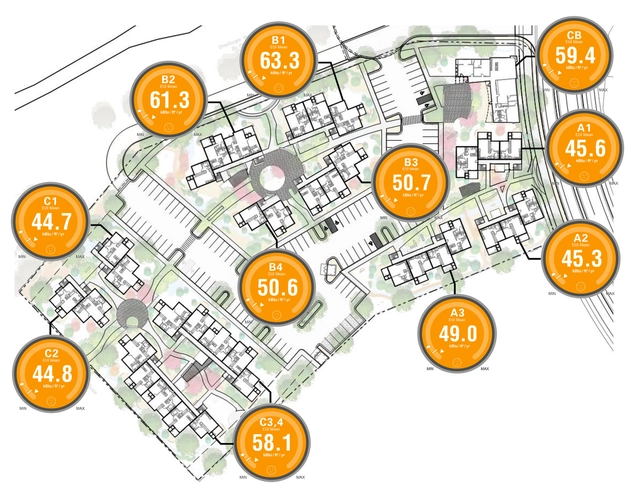
Site-wide pEUI Analysis using Autodesk Insight: helps identify outliers that could possibly impact the site’s energy consumption the greatest.. Image Courtesy of Dekker/Perich/Sabatini
Dekker/Perich/Sabatini (D/P/S) has made a strategic business decision, one that architecture firms are starting to adopt as a means to help them achieve their own sustainability goals and drive more business. With the implementation of a Building Performance Analysis (BPA) team and equipped with time-saving design tools, D/P/S has been leveraging building information modelling (BIM) for energy analysis. Since joining the AIA 2030 Commitment last year, the firm has already analyzed and reported nearly 1 million square feet in new construction projects.








_(1).jpg?1506588062 "© <a href='http://www.panoramio.com/photo/106899133'>Panoramio user alireza javaheri</a> licensed under <a href='https://creativecommons.org/licenses/by/3.0/deed.en'>CC BY 3.0</a>")