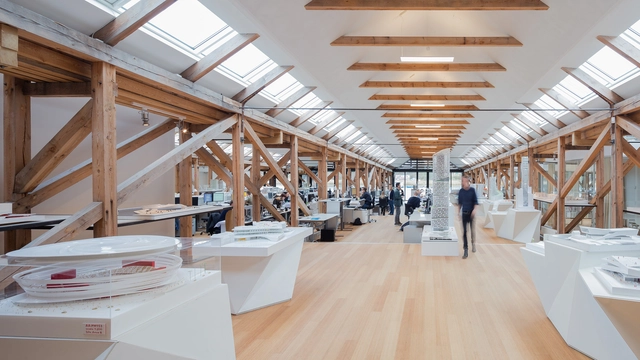
Days (or rather, nights) before the deadline, the studio becomes a haven for all those students madly rendering, photoshopping, and printing the last pieces of their presentation, using the adrenaline of the deadline for motivation. While it's common for people to disagree even on the true definition of an all-nighter—is it classed as working until the sun rises, being awake for a period of over 24 hours, or even working right through to bedtime the following evening?—students often unhealthily boast about how many they have survived.
People’s true personalities begin to blossom in the early hours of the morning, and you get to experience the person they truly are. Although many of us have probably experienced such nights, it is luckily a culture that we grow out of throughout architecture school, or at least something we get wise to and begin to reassess our priorities. But the memories of those who suffered through with us will never be forgotten.
The staircase is a fundamental element for the connection of architectural spaces. But beyond its functional use, in many projects the staircase serves as a sculptural object, offering an opportunity for architects to generate creative spatial forms that animate the built space. In this installment of our Photos of the Week, we present 15 incredible staircases captured by photographers such as Patricia Parinejad, José Campos, and Brigida González.
In this video, Wendover Productions asks some simple (if rarely asked) questions about cities: Why do they exist? What causes them to grow exponentially over time in the way they do? In answering these questions, the video suggests that, somewhat paradoxically, the creation and growth of cities is a natural phenomenon, bringing up some interesting implications regarding city planning in the future.
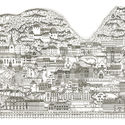
Trained in Architecture, Urban Design, and Theory, Alina Sonea illustrates the complex and often paradoxical nature of the cities we inhabit. The Feldkirch-based artist and architect has, since 2013, completed a series of detailed illustrations that employ graphic yet delicate black lines to render dense images of fantastical metropolises.
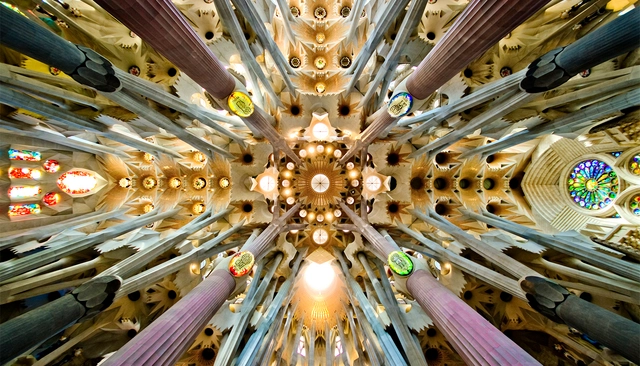
Throughout history, there have been certain architects whose unique ideas and innovative styles have influenced generations to come. Some of these pioneers introduced ideas so revolutionary that entirely new words had to be invented to truly encapsulate them. Whether they became a style embraced by an entire era, or captured the imagination of millions for decades to come, we know a Gaudiesque or Corbusian building when we see one.
Here are eight adjectives derived from the works of architects whose names are now in the dictionary:
A great photograph is often as important as a great building—sometimes even more. From the pages of glossy magazines to the galleries of digital publications and online portfolios, high-quality photography is crucial for contemporary architects. Yet the array of camera options, equipment, accessories, and technical jargon (aperture, ISO, shutter-speed, etc.) can be dizzying, if not intimidating. So what happens when the camera in your iPhone is no longer enough?
To ensure emerging practitioners and professionals alike take the perfect shot, Eric Reinholdt summarizes at length the photography equipment used in his own practice in this two-part video from 2016. The first instalment on the architect, writer, and photographer's channel 30X40 Workshop makes it clear that his preference is a digital SLR camera. The 20+ megapixel image quality as well as range of larger aperture lenses with added versatility are crucial features for large format printing and digital publishing. Canon and Nikon are among the suggested brands as they are established with a large offering of products. And, are expected to provide additional upgrade paths as new equipment is released.
You’ve probably seen the ads. Popping out from your Facebook newsfeed, the Masterclass sales pitch immediately attracts the eye: beautifully backlit wooden models and silky hand sketching emphasized by orchestral swells are accompanied by an adorable pirouette by the one and only Frank Gehry. The combination of Gehry’s status and slick production has managed to amass over 1.6 million views for the trailer on Youtube. Even in the company of courses taught by Martin Scorsese, Deadmau5, and Samuel L Jackson, the lone architect impressively lays claim to the eighth most popular teaser in the Masterclass series. The production value alone is almost a convincing argument for the $90 USD price, a detail that is quietly left out of the trailer.
The course has been reviewed by a critic, a practicing architect, and a curator—but what of its ostensible target audience, the architecture student? Has Masterclass managed to crack the online class conundrum with cinematography and celebrity?
https://www.archdaily.com/885220/frank-gehrys-online-masterclass-a-review-by-architecture-studentsAndy Chen & Thomas Musca
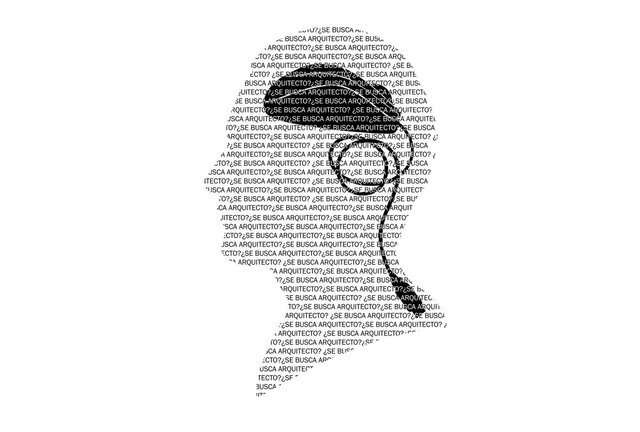
We are seeking someone with a Bachelor of Architecture with two years of experience. Knowledge of Revit, Vray, Adobe and Microsoft. Knowledge of RNE and Municipal documentation. Immediate availability - Typical Architecture Job Listing.
Are newly graduated Architects "employable" people according to the requirements of the current market? And are these the right requirements?
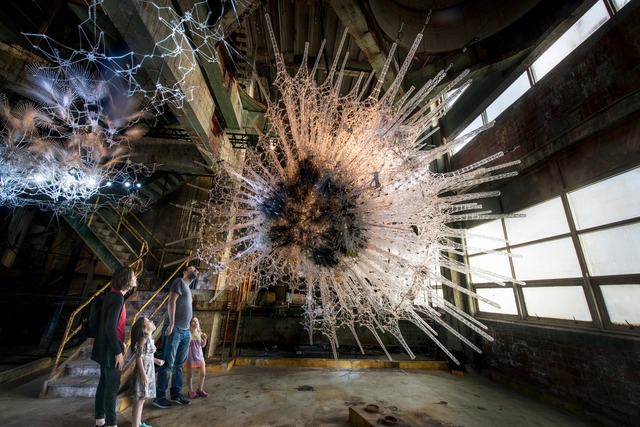
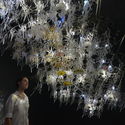
'Astrocyte' is a living piece of architecture that could easily be mistaken for a piece of science fiction. Engaging with the senses for an immersive experience, artist and architect Philip Beesley’s aerial structure combines chemistry, artificial intelligence, and a responsive soundscape. ‘Astrocyte’, translates from Greek to the literal meaning of star and cell, appropriate for such a complex structure that can react with the viewers' movements with patterns of light, vibrations and surround sound.
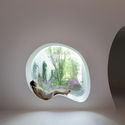
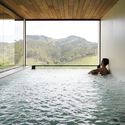
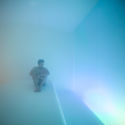
Spas, swimming pools, and saunas are spaces to which we turn in search of positive experiences, especially healing and sanitation. What characterizes all of these spaces is a requirement to wear little clothing--or even none at all--meaning that these spaces have very different expectations regarding nudity, privacy, and the human body when compared to other forms of architecture. From the point of view of design, nudity requires specific spatial conditions, forcing architects to think carefully about details such as the opacity of materials and the dimensions of space. With this in mind, this week we present a selection of the 15 best images of healing spaces, captured by renowned photographers such as Kevin Scott, Clément Guillaume, and Marcello Mariana.
https://www.archdaily.com/887350/architecture-and-the-bare-body-15-spaces-for-healing-relaxing-and-bathingArchDaily Team
In Zaha Hadid Architects' description of their Library and Learning Centre at the University of Economics Vienna, they describe the exterior of the building as "characterized by two elements of contrasting colors separated by a glass joint: shell and shadow." For that reason, the building was a perfect subject for architect and photographer Edwin Seda, who says he is fascinated by the effect light has on buildings. "Design is created to work with natural light but is never really in control of this aspect," says Seda. "This set of images therefore explores light as a medium for architectural transformation, a sort of fourth dimension, that only materializes once the building is complete and the seasons begin to change."
Seda's photoset captures the Library and Learning Centre throughout the course of a day: from the daytime when the building's light and dark elements are clearly distinguished; to sunset when one side of the building is closer to orange than the white or black planned by the architects; then to the evening, when the building's internal lights bring an entirely different dynamic to the building's composition. Read on to see the full set of images.
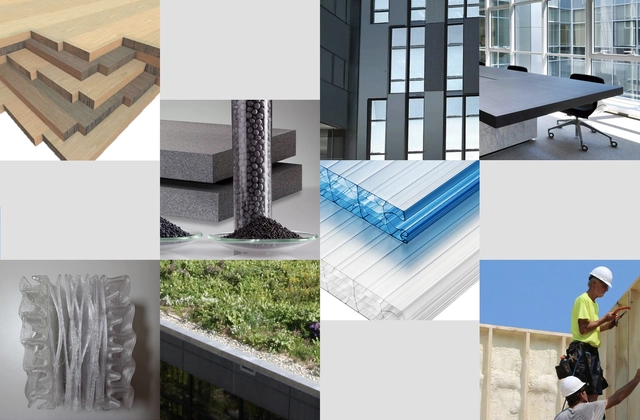
Whether architects are trying to meet the Architecture 2030 Challenge or pursuing their own mission to save energy, they have an opportunity to design buildings that can limit carbon emissions and be resilient against changing climate conditions.
To help architects meet their goals, a new wave of chemistry and material science is bringing innovative materials and building systems to the marketplace. From advanced insulation foams to multiwall cladding, this next generation of high-performing materials will help accelerate energy-efficient design.
Learn more about some of the high performing materials of today and tomorrow.
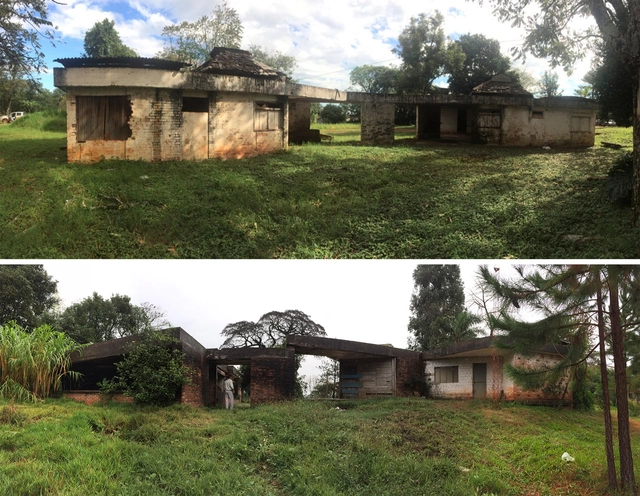
Tourist Inn at A. del Valle and Parador in San Pedro. Image via Agustina Basile
It is difficult to forget about the demolition of Clorindo Testa’s Commissariat of Santo Pipó and with it, the demolition of part of the Argentine architecture.
With the objective of addressing issues related to the rescue and protection of the forgotten and deteriorated buildings, the MMM3 (Modern Movement in Missions) of the Faculty of Humanities and Social Sciences (UNaM) held an exhibition on October 31 in the locality of A. Del Valle.
The exhibition is part of the 60th anniversary of other works of the architect in the Argentine northeast: the Tourist Paradores, three buildings located in A. del Valle, San Ignacio and San Pedro product of the architects Boris Davinovic, Augusto Gaido, Francisco Rossi and Clorindo Testa.
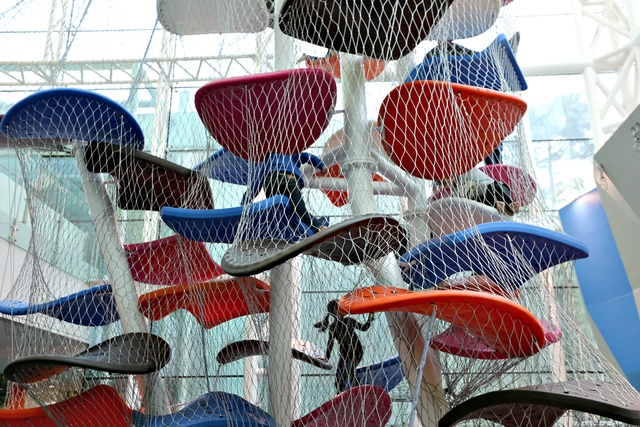
Having trained at Yale School of Architecture, Spencer Luckey decided to pursue a slightly alternate career designing vertical climbing structures to let children’s imaginations run free. Luckey Climbers are part jungle gym, part work of art that rise up off the ground with undulating platforms sprouting out, creating an abstract space to inspire creativity and intellectual development.
Today, Michel Rojkind is widely known as one of Mexico's most successful, and at times flamboyant, architects of the 21st century. But in spite of his success, his path to architecture was never straightforward; before founding Rojkind Arquitectos, he spent over a decade as a drummer in pop-rock band Aleks Syntek y La Gente Normal, an experience which he actually credits with sparking his interest in architecture. An article released this week by Surface Magazine offers an extensive profile of Rojkind, from his childhood, through his days as a drummer, to the difficulties he experienced on his architectural work--including the disastrous opening of Mexico City's Cineteca Nacional in 2014. Read some excerpts from Surface Magazine's article after the break.
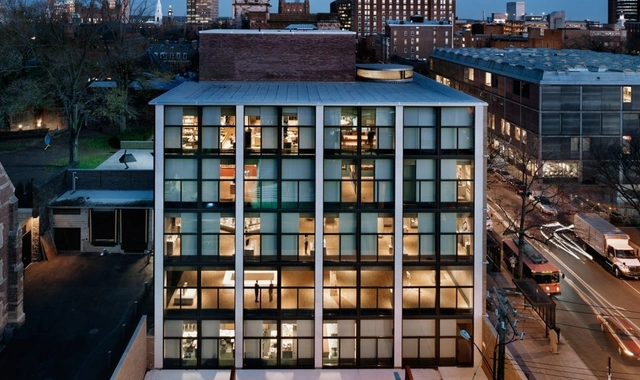
I have a distinct memory from my days as an architecture student at the University of California Berkeley in the late ‘80s. During an architectural survey class taught by Spiro Kostof, Louis I Kahn’s Yale University Art Gallery popped up in the slideshow. “Nice building,” I thought, “but what’s with those windows?”
Fifteen years later at Polshek Partnership (now Ennead Architects), I would become the project architect for the construction phase overseeing the rehabilitation of that classic building—the most challenging aspect of which was to replace “those windows.” I came to understand, intimately, how the double-paned window wall had failed almost as soon as construction was complete. Condensation accumulated between the panes, creating the foggy effect that marred my first impression of this groundbreaking building.
The architecture profession is in a perpetual debate concerning the myriad issues that impact how we practice and how that work can and should impact the world around us. As the chair of the AIA’s Young Architects Forum, I am keenly aware of the problems facing the next generation of practice leaders: inefficient practice models that lead to overworked, underpaid, and highly unsatisfied staff. We hear repeatedly that a seismic shift in the way firms operate is necessary to successfully move the profession forward and retain talent.
In October, the AIA held their first ever Practice Innovation Lab, looking to develop new practice models to raise the value of architects and the services that they provide to their clients with the goal of sparking a new debate that could challenge the status quo in firm management.Ten teams of six were formed with the intent of creating 10 new innovative practice models which would be pitched, “Shark Tank” style, after a daylong hackathon. Attendees then voted on the best practice model for the People’s Choice Award. Among the 10 pitches, there were five major themes to come out of the Practice Innovation Lab, which are discussed in more detail below:
https://www.archdaily.com/887308/5-innovative-business-models-for-young-architectural-practicesEvelyn Lee
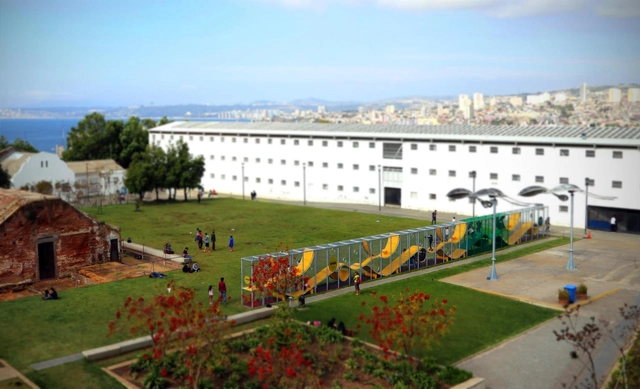
La Serpentina en el Parque Cultural de Valparaíso, Chile. Image Cortesía de ELEMENTAL
A new children’s urban playground has captured the attention and energy of children of all ages in the center of Valparaíso’s Cultural Park (Chile). The metallic structure is 40 meters long and has a colorful undulating path where children can run, jump, hide and slide.
La Serpentina follows a similar design to the equipment at the Bicentenary Children’s Park (2012) in Santiago. La Serpentina is one of two interventions entered by Somos Choapa in the Biennial. The second project is a prototype with a series of touch screens installed in the main area of the Cultural Park of Valparaíso, accounting for over 100 concrete initiatives of the project.



















.jpg?1516392347)
.jpg?1516392338 "© Edwin Seda")
.jpg?1516392360 "© Edwin Seda")
.jpg?1516392312 "© Edwin Seda")
.jpg?1516392330 "© Edwin Seda")
.jpg?1516392301)