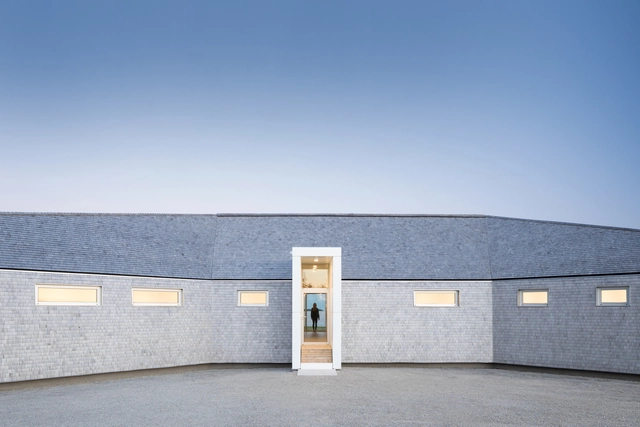
Is there an aspect, a recurring mark, that reveals a difference in the way that male and female architecture photographers see the world? This is, perhaps, one of those rhetorical questions often used as an argument to shed light on works produced by women and for which there is no precise answer.
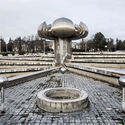
The history of Slovakia is riddled with political unrest and unwanted occupation, with the Slovak people having repeatedly been denied a voice throughout history. In the years following World War I, Slovakia was forced into the common state of Czechoslovakia; the territory was dismembered by the Nazi regime in 1938 and occupied by the Nazis for most of the Second World War, before being eventually liberated by Soviet and Romanian forces in 1945. Over the next four decades of communist rule—first by communists within Czechoslovakia itself and then later by the Soviet Union—the architecture of Slovakia came to develop into a unique form of sci-fi postmodernism that celebrated the shift in industrial influence at the time.
Photographer Stefano Perego has documented the Slovakian architecture from the 1960s–80s and has shared some of his photos with ArchDaily.
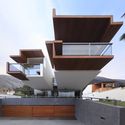
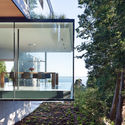
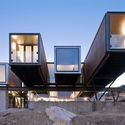
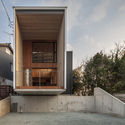
Cantilevers, structures that protrude from a building without the need for supports, are highly popular not only for their dramatic aesthetic effect, but also for the demonstration of technical mastery involved in their development. But we rarely see cantilevers in housing. For this reason, in this installment of our Photos of the Week, we have made a selection of 11 houses that seem to defy the physical laws of construction. Keep reading to see photos of renowned photographers such as Cécile Septet, Ema Peter, and Juan Solano.
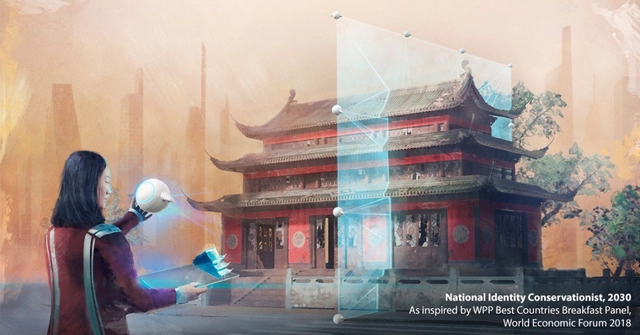
In a world where technology is at the forefront of our lives, it’s hard to imagine that many of the jobs that are available now did not exist 10 years ago; uber drivers, social media managers, app developers and even the job of an ArchDaily writer would have seemed an abstract concept! As technology advances further, even more job positions will be created and others left behind, leaving it open to speculation as to what will come next.
It is almost impossible to predict the future, but digital agency AKQA and Mish Global have attempted the impossible and envisioned several potential jobs in the design and construction industry in 2030 following inspiration from several panels they attended at the World Economic Forum. With the speed of changes over the last decade, they don’t seem too far from reality either.
#donotsettle is an online video project created by Wahyu Pratomo and Kris Provoost about architecture and the way it is perceived by users. They visit buildings, make videos and write extended stories in their exclusive column on ArchDaily, #donotsettle Extra.
Yes, that library. The images of the Tianjin Binhai Library have appeared everywhere, from architecture blogs and news broadcasts to going completely viral on social media. We had to go see it and show you what the space is really like. So, we teamed up with MVRDV who sent us to Tianjin to see it up close.
Tianjin Binhai Library, designed by MVRDV, is part of the bigger master plan for the new Binhai Cultural Center (masterplanned by Germany’s GMP). The building has seen phenomenal success on social media reaching all corners of the world. Since the opening, the number of visitors has been constantly increasing, with many of them coming from way beyond Tianjin. It is a library as destination point, redefined.
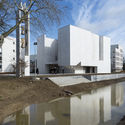
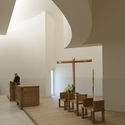
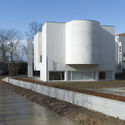
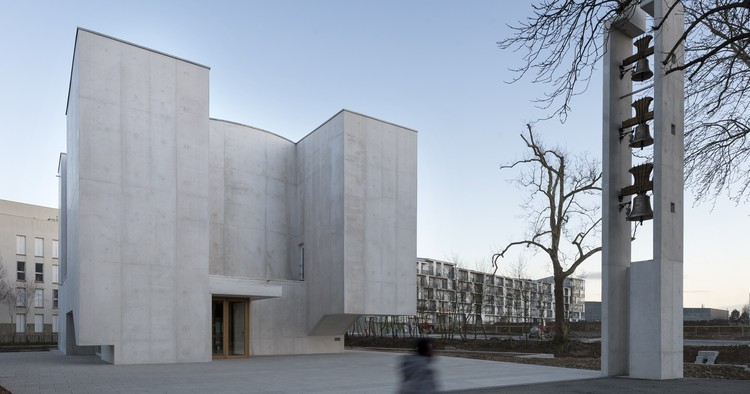
Architecture photographer Ana Amado has shared with us a set of photographs featuring Álvaro Siza's recently inaugurated Church of Saint-Jacques de la Lande, in Rennes—the first church built in Brittany, France this century.
As in many other Siza buildings, this church is built in white concrete and pays special attention to the natural light, which bathes the altar, tabernacle, pulpit and baptismal font from above. Externally, different volumes—blocks, cylinders and incisions—add to the overall mass of the building, distinguishing it from the neighboring housing blocks, while the use of few openings helps to establish a solid, permanent presence in the natural environment. Check Ana Amado's set of photographs below:
One of the last programs I attended as part of the Chicago Architecture Biennial was a panel titled “Making/Writing/Teaching Contested Histories” at the Chicago Cultural Center. The panel, organized by the Feminist Art and Architecture Collaborative (FAAC), aimed to “foreground issues of class, race, and gender, interrogating how they partake in the production of the built environment.”
The panelists, all academics in fields related to the built environment, were asked to bring in an object central to their practice or their teaching method. The objects on display were a painting, a pier, a refugee camp, and a living room.
Three or four decades ago, this array would’ve scandalized an audience of architects and architectural scholars, who might’ve been expecting, I don’t know, a photo of the Pantheon, or a plan of it, or even a piece of wood or a brick. Maybe even the choice of a piece of furniture would’ve induced some surprised gasps or confused looks.
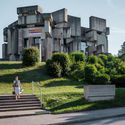
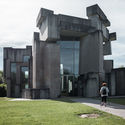
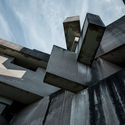
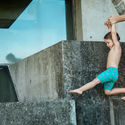
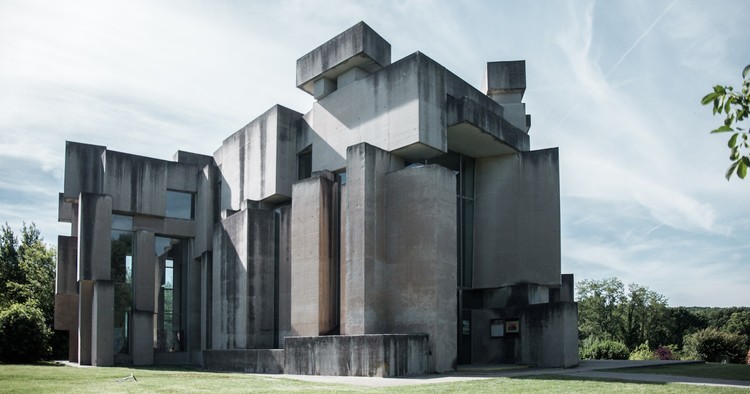
Located on a hill in Mauer, on the outskirts of Vienna, the Wotruba Church was the culmination of sculptor Fritz Wotruba’s life (the project’s architect, Fritz G. Mayr, is often forgotten). Constructed in the mid-1970s, Mayr completed the project one year after Wotruba’s death, enlarging the artist’s clay model to create a functional walk-in concrete sculpture. As can be seen in these images by Denis Esakov, the result is a chaotic brutalist ensemble that toys with the boundaries between art and architecture.
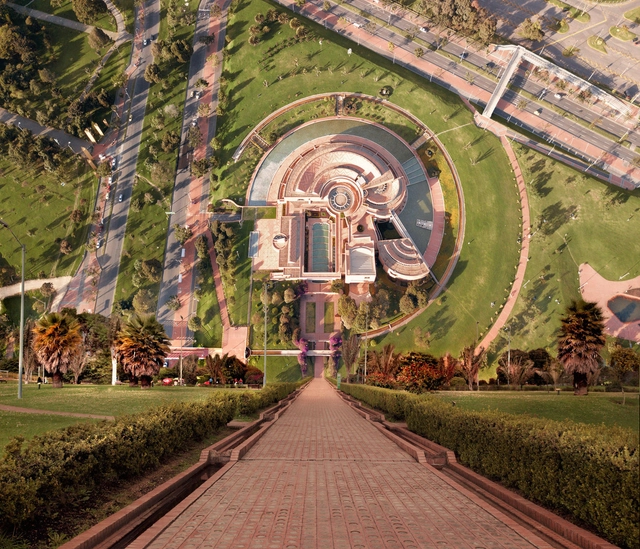
Colombian graphic designer and creative director Camilo Monzón's Instagram account is not your average catalog of Bogotá's iconic architecture.
Camilo explains that his particular way of capturing the city arose while he tried out his drone. "I realized that the tiles from nearby buildings showed me an unedited side of Bogotá that should be revealed and shown to everyone," he said in a conversation with ArchDaily en Español. "I think of it as rediscovering the city."
We live in a world that spends more time online than outside. And as architects and designers, we invest in creating a more engaging world by means of enhancing life through our buildings. However, through a perhaps unique form of tunnel vision, we are missing an incredible opportunity to leverage alternative mediums to impact more people through our design businesses.
Here are 5 ways to utilize your creativity to produce unique content that will help enhance your impact on the world of design, and in turn, push you and your design business forward:
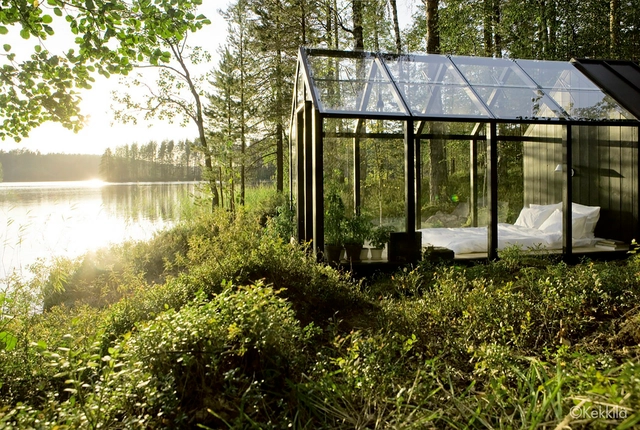
Ah, love—one of life's most treasured gifts. Whether we're talking about erotic or plantonic love, Valentine's Day is the day to go all out with your expressions of affection. Maybe you'll go out to dinner, or go on a nice date, or treat yourself to a just a little more of the things that make you happy. And then, you'll move it to the bedroom to fall into a blissful slumber... or not.
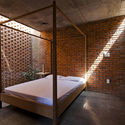
In any case, these nice bedrooms will inspire lovely thoughts for this special day. Here we present 14 bedrooms to fall in love with (or in!) featuring photos from Emily Hutchinson, Cosmo Laera and Andreja Budjevac.
In recent months, legislators in California have begun a concerted effort to use state law to address the state’s ongoing housing crisis. The moves come amid worsening regional inequality that has pushed housing affordability outside the reach of many populations. Facing mounting pressure from a growing cohort of pro-housing YIMBY activists and increasingly grim economic and social impacts—including a sharp increase in the number of rent-burdened households and the number of individuals and families experiencing homelessness—state-level legislators have begun to take action where municipal leaders have thus far stopped short.
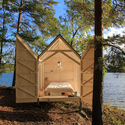
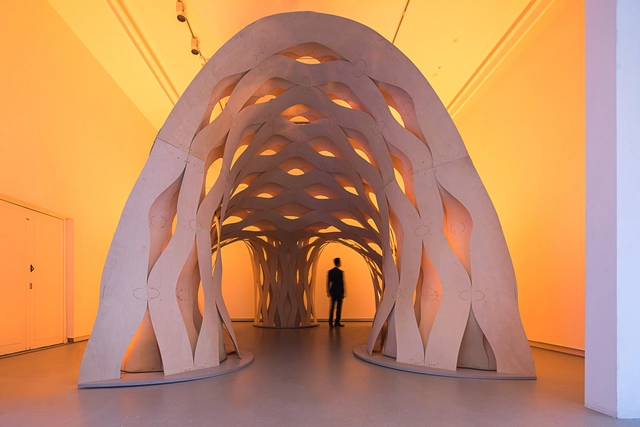
Thinking broadly of architecture, the masterpieces of the past inevitably come to mind; buildings constructed to withstand the passage of time, that have found an ally in age, cementing themselves in the history of humanity. Permanence, however, is a hefty weight to bear and architecture that is, due to its program, ephemeral should not be cast aside as "lesser-than."
When looking back on the rich history of Japanese architecture, some of the things that immediately come to mind are complex wood joinery, hipped roofs and intimate experiences with water. Today, Japan is on the cutting edge of architectural innovation in many different buildling types—skyscrapers, office buildings and micro-housing to name a few. However, this Instagram account chooses to highlight an extremely unappreciated building type—public restrooms.
Cheekily named @toilets_a_go_go, the account promises its followers the "discovery of Japanese toilets," covering everything from bathroom pavilions inspired by traditional Japanese architecture to metabolist-like toilet pods—with a few novelty structures thrown in for good measure. If the name of the account did not already reveal the identity of the structures, one might even mistake many of them for something else. We typically overlook public restrooms or even see them in a negative light, but this account showcases the power of architecture to improve a neglected building type, showing that even a trip to the toilet can (and should) be beautiful.
The Scottish liberal economist and philosopher Adam Smith once argued: “To feel much for others and little for ourselves, to restrain our selfishness and exercise our benevolent affections, constitute the perfection of human nature.” While we may have come some way since the 1700s, selfishness is still viewed by many as one of humanity’s ugliest traits.
Yet with the rise of mindfulness and the burgeoning self-help and life-coach industry, the view towards selfishness—more palatably referred to as "self-care"—is changing, which isn’t necessarily a bad thing.
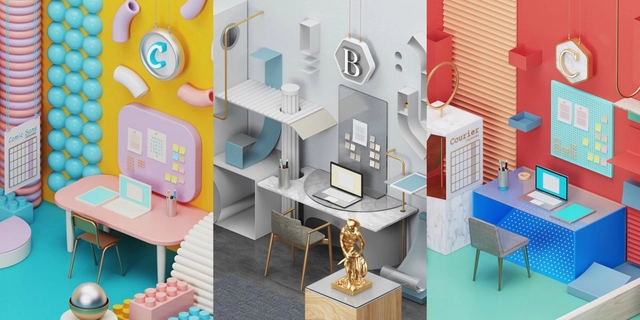
As many architects know, fonts have their own personality - so to use them as inspiration for office decors isn’t as crazy as you might think. Typography has the ability to instantly tell a narrative to the reader before needing to read the words, hence why we can take the decision-making behind which font to use in a project or scheme very seriously. They can hold the utmost importance in graphic design and architecture, as we often find ourselves displeased if the font is inefficient or disproportionate (take comic sans for example).
Seven unique, iconic fonts have been used as a base for each of the interior design projects below. Using their heritage, connotations, and style of the typography, HomeAdvisor have stylised each of the rooms to embody their identities and make us question their character.
Fans of absurd architecture, over-the-top action, and wrestling-stars-turned-beloved-actors are in for a treat this summer thanks to the recently-announced film Skyscraper. The movie’s central character is “The Pearl,” an imagined 1,067-meter-tall skyscraper in Hong Kong—although apparently some guy named “Dwayne ‘The Rock’ Johnson” also plays a pretty big role with his character Will Sawyer, a former FBI Hostage Rescue operative who lost a leg in the line of duty and now reviews building security for a living.
The plot, as revealed in the trailer and a single-paragraph synopsis on the official website, sees Will Sawyer criticizing the security of the “vertical city” billed as the tallest, most advanced, and safest building in the world. His concerns are immediately shown to be well-founded, as a group of (what are presumably) terrorists set fire to the 96th floor of the building, trapping Sawyer’s family and somehow framing Sawyer for the whole thing. As a result, Sawyer must save his family while running from the law, with the trailer showing a climactic leap from an adjacent crane (we can only assume that Dwayne Johnson doesn’t fit into a ventilation duct). The film has come in for some good-natured ribbing already, with internet jokesters questioning how a 260-pound amputee makes a 15-meter jump off the end of a crane. But of course, closer inspection reveals that these concerns are just the start of the entertaining wackiness of this movie.