The first few times I received negative feedback I was surprised about how I felt. I could feel my body getting tight, my temperature rising and a feeling of tension. For a brief moment, I felt as if the air had left my body and could feel myself getting defensive.
Pritzker Prize Laureate, Balkrishna Doshi, has imparted many lessons through his poetic architecture. Drawing upon local craft and culture, he has created buildings that focus on community and humanity. Doshi once described design as "nothing but a humble understanding of materials, a natural instinct for solutions, and respect for nature," the philosophy evident in his architecture which combines the natural environment with a focus on the human. Here, The Leewardists illustrates one of his famous quotes and show how B.V. Doshi has inspired generations of students and practitioners in the universal values he displays in his architecture.
What if the one thing that makes BIG "BIG" was suddenly stripped away right at the apex of its potential? That's the question posed by the trailer for Kaspar Astrup Schrøder’s documentary BIG TIME, which ominously illustrated a possible problem with Bjarke Ingels’ health.
Schrøder's documentary highlights the intense journey of Bjarke Ingels, the founder of Bjarke Ingels Group, through the past few years of his life. This unique insight into what exactly it's like to be an architect on top of the world ultimately poses a question that needs to be answered by anyone seeking to reshape the world through design. How do you handle the responsibility of forming the future you want to live in?
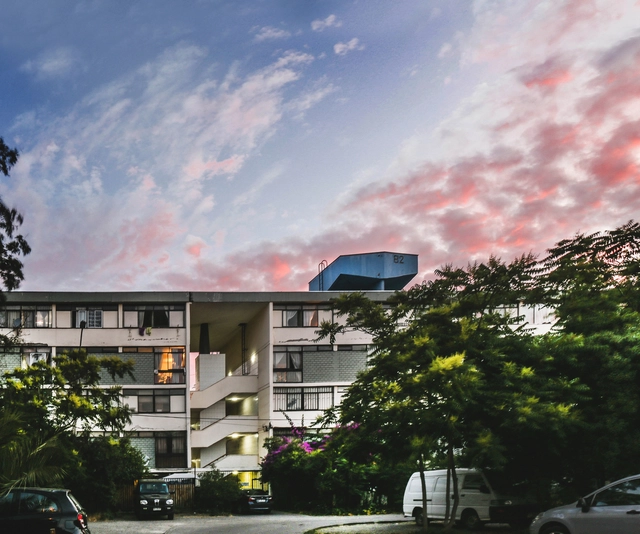
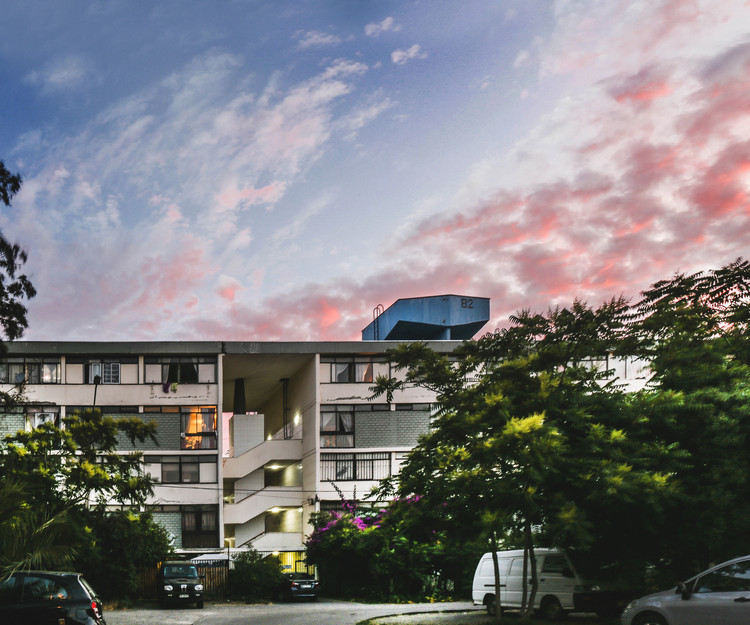
The modern movement was a key player in the cultural construction of Chile in the 20th century. Although the first projects came from the private sector, their urban and landscape principles were adopted by the modernizing project of the welfare state that began to be built after the social conflicts that exploded in the 1920s.
During chile's industrialization process, the State's housing construction incorporated concepts such as liveability, and universal access to housing and sanitation, which were put to the test early on in the reconstruction of cities such as Chillán after the 1939 earthquake. As Chile is a country that is familiar with earthquakes, it was necessary to readjust the concepts of the modern movement to national structural requirements, that is, resizing the reinforced concrete sections, which gave them a heavier visual expression than in Brazil or Argentina.
From the daring vision of Sergio Larraín García-Moreno and Jorge Arteaga in the Oberpaur building - the first of the modern movement - to the urban visions of BVCH in the Villa Portales, or the first exercises in height in the upper middle class sectors, the modern movement has left its mark on our society and in our cities. However, only one of the projects presented here is declared a historical monument.
In this edition of the architectural guides, we present you twenty chronologically ordered projects that reflect the evolution of the modern movement in Santiago, Chile.
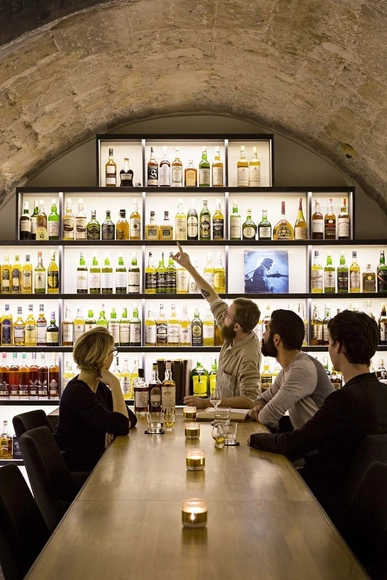
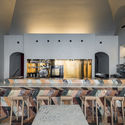
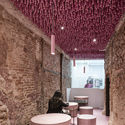
Bars are the perfect meeting place to finish the day in the company of friends and a few drinks. The relaxed atmosphere and lighting allow intimate discussions around tables, while the social butterflies can instead meet around the focal element of the space, the bar.
The atmosphere provoked by the mixture of textures, smells, materials, and darkness—ideally accompanied by a cocktail menu—is an essential component in helping us find our favorite watering holes. Read on for a selection of 15 incredible examples of this typology, with images by prominent photographers such as Frank Herfort, Serena Eller Vanicher, and Yann Deret.
Last Wednesday the world knew the name of the latest Pritzker Prize laureate: Balkrishna Doshi, the first Indian architect to receive architecture’s highest honor. The jury stated that "with an understanding and appreciation of the deep traditions of India’s architecture, Doshi united prefabrication and local craft and developed a vocabulary in harmony with the history, culture, local traditions and the changing times of his home country India".
While architects all in India are rejoicing and celebrating him, Anupama Kundoo, Professor at IE School of Architecture and Design, shared her thoughts on Doshi’s Pritzker Prize. "It is timely that there is recognition of a holistic understanding of the role of the architect, where the design of the built environment is seen as sensitive interventions that retain human scale in the man-made built landscape", stated Kundoo.
Architecture meets the outdoors in Sou Fujimoto's L’arbre Blanc housing tower, under construction in Montpeller, France. Image Courtesy of SFA+NLA+OXO+RSI
The destruction wrought upon Ishinomaki by the 2011 Great East Japan Earthquake and Tsunami damaged the city’s civic hall and cultural center beyond repair. To rebuild, Ishinomaki City wanted to create a landmark combining these two facilities into a new complex—one that would be like a city unto itself, serving the community.
In 2016, design proposals were screened in a process that included public presentations, with many locals participating. In the end, Sou Fujimoto, a leader among the next generation of Japan’s architects, was selected for his innovative design.
At first, it was just a crane or two, a little urban renewal down on Westlake, a rumor that Paul Allen was cleaning things up, wanted a huge park with bike trails. I thought that might be nice and didn’t think about it again for a while.
No park happened, but one day I went down to the new Whole Foods below where I work and noticed that a whole habitat had sprung up on Westlake, an expensive Mexican chain restaurant and an expensive Italian place and an expensive Thai place, and some expensive after-work bars. I also noticed small groups of men, all white or Indian and all wearing lanyards. These groups moved around the streets, talking animatedly, freshly out of their cubicles and going to lunch, oblivious to whomever else was on the street.
Carbon fiber's light weight and unique properties make it an exciting potential building material, say researchers at Autodesk BUILD Space. Image Courtesy of University of Stuttgart
On any weekday, Chicago’s downtown business district, the Loop, teems with harried humans crossing the street like herds of wild antelope fleeing a predator. Most scurry past the Field Building without considering its significance—or that of the historic building demolished in 1931 on the same site: the Home Insurance Building. Built in 1884, it was the first tall building erected on a frame made of structural steel—a light, affordable, and durable material that allowed structures to be built taller, stronger, and faster than those made of wood or stone.
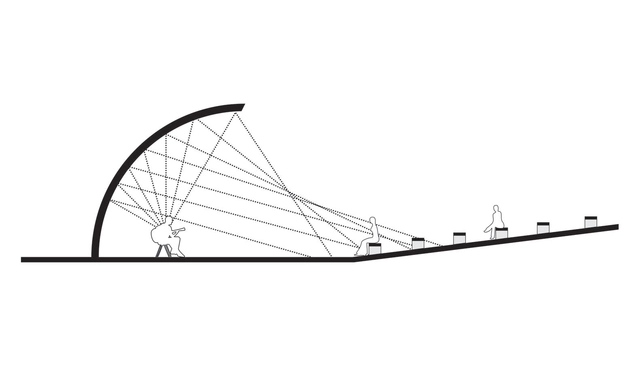
Acoustic shells are iconic elements seen in public spaces around the world. But beyond their curious form, their operation is highly interesting. Inspired by the design of the human ear, the sound waves produced within acoustic shells are organized by their form, becoming stronger and more vivid for the audience in front of the structure.
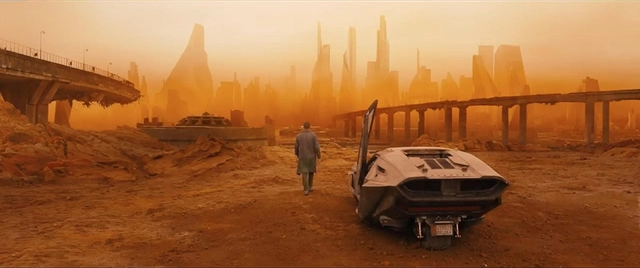
There ought to be a word for this kind of film—halfway between a sequel and a reboot—but there isn't, so we just have to call it Blade Runner 2049. The film is perhaps more subtle in the way it refers to Ridley Scott's 1982 dystopian cult classic than some recent sci-fi restorations—Star Wars: The Force Awakens, I'm looking at you—but it isn't above a bit of blatant parallelism. For example, it's easy to see reflections of Blade Runner characters in 2049: private dick Rick Deckard is now the stoic, world-weary K; femme fatale Rachael is Joi, a hologram companion who straddles the line between mortal and machine; wacky Roy Batty is the single-minded, murderous Luv; not to mention a bevy of replicants passing for humans and cops with hidden agendas. In fact, one of the few prominent characters not recast is the city of Los Angeles, whose architecture is strikingly absent compared to the first film. The resulting movie feels curiously devoid of a civic soul, which is perhaps the point.
https://www.archdaily.com/890005/grit-vs-globalism-what-the-city-of-blade-runner-2049-reveals-about-recent-trends-in-urban-developmentColin Newton
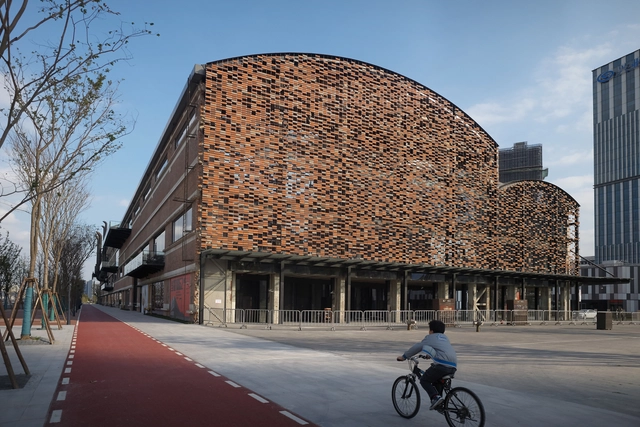
In the Lujiazui financial district in Pudong, Shanghai, Kengo Kuma has reimagined a 1972 shipyard into a new 9,000-square-meter multi-use complex, named Shipyard 1862. Behind original, rugged brick walls, the old shipyard was once defined by a 12 by 30-meter grid, which allowed for massive interior spaces to hold ships. In this industrial-styleadaptive reuse project, Kuma was careful to preserve the building’s structural and material integrity. These photographs provided by Julien Lanoo show how the industrial shell has been transformed by the refurbishment project.
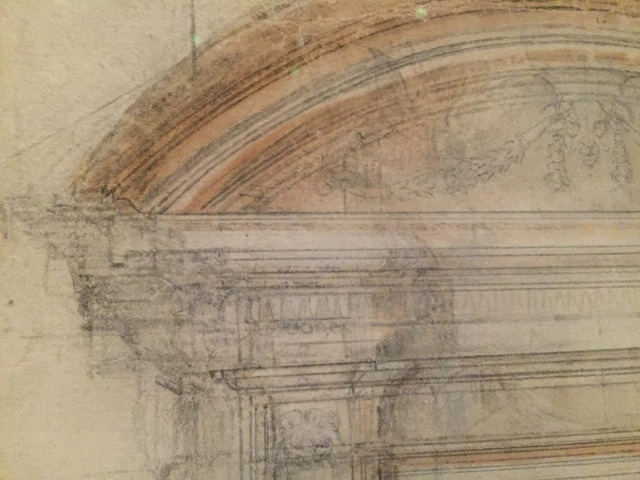
A recent exhibition at The Metropolitan Museum in New York, Michelangelo: Divine Draftsman & Designer, provided a thrilling glimpse into the mind and methods of a true polymath. The exhibit has just closed, so I offer this selection of images. Photography was encouraged, and the intimacy of the presentation allowed insights and realizations.
I’ve been studying or practicing architecture for 45 years, and the exhibit clarified how architects can think about what they do. It probably meant similar things to everyone feeling its resonant beauty, but I saw the complexities of a creative life in mid-application.
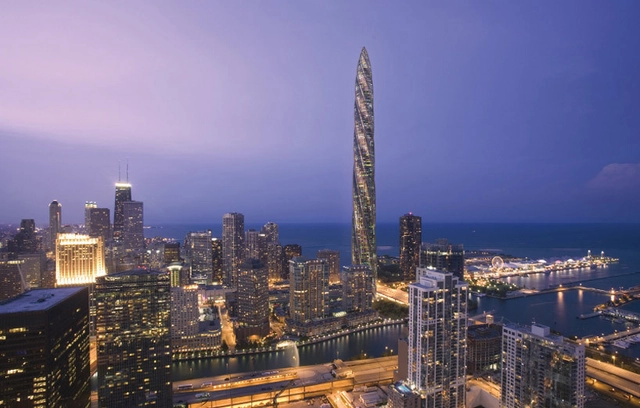
We all know a little about the world's tallest buildings—those engineering feats which define their cities and become symbols of human achievement—but what of the buildings that never took their planned place in their respective skylines? In 2014, The Council on Tall Buildings and Urban Habitat (CTBUH) released a report listing the 20 tallest buildings that were never completed (an up-to-date list is also maintained on their website here). In order to be considered "never completed," all of the buildings in the report had begun site work, but construction was completely halted with no reports indicating it will continue. Read on to find out the top 10 tallest uncompleted buildings in 2018 after the break.
When we say "most" architects, we're basing our conclusion on the responses to our first AD Discussion of 2018. Even though Tim Harford, author of the book Messy, contends that disorder and a bit of confusion can be linked to spaces that inspire more creativity, our readers tend to disagree. In our review of comments on our article, the majority of respondents explained that workspaces with out-of-place objects negatively affected their ability to concentrate. Many responses alluded to their more efficient and prolific results gained by working in an organized space. But that doesn't mean that all ArchDaily readers agreed; there are still ardent defenders of "control chaos" who insist that their best work emerges from working beneath piles of papers or supplies.
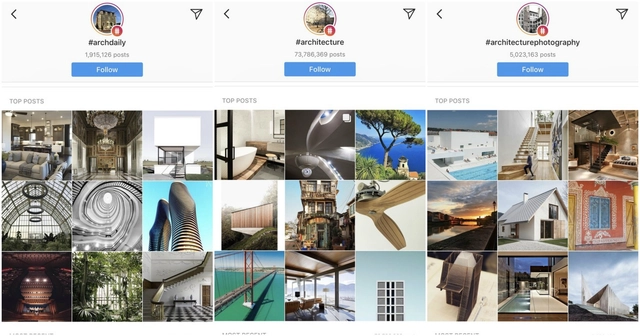
The hashtag officially became part of the Oxford English Dictionary in 2014, and whether you tend to use them or not, they are a pretty unavoidable internet tool that helps users connect related internet content. Maybe you’re hashtagging photos to get featured on a certain account or to poke some fun at yourself (see Justin Timberlake and Jimmy Fallon)? But serious ArchDaily readers have been using “#” to group beautiful photographs of architecture for the better part of a decade. When Instagram announced that it was possible to follow hashtags, die-hard taggers found a way to discover and like new content without actively seeking it out.
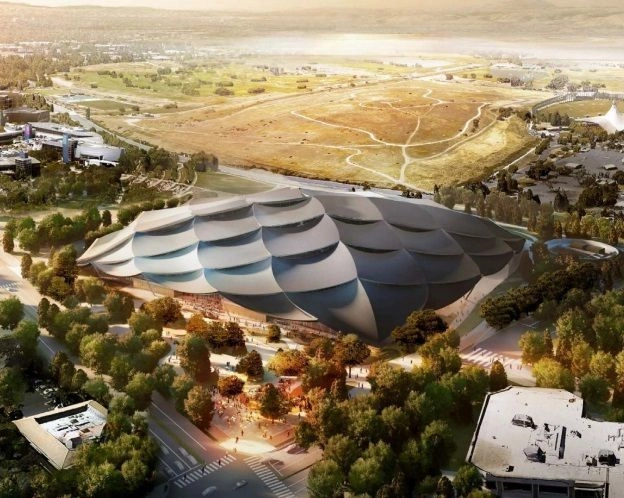
Would BIG and Thomas Heatherwick have designed a huge, adaptable tensile structure for any client other than Google?. Image Courtesy of Google
In January, we covered an interview with Bjarke Ingels where he spoke of the role that clients play in architecture. In the article, Bjarlke Ingels mentioned that "In the world of architecture there are many more things beyond an architect's control than are under his command." The post started a debate among our readers as well as our editors at ArchDaily. Many readers bemoaned the demise of architecture at the hands of clients with big pockets. Some of us talked about how IT giants not only control our digital world, they are now also encroaching upon our urban environments. Several readers blamed big clients for creating starchitects who build grand buildings and, as they allege, cause an "infantalisation" of architecture in the process.
Here at ArchDaily, our editors got to thinking: Can architecture exist without a client? Or is it just a service, a capitalistic exchange? And really, are clients such a bad thing for the field?
We talk to some of our editors to get their perspective.
Credits: Supreme Committee for Delivery & Legacy / Architect : ZHA & AECOM / Automatization Processes for Digital Fabrication : ECHOES.PARIS
Applications are open for the third edition of the Design by Data Advanced Master® in Computational Design, Digital Manufacturing and Building Technologies opening in September 2018 in Paris.
Design by Data provides attendees with a cross-disciplinary culture of computational design and a comprehensive knowledge of cutting-edge technologies in the fields of parametric architecture, robotics, digital manufacturing and 3D printing for the construction industry.