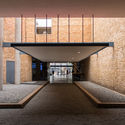
One of the most important factors when designing is the specific climate of the site. This can often present challenges when dealing with extreme climates and it is necessary to use insulating materials that adapt to changing conditions. However, Mexico and its privileged climate can be in an architect's favor. Here, architects can create microclimates and spaces that blur the transition of inside and outside.
Looking for a job isn’t fun. It’s nerve-wracking for the applicant and it’s often time-consuming for the potential employer as well. It can be even worse if you’re job-seeking internationally, hoping for a position with a top firm in the United States. For an applicant from another country hoping to make the move to an architecture career in the US, the process can seem overwhelming: rules and regulations, visa issuance processes, and loads of supplementary documentation necessary for immigration.
Top Architecture Firms enrolled in the Architect-US Programs. Image courtesy of Architect-US.
Videos
Located at the old harborfront of Arhus, Denmark, DOKK1 designed by Schmidt Hammer Lassen architects houses not only Scandinavia’s largest library but also Europe’s largest public robotic parking system. Photograph by Adam Mork.
Saving space, reducing costs and a pleasant user experience – parking doesn’t get much better than this.
Cityscapes around the world are changing, architects face the constant challenge of integrating parking space into new or existing real estate in densely built-up urban environments. While there is a growing ambition to replace cars as a prime mobility tool, we’re far from realizing this goal. Most downtown revitalizations today require structured parking. Where space is tight, access ramp or radius of a conventional parking garage may be hard to fit. Because robotic parking systems require neither these nor access for pedestrians, they can place up to 60% more cars in the same space – increasing the RoI on parking spaces Alternatively, the same number of cars can be parked in 60% of the space of a conventional parking garage, creating significant cost savings in the construction phase. In either case, the user experience in robotic parking systems – brightly lit entrance areas, safe vehicle retrieval processes and reduced car fumes as the search for parking is effectively eliminated – is second to none.
https://www.archdaily.com/909192/how-robotic-parking-systems-enable-urban-architectureSponsored Post
Architects are often bound by the will of their client, reluctantly sacrificing and compromising design choices in order to suit their needs. But what happens when architects become their own clients? When architects design for themselves, they have the potential to test their ideas freely, explore without creative restriction, and create spaces which wholly define who they are, how they design, and what they stand for. From iconic architect houses like the Gehry Residence in Santa Monica to private houses that double as a public-entry museum, here are 9 fascinating examples of how architects design when they only have themselves to answer to.
Online courses have gained more and more recognition in the past couple of years. In addition to the flexibility and convenience of learning wherever and whenever you want, they provide access to content from well-respected professors and colleges. In the field of architecture and construction, online courses have grown exponentially. Last year, we compiled a list that focused mainly on constructive and material techniques. This time we selected 15 online courses covering a range of subjects. We hope this selection of courses can help you with your next project.
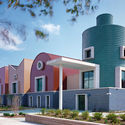
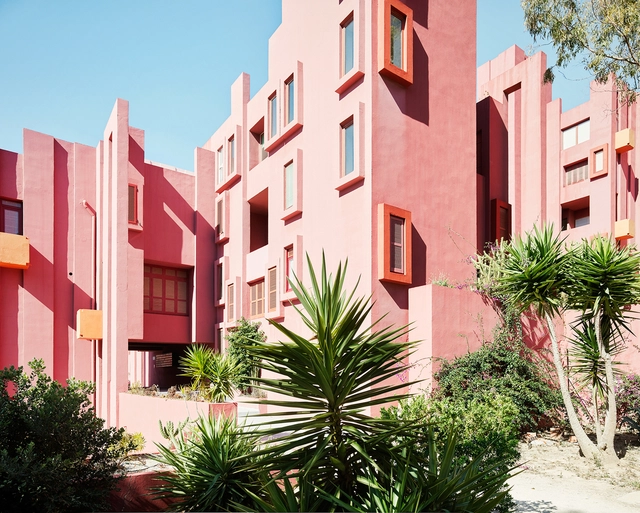
Some architects love color, some are unmoved by it, some hate it, and some love to dismiss it as too whimsical or non-serious for architecture. In an essay on the subject, Timothy Brittain-Catlin mentions the “innate puritanism among clients of architecture,” architects and their “embarrassment of confronting color,” and how “Modernism tried to ‘educate out’ bright colors.” So, while the debate on color in architecture is far from being a new one, it is not finished, and probably never will be.
In today’s world where the exhausted stereotype of the no-nonsense architect clad in black still persists, and while we quietly mull over the strange pull of the Cosmic Latte, there are some architects who haven’t been afraid of using broad swathes of color in their work at all. Read on for a list of 7 such exemplary architects both from the past and the present.
https://www.archdaily.com/881169/7-architects-who-werent-afraid-to-use-colorZoya Gul Hasan
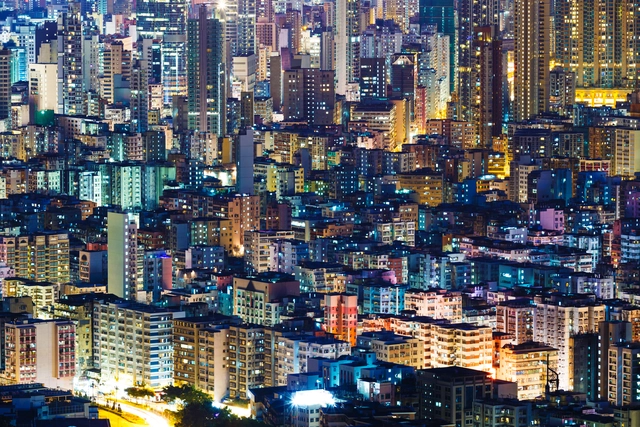
Hong Kong is one of the most densely populated cities on earth. Image via Shutterstock
Cities are hotter than surrounding areas because of a climate phenomena that is known as the urban heat island (UHI). While scientists have studied this effect for decades, new information has recently come to light that points to the way we arrange our cities as a key contributor to raised temperatures. The results could help city planners build our future cities better.
https://www.archdaily.com/909476/how-urban-planning-can-help-us-cope-with-climate-changeTaahirah Martin
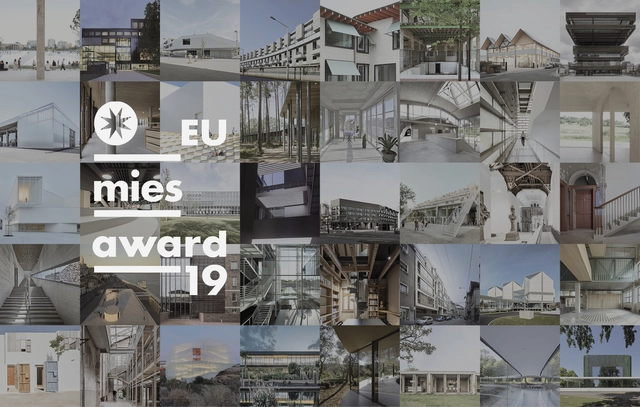
The European Commission and the Mies van der Rohe Foundation have announced the 40shortlisted works that will compete for the 2019 European Union Prize for Contemporary Architecture – Mies van der Rohe Award. The Prize, for which ArchDaily is a media partner, has seen a jury distill 383 nominated works into a 40-project-strong shortlist, celebrating the trends and opportunities in adaptive reuse, housing, and culture across Europe.
https://www.archdaily.com/909537/shortlisted-projects-announced-for-the-eu-mies-award-2019Niall Patrick Walsh
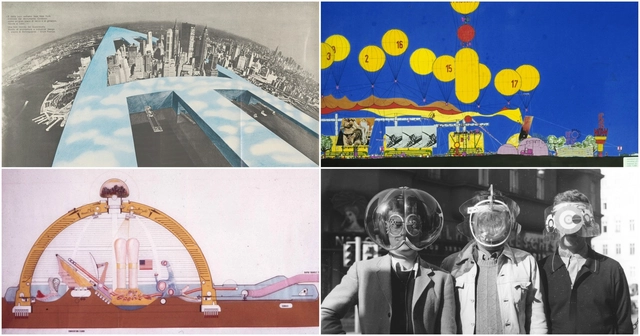
The first moon landing, widespread anti-war protests, Woodstock and the hippies, rural communes and environmentalism, the Berlin Wall, the women’s liberation movement and so much more—the tumultuous decades of the Sixties and Seventies occupy an unforgettable place in history. With injustices openly questioned and radical ideas that set out to unseat existing conventions and practices in various spheres of life, things weren’t any different in the architectural world.
The grand visions dreamt up by the modernists were soon challenged by utopian experiments from the “anti-architecture” or “radical design” groups of the 1960–70s. Reestablishing architecture as an instrument of political, social, and cultural critique, they drafted bold manifestoes and designs, experimented with collage, music, performance art, furniture, graphic design, zines, installations, events, and exhibitions. While certain individuals from this era like Cedric Price, Hans Hollein, and Yona Friedman remain important to the realm of the radical and the unbuilt, the revolutionary spirit of these decades also saw the birth of various young collectives. For eccentricity at its very best, read on for a (by no means exhaustive) list of some groups who dared to question, poke, expand, rebel against, disrupt and redefine architecture in the 60s and 70s.
https://www.archdaily.com/880253/9-of-the-most-bizarre-and-forward-thinking-radical-architecture-groups-of-the-60s-and-70sZoya Gul Hasan
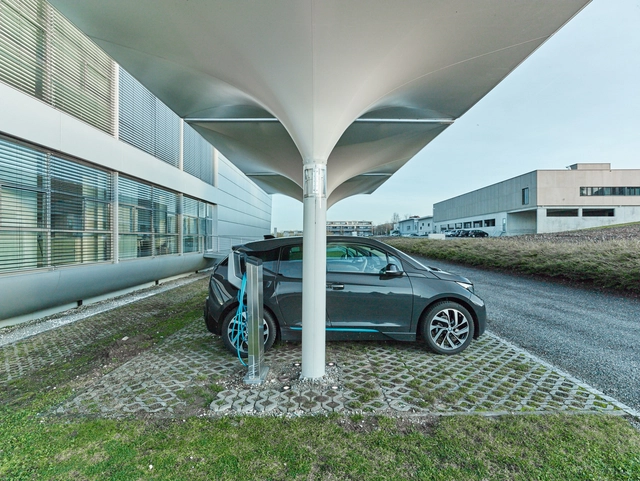
In recent years, solar energy has become a very popular method to power electric vehicles. This emerging technology has motivated the development of new architectural typologies. An evident evolution of traditional gas stations, it could be foreseen that solar-powered charging stations will begin to significantly grow in numbers in our cities in both public and private spaces.
https://www.archdaily.com/897606/energy-harvesting-charge-a-car-in-3-hours-at-this-solar-powered-electric-stationAD Editorial Team
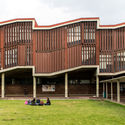
Although the National Autonomous University of Mexico (UNAM), south of Mexico City, is home to the well-known O’Gorman murals, it is, in fact, the campus itself, that is quite intriguing. Walking through UNAM, individuals find themselves in an architectural display of modernist buildings that date back 70 years, along with open courtyards, hidden walkways, and pavilions. Uniquely, the campus buildings have a little bit of everything: bold geometry, openness, abstraction, humanistic design, permeability with nature, decaying masonry walls, local lava rocks used as walls, and pavers throughout the campus.
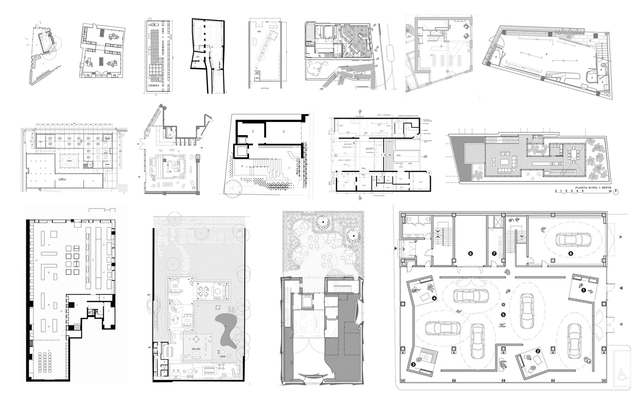
As mentioned in our previous article on retail stores under 100 square meters, the spatial distribution of commercial spaces is a determinant for its success. Not only does it address adequate logistics and the circulation of customers, but the variations and innovations that will enable a more efficient and original space.
Below, we've selected projects from our site, with their plan and section, that can help inspire your next project.
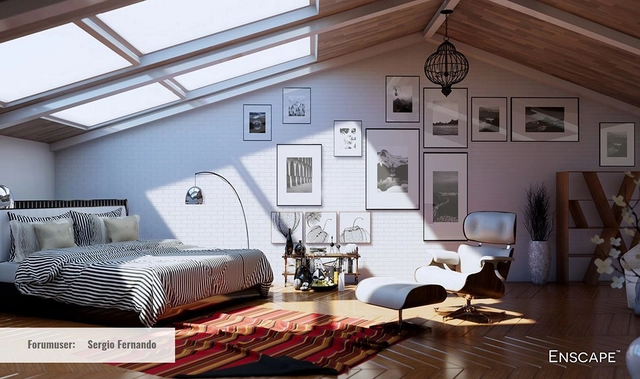
Virtual reality offers benefits that, just years ago, were hardly even imaginable. Projects can be walked through before being built; the interiors fully visualized before all the details are decided. It allows architects and clients the ability to work as true collaborators in the design of a project.
https://www.archdaily.com/909312/exploring-your-project-in-virtual-reality-7-tips-from-the-experts-who-make-itKatherine Allen
The regional expressions of a country’s culture are vital in helping us understand the relation between context and specific conditions of social manifestations. These nuances and singularities inside the realm of construction are translated into what can be called vernacular architecture. Although it has always existed, this universe of local exemplars of architecture with their particular materials, techniques and regional constructive solutions came to be well studied in the second half of the twentieth century in Brazil, in a project that traced national architecture history, headed by Lucio Costa.
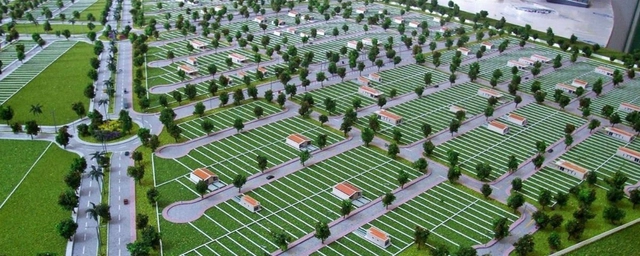
Aerial view of Smart City Laguna. Image by TecMundo
In 2017, ArchDaily Brazil reported that Smart City Laguna would become the first “smart city” in Brazil. With its inauguration scheduled for that same year, the venture opened with 1,800 units in its first phase, and in its final phase, 7,065 units divided between residential, commercial and technological uses.
Located in the Croatá district of São Gonçalo do Amarante, the first Brazilian smart city occupies 815 acres directly connected to the federal highway BR-22, which crosses the states of Ceará, Piauí, and Maranhão, starting in Fortaleza towards Marabá, in Pará. Its location has economic reasons: the proximity to Pecém Harbor, in Fortaleza, the Pecém Steel Company (CSP) and the Transnordestina Railroad make Croatá a strategic hub that has been recently occupied by technological companies, becoming a “digital belt” a little over 50 kilometers from the state’s capital.
Artistic expression is often undisciplined. Sometimes, the riot of colors and explosion of lines and forms help unleash a 2D illustration out of its medium, which is precisely what Drawing Architecture Studio (DAS) managed to create in Ucommune’s new branch in Dajiang Hutong, Beijing.
In late 2018, Li Han, co-founder of Drawing Architecture Studio, won the 2018 Drawing Prize for her digital drawing of The Samsara of Building No.42 on Dirty Street, which also illustrates a visual narrative of the city of Beijing and its residential chronology throughout the 21st century. This year, DAS took Qianmen area, co-working brand Ucommune’s location as a subject, transforming its road network, architecture, and urban composition into a dynamic, meticulously detailed panorama titled Under the Zhengyangmen.
3D printing itself is no longer a new technology, but that hasn’t stopped researchers and innovators around the world from coming up with new applications and opportunities. Some experiments with new materials have been driven by sustainability concerns and others are simply the result of imagination and creativity. Others have chosen to invest their time utilizing more traditional materials in new ways. Materials, however, are just the beginning. Researchers have developed new processes that allow the creation of objects that were previously impossible to print and, on a larger scale, new building typologies are being tested - including a Mars habitat!
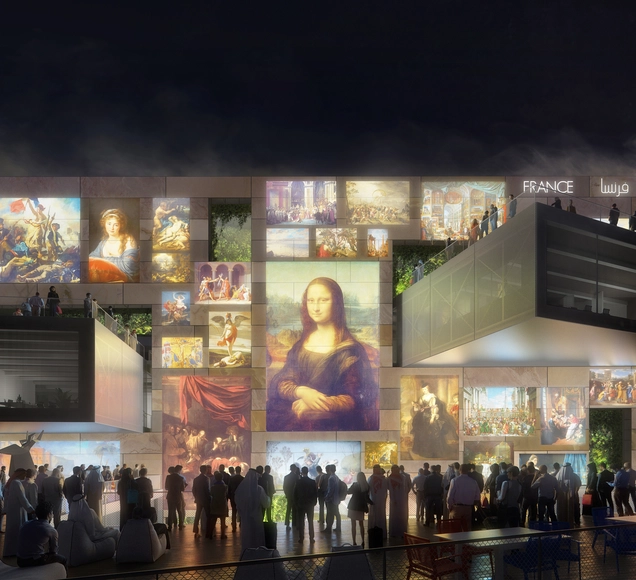
Clément Blanchet Architecture in collaboration with Etienne Tricaud (AREP) have been shortlisted for the French pavilion at Expo 2020 Dubai. The winner will be announced in February. The proposal is intended to enhance both the virtual world and the real to support human communication, cultures and interactions. The pavilion will be built around the themes of Light and Mobility to create a hidden oasis with two vertical gardens facing one another.





.jpg?1547587025)







.jpg?1507476262 "Casa Batlló. Image © <a href='https://commons.wikimedia.org/wiki/File:Barcelona_Casa_Batll%C3%B3_DachterrasseKamine.jpg'>Wikimedia user M.Stallbaum</a> licensed under <a href='https://en.wikipedia.org/wiki/Public_domain'>Public Domain</a>")