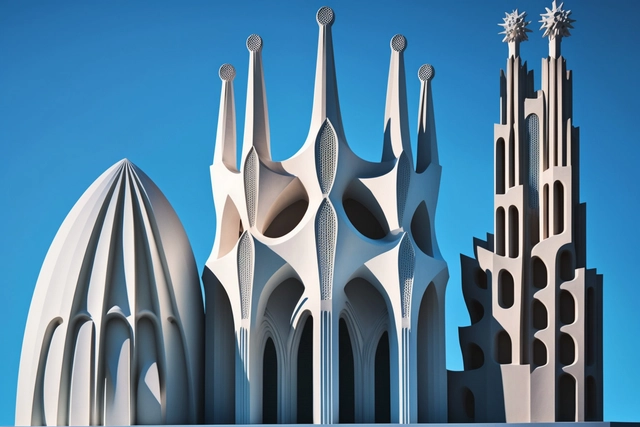
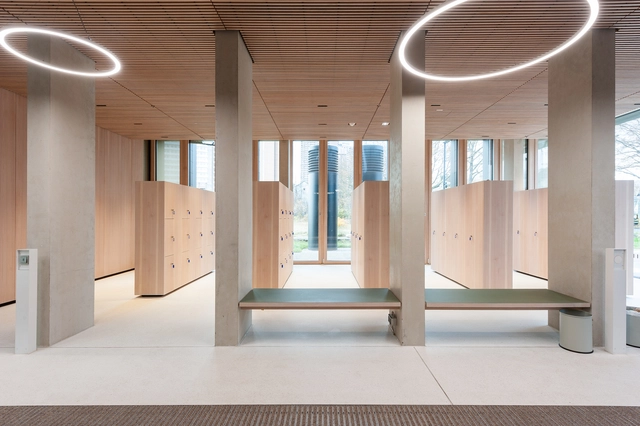
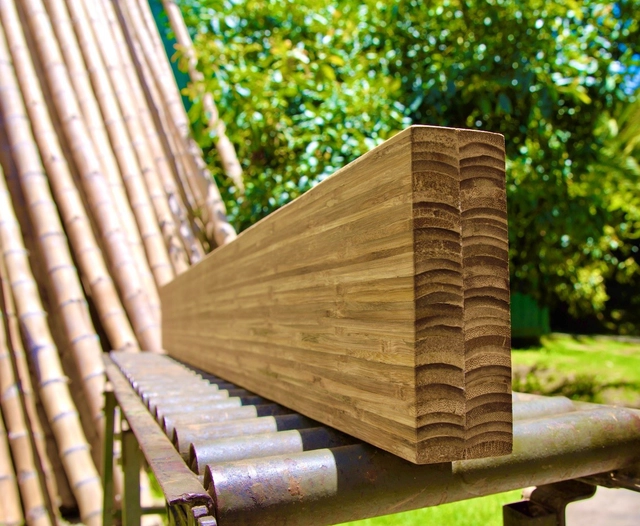
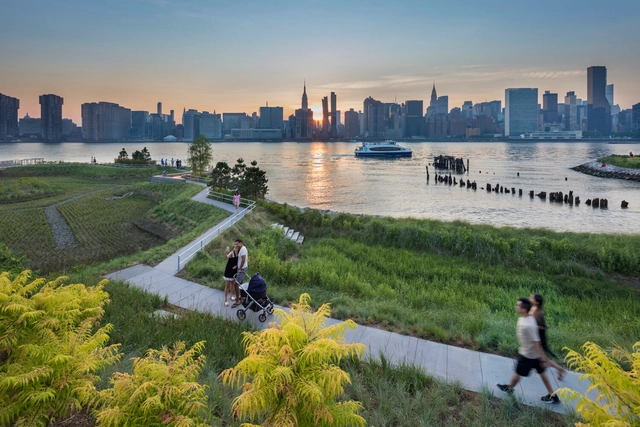
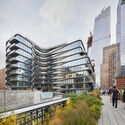
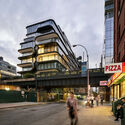
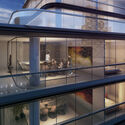
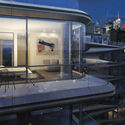
The United Nations estimates that the world population will reach 10.4 billion by 2100. Already by 2050, 2 out of 3 people will call cities home, coming in search of the opportunities, services and amenities on offer. That puts even more pressure on urban areas given all these people will need access to water, food, public space, good infrastructure and, above all, housing. In fact, estimates suggest more than two billion homes will need to be built by the end of the 21st century to accommodate this population explosion. As cities grow, so does urban sprawl, which brings its own set of environmental and social challenges. In the face of climate change, sustainable urban development must ensure that future housing solutions –new and renovated– are built to support healthy communities, prioritizing both human and environmental well-being. In turn, cities will need to be built denser and faster, but not without meeting a long list of stringent criteria. Only this way can we avoid the negative, often overlooked, effects of uncontrolled hyper densification that give urban development a bad name.
A24 and Atomic Monster have recently confirmed a movie adaptation of The Backrooms, a Youtube short horror film (expanded to a series) created by 17-year-old director and VFX artist Kane Parsons.
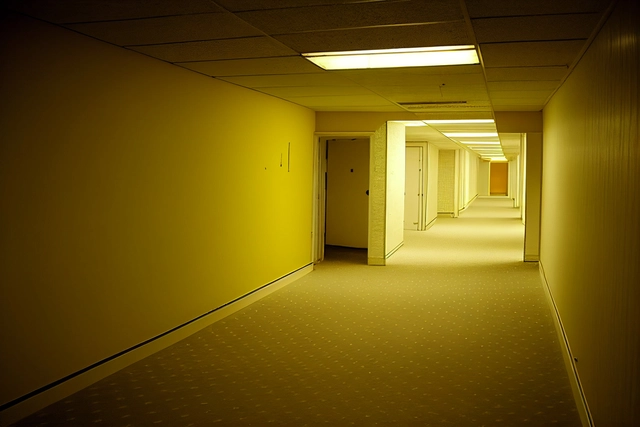
Based on the namesake creepypasta, The Backrooms is set in a seemingly infinite labyrinth of yellow-tinted, carpeted office spaces, bathed in fluorescent indoor lighting, like an abandoned building, in 1996. Its kitsch corporate aesthetic is reinforced by the imitation of the VHS tape recording style that allows Parsons to hide imperfections (or avoid an uncanny valley effect) of a simple 3D scenario created in Blender and edited in Adobe After Effects during the post-production stage.
“Our planet is choking in plastic,” states the United Nations. While the man-made material has many valuable uses, our addiction to single-use plastic products has led to severe economic, health and environmental issues. Roughly one million plastic bottles are purchased every minute, and five trillion plastic bags are used every year worldwide –used just once, then thrown away. Plastics and microplastics have found their way into every corner of our natural environment, from the peaks of the highest mountains to the depths of the deepest oceans. So much so, that they have become part of the Earth’s fossil record and created an entirely new marine microbial habitat known as the “plastisphere.”
When lockdowns first hit and retailers were forced to shut up shop, many took to the digital high street instead, with those investing hardest and quickest in their online personas invariably winning the battle for our bookmarks. As the world opened again, some kept both their physical and digital presence in a hybrid model, while others chose to remove themselves from bricks and mortar altogether.
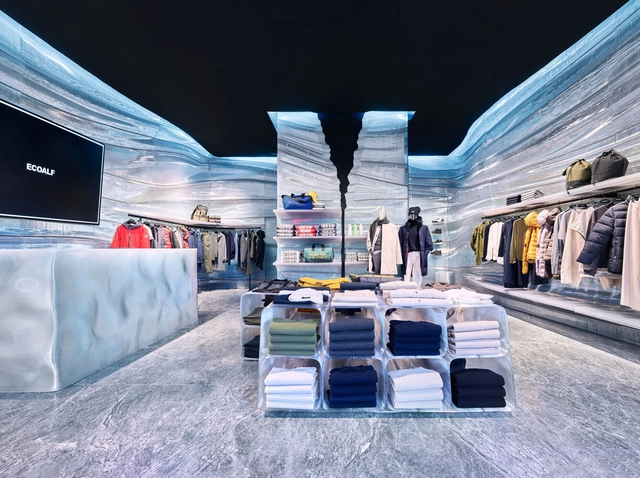
As we become more accustomed to using both models together, it’s clear that physical retail spaces can offer sensorial experiences that the digital simply can not – yet. These four projects buck the online retail trend and encourage consumers – and therefore other retailers, too – to move back into the physical, by turning the act of shopping into an exciting, invigorating, or relaxing luxury pastime, rather than a chore.
The Brick Award is an internationally established award that presents outstanding brick architecture from all around the world. Independent architecture critics, experts, architects and developers are invited to submit innovative and creative buildings and other construction works made of clay building materials. The spectrum of applications ranges from building solutions using classic clay blocks, facing bricks and roof tiles to the creative application of clay pavers and ceramic façade panels.
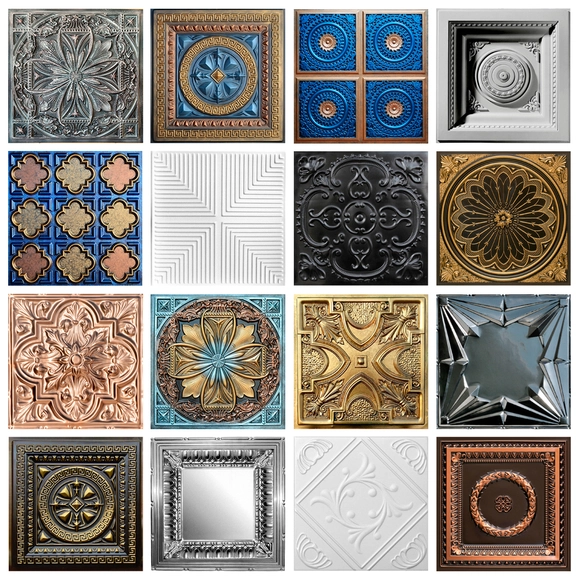
Ceilings were once a symbol of grandeur and opulence, adorning grand buildings, churches and palaces with their intricate and elaborate designs. We still find ourselves looking up in awe at these mesmerizing historical buildings, with our eyes drawn to their magnificent vaulted ceilings, remarkable truss structures or distinctive works of art depicting mythology, historical events and landscapes. Contemporary design, on the other hand, has shifted towards a sleek, minimalistic aesthetic; one where plain white ceilings have become the norm in most modern buildings. As Rasmus Wærn and Gert Wingårdh suggest in their book What is Architecture? And 100 Other Questions, “Ceilings have devolved from being the focal point of a room to being a zone for mechanical equipment.” And yet they have extraordinary creative potential.
Architecture is a referential discipline. From ziggurats, machines for living, to contemporary biophilic high-rises designs, it is impossible to know whether ideas are genuinely novel or whether they have been conceptualized before. Artificial intelligence has ignited the conversation on intellectual property (IP) even more. As millions generate unique graphic work by typing keywords, controversies have arisen, specifically concerning protecting creative work and the Copyright of architects in their creations. Therefore, understanding the scope of what is protected helps determine whether licenses are sufficient, whether trademark registration's long road is worth it; or perhaps a graphic piece cannot be protected and belongs to the public domain.
Selecting materials for an architectural project is an art form in itself. From the ruggedness of stone to the transparency of glass, materials and their unique qualities can set the tone, influence the mood and define the atmosphere of any interior. They have the power to transform a cold, sterile room into a warm and inviting sanctuary or a modern and sleek environment. Functionality and comfort are also closely tied to material selection; for example, durable, low-maintenance materials like terrazzo are an ideal choice for high-traffic areas, while the softness of carpet or fabric can provide a sense of coziness in hospitality settings.
Pretentious as it may sound, we can say with certainty that bamboo is one of the most promising materials for the future of the construction industry. Neil Thomas, principal engineer at atelier one, says that if we were to design an ideal building material, it would look a lot like bamboo. This is because it grows very fast, is present in many countries around the world, has a highly efficient cross-section, and has impressive load-bearing strength. But beyond its structural use in its raw form, bamboo is also a material that allows a high level of processing and can be laminated for flooring, fixtures and, as we will see in this article, for Structural Engineered Bamboo (SEB) structures, which are very similar to Engineered Wood. We spoke with Luke D. Schuette, founder and CEO of ReNüTeq Solutions, LLC, a company in St. Louis, Missouri, that has been working with this structural material technology.
The philosopher and sociologist Henri Lefebvre coined the notion of "production of space" in 1974, breaking with the vision of space as a container or scenario of objects and social relations, to move towards space understood as a process. From this vision based on the Marxist tradition, space is a product and a producer of social relations and processes.
This week, the Museum of Modern Art officially launches a new series of exhibitions entitled Architecture Now. According to MoMA, “The first iteration of the series, New York, New Publics, will explore the ways in which New York City–based practices have been actively expanding the relationship of metropolitan architecture to different publics through 12 recently completed projects.”
The exhibition will showcase public-facing work, such as parks, community gardens, and pools, by Adjaye Associates, Agency—Agency and Chris Woebken, CO Adaptive, James Corner Field Operations, Kinfolk Foundation, nArchitects, New Affiliates and Samuel Stewart-Halevy, Olalekan Jeyifous, Only If, PetersonRich Office, SO – IL, and SWA/Balsley and Weiss/Manfredi.
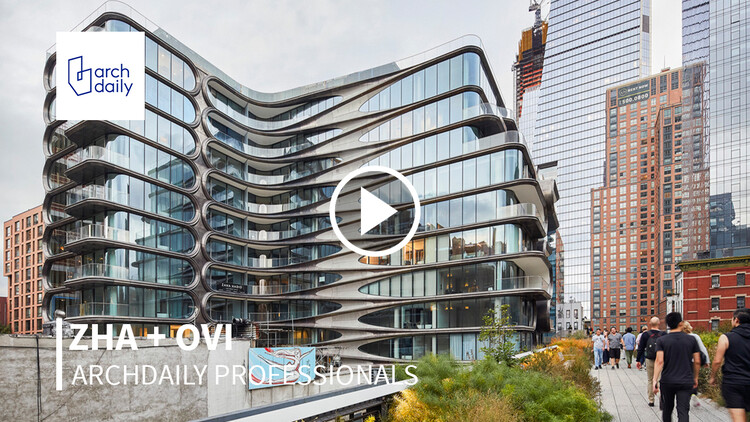
With more than 900 projects in over 40 countries, every project that Zaha Hadid Architects designs and builds has an impact on the narrative of contemporary architecture. At ArchDaily, we know that each architectural project has a team of professionals behind it which makes it possible. In this edition of the ArchDaily ProfessionalsVideo Interviews, we talked to Johannes Schafelner, associate director at Zaha Hadid Architects, and Enrique Peiniger, founder of OVI-Office for Visual Interaction about their long-standing collaboration in projects merging design and lighting.
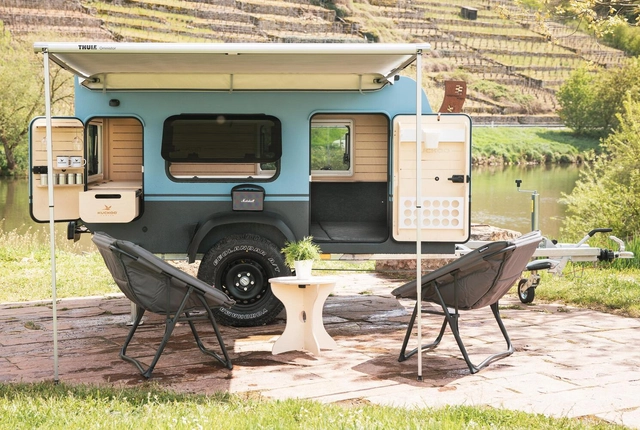
The Design Center Baden-Württemberg has opened the call for submissions for the 2023 edition of its Focus Open International Design Award. As a non-commercial design prize, the Focus Open offers particularly low barriers to participation thanks to its moderate fees, while providing a high level of visibility from which, in the event of an award, smaller agencies, design studios and companies, in particular, can benefit. Entries can be submitted in a total of 14 categories including Bathroom, Kitchen, Light, Mobility, Investment products, Sport and Mobility.
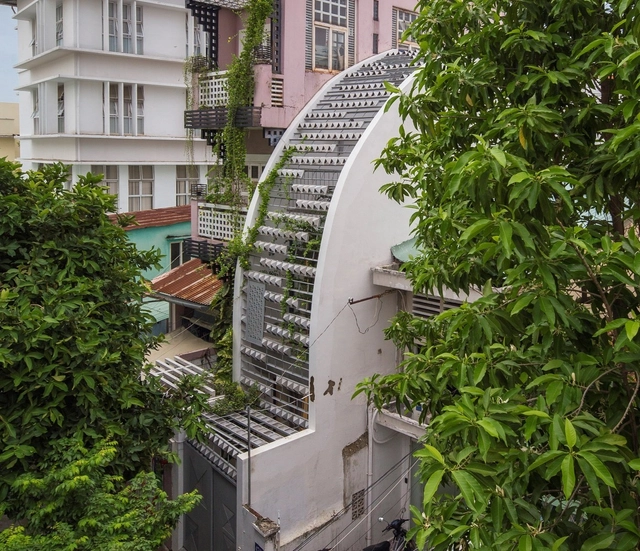
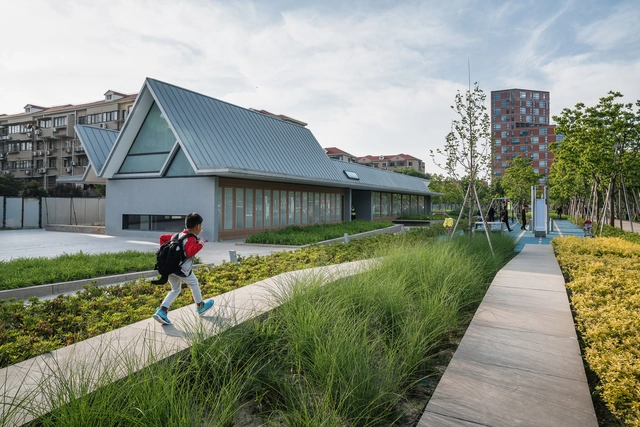
Walking down the streets of cities like Hanoi and Saigon in Vietnam, you might encounter houses with surprisingly narrow facades in contrast to the stacking of three to five floors, with windows for ventilation and natural light only on the front facade. These are the famous traditional Tube Houses. According to ancient popular culture, this type of housing emerged due to property taxes being based on the width of the facade, but the true reason is to optimize land use, allowing a larger number of plots in the same square.
However, this legacy is now being recreated in contemporary designs by Vietnamese architects. Old facades give way to innovative solutions featuring atriums for natural lighting and ventilation, courtyards and interior gardens, greenery incorporated into different environments, split-levels, etc., allowing for high-quality spaces. With that in mind, we have put together a selection of Tube Houses, together with their respective section drawings. Check out below:
I've been designing websites since 1997, and in that time, websites have changed quite a bit. With all the changes over the years, it's no surprise that I often find some firm owners don't understand how architecture website design really works. While you might know a bad website when you see one, you might not understand what makes a good site work. This article will change that.
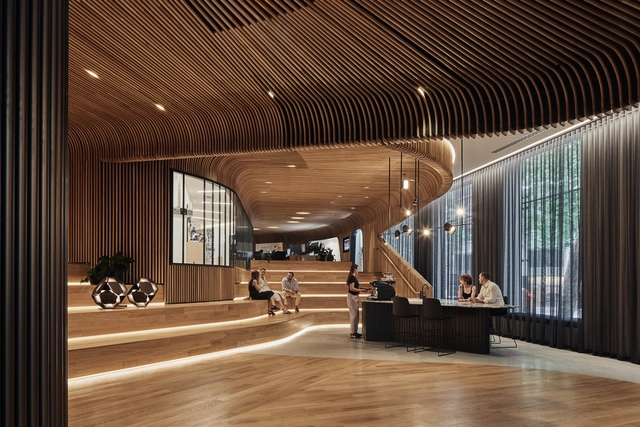
Envisioned by the architectural pioneers at Woods Bagot, the Sculptform Design Studio was the recipient of the prestigious Best Small Workplace Award at the recent World Architecture Festival 2022. The space is an immersive tactile experience and has become a gathering space for the wider architecture industry. The design evokes the bespoke timber and aluminium products, craftsmanship and the custom detailing they are known for.
Sculptform and Woods Bagot set a new standard for the reciprocity that can exist between client and architect and showcases the limitless potential when a design team is truly immersed in materiality. Blurring the line between retail space and installation, it is a brilliant ‘working showroom’ case study for just how impactful design can be when local manufacturing and quality craftsmanship come together.
World Wetlands Day is celebrated every February 2nd to raise awareness of wetlands. This day also marks the anniversary of the Wetlands Convention, adopted as an international treaty in 1971. Its enactment is because nearly 90% of the world's wetlands have been degraded since 1700, decimated three times faster than the forests. However, they are essential ecosystems that contribute to biodiversity, climate mitigation and adaptation, freshwater availability, world economies, and much more.
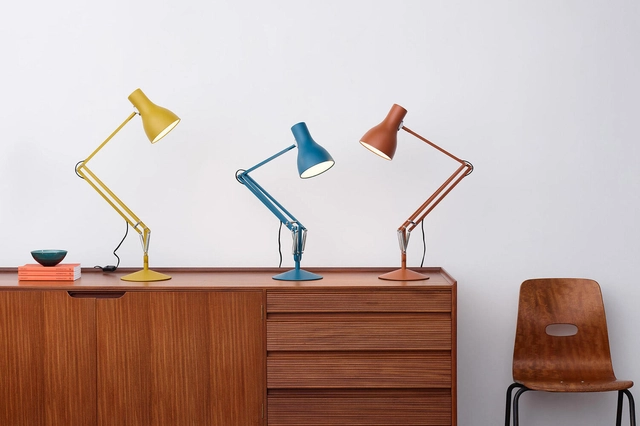
Founder of the balanced-arm design, the Anglepoise lamp holds the weight of its head with attached springs. Image Courtesy of Anglepoise
"You’ve got a friend in me…" sings Randy Newman, in the Oscar-winning toy-box-fearing romp, Toy Story. But although the song refers to the relationship between a young boy and his favorite toys, it could equally apply to another of Pixar Animation’s most iconic characters, the loveable Luxo Jr, seen hopping around the studio’s production logo.
Combining a stable base with an independently moveable arm and head may make anthropomorphic desk lamps more functional, but while size, position, brightness, temperature, and the adjustability of all of the above are important features, what you really look for in someone to share a desk with, is a friend. Here are some of the friendliest desk light characters.