The Second Studio (formerly The Midnight Charette) is an explicit podcast about design, architecture, and the everyday. Hosted by Architects David Lee and Marina Bourderonnet, it features different creative professionals in unscripted conversations that allow for thoughtful takes and personal discussions.
A variety of subjects are covered with honesty and humor: some episodes are interviews, while others are tips for fellow designers, reviews of buildings and other projects, or casual explorations of everyday life and design. The Second Studio is also available on iTunes, Spotify, and YouTube.
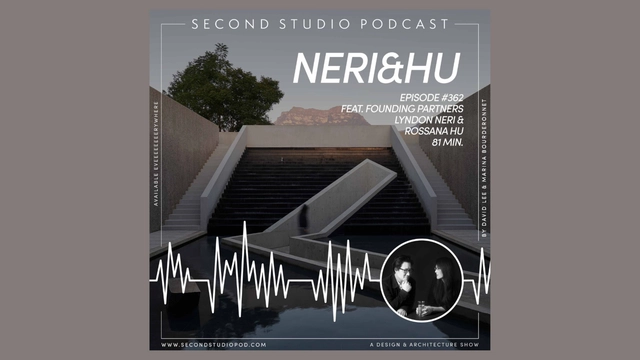
This week David and Marina of FAME Architecture & Design are joined by Architects Lyndon Neri and Rossana Hu, founding partners of Neri&Hu Design and Research Office, to discuss their upbringing, moving to the United States in their youth; meeting at Berkeley; studying and teaching Architecture; moving to China; starting their office together; running a multi-disciplinary office; their philosophy; and more.
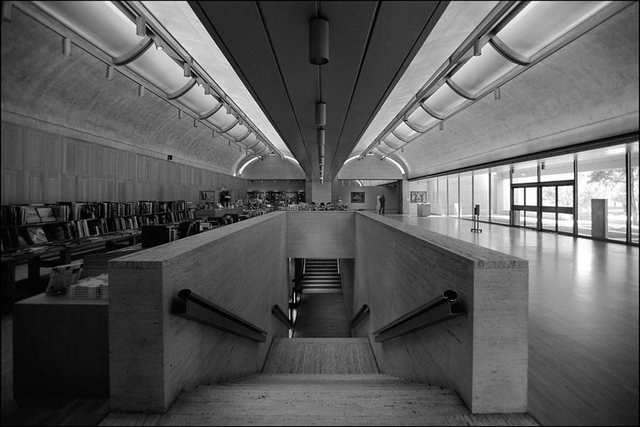
Kimbell Art Museum / Louis Kahn. Image Courtesy of Xavier de Jauréguiberry
AD Classics presents you with some of the greatest buildings of the past that have influenced and shaped architecture today. Throughout ArchDaily's 13 years, more than 200 classics were published, and for this edition, we have rounded up the top 20 most visited Architecture Classics to date.
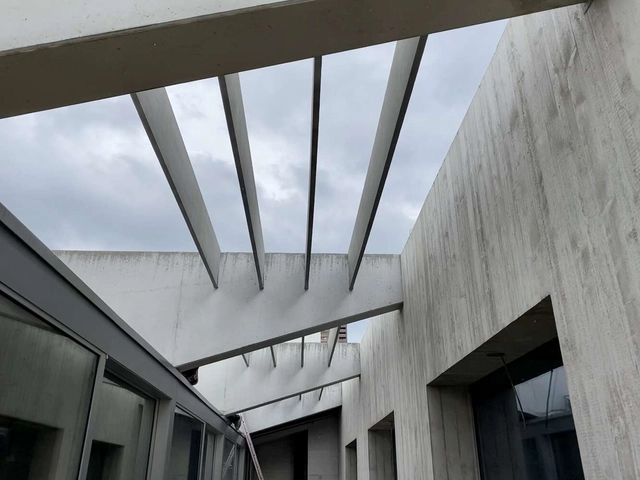
CPC concrete slabs are based on the technology of "carbon pre-stressed concrete," which originated from a long-term research project conducted by the Zurich University of Applied Sciences Winterthur (ZHAW) and Silidur AG, Andelfingen. These panels are reinforced with thin, pre-stressed carbon strands, allowing them to be three to four times thinner and lighter while maintaining the same load-bearing capacity as traditional reinforced slabs.
CPC's innovative approach to concrete panel production reduces material usage by 75% and minimizes the carbon footprint of concrete production. ArchDaily interviewed Professor Josef Kurath from the Department of Architecture Design and Civil Engineering at the Zurich University of Applied Sciences (ZHAW), who collaborated with CPC Construction in developing these concrete panels. We discussed his perspectives on decarbonizing architecture, the inspiration behind the development of CPC panels, a comparison with traditional concrete, and the potential for scalability and accessibility in the future.
The ICONIC AWARDS 2023: Innovative Architecture –awarded by the German Design Council– honors the best achievements in architecture, pioneering interior and product design, outstanding brand communication and a particularly innovative use of materials in the architecture sector. The winners are examples of design excellence and inspiring solutions for current challenges. The international jury of experts emphasizes the importance of visionary design that is not only aesthetically inspiring but also ecologically and socially influential.
From 620 submissions from over 30 countries, the jury selected 62 pioneering projects for the “Best of Best” award. In addition, the special prizes “Architects of the Year”, “Interior Designer of the Year” as well as the honorary prize “Architects’ Client of the Year” were awarded. The award winners were honored at the BMW World in Munich on 4 October, 2023.
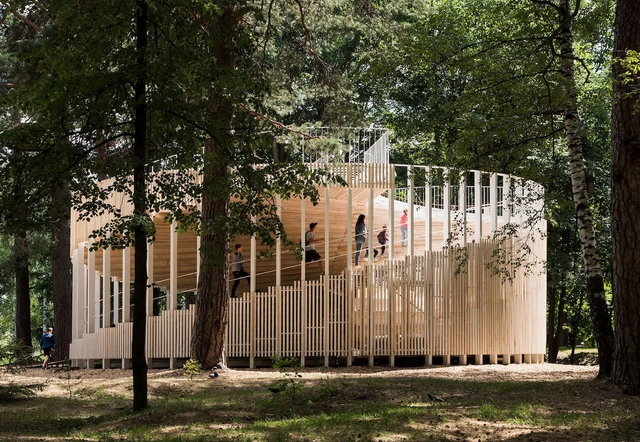
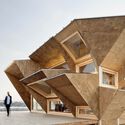
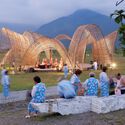
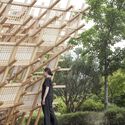
Throughout the modern era, pavilion architecture has consistently reflected cutting-edge architectural trends. These temporary or semi-permanent structures, often featured in exhibitions, fairs, cultural events, and sports gatherings, provide a platform for exploring new materials and design concepts. Pavilion designs are intended for easy assembly and disassembly and are typically used for short durations, making it crucial to consider reducing environmental impact without sacrificing aesthetics and innovation. In this endeavor, wood emerges as a key ally.
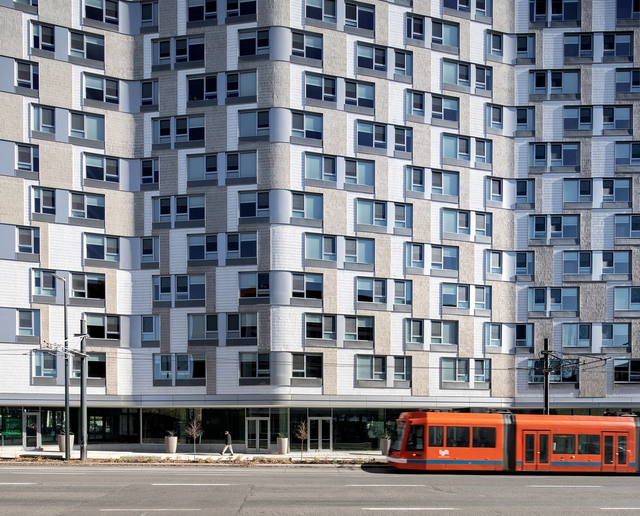
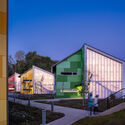
Despite the bad reputation of public housing in the United States, organizations, planners, and architects in Portland, Oregon are determined to create affordable housing that does not sacrifice quality or aesthetic appeal. While Portland has developed a bad reputation regarding its homelessness problem, in the past four years resources have flowed in the right direction, and designers have taken this in stride to design livable and striking buildings, within very restrictive budgets. Through innovative and creative approaches to construction and design, these organizations and designers have utilized federal, state, and city resources to make these types of projects a reality.
The phrase “Demography is destiny” is repeated more than once in Smaller Cities in a Shrinking World (Island Press). This new book by noted urban researcher Alan Mallach tackles, in meticulous and fascinating detail, the “wicked problem” of shrinking cities in the U.S. and across the globe. But it’s not only our cities that are shrinking—the countries that contain them are, too. I spoke with Mallach about the imperative of planning for this new demographic reality.
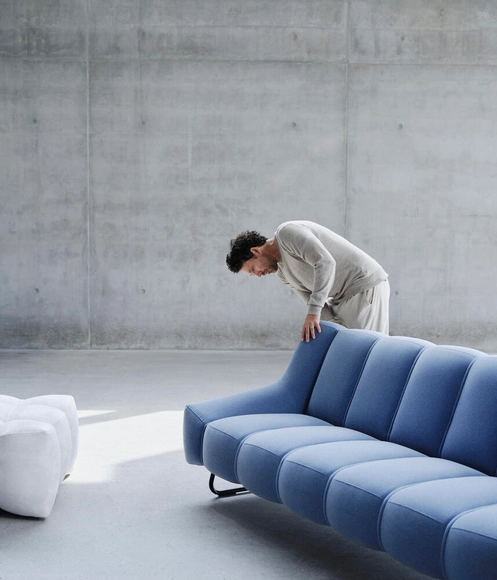
Designer and head of products at BIG, Jakob Lange, interacting with one of the sofa designs from the new Nawabari collection. Image Courtesy of BoConcept
The new furniture collection Nawabari is the manifestation of a shared vision. At the outset of the creative collaboration between furniture designers BoConcept and architecture office BIG, both parties sat down to share their insights and understandings of what today’s consumers need and how to create optimal social and living spaces.
The small town of Illueca lies in a rift valley, flanked by the massifs of the Sierra de la Virgen and Sierra de la Camamila mountain ranges, which run close to the Moncayo Nature Reserve (Zaragoza, Spain). It is in this setting that Permán & Franco Architects Studio have built a primary-care health center, with a distinctive design and ventilated façade by Faveker.
The Illueca Health Centre stands in a new development area of the town, providing the region with healthcare services, including 11 nearby towns and villages. It was built on an almost 1,400 m2 plot of land featuring an over two-meter drop between the entrance at street level and the land used as a base for the building.
In many cases, when working on a renovation project within an old building, architects often encounter segmented floor plans, spaces without natural light, and complex layouts that hinder the seamless flow required in modern living. Consequently, architects typically opt for targeted demolition, removing specific walls during renovations. This solution can address several of the problems encountered but demands meticulous planning to ensure the structural integrity of the building. When it comes to scenarios like these, structural reinforcement is one of the most commonly employed methods.
Sustainable construction certifications can play a crucial role in mitigating climate change by establishing solid criteria to foster ecologically responsible practices in the construction industry. They not only give public visibility to industry-accepted standards and monitor performance, ensuring compliance with regulations, but also stimulate the reduction of negative environmental impacts while rewarding buildings that fulfill strict sustainability standards. By establishing higher levels of excellence in projects and constructions, these certifications influence the evolution of construction codes, training professionals, and even changing corporate strategies.
Archaeological findings suggest that the Great Bath of Mohenjo-Daro, the "oldest public water tank in the world," was constructed during the 3rd millennium BC. The significance of this impressive millennia-old structure is unknown, but it is generally believed to be linked to some form of purification ritual of the mysterious Harappan Civilization in the Indus Valley —the first civilization to develop urban planning. Indeed, throughout history, water has consistently captivated human fascination, from ancient ceremonial practices to the modern leisure and sports pools we see today. Whether situated indoors or outdoors, these structures represent a fusion of architectural design and landscape. However, it's no secret that establishing, operating, and maintaining pools involve substantial financial commitments. Every phase of the construction process, from the initial foundations to the meticulous steps of waterproofing, plastering, tiling, and the intricate installation of mechanical and electrical systems, requires significant investment and attention to detail. Therefore, the use of top-tier materials, cutting-edge technical equipment, and the highest level of skill is not merely advisable but absolutely essential.
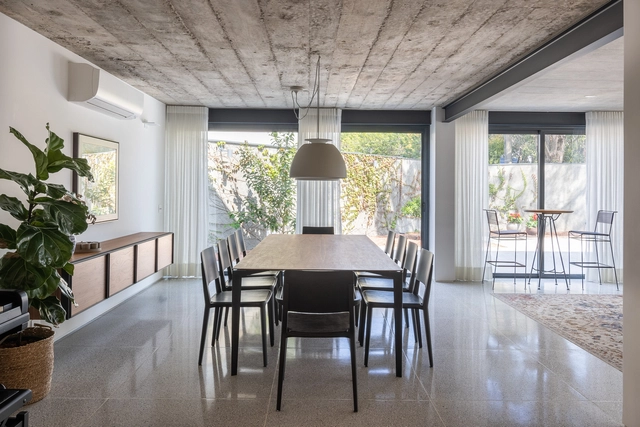
The layout of interior spaces has been in constant evolution since the very first residential project. For many years, functionality dictated how they're are organized, but soon after, cultural, social, and economical changes influenced the way people design their living space, bringing about the spacious and versatile open floor plan. A lot has been written - and critiqued - about the open floor plan: who introduced it, how it was developed, its benefits, and/or lack thereof. During the past couple of decades, open floor plans were perhaps among the most requested interior design concepts, but today, architects are leaning towards the opposite.
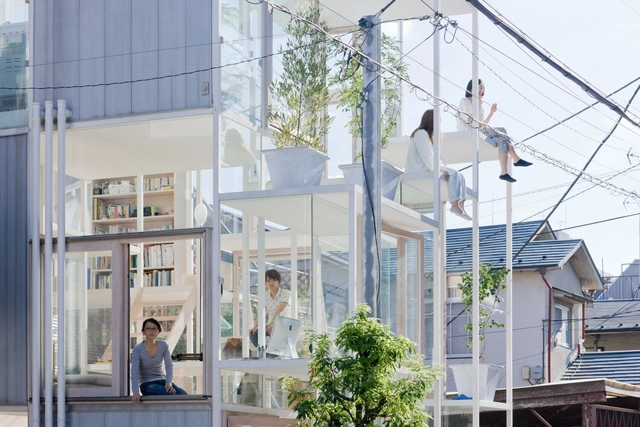
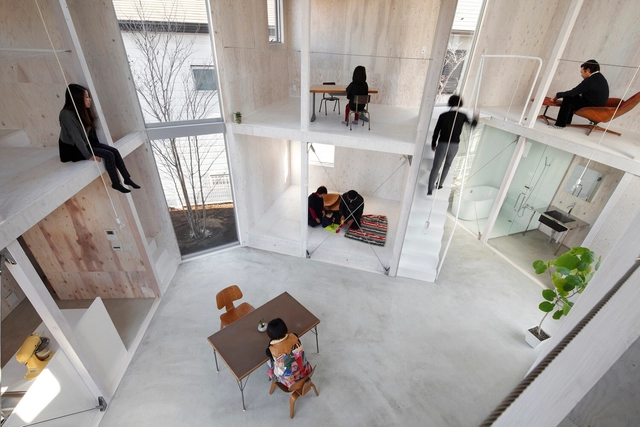
House in Kashiwa / Yamazaki Kentaro Design Workshop. Image Courtesy of Naoomi Kurozumi Architectural Photographic Office
Similar to a chameleon that changes color to blend in with its environment, architecture must constantly evolve and adapt to changing demands. A few decades ago, homes used to be associated solely with private life and rest, while workspaces were exclusively designed for just that: work. It was common for each use to be separated into its own room, making enclosed, rigid spaces the standard norm for architects to follow. That is, of course, until new living and working patterns blurred these boundaries to respond to contemporary trends.
Will Artificial Intelligence replace architects in their roles? In the May 2023 edition of Building magazine, Thomas Lane suggests that AI has the potential to automate up to 37% of the tasks typically carried out by architects and engineers. This automation, though, is likely to target routine and less creative tasks, allowing professionals to concentrate on more strategic and imaginative aspects of their work.
Just as Revit and 3D software did not replace architects but only transformed their workflows, the same principle holds for AI tools. AI is poised to bring about new tasks, such as AI management, alongside existing responsibilities, signaling a shift in how architects work.
Oana Stănescu is a Romanian architect, designer, writer, and educator, based in New York and Berlin, with a diverse portfolio of interventions around the world. Selected as part of 2023 New Practices by ArchDaily, the young architect recognizes the value of architecture as a discipline, but nevertheless acknowledges that architecture cannot single-handedly resolve the complex challenges of our world. “Architecture is most powerful when recognized as part of a larger system, rather than being solely self-serving”, she adds in her conversation with ArchDaily’s Managing Editor, Christele Harrouk. In this way, Oana views architecture as a key player in a broader context, working to address significant societal issues.
With several ongoing projects, from the rehabilitation of an existing industrial infrastructure in Romania, to an integrated house within its natural environment in Canada, Oana’s creative process is centered on a commitment to serve people. Watch the full interview and discover below key insights from the conversation.
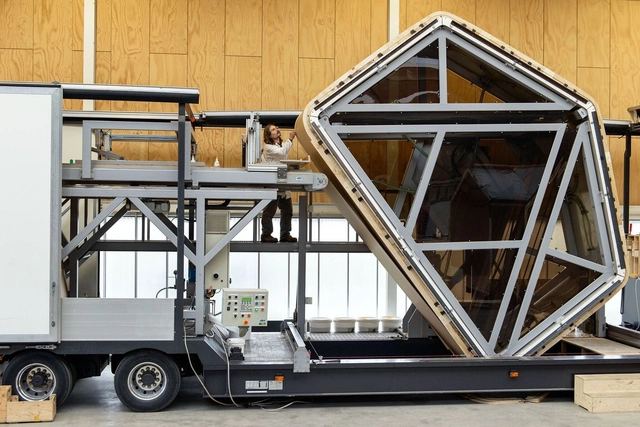
Modular Eco-Housing . Image Cortesia de Yvonne Witte
When we talk about technology, we often think of robots, supercomputers, data centers or smartphones. But technology also refers to the invention of the first chipped stone tools or the development of the steam engine, which brought about the first Industrial Revolution. The term comes from the combination of the Greek words techne (art, craft) and logos (word, speech) and is nothing more than the application of knowledge to achieve goals in a specific and reproducible way, for practical purposes. In the construction industry, which moves large amounts of resources and people, more technology means incorporating new methods, tools, automation and software that can improve efficiency. As a historically innovation-resistant industry, the construction sector has a huge impact on the environment due to its carbon emissions and exploitation of raw materials. However, as it turns to the digital world, builders have seen technology as a means to optimize practices and identify, build, and manage their projects.
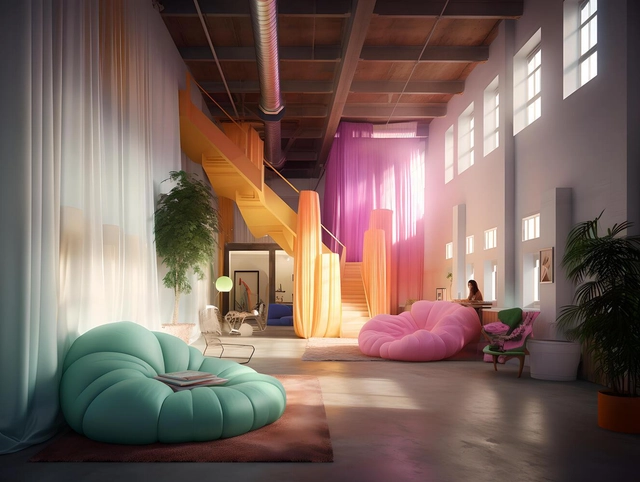
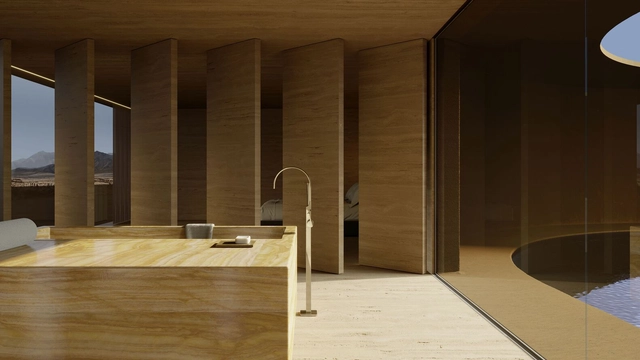
Inspiring applications of the MEM collection in architectural settings inspired by AI. Image Courtesy of Dornbracht
In addition to contributing to the functionality of the space, bathroom fittings underlie the overall aesthetics of a chosen design style. Within their technical features –as well as the possible materials, finishes, and styles–, fittings play a role in both the visual appeal of a space, while also focusing on comfort and user experience. This is part of Dornbracht's continuous re-imagination of bathrooms as living spaces, in which the brand seeks to create innovative solutions based on proportion, precision, progressiveness, performance, and personality.
Among Dornbracht’s series, the MEM collection includes a complete selection of minimalist bathroom fittings for washstands, showers, and tubs. In collaboration with ethical design brand Nature Squared and Italian craft manufacturer Glass Design, the collection’s original design has been enriched with versatile new features for customizing bathrooms. These features are created through the combination of high-quality materials with sustainable craftsmanship and the incorporation of futuristic artistic crystal glass.







.jpg?1570002957 "La Muralla Roja / Ricardo Bofill. Image Courtesy of Ricardo Bofill")