Although societies have transformed through the ages, wealth never truly seems to go out of style. That said, the manner in which it is expressed continually adapts to each successive cultural epoch. As a consequence of evolving social mores and emerging technologies, the ideal of “luxury” and “splendour” sees priorities shift from opulence to subtlety, from tradition to innovation, and from visual ornamentation to physical comfort.
AD Classics are ArchDaily's continually updated collection of longer-form building studies of the world's most significant architectural projects. In these ten examples of "high-end" residences, which represent centuries of history across three separate continents, the ever-changing nature of status, power and fine living is revealed.
A feature Instagram users have spent years longing for is finally here: Zoom. Just released today, the update to the iOS app finally will allow you to pinch to zoom in on photos and videos, just like you can in most photo viewing apps (no more screenshotting necessary!). This means you can now get a closer look at the architectural details of your favorite buildings on Instagram, from doorways to moldings to joints. Though be warned, just because you can make it bigger doesn’t mean it will necessarily be clearer - Instagram still will only support images 1080 pixels wide.
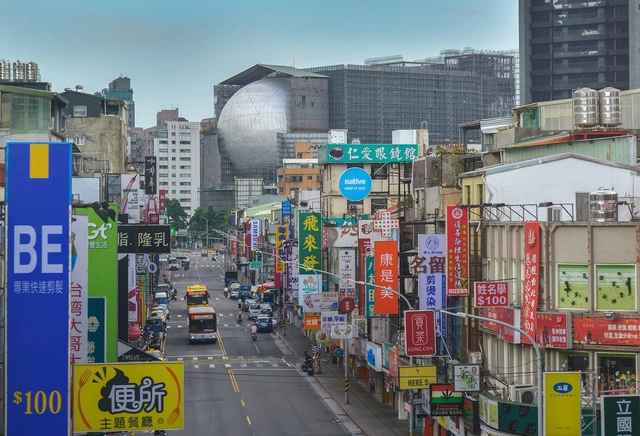
The scaffolding obscuring the facade of OMA’sTaipei Performing Arts Center has begun to come down, exposing the aluminum exteriors of the spherical Proscenium Playhouse and the Multiform Theatre for the first time. Upon completion, the experimental building will feature a looped public pathway, flexible auditoriums and unique stage environments. Construction on the building is now moving full speed ahead, with an expected opening date in June 2017.
Continue on for more images of the in-progress building.
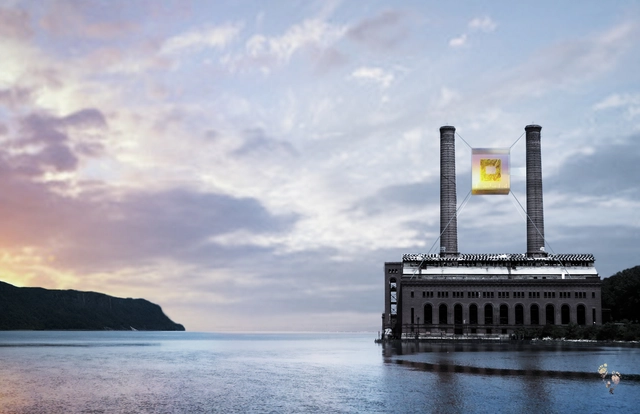
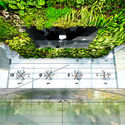
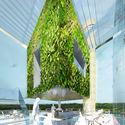
New-York-based Big Foot Developers have unveiled speculative designs for The Floating Restaurant, a glass cube restaurant that could hang between two smokestacks at the historic Glenwood power plant over the Hudson River in the Yonkers neighborhood of New York City.
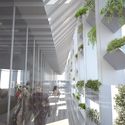
With forest on the riverbank, the water below, and green space inside the restaurant, the project aims to blend architecture and nature while having a minimal impact on the view of the site.
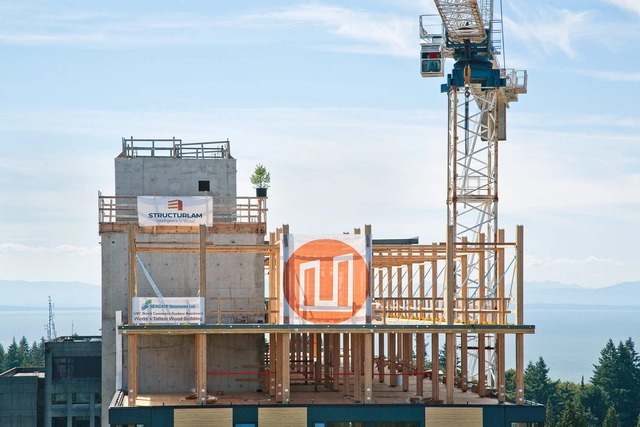
The world's tallest timber tower has topped out this week, standing 53 meters high in the Vancouver skyline. The 18 story building, designed by Acton Ostry Architects, began construction in November 2015 and has since opened the floodgates for a new wave of mass timber towers. The building, which has been erected at record speed, will house 404 students as the Brock Commons Student Residence at the University of British Columbia (UBC). Offsite-production and the careful coordination of trades saw it rise at a rate of two floors per week, with the official completion set for mid-2017.
Burning Man 2016 is underway in the temporary city of Black Rock City, Nevada – meaning for one week, thousands of festival goers will romp through the desert taking pictures of the hundreds of art and architectural installations constructed for the event. This year's theme is "DaVinci's Workshop," inspiring sculptures based off the artist's famous inventions and artworks, including a large-scale interpretation of the Vitruvian Man on a circular frame.
Read on to see some of the best structures and installations found at Burning Man 2016.
Courtesy of Flickr user Flemming Ibsen under CC BY-NC 2.0
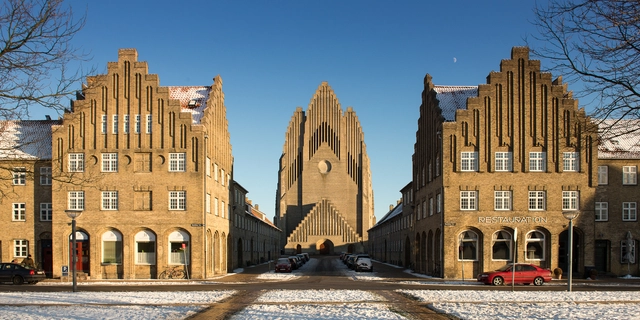
Religion, in one form or another, has formed the core of human society for much of our history. It therefore stands to reason that religious architecture has found equal prominence in towns and cities across the globe. Faith carries different meanings for different peoples and cultures, resulting in a wide variety of approaches to the structures in which worship takes place: some favor sanctuaries, others places of education and community, while others place the greatest emphasis on nature itself. Indeed, many carry secondary importance as symbols of national power or cultural expression.
AD Classics are ArchDaily's continually updated collection of longer-form building studies of the world's most significant architectural projects. The collection of sacred spaces collated here invariably reveal one desire that remains constant across all faiths and cultures: shifting one’s gaze from the mundane and everyday and fixing it on the spiritual, the otherworldly, and the eternal.
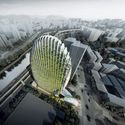
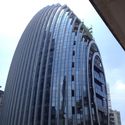
Aedas has released new renderings and photos of Lè Architecture as the 18-story building approaches completion. Inspired by the form and striations of river pebbles, the office building will provide a unique work environment along the Jilong River and will mark an important milestone in the revitalization of the Nangang District of Taipei.
Italian Prime Minister Matteo Renzi has asked architect Renzo Piano to lead in the reconstruction of the central Italian towns devastated by last week’s magnitude 6.2 earthquake that claimed the lives of at least 290 people. Renzi announced a national action plan for recovery and risk prevention on Monday after meeting with Piano to discuss strategies for housing the over 3,000 displaced survivors and rebuilding the historic towns in a manner that would mitigate damage caused by future seismic activity.
“We have to act quickly, with the utmost urgency,” said Piano in a telephone interview with The Guardian. “Anti-seismic requirements must be inserted in the laws of the country to make our homes safe, just as it’s compulsory for a car to have brakes that work.”
With recent streamlining and increased flexibility of architectural licensing programs, the time it takes to earn a license has decreased for the seventh year in a row, and the average age of licensure has concurrently dropped. On average, it takes just over 13 years to become an architect, from the time a student enrolls in school to the date they receive a license.
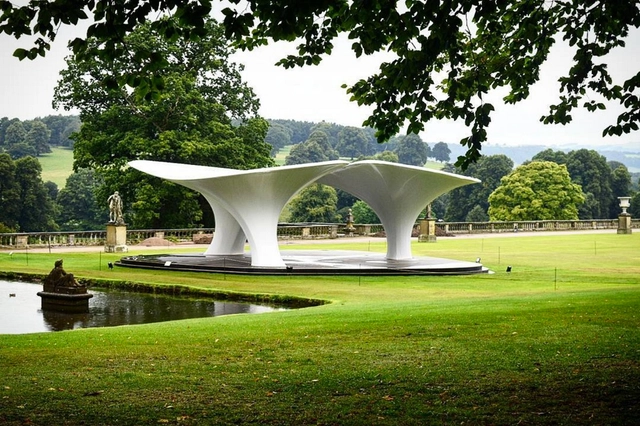
Lilas, Zaha Hadid Architects’ design for the 2007 Serpentine Gallery pavilion, has been reinstalled at a new location on the south lawn of Chatsworth House, the Derbyshire home of the Duke and Duchess of Devonshire. The mushroom-like pavilion has been put on display as part of Sotheby’s annual Beyond Limits sculpture exhibition, and is for sale through the international auction house.
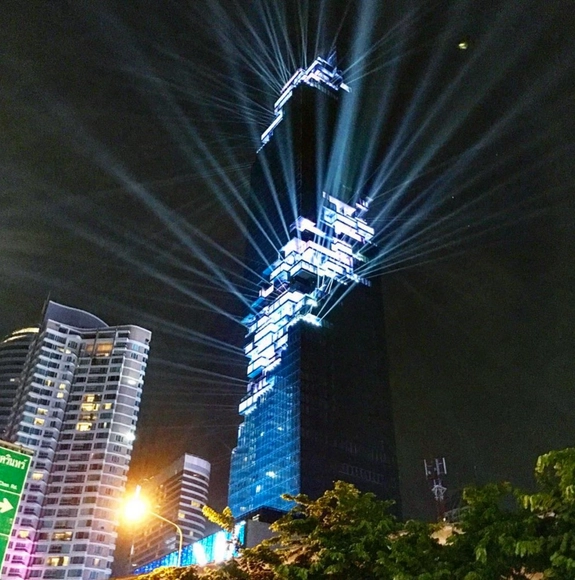
Thailand’s new tallest building, MahaNakhon, has opened to the public with a spectacular light show highlighting the pixelated-design of the 314 meter tall building. Designed by Büro Ole Scheeren, the 77-story mixed-use skyscraper contains space for a hotel, retail, bars, restaurants and an observation deck, as well as 200 condominium units managed by Ritz-Carlton Residences with unparalleled views out onto the Bangkok skyline and beyond. The building’s distinct appearance is created through carving a pixelated spiral up the building, creating “an architecture that encloses and protects its inhabitants while revealing the inner life of their city.”
Continue for more images of the completed building.
Wood has always been one of the essential materials used in construction, and with the ongoing trend of timber-framed tall buildings, it has become more important than ever to be conscious of the impacts on the environment from the types of wood we source.
Currently, there exist more than 50,000 tropical timber species in the world, yet only a small percentage of those are utilized in construction projects. This has led to the exploitation of the more well-known timber species, altering the diversity of the world’s tropical forests and putting those species in danger of disappearing completely. But what if we began building with the full range of species available to us?
From architectural lectures to coverage of local projects and events, The Architectural League of New York presents a wide range of topics through its video series to further its goal of advancing the art of architecture. Through this presentation of some of the world’s most interesting and influential architects, designers, and works, The Architectural League draws international audiences to help shape the future of the build environment by stimulating discussion and provoking design-based thinking.
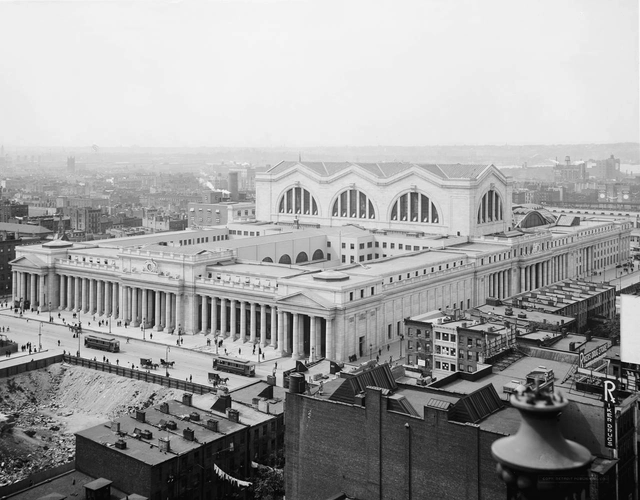
Courtesy of Detroit Publishing co. via US Library of Congress (Public Domain)
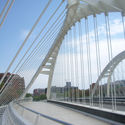
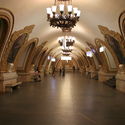
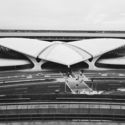
Architecture inherently appears to be at odds with our mobile world – while one is static, the other is in constant motion. That said, architecture has had, and continues to have, a significant role in facilitating the rapid growth and evolution of transportation: cars require bridges, ships require docks, and airplanes require airports.
In creating structures to support our transit infrastructure, architects and engineers have sought more than functionality alone. The architecture of motion creates monuments – to governmental power, human achievement, or the very spirit of movement itself. AD Classics are ArchDaily's continually updated collection of longer-form building studies of the world's most significant architectural projects. Here we've assembled seven projects which stand as enduring symbols of a civilization perpetually on the move.
Satellite Architects have designed a pixelated facade for Designjunction temporary exhibition space at Cubitt House in Kings Cross, London. The facade combines natural and artificial elements by wrapping a reflective, gridded screen on top of a second screen of trees and bushes, allowing the foliage to peek through.


.jpg?1472236051&format=webp&width=640&height=580)


.jpg?1472236051)
.gif?1472762798)












.jpg?1472177596&format=webp&width=640&height=580)


