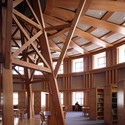
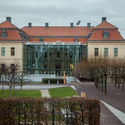
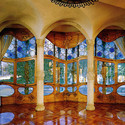
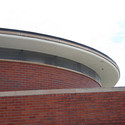
With its simple geometry and classical arrangement, Stockholm’s Public Library is a difficult building to characterize. Designed by noted Swedish architect Gunnar Asplund during the 1920s, the library is the physical manifestation of a transitionary period in both the rationale of its designer and the shifting values of European architecture. The ultimate result is a deceptively complex synthesis of styles presented in a visually straightforward package: the fading influence of Neoclassicism juxtaposed against the emergence of Rationalism.
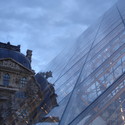
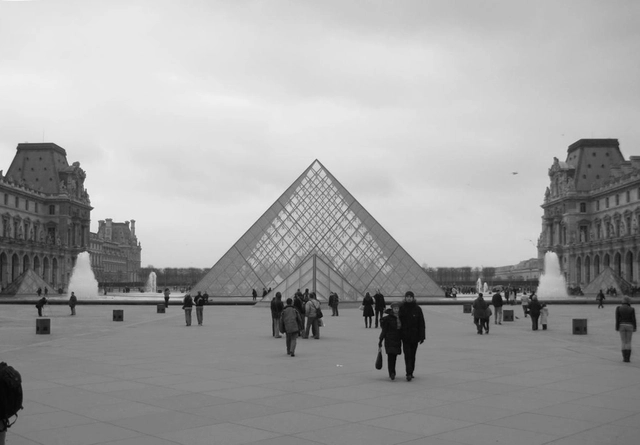
In 1981, the newly elected French president, Francois Mitterrand, launched a campaign to renovate cultural institutions throughout France. One of the most advantageous of those projects was the renovation and reorganization of the Louvre.
























.jpg?1441138553&format=webp&width=640&height=580)
.jpg?1441138106 "© Laurian Ghinitoiu")
.jpg?1441138131 "© Laurian Ghinitoiu")
.jpg?1441138429 "© Laurian Ghinitoiu")
.jpg?1441138529 "© Laurian Ghinitoiu")
.jpg?1441138553)