

The Water / Cherry House by Japanese firm Kengo Kuma Associates is located on a cliff along one of Japan's many beautiful coastlines. The home is a series of separate enclosures connected by open-air walkways that run between water and rock landscapes, fusing interior and exterior spaces into one. Various screens in the house can be opened to further connect living spaces with the outdoors, exposing panoramic vistas onto the home's lush, peaceful surroundings to create a structure that is truly in tune with its natural environment. Check out this video by JA+U for a tour!
Architecture News
Video: Water / Cherry by Kengo Kuma Associates
https://www.archdaily.com/339130/video-water-cherry-by-kengo-kuma-associatesBarbara Porada
A Candid Conversation with Frank Lloyd Wright
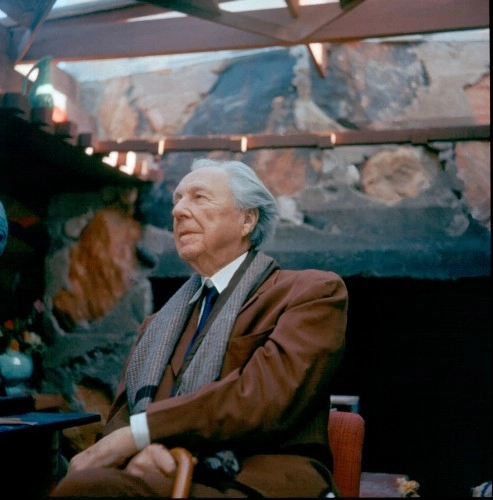
If you only know Frank Lloyd Wright for his classic works - Fallingwater and the Guggenheim among them - and not for his bristly personality, then you're in for a treat.
WNYC has just released a candid interview they recorded with Wright in 1957, two years before his death, in his Plaza Hotel apartment (where he’d moved to oversee construction of the Guggenheim, which he'd been working on for 14 years). The conversation covers a wide range of topics - from Wright's quirky personal views on American culture to the significance of architecture for mankind. Some gems from the interview include:
On the Guggenheim and its critics: “You’re going to be awakened to the beauty of that thing [a picture, a painting] from a new point of view. And it’s going to be so enlivening and refreshing, that it will make some of these painters quite ashamed of the protest that they issued against it.”
More quotes from Frank Lloyd Wright, after the break...
https://www.archdaily.com/338698/a-candid-conversation-with-frank-lloyd-wrightVanessa Quirk
Should President Obama Create U.S. Department of Cities?

Author Richard Florida of the NY Daily News made an argument in his “Obama, build a lasting urban legacy” article that President Obama should create a new federal department at the cabinet level called the Department of Cities. Although the President has listed many issues that he would like to focus on in his second term, such as immigration, gun control and climate change, an initiative to create a more promising future for American cities could define the President's term and leave a lasting impression on the country.
The President made efforts in his last term to rethink and revitalize America's urban centers with the Office of Urban Affairs, created in 2009, but these efforts have gone largely unrewarded. Pair this with the existing Department of Housing and Urban Development, which is becoming increasingly out of date and irrelevant, and it's clear that Mr. President needs to rethink his approach. But despite the challenges that the Obama Administration faces, creating a Department of Cities to finally tackle the issues plaguing our most vital urban nuclei could be one of the most important and far-reaching moves he makes.
Read more about the future of our cities!
https://www.archdaily.com/339118/obama-to-create-u-s-department-of-citiesBarbara Porada
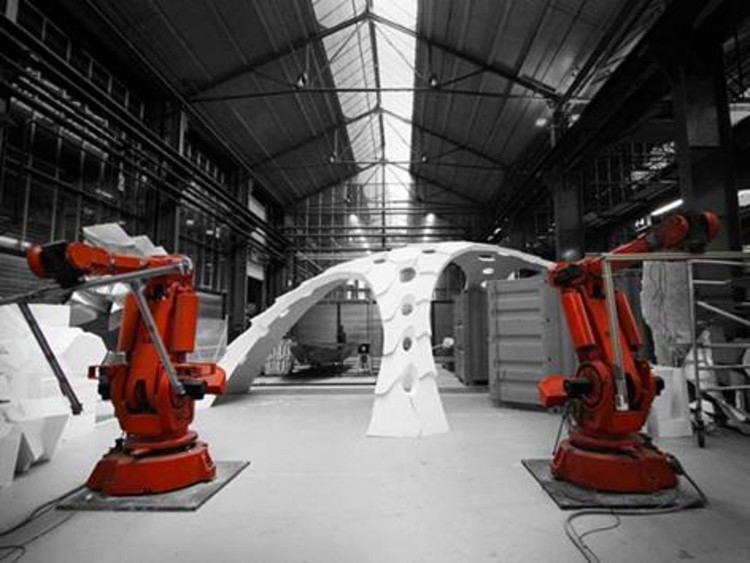
5 Robots Revolutionizing Architecture's Future
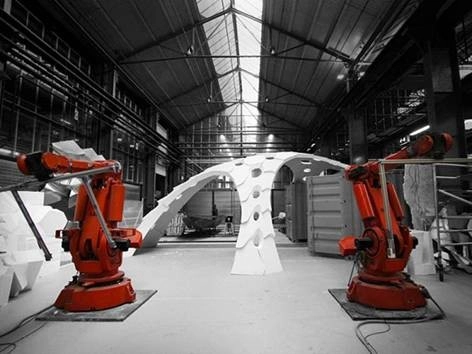
Robots fascinate us. Their ability to move and act autonomously is visually and intellectually seductive. We write about them, put them in movies, and watch them elevate menial tasks like turning a doorknob into an act of technological genius. For years, they have been employed by industrial manufacturers, but until recently, never quite considered seriously by architects. Sure, some architects might have let their imaginations wander, like Archigram did for their "Walking City", but not many thought to actually make architecture with robots. Now, in our age of digitalization, virtualization, and automation, the relationship between architects and robots seems to be blooming...check it out.
Keep reading to see five new robots making architecture.


https://www.archdaily.com/336849/5-robots-revolutionizing-architectures-futureJonathan C. Molloy
Where Does Zoning Fit Into Our Future City Planning?
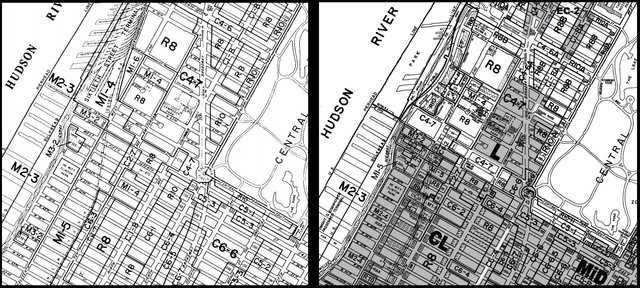
Let’s dump the word “zoning,” as in zoning ordinances that govern how land is developed and how buildings often are designed. Land-use regulation is still needed, but zoning increasingly has become a conceptually inappropriate term, an obsolete characterization of how we plan and shape growth. - Roger K. Lewis
Zoning, just over a century old concept, is already becoming an outdated system by which the government regulates development and growth. Exceptions and loopholes within current zoning legislation prove that city planning is pushing a zoning transformation to reflect the goals and needs of city building today and in the future. To determine how zoning and land use need to change we must first assess the intentions of future city building. Planners and architects, legislators and community activists have already begun establishing guidelines and ordinances that approach the goals of sustainability and liveability. The AIA has established Local Leaders: Healthier Communities through Design and has made a commitment to the Decade of Design: Global Solutions Challenge. NYC has come up with Active Design Guidelines: Promoting Physical Activity and Health in Design and its Zone Green initiative in regards to updating its zoning resolution. Philadelphia has augmented its zoning to include urban farms and community gardens. It is safe to assume that many other cities will follow this precedent.
https://www.archdaily.com/337042/where-does-zoning-fit-into-our-future-city-planningIrina Vinnitskaya
NBBJ's Samsung Headquarters Addition to Silicon Valley's Architectural Transformation

NBBJ's design for the new Samsung Headquarters in Silicon Valley will become one of the new buildings to relieve the the city of its dull, nondescript two-story office architecture that dominates the landscape and introduce a new culture of office environments with a little push from the architecture itself. According to the LA Times by Chris O'Brien this architectural endeavor is just one move to establish ground in the rivalry between Samsung and Apple, whose highly anticipated spaceship-like Foster + Partners-designed Cupertino Campus has made waves in the design community. Technologically innovative and influential companies like Samsung, Apple, Google, Facebook, and Nvidia have engaged in a cultural shift of the work environment to create a hospitable and creative community for its employees. The architecture of the campuses and offices introduced by each of these companies reflect the goals of an innovative business model that engages its employees in an innovative work environment that fosters collaboration and creativity.
See how the new Samsung Headquarters innovates office building design after the break.
https://www.archdaily.com/337225/nbbj-reveals-plans-to-extend-samsungs-silicon-valley-headquartersIrina Vinnitskaya
ULI Announces Finalist Teams for 2013 Student Urban Design Competition
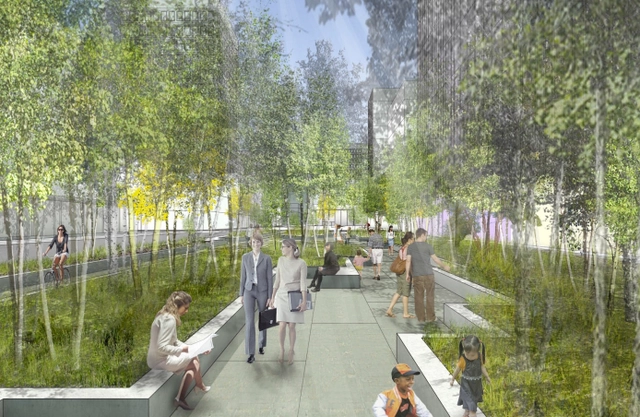
The Urban Land Institute (ULI) has selected the finalist teams in the eleventh annual ULI Gerald D. Hines Student Urban Design Competition. Graduate-level student teams representing Harvard University, Yale University, a joint team from Ball State University and Purdue University, as well as another join team from Kansas State University, the University of Missouri-Kansas City, and the University of Kansas are all advancing to the final round of competition, scheduled to take place in March and April. This year’s finalists were charged with proposing a long-term development plan for downtown Minneapolis that creates value for property owners, city residents, and the greater Twin Cities region.
https://www.archdaily.com/337447/uli-announces-finalist-teams-for-2013-student-urban-design-competitionKarissa Rosenfield
The Architecture Foundation and We Made That Launch "The Open Office"
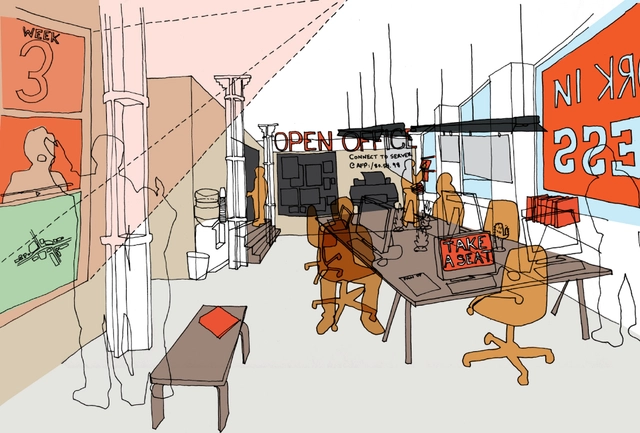
The Architecture Foundation has recently launched a month-long initiative named The Open Office. The scheme, which is described as “part 'Citizens Urban Advice Bureau', and part functioning practice” is the brainchild of London-based practice We Made That and will take place in the offices of The Architecture Foundation in Southwark, London until 22nd March. Operating on a walk-in basis, and displaying all work openly, The Open Office aims to engage and educate local communities on issues of architecture, urbanism and planning.
Read more about The Open Office scheme after the break.
https://www.archdaily.com/336164/the-architecture-foundation-and-we-made-that-launch-the-open-officeRory Stott
TED2013 Begins Today!

The latest incarnation of TEDTalks has finally arrived with TED2013: The Young. The Wise. The Undiscovered. This year's conference in Long Beach, California will host the largest number of speakers in TED history, more than 70, with more than half coming from TED's global talent search (which found "some truly astounding youngsters"). Another interesting change for this year? Many will present shorter speeches (most hovering about12 minutes, rather than the traditional 18) .
https://www.archdaily.com/336225/ted2013-begins-todayVanessa Quirk
Architecture in Space: NASA Seeks Architect's Opinion on Habitat Design for Astronauts
Currently in the California State Polytechnic University, Pomona, Interim Design Center parking lot, students are constructing a 30 foot experimental structure that expands on the notion of housing astronauts in space. Funded by the National Aeronautics and Space Administration (NASA), the year-long research and experimentation project challenges students to design a vertical habitat capable of housing four astronauts in space for a period of 60 days. Not only is this an extreme case of micro-living, but to design a living quarters with no orientation, where walls, floors and ceilings are non-existent, is unworldly.
More after the break...
https://www.archdaily.com/336844/architecture-in-space-nasa-seeks-architects-opinion-on-habitat-design-for-astronautsKarissa Rosenfield
Smithsonian Hires BIG to Rethink Historic D.C. Campus

The Smithsonian Institution has commissioned the innovative practice of Bjarke Ingles to reimagine the heart of its antiquated Washington D.C. campus. The Danish architect has agreed to an eight- to 12- month, $2.4 million contract to draft the first phase of a master plan that seeks to dissolve the notable impediments and discontinuous pathways that plagues the area.
More on this news after the break...
https://www.archdaily.com/336900/smithsonian-hires-big-to-rethink-historic-d-c-campusKarissa Rosenfield
The Indicator: A Rather Large Array
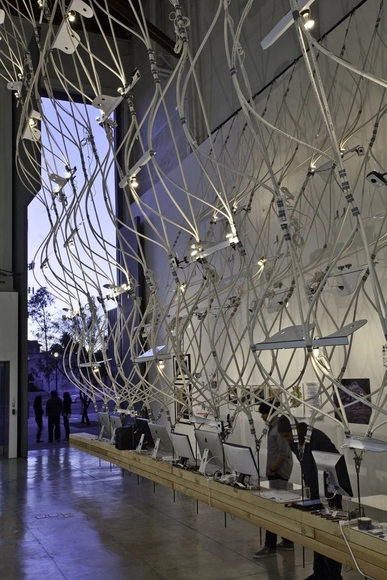
First, we have to get something straight. This is not the VERY Large Array. This is the RATHER Large Array, the Very Large Array’s much smaller, distant—and inexpensive—cousin and the flagship piece for Art Center College of Design’s 2011 exhibition, MADE UP: Design’s Fictions (curated by Tim Durfee with Haelim Paek).
The other thing is that while the Very Large Array still exists out in its Dune-like remote setting, spread across a giant “Y” configuration in the New Mexico desert, the Rather Large Array (RLA) has all but vaporized back into the production streams from whence its PVC tubing and hardware store components came from.
https://www.archdaily.com/335713/the-indicator-a-rather-large-arrayDiego Hernández
MIT’s Center for Advanced Urbanism Collaborates with AIA to Bring Research Solutions for Healthy Urban Futures

American Institute of Architects (AIA) and Massachusetts Institute of Technology’s (MIT) Center for Advanced Urbanism have announced a research collaboration to support AIA efforts through the Clinton Global Initiative (CGI), Decade of Design, a measure focused on improving the health of urban communities. As the global population continues to shift toward urban environments, urban conditions of the past century have become too outdated to address the increase in population and pollution. In order to advance the state of city liveability, professionals in the design and planning fields must reconsider how urban environments need to be designed to work optimally in regards to social, economic and health challenges. MIT's collaboration with the profession-based organization of the AIA allows the research of the school to reach the professional world for application and development.
https://www.archdaily.com/336077/mit-collaborates-with-aia-to-research-solutions-for-healthy-urban-futuresIrina Vinnitskaya
AD Recommends: Best of the Week
.jpg?1361828534&format=webp&width=640&height=580)

.jpg?1361828534)
https://www.archdaily.com/336511/ad-recommends-best-of-the-week-117Diego Hernández
Google Collaborates with NBBJ to Expand California Headquarters

One thing Google has become known for is their spectacular work environments. From playful employee lounges to environmentally sensitive design, the multifaceted internet giant has successfully transformed hundreds of existing spaces from around the globe into casual work environments that spawn innovation, optimizes efficiency, and boasts employee satisfaction. Much like many other California-based corporations, Google has been toying with the idea of building their own office space from scratch. Well, this dream will soon be realized, as the company has teamed up with Seattle-based NBBJ to expand their current, 65-building “Googleplex” in Mountain View, California, by adding a 1.1-million-square-foot complex known as “Bay View” on a neighboring 42-acre site.
More on Bay View after the break...
https://www.archdaily.com/336539/google-collaborates-with-nbbj-to-expand-california-headquartersKarissa Rosenfield
Seattle Leads the Way in Tracking Building Energy Use

Enthusiasm for water and energy data collection for commercial and residential buildings has been growing strong across the U.S. in major cities such as Austin, New York, Washington D.C. and San Francisco. It's no surprise to learn that Earth-friendly Seattle is ahead of the game when it comes to tracking its buildings; reports show that the city is receiving data for a whopping 87% of its commercial and multi-residential buildings over 50,000 square feet, which totals to 1,160 individual properties covering over 200 million square feet of the city.
https://www.archdaily.com/335844/seattle-leads-the-way-in-tracking-building-energy-useBarbara Porada
3-D Printing ProtoHouse 1.0 and ProtoHouse 2.0 / Softkill Design
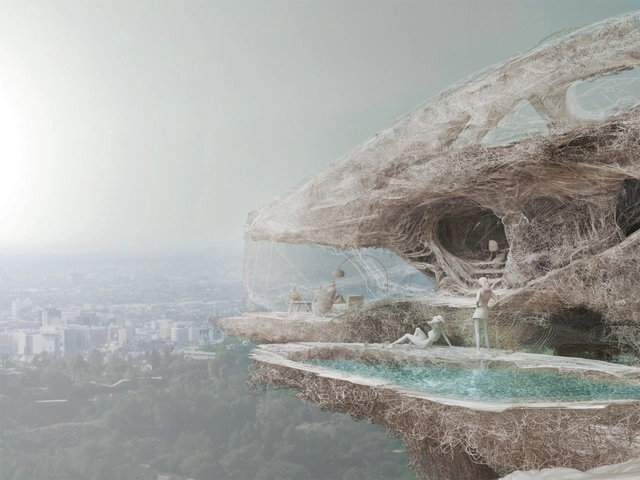
3-D printing technology has made immense leaps in the last few years as equipment and specialized programming has been refined to produced fully occupiable and usable spaces. In previous articles, ArchDaily has discussed the numerous advances in 3-D printing technology and their potential applications. 3d-printed dwellings on the moon made of sand via D-Shape, full-scale rooms via the KamerMaker and a personal printer for your kids called the MakerBot are just some speculative and experimental prototypes that have emerged from extensive research and development. The designers of the next experiment in 3-D printing is design group, Softkill Design, which includes Nicholette Chan, Gilles Retsin, Aaron Silver, and Sophia Tang within the Architectural Association School's Design Research Lab at the 'behavioral matter' studio of Robert Stuart-Smith. Last year Softkill Design completed ProtoHouse 1.0, a high-resolution prototype of a house printed at 1:33 scale. Research prototypes were generously supported by Materialise.
More details on the technology and images of ProtoHouse1.0 after the break.
https://www.archdaily.com/335887/3-d-printing-protohouse-1-0-and-protohouse-2-0-softkill-designIrina Vinnitskaya
Ten Points for Liveable Cities: Lessons from Singapore

Urban populations are expanding at an exponential rate as people are migrating to city centers where economic opportunities promise social mobility and access to education, health resources, and where employment is more abundant than in rural areas. Nations once considered in the "third world" are making leaps to accommodate growing populations with thoughtful considerations in designing these new urban capitals. Population trends have shifted considerable and have contributed to some of the densest urban cities never before seen in history. The rise in the classification of cities as "mega-cities" and the problems that such high population densities face speak to the fact that our cities have reached a saturation point that needs to addressing.
https://www.archdaily.com/335568/ten-points-for-liveable-cities-lessons-from-singaporeIrina Vinnitskaya
Mary Ann Lazarus, FAIA of HOK Joins AIA in Sustainability and Health Initiative as a Resident Fellow
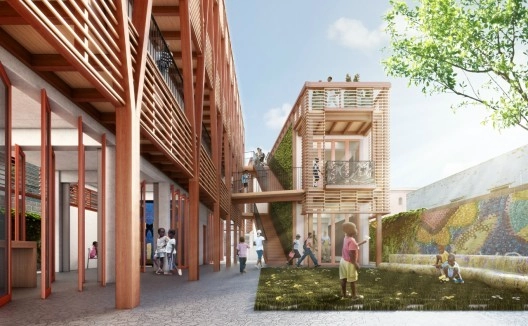
The AIA has appointed green-building leader Mary Ann Lazarus, FAIA, to a consulting position as a Resident Fellow. In this position, Lazarus will help guide and influence a program heavily based in sustainability and health as the AIA implements its ten-year pledge to the Decade of Design: Global Urban Solutions Challenge, a Clinton Global Initiative Commitment to Action. The purpose of the commitment is to document, envision and implement solutions that leverage the design of urban environments through research, community participation, and design frameworks. It is a commitment based in the interest of public health with special attention to the use of natural, economic, and human resources.
More about Mary Ann Lazarus's work and future at the AIA after the break.
https://www.archdaily.com/335878/aia-appoints-mary-ann-lazarus-to-lead-sustainability-and-health-initiativeIrina Vinnitskaya
Do Architects Really Understand the End-User?
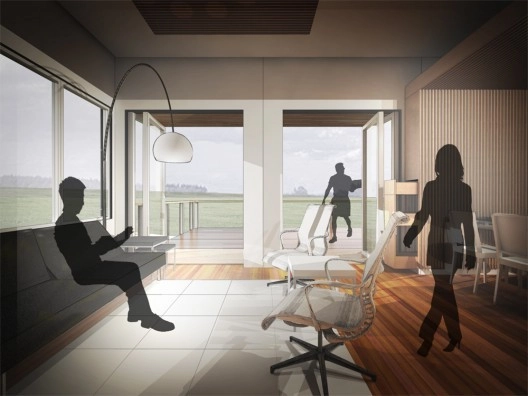
Since the time of Vitruvius, we architects have pondered the effect that our work might have on those who use the spaces we design; unfortunately, however, we set ourselves up as universal models, judging what 'works' or not for the occupants, without any explicit evidence to substantiate those ideas. Of course, the profession has changed over the last three decades; the experience of the occupant is paramount, and evidence-based design - particularly when it comes to performative environments for work, health and learning - has risen substantially in importance.
But as much as we claim - as architects, interior and urban designers - to understand the people who will occupy the spaces we design, how much do we really? Where does our knowledge come from and how do we use it? Do we help contribute to the evidence? Do our clients (and, if they do, do they pay for it)?
Architectural Research Consultancy (ARC), a company that researches how the built environment affects the way people think, feel and act, is attempting to find out the answers to just these questions. And they're conducting a brief, anonymous online survey (it takes only 2 minutes) to learn more. They'll be publishing their data later in the year, and we'll be sure to share those results with you.
https://www.archdaily.com/335552/do-architects-really-understand-the-end-userVanessa Quirk
Zaha Hadid to Develop Plans for New London Airport

As pressure mounts to solve the UK’s aviation crisis, the Mayor of London has appointed Zaha Hadid Architects (ZHA) alongside a world-class team of aviation experts to develop plans for a new major airport in southeast England. The team is expected to resolve the debate on how and where the capital’s next multi-runway airport hub should be constructed, a decision that will play a critical role in the future of the British economy.
Zaha Hadid said: "This work is essential to deliver the most integrated transport solutions for London and the UK. It will enable London to maintain its position as one of the world's most important economic, commercial and cultural centers; outlining the city's future growth and development which has always been founded on global connectivity."
See who made the list after the break...
https://www.archdaily.com/335764/zaha-hadid-to-develop-plans-for-new-london-airportKarissa Rosenfield
PechaKucha Celebrates 10 Years!

After coming to the realization that architects tend to talk way too much, Astrid Klein and Mark Dytham of Klein Dytham architecture devised a lecture format that ended up revolutionizing the way we present. For the past 10 years, PechaKucha 20x20 has inspired creatives from 600 cities to informally gather in dimly lit spaces around the globe and conduct 400-second presentations to their friends and colleagues. The beauty of PechaKucha Night is that anyone can participate - as long as they stick to the 20 image, 20 second format - thus providing ample amounts of stimulating information, ideas and inspiration in just a short, booze-filled night. Who wouldn’t like that?
https://www.archdaily.com/335826/pechakucha-celebrates-10-yearsKarissa Rosenfield
AIA College of Fellows Awards 2013 Latrobe Prize for “The City of 7 Billion”

The American Institute of Architects (AIA) College of Fellows has awarded Bimal Mendis and Joyce Hsiang of the Yale School of Architecture and Plan B Architecture & Urbanism, LLC the 2013 Latrobe Prize of $100,000 for their proposal, “The City of 7 Billion.” The research will study the impact of population growth and resource consumption on the built and natural environment at the scale of the entire world as a single urban entity. An antidote to the fragmentary analyses of current practices, this project will remove arbitrary boundaries and reframe the entire world as a continuous topography of development: the city of 7 billion.
The grant, named for architect Benjamin Henry Latrobe, is awarded biennially by the AIA College of Fellows for research leading to significant advances in the architecture profession.
More on “The City of 7 Billion” after the break...
https://www.archdaily.com/335685/aia-college-of-fellows-awards-2013-latrobe-prize-for-the-city-of-7-billionKarissa Rosenfield
Gensler Designs New Silicon Valley Headquarters for Nvidia

Silicon Valley visual-computing pioneer Nvidia has joined the expanding list of tech moguls seeking to transform their work environment into the physical manifestation of their innovative business model. Nvidia CEO Jen-Hsun Huang has released the first schematic renderings - designed by Gensler’s San Francisco office - that depict a pair of 250,000 square foot triangular motherships centered around collaboration - a complete contrast to the typical, dated office building commonly found throughout Silicon Valley’s “oddly banal” landscape.
More after the break...
https://www.archdaily.com/335357/gensler-designs-new-silicon-valley-headquarters-for-nvidiaKarissa Rosenfield
Oops! We don't have this page.
But you can browse the last one: 417


