As 3D Printing becomes more accessible, and a whole lot cheaper, it will open up a whole new world for architecture. There’s just one problem: how to share all that 3D data easily over the web. With this in mind, we've partnered with Gigabot - the biggest, most affordable 3D printer (printing models up to 60x60x60cm) - and Sketchfab - a new platform bridging the gap between the 3D models on your desktop and the web - to launch a new, exciting competition.
While most of us are grappling with the idea of 3D printing, Skylar Tibbits - computational architect and lecturer at MIT - is spearheading projects towards a fourth dimension. Transformation, Tibbit claims, is an uncharted capability that enables objects - straight off the printing bed - to assemble themselves, changing from one form to another. "Think: robots with no wires or motors." Tibbits exhibits how a single strand - embedded with predetermined properties - can fold from a line to a three dimensional structure. "I invite you to join us in reinventing how things come together."
https://www.archdaily.com/437587/3d-printing-moves-into-the-fourth-dimensionJose Luis Gabriel Cruz
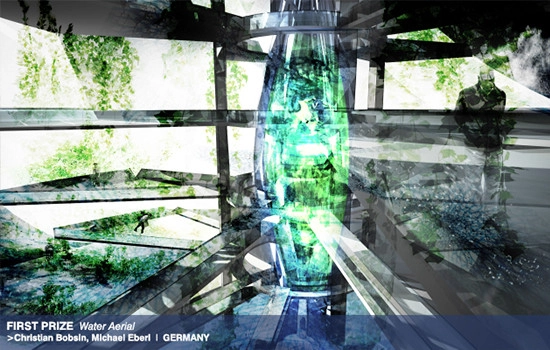
d3 has announced the winners of its Natural Systems Competition for 2013, an annual award that offers architects, designers, engineers and students the chance to investigate natural processes from the microscopic to macroscopic scale, and propose innovative and nature-based solutions in architecture, urbanism, interiors and product design for sustainable living.
The jury, a panel of architects and designers engaged in sustainable practices and computational explorations, has this year selected a top three as well as fourteen special mentions. Join us after the break for images from all 17 designs.
After two successful cycles, Zagreb Society of Architects organized the 3rd edition of the international series of concept based architectural competitions entitled 'Think Space'. So far, the program hosted a number of established architects and curators and it continues to re-think space in the 2013|2014 season.
The new theme Think Space | MONEY [The Echo of Nothing] was devised by Ethel Baraona Pohl and César Reyes Nájera of dpr-barcelona; architects, writers, editors, publishers, bloggers and guest curators of the third cycle.
Throughout the new season of competitions and papers, Think Space will be looking for pioneering works at the intersection of architecture, sociology, economics, programming and marketing that radically challenge the fundamental spatial, social and urban relation based on capitalism. The competitions and Call for Papers will focus on territories, environment, culture and society through MONEY lenses, as observed by architects and other visual artists and professionals.
More information on the first of competitions, Territories, after the break.
This week the shortlist for this year's Young Architect of the Year Award (YAYA) was announced. The YAYA, organized by BD and now in its 15th year, has become a high-profile springboard for many practices led by architects under 40.
For the first time, this year the award is open to architects from outside the UK, allowing any practice based in the EU a chance to apply. The shortlist reflects this new opportunity, featuring practices from Belgium and Spain among the list of five.
To celebrate excellence in architecture and urban design in New York City, the Municipal Art Society has announced the winners of this year’s MASterworks Awards. Starting with “Best New Building,” Steven Holl was awarded for his Campbell Sports Center in Manhattan. See who else was honored, after the break.
The Guardian's Oliver Wainwright documents the current trend of micro-scale installations spurring new life into the historic hutongs of Beijing and gaining support from the local communities, eager to reject the economic pressures of destroying/rebuilding. The local government’s endorsement, however, comes as a surprise - especially considering its fervent impetus to raze these areas just a few years ago. Read the full article here: Designers Use 'Urban Acupuncture' to Revive Beijing's Historic Hutongs.
https://www.archdaily.com/435775/reviving-beijing-s-hutongs-with-micro-installationsJose Luis Gabriel Cruz
Beloit College has chosen Studio Gang Architects to convert a century old power-plant into a campus recreation and activity center. The project was born out of an ongoing partnership with Alliant Energy Wisconsin, the local utility company that currently holds the space, who has been in talks within the college for over a year.
“The Studio Gang team is very excited to partner with Beloit College,” stated Jeanne Gang. “Together we can transform this historic structure into a new hub for wellness, green power, and great architecture. By reflecting Beloit’s core values in the design, values shared by our team, we will create a model that will bring many benefits to the college, city, and region. This is a project that has the potential to inspire other communities around the globe.”
https://www.archdaily.com/436239/studio-gang-chosen-to-convert-power-plant-to-rec-centerKatherine Allen
ACME has won an international competition for the design of the new headquarters of the Sächsische AufbauBank in Leipzig, Germany. Chosen from submissions by 20 architectural practices (including Zaha Hadid and Sauerbruch Hutton), ACME's design was referred to by the jury as "an innovative and [...] a visionary solution, which is manifested in a striking, distinctive appearance. Especially noteworthy is the symbiotic unity of building and open space design."
Videos
At the Clinton Global Initiative (l to r) Robert Ivy, FAIA; New Orleans Mayor Mitch Landrieu; Cameron Sinclair, co-founder Architecture for Humanity; Former U.S. President Bill Clinton; Martyn Parker, Chairman Global Partnerships at Swiss Re; Alex Karp, co-founder Palantir; Judith Rodin, Ph.D, President of The Rockefeller Foundation. Image Courtesy of The AIA
Last week, we noted how the American Institute of Architect's (AIA) participation with the Clinton Global Initiative (CGI), as well as it's many other initiatives, signify the organization's commitment to putting resiliency on the agenda. The following article, written by Brooks Rainwater, the Director of Public Policy at the AIA, outlines these efforts and emphasizes how architects are tackling today's most pressing global challenges.
Architects are increasingly demonstrating their ability to help solve large-scale problems in the areas of resilience and health. At the same time the continued ascendancy of social impact design has helped elevate the conversation and prescribed a needed emphasis on equity considerations, uplifting global populations, and the idea that design should be for and impact all people.
With more than 1,000 global leaders convened in New York last week for the Clinton Global Initiative Annual Meeting it is an ideal time to ask the question, how does design fit into the global conversation?
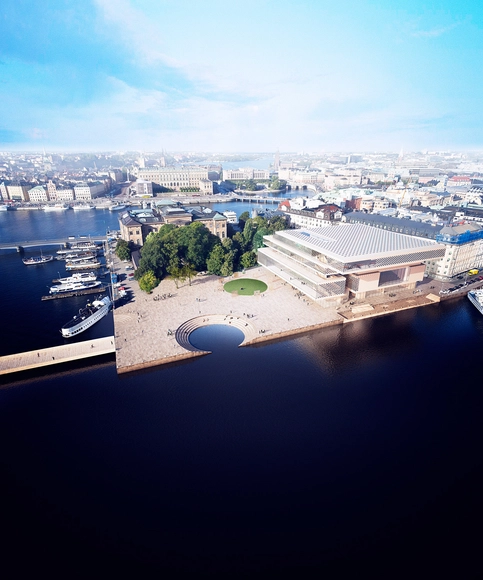
BIG, OMA and SANAA are amongst 12 architectural heavyweights competing to design the Nobel Foundation’s new home in Blasieholmen, Stockholm. Currently in the competition’s first stage, the architects have submitted anonymous entries for jury review.
Once complete, the building hopes to become one of Stockholm’s main attractions. It will not only serve as the Nobel Foundation's primary home, but also provide facilities for research and education, as well as public exhibition spaces, a conference center, library, cafe, shop and more.
Read on for the complete list of participating architects and a sneak peak of the proposed schemes.
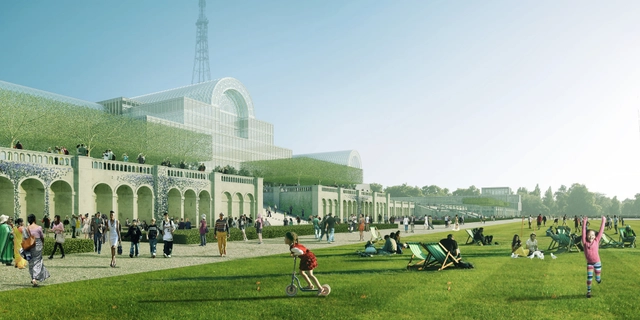
Mayor of London, Boris Johnson said: "Paxton's stunning Crystal Palace was a beacon of innovation in the 19th century, encapsulating a spirit of invention which was to shape London and the world for generations to come. Since the iconic building was destroyed, the conundrum of what to do with the crumbling site has not been successfully resolved.” Until now.
Check out renderings and more information, after the break…
The New York Times has published “A Short History of the Highrise” - an interactive documentary that explores the 2,500-year global history of vertical living and issues of social equality in an increasingly urbanized world. Organized in four short films - “Mud,” “Concrete,” “Glass,” and “Home” - viewers are given the option to "dig deeper" into each subject and explore additional archival material while viewing the film. Check out the film here.
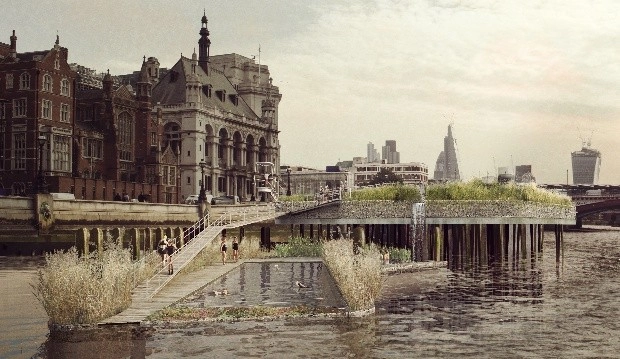
Five proposals for reconnecting Londoners with the River Thames have gone on display at London's Royal Academy of Arts (RA). The competition, organised by the Architecture Foundation, "launched an open call for multidisciplinary design teams to put forward new ideas and visions for self-selected sites along the Tidal Thames" earlier this year. The five selected teams were shortlisted earlier this year and recently discussed their designs at a public design workshop. The schemes are now being exhibited as part of the Richard Rogers RA: Inside Outexhibition.
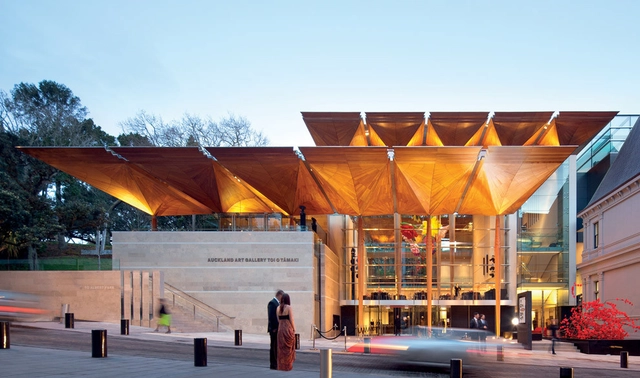
Auckland Art Gallery Toi o Tamaki / FJMT + Archimedia
At the last day of the World Architecture Festival, the winners of each category had their chance to showcase their projects in front of the jury and the audience. The jury, which included Ken Tadashi Oshima (University of Washington), Ken Yeang (Llewelyn Davies Yeang), Patrick Bellew (Atelier Ten), Jeanne Gang (Studio Gang Architects) and Dietmar Eberle (Baumschlager Eberle), gave the World Building of the Year Award to the new Auckland Art Gallery Toi o Tamaki, by Francis-Jones Morehen Thorp (FJMT) and Archimedia.
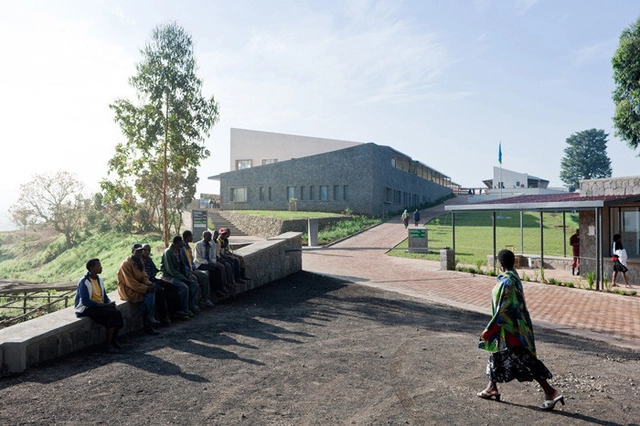
Together with the African Wildlife Foundation (AWF), MASS Design Group is helping to build 15 conservation primary schools over the next 10 years in African landscapes, home to some of world's most important wildlife populations, including elephants, rhinos, great apes, and lions. They will design non-traditional educational campuses for primary school children that offer lessons and other services extending beyond the classroom walls.
Architecture researchers in Edinburgh have completed a breakthrough study on brain activity recorded in situ by using mobile electroencephalography (EEG) technology, which records live neural impressions of subjects moving through a city. Excitingly, this technology could help us define how different urban environments affect us, a discovery that could have provocative implications for architecture. Read the full story on Salon. Also, check out this article from Fast Company about how a similar mobile technology could show us the effects of urban design - not on our brains, but on our bodies.
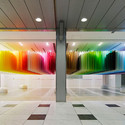
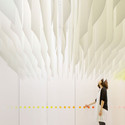
Shikiri, meaning "to divide space using colors," is a made-up term the French architect has embraced in her art and architecture. She aims to "use colors as three-dimensional elements, like layers, in order to create spaces, not as a finishing touch applied to surfaces."
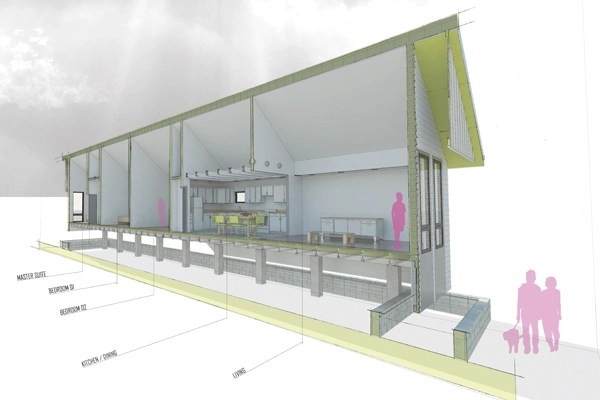
Looking for something to do this week? If you are in the greater Los Angeles area, come check out the U.S. Department of Energy’s (DOE) sixth Solar Decathlon at the Orange County Great Park in Irvine. Currently on view through October 13, this (free!) event showcases nineteen student-built, solar-powered homes that claim to be exemplars of sustainable housing. After being closely monitored by the DOE throughout the length of the competition, one team will be crowned as winner for successfully blending affordability, consumer appeal, and design excellence with optimal energy production and maximum efficiency.
Catch a glimpse of each project, ranked in order of the current standings, after the break.
Picture this: self-assembling blocks that, when given a task, have the ability to reorganize themselves into new geometries.
This is precisely what research scientist, John Romanishin, at MIT's Computer Science and Artificial Intelligence Laboratory (CSAIL) has long envisioned for a near future — robotic modules known as M-Blocks. Romanishin has teamed with his professor, Daniela Rus, and colleague, postdoc Kyle Gilpin, to prototype robotic cubes with no external moving parts, able to climb over, around and even leap onto each other.
Till now, robots have depended on arms or attachments to move themselves. "We wanted a simpler approach," says Romanishin, that uses fewer moving parts. Inside each M-Block is a flywheel that spins at 20,000 revolutions per minute, creating enough angular momentum when it brakes that the blocks assemble themselves in new configurations. On each face and edge of the cubes are magnets, naturally connecting the cubes when spurred by the flywheel.
Learn more after the break...
https://www.archdaily.com/435250/mit-researchers-propose-self-assembling-robots-as-future-of-constructionJose Luis Gabriel Cruz