Now in its 5th edition, the Bi-City Biennale of Urbanism / Architecture (UABB) is the only biennial exhibition in the world to be based exclusively on the themes of urbanism and urbanization. The Biennale is co-organized by Shenzhen and Hong Kong, two of the most intensely urban cities in the world, where political and economical contexts have shaped unique urban dynamics.
The Hong Kong Biennale is led by Chief Curator Prof. Colin Fournier along with Joshua Lau and Allen Poon of TETRA and Travis Bunt and Tat Lam of URBANUS. As reported earlier, the Shenzhen edition will be curated by Ole Bouman and Team Li Xiangning + Jeffrey Johnson.
As Asia’s leading architecture, design and planning event, it will exhibit work by leading international and local design professionals and engage in a three month cultural dialogue that will include satellite exhibitions, performances, fi lm screenings, forums, workshops, guided tours and lectures.
The Biennale "will be informed by the singularity of Hong Kong but it will not be primarily about Hong Kong, just as the Venice Biennale is not about Venice: it will be about the cities of the world, making use of the unique bi-city setting of the Biennale as a platform to address global issues in a visionary and critical way."
ArchDaily will be present at the opening of the Shenzhen edition to bring you all the insights of the event.
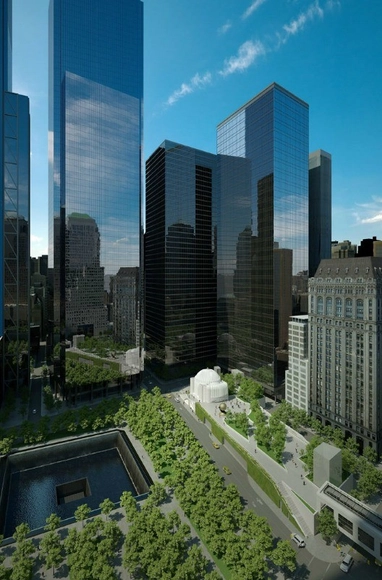
Early Schematic Rendering of St. Nicholas Greek Orthodox Church and Liberty Park. Image Courtesy of Tribeca Citizen
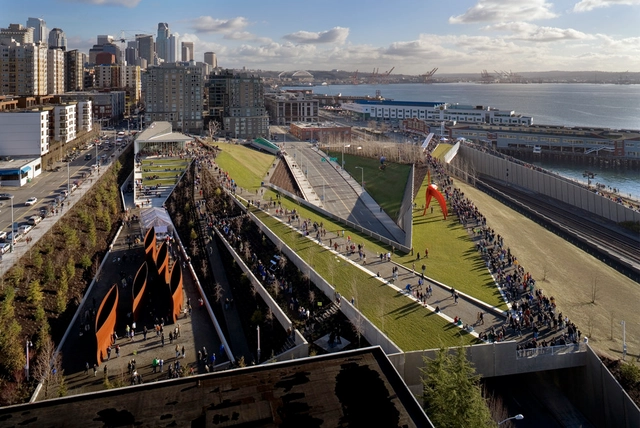
The World Trade Center’s “best-kept secret” has been revealed. As reported by the New York Times, the Port Authority released details on what will be “Liberty Park,” an acre-sized, elevated park lifted 25 feet above Liberty Street on the WTC site. Planned for completion in 2015, the $50 million landscaped terrace will connect the financial district with Battery Park City, while providing a panoramic view of the National September 11 Memorial and serving as a forecourt for the new St. Nicholas Greek Orthodox Church. More information on Liberty Park can be found here.
The concept of the open plan revolutionized architecture - promising light, space, and effortless collaboration (not to mention a more cost-effective way of getting lots of people into one space). Today, it's practically become a standard of design - but at what cost?
A new report from researchers Jungsoo Kim and Richard de Dear, published in the Journal of Environmental Psychology, concludes that the open plan comes with some serious collateral damage - namely a lack of "sound privacy" - which outweighs its positive qualities. What's more, according to their results, the open plan doesn't even make a measurable improvement in communication at all.
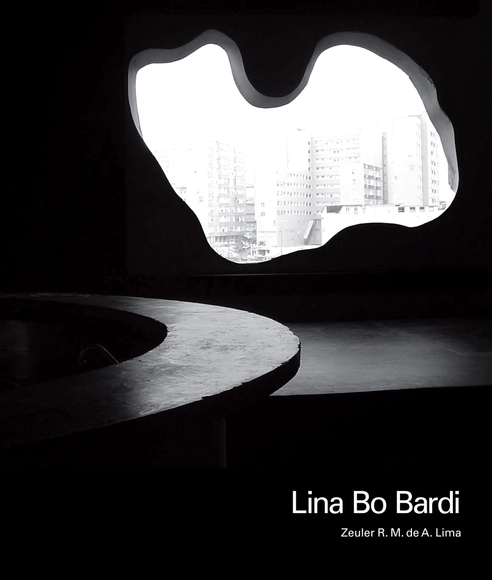
UPDATE: Congrats to Susana Duarte of Portugal, winner of the "Lina Bo Bardi" giveaway! Thank you to all those who participated. Keep your eyes peeled for another fantastic giveaway, courtesy of Yale University Press, in the coming weeks.
https://www.archdaily.com/451627/giveaway-lina-bo-bardiJose Luis Gabriel Cruz
Biopharmaceutical company AstraZeneca has commissioned Herzog & de Meuron to design their new Global R&D Centre and Corporate Headquarters. Planned for the Cambridge Biomedical Campus on the southern outskirts of the city, the new £330m project will be home to one of the company’s three global strategic research and development centres as well as its corporate headquarters.
The Cultural Landscape Foundation recently launched its newest documentary as part of the ongoing Oral History series, this time focusing on the ideas and career of Laurie Olin, a recipient of the National Medal of the Arts and one of the greatest landscape architects of our time. Olin's influential work as a practitioner, educator and author over the past forty years has helped to guide the future of landscape architecture and shape urban life around the world.
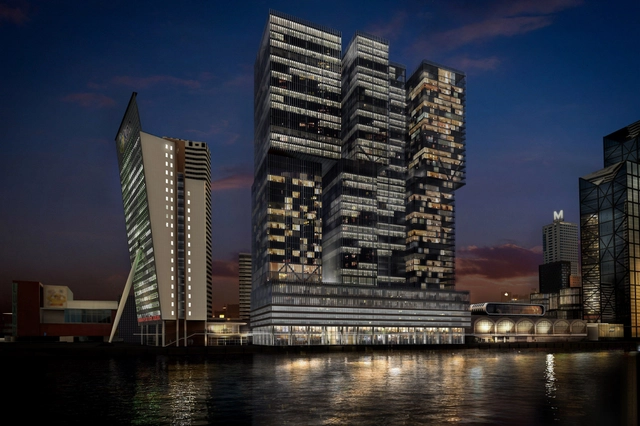
In the architectural stomping ground that is Rotterdam, it's no small task to design a building that actually stands out. But, according to The Guardian's Oliver Wainwright, the recently completed De Rotterdam building manages to. Although the Koolhaas-designed structure, which houses offices, apartments and even a boutique hotel, may at first seem simple (simplistic, even), Wainwright praises how the shifting masses cleverly play tricks on your perception. The building is undoubtedly impressive, but is the unconventional envelope enough to distract from a bland-at-best interior? Read the rest of Wainwright's critique here. evaluate
https://www.archdaily.com/450513/wainwright-weighs-in-on-rem-s-de-rotterdamKatherine Allen
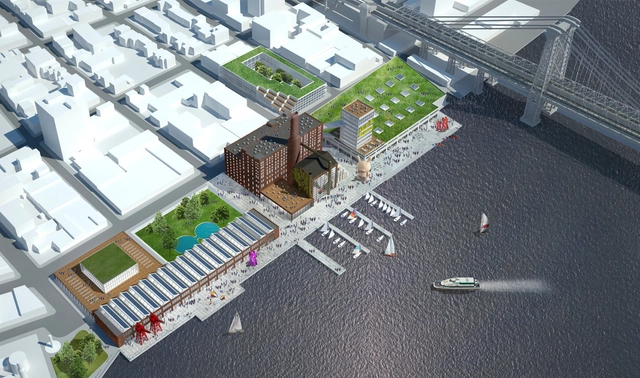
HAO's counter proposal seeks to adaptively reuse the existing factory buildings, including the iconic Civil War-era Domino Sugar Refinery — which has defiantly held its ground amidst heavy redevelopment in surrounding areas. Not unlike SHoP's proposal, HAO aims to regenerate these spaces into a "world-class cultural destination" that combines public and private programs.
https://www.archdaily.com/451552/hao-makes-counter-proposal-to-save-sugar-factory-and-stop-luxury-apartments-in-brooklyn-s-waterfrontJose Luis Gabriel Cruz
From Atlanta's Beltline to Los Angeles' Spring Street "Parklets," architecture and design is increasingly more relevant in the fight against obesity and chronic disease, conditions which have reached epidemic levels in the United States. In the article, "Toward a Fit Nation," the AIA and FitNation identify 18 projects from around the country, ranging from large complexes to temporal installations, that encourage physical activity and healthy lifestyles. The AIA National Headquarters will be curating the FitNation exhibit till January 31, 3014. Read the article here.
https://www.archdaily.com/451594/toward-a-fit-nation-18-projects-that-promote-healthy-lifestylesJose Luis Gabriel Cruz
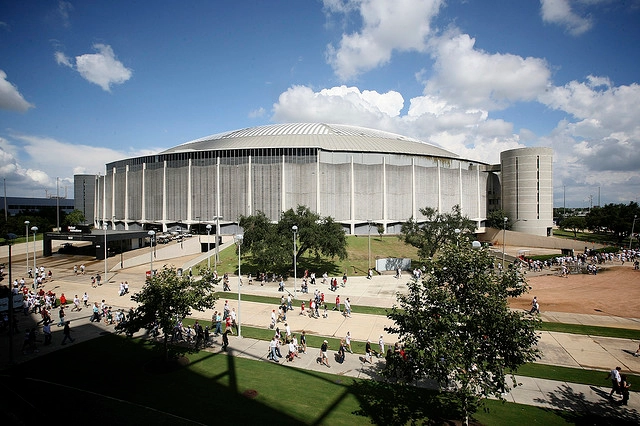
According to LA Times architecture critic Christopher Hawthorne, buildings experience a pretty distinct mid-life crisis. After seeing the demise of mid-century gems such as the Houston AstroDome and the Prentice Women's Hospital in Chicago, it's difficult to disagree. But unfortunately architectural value isn't convincing enough an argument - if preservationists want to get serious about their cause, he suggests, they will have to pick their battles far more strategically.
https://www.archdaily.com/450516/how-to-get-a-building-through-its-mid-life-crisisKatherine Allen
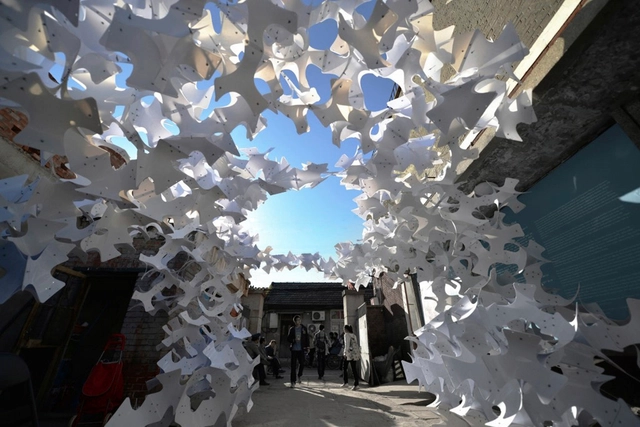
"As Autumn Leaves" (AAL) is a spatial installation designed and built by students of the Laboratory for Computational Design (LCD) for Beijing's 2013 Design Week. Located in a historic hutong district in Beijing, AAL highlights the existing entrance to Dashilar Factory where emerging creatives exhibit their design. The concept is based on ephermerality of nature. As temperatures change, autumn turns to winter, and trees shed their leaves, AAL recalls the passage of time through changing seasons.
https://www.archdaily.com/451572/lcd-exhibits-as-autumn-leaves-at-beijing-s-2013-design-weekJose Luis Gabriel Cruz
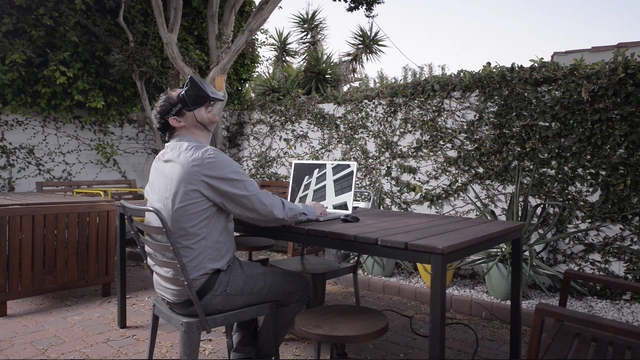
And secrets they must be because Kemp’s little company, Digital Physical, has kept under the radar, housed away in some nondescript loft space in Los Angeles. What Mr. Kemp and his bearded acolytes have developed is something so simple, so obvious, and yet utterly revolutionary. It’s one of those inventions that all architects are soon going to realize they need - and clients will soon start to expect.
Robert Miles Kemp is going to be one of 2014’s Innovators of the Year. Mark my words. If I worked for Autodesk, I’d be calling him up right about now - or at the very least trying to steal his secrets.
The “it” is Spacemaker VR, architecture’s first virtual reality system made for designers. Yes, you have to wear a VR headset, but you won’t care if you look like a dork because you (and your big clients) will be blown away by the fact that you’re looking, flying around a 3D model of a future-space - all while being firmly in the present.
Hans House. Image Courtesy of M.O.D.O & Ricky Fung
Qantas has selected Michael Ong as the winner of the 2013 Spirit of Youth Awards 365 (SOYA 365) for architecture and interior design, awarding him $5,000 in cash, $5,000 in Qantas flights, and a rare 12-month mentorship with leading architect and founding partner of Tonkin Zulaikha Greer, Brian Zulaikha. Ong, a Melbourne-based architect, founded MODO (Michael Ong Design Office) in 2011, and was chosen for the prize due to his work on the project Hans House. Check out more about the story here.
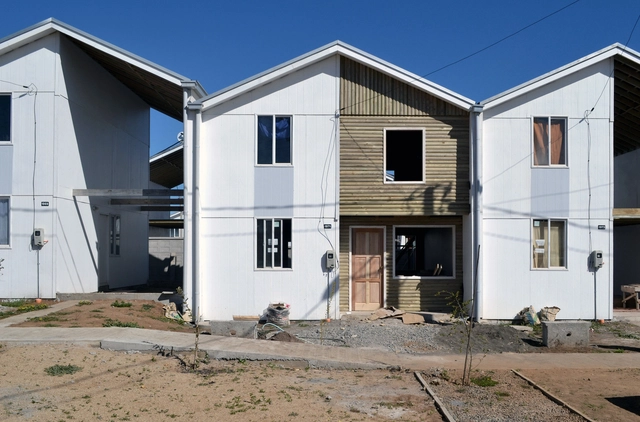
Since they first developed the typology for their Quinta Monroy project in Iquique, Chile, the "half-finished home" has become something of a signature for ELEMENTAL: they have used the technique in multiple cities in Chile, as well as their Monterrey Housing project in Mexico. The typology began life as a way of dealing with extremely low budgets, allowing governments to provide housing to citizens at incredibly low prices, but nevertheless creating homes that would provide for the needs of residents and even gain value over time. Now, they have applied the theory to their Villa Verde Housing project, published just last week on ArchDaily.
Read more about the typology, and how it has been applied at Villa Verde, after the break...
Videos
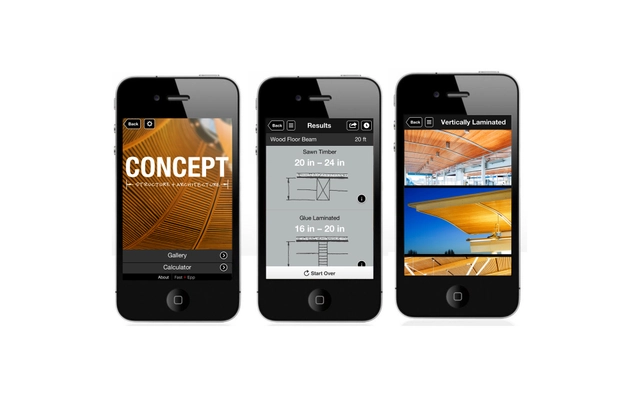
Interface on iOS. Image Courtesy of Fast + Epp
Getting instantaneous, accurate structural dimensions in the early stages of the design process, or even when exploring the feasibility of a project, can often be challenging. In response to this, Vancouver-based structural engineering firm Fast + Epp have developed a new mobile application called Concept, a depth calculator which uses typical span-to-depth ratios for common steel, concrete and wood members to give you a quick overview of what dimensions a certain structural idea will require. In addition to this, the app also includes project photos to give users an idea of how certain materials will be expressed in built form.
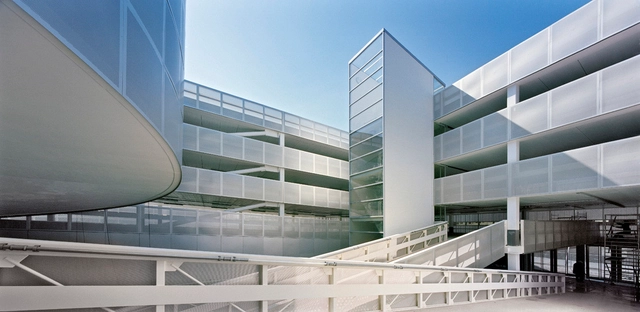
This intriguing article on The Atlantic Cities highlights a growing trend as cities become more focused on pedestrians, bicycles and public transport: parking garages that are designed with alternative uses in mind. Developers are ensuring that these garages have "good bones", such as comfortable ceiling heights, that will allow them to be easily converted into apartments or offices in a future when many city-dwellers don't own cars. You can read the full article here.
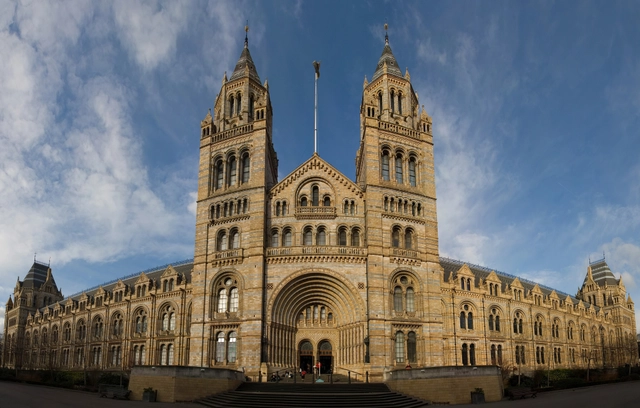
Five architect and landscape architect-led teams have been shortlisted to redesign and re-imagine the grounds of London’s world famous Natural History Museum. The major project will aim to “create an innovative exterior setting that matches the architectural excellence of the iconic 19th Century site, whilst ensuring that the Museum grounds are easily accessible to all visitors.”
Without further ado, the leaders of the five teams are:
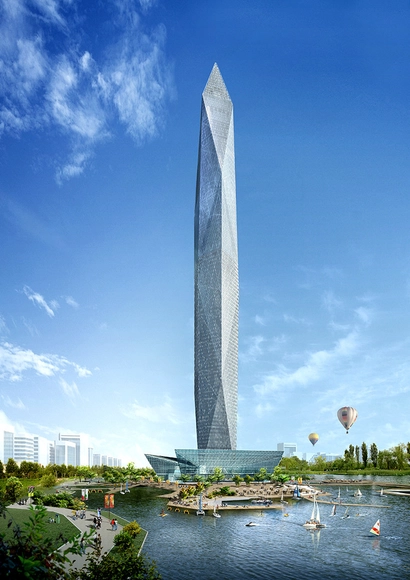
The Infinity Tower by GDS Architects. Image Courtesy of fastcodesign.com
Last week Time Magazine released their list of the top 25 inventions of 2013. The list covers both fun and life-changing new ideas, covering everything from the Cronut to the Artificial Pancreas - but there are also four architectural innovations that made the prestigious list. Find out more about them after the break.
Khao Mo, which translates as Mythical Escapism, is a reflective sculptural work by Sanitas Studio currently being exhibited at the Bangkok Art & Cultural Centre. The concept behind the work is based on city dwellers' desire for a moment of escape from everyday life, along with the concept of the Chinese garden: a scaled replicated universe expressed through nature in order to create a sense of tranquility. According to the artist, "the smell of earth, the moisture and vapour that evaporate from the earth, the ordinariness and the emptiness allow the audience time to imagine."