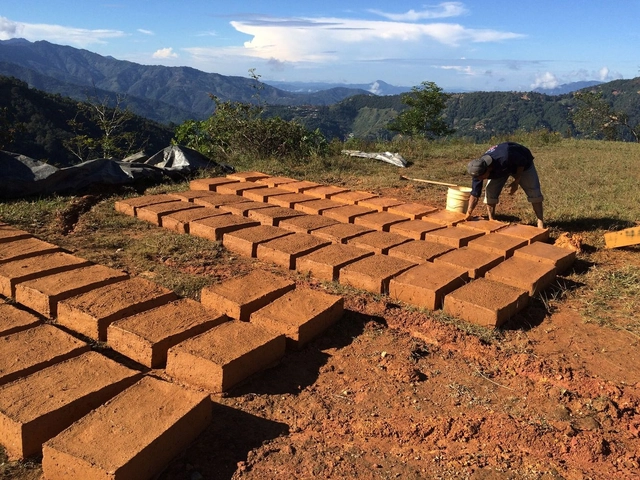
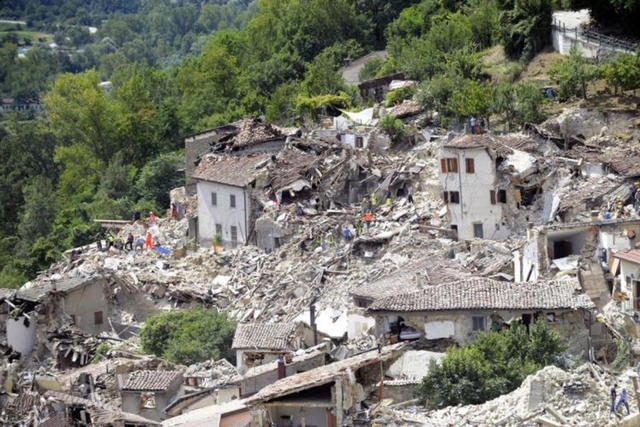
After yesterday’s devastating magnitude 6.2 earthquake in central Italy, art historians fear that numerous historic Italian buildings and their contents may be permanently lost. The affected region is dotted with hilltowns containing beautiful churches, monuments and museums, many of which have been rendered completely unrecognizable.
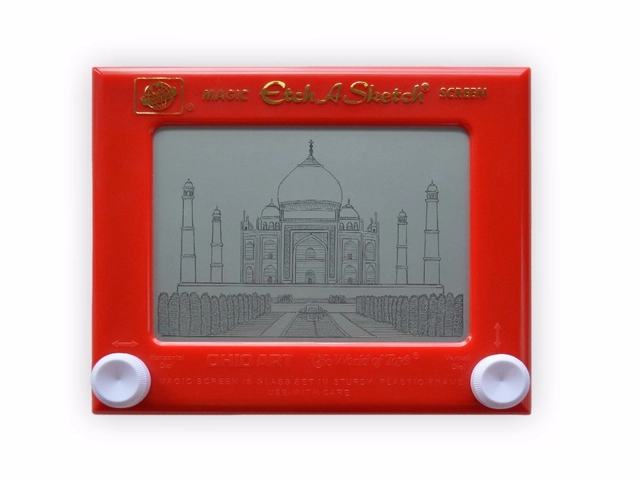
Anyone who has ever picked up an Etch A Sketch knows just how difficult and time consuming it can be to draw even the simplest of shapes. But for some fanatics, the challenge is simply a part of the fun. Artist Jane Labowitch, known also as “Princess Etch A Sketch,” is one of those people. Since first picking up an Etch A Sketch at the age of 4, she has been fascinated with the red drawing toy, developing her skills to recreate notable works of art, architecture and pop culture.
Check out her drawings of some of architecture’s most iconic works after the break.
Earlier this summer, the Vitra Schaudepot on the Vitra Campus was officially opened. The latest in a string of structures designed by emerging and well-known architects, this gallery space is the second building by Swiss-practice Herzog & de Meuron. Conceived as "a visible storage facility" presenting a cross-section of the Vitra Design Museum's extensive collection of furniture and lighting, over 400 objects will provide "a comprehensive introduction to the history of furniture design." Featuring a café, shop and a new entrance for visitors to the museum, the building is also able to host temporary exhibitions. Photographer Laurian Ghinitoiu has turned his lens to this latest addition in Weil am Rhein.
The Buckminster Fuller Institute has announced six finalists for the 2016 Fuller Challenge, a competition now in its ninth cycle. The Fuller Challenge called for submissions from all fields that address humanity’s most pressing problems, and will award $100,000 to one submission that “presents integrated strategies deeply informed by an understanding of a whole system context.”
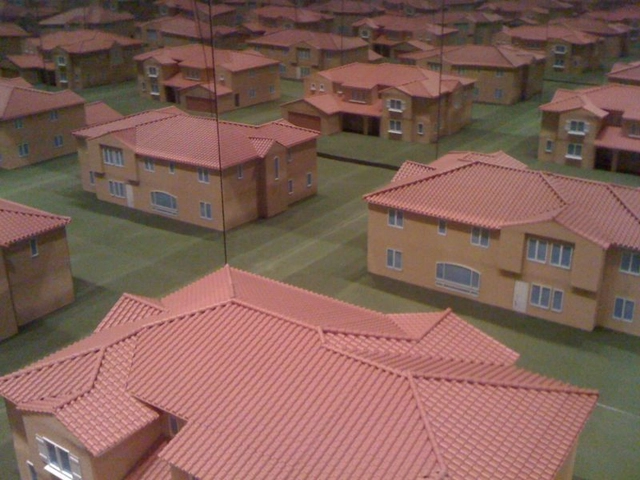
The architectural world’s most hated structures may finally be meeting their demise. McMansions, the cheaply-built, faux-opulent mega-houses that litter many of the world’s suburban communities, were born in the 1980s and quickly became the most desirable living accommodation for middle and upper-middle class families. After a slight blip caused by the financial recession of 2008, McMansion popularity returned, with the median size of homes reaching a peak of 2,488 square feet just last year. But as seen in a new study conducted with data from real estate website Trulia, the economic benefit of purchasing one of these houses may now finally be falling.
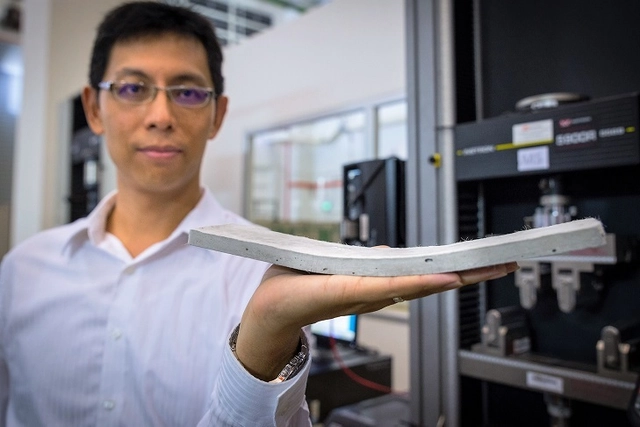
Scientists from Nanyang Technological University (NTU Singapore) have developed a bendable variety of concrete called ConFlexPave, which in addition to its increased flexibility, is both stronger and more durable than traditional concrete. Working at the NTU-JTC Industrial Infrastructure Innovation Centre (I³C), the team created the material by introducing polymer microfibers into the concrete mixture.
The innovation also allows for the production of slim precast pavement slabs, increasing installation speed. It is anticipated to be used in infrastructural projects, halving the amount of time needed for road works and new pavements while also requiring less maintenance.
This article is part of our new "Material Focus" series, which asks architects to elaborate on the thought process behind their material choices and sheds light on the steps required to get a building constructed.
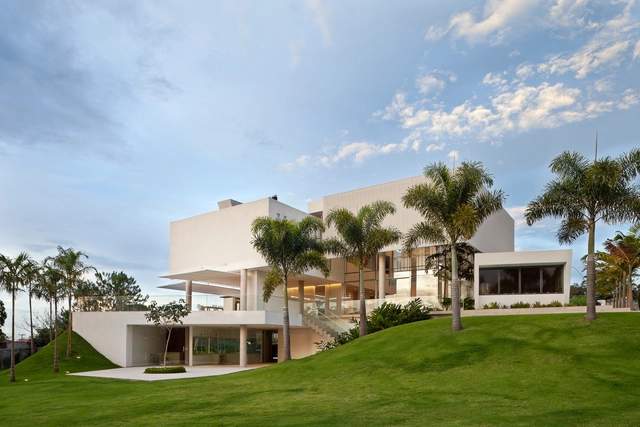
The House in Lago Sur Qi 25 was designed by Sérgio Parada Arquitetos Associados firm. The project is 800 square meters and the layout is organized into 3 floors. Their volumes were defined by their use: intimate, service, formal and leisure. The project’s structure is completely made up of reinforced concrete with large openings that allow for complete integration of the exterior with the interior. We talked with the architect Rodrigo Biavati to learn more about the material choices and challenges of the project.
https://www.archdaily.com/793747/material-focus-house-in-lago-sul-qi-25-by-sergio-parada-arquitetos-associadosEquipe ArchDaily Brasil
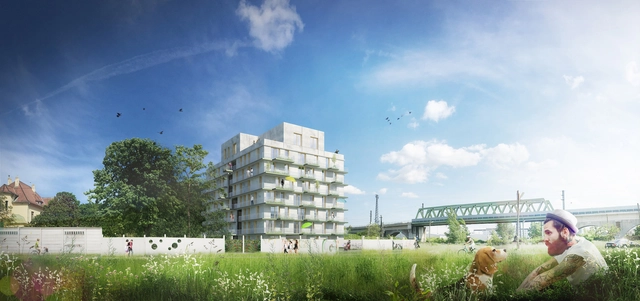
feld72 has won the competition for the design of the Neu Leopoldau, a Youth Living residential complex in Leopoldau, a post-industrial area on the outskirts of Vienna. Based on the idea of creating community, the project utilizes overlaying, staggered, and connected spaces and communication areas to facilitate the feeling of a village.
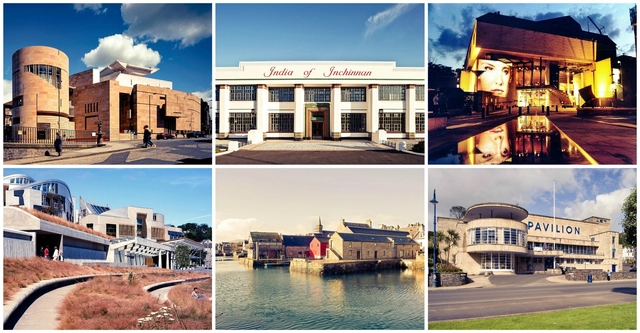
The top 10 buildings in Scotland of the past 100 years have been named as part of the traveling Scotstyle exhibition. Voters selected the list from an exhibition of 100 Scottish buildings, currently on display at the Scottish Parliament during the Festival of Politics, and will now vote to determine which building will be bestowed the title of “Building of the Century.”
“This brilliant list testifies to the extraordinary quality of Scotland’s buildings. The fact that so many are relatively recent demonstrates that our national architecture is in very good health. We have much to celebrate,” said Neil Baxter, RIAS Secretary and co-editor of Scotstyle.
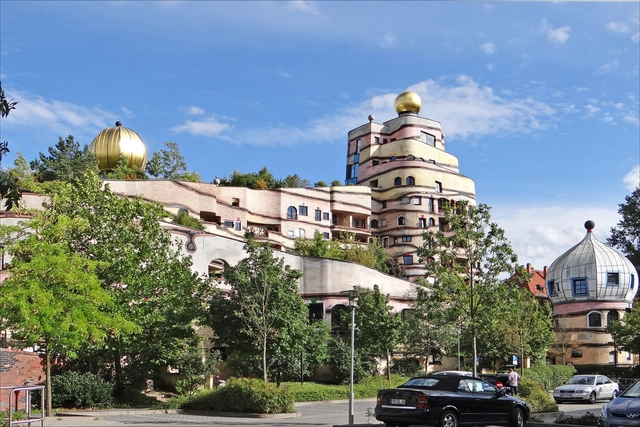
While there are many ways to stand out from the crowd in the field of architecture, some buildings challenge your expectations so greatly that they can only be described as "bizarre." This list of 18 buildings, compiled by Fly Abu Dhabi, takes a look at some of those exceptionally strange buildings. While several of these examples appear to be "ducks" lifted straight from the pages of Robert Venturi and Denise Scott Brown's seminal Learning from Las Vegas, others find their originality in unorthodox curves, flipped orientations and sharp geometries. But all share one thing in common – they're nothing like your everyday buildings.
You can now easily build integrated seating into your landscape project, thanks to a prefabricated grass armchair system called TERRA! The laser cut framework elements are quickly assembled, and all that's left to do is cover the mound with soil and wait for the grass to envelope it. First released over 15 years ago and taken off the market shortly after, TERRA! is now back with a revitalized and simplified design.
After four months of research identifying works in Latin America and the Caribbean that met the eligibility criteria of the 'Latin American Architecture Prize Rogelio Salmona: open / collective spaces' a list of finalist has been compiled. Members of the International Curatorial Committee, architects Ana Maria Duran (Andean Region), Ruth Verde Zein (Brazil Region) and Fernando Diez (Southern Cone Region), and Art History background Louise Noelle Gras (Mexico, Central America, and the Caribbean Region), postulated a total of 62 works covering the four regions.
On the 5th of August, upon completion of a shortlist the International Curatorial Committee selected 20 works whose authors will be invited by Rogelio Salmona Foundation to participate in the second round of this award.
Here are the 20 Finalists of the Latin American Architecture Prize Rogelio Salmona.
https://www.archdaily.com/793516/these-are-the-20-finalists-of-the-latin-american-architecture-prize-rogelio-salmonaArchDaily Team
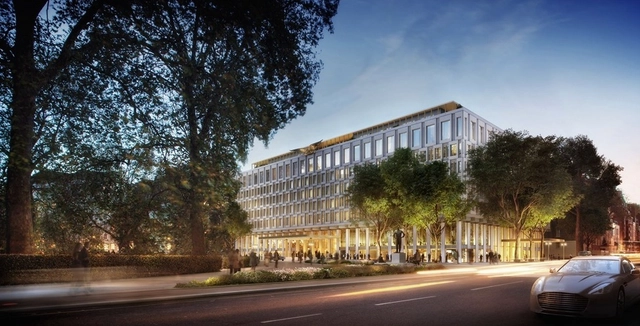
British preservation group Twentieth Century Society has publicly denounced plans by David Chipperfield Architects to convert the Eero Saarinen-designed, soon-to-be former US Embassy near London's Grosvenor Square into a "world-class" 137-room hotel. Central to Chipperfield’s plan is an enlargement of the sixth floor to make room for a double-height event space, a move Twenieth Century Society believes will “cause significant and substantial harm to the character of the building.”
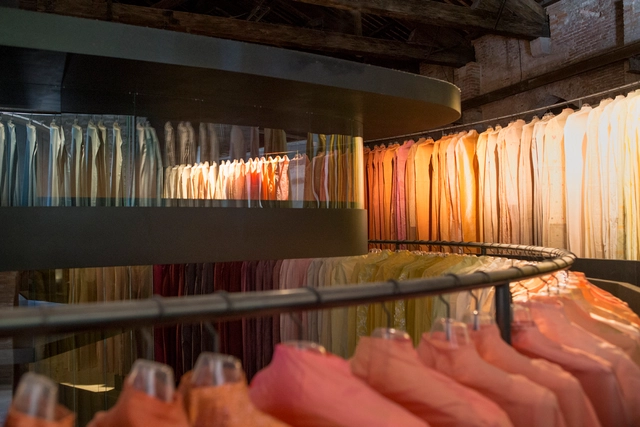
At the 2016 Venice Biennale, Peter Zumthor has put his designs for the Los Angeles County Museum of Art (LACMA) on display for the professional community. Inside the Arsenale building, a model of the tar-pit-inspired building has been suspended to float within a curving display of textile artworks by Christina Kim, while a soundtrack by Walter De Maria – “Ocean Music,” written in 1968 – provides a rhythmic backdrop for the installation.
Continue for more on the exhibit, featuring images by photographer Danica O. Kus.
Architecture Research Office and FilzFelt have teamed up to create ARO Block, a series of modular acoustic tiles that provide sound control in a customizable, easy-to-install system. Generated from remnant material of FilzFelt’s CNC cut products, which are often times small, ARO Block not only creates distinct felt tile patterns but also prevents leftover fabric from going to waste.
ArchDaily is looking for motivated architecture lovers to join our team of interns for Fall 2016! An ArchDaily internship is a great opportunity to learn about our site and get exposed to some of the latest and most interesting ideas shaping architecture today.
Interested? Then check out the requirements below.
https://www.archdaily.com/793657/call-for-archdaily-interns-fall-2016AD Editorial Team
The European Space Agency's vizualisation of space debris orbiting Earth. Image Courtesy of "Are We Human" / 3. Istanbul Tasarim Bienali
The 3rd Istanbul Design Biennial, which will officially open on the 22nd October 2016 and last for four weeks, will ask the question: Are We Human? Encompassing a wide range of ideas related to The Design of the Species, from timeframes of 2 Seconds to 2 Days, 2 Years, 200 Years and 200,000 Years, the international show will revolve around one pressing provocation: that design itself needs to be redesigned. It will do so by exploring the intimate relationship between the concepts of "design" and "humanity."
Five primary venues—the Galata Greek Primary School, Studio-X Istanbul and Depo in Karaköy, Alt in Bomonti, and the Istanbul Archaeological Museums in Sultanahmet—will house more than 70 projects by designers, architects, artists, historians, archaeologists and scientists from thirteen countries. In order to "rethink design from the very beginning of humanity," the Biennial will be organised into four overlapping “clouds” of projects: Designing the Body, Designing the Planet, Designing Life, and Designing Time.
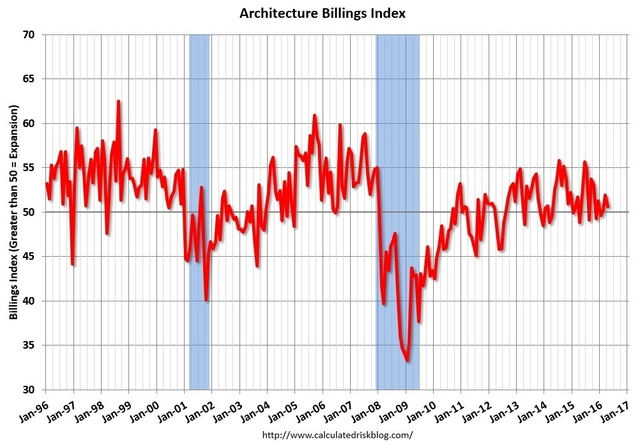
The American Institute of Architects (AIA) has reported that the Architecture Billings Index (ABI) has remained positive in July for the sixth consecutive month, and tenth out of the last twelve months as demand across all project types has continued to increase. The July ABI score was 51.5, down from 52.6 in June, but nonetheless still reflects an increase in design services, as any score above 50 indicates an increase in billings. The new projects inquiry index was 57.5, down from a mark of 58.6 the previous month.
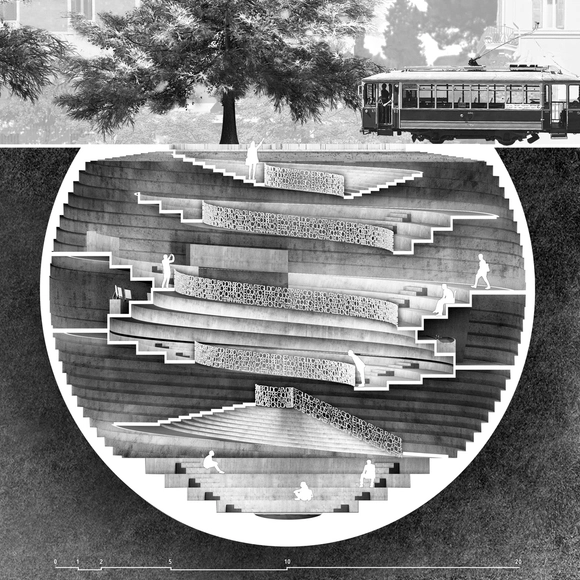
Second Prize Winning Proposal "Rome Concrete Poetry Hall" by Sergey Korobkov, Alexey Yakushev, Evginy Korobskoy and Andrey Tsyplakov. Image Courtesy of Bee Breeders
The prolific Bee Breeder competitions encourage innovative and conceptual responses to charged architectural situations. The latest competition asked participants to consider the expansive material applications (and implications) of one of the world's most prominent building materials; concrete. Described by Bee Breeders as a "poetic manifestation" of its constituent parts, concrete was then to form the basis for the Rome Concrete Poetry Hall.
The presence of the new, multi-purpose building in Rome required an awareness of the historic influences bordering the site. A further requirement was the excavation of the ground, a reference to Rome's archeological past. According to Bee Breeders, the judges favored those projects which thoroughly addressed the "spatial, material, structural, conceptual, and cultural agency of this ever expanding building science."
Update: We've added a video, presented by PLANE-SITE, about the exhibition, featuring quotes from Carla Bechelli.
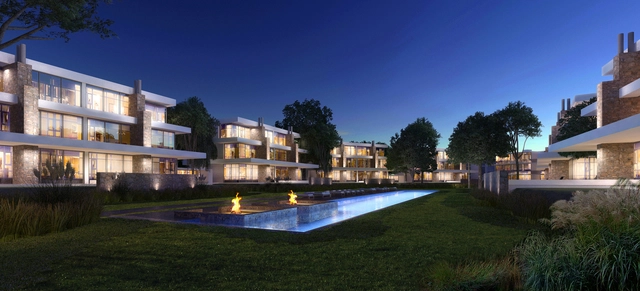
Carla Bechelli Arquitectos has created an exhibition of its multiple-residence project, Las Piedras Villas & Houses, a 2015 recipient of an International Property Award, which is currently on display at the 2016 Venice Biennale, at Palazzo Bembo.
Located in the suburbs of Buenos Aires in Argentina, the project consists of a series of small-scale buildings around a central lake intended to create a dialogue with the single-family housing in the surrounding neighborhood.
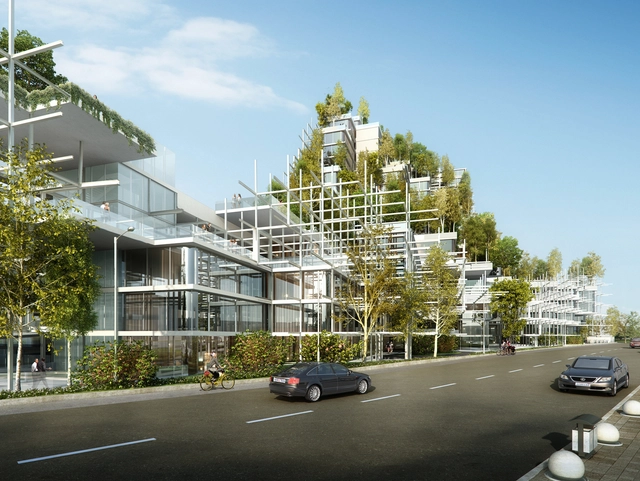
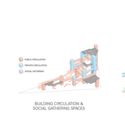
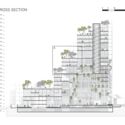
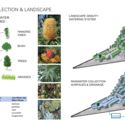
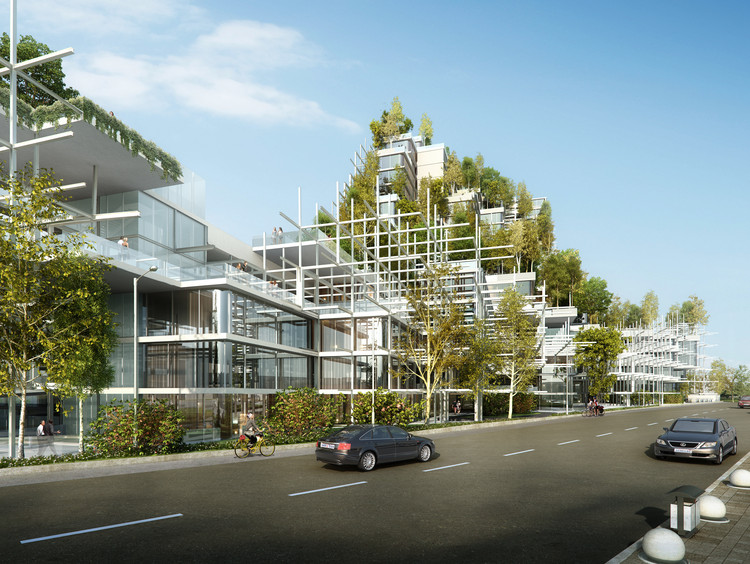
New-York-based studio Architensions has released the design for its shortlisted project, Rising Ryde, for the Ryde Civic Center in Sydney, Australia. In an effort to embrace local communities and contexts, the project is conceived as a hill-shaped building covered in local vegetation and it aims to prioritize people through its complex system of social connections and interactions with nature.
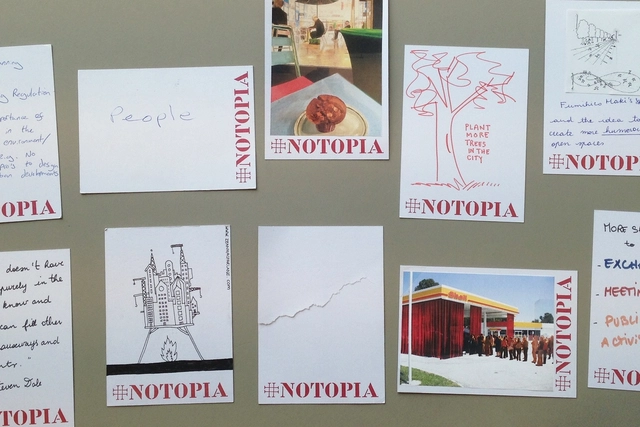
In its recent issues, The Architectural Review has been on a mission, highlighting a phenomenon that they have named "Notopia." Characterized by a "loss of identity and cultural vibrancy" and "a global pandemic of generic buildings," Notopia is - in overly simplistic terms - a consequence of the cold logic of market forces combined with a disinterested populace. The AR's campaign therefore aims to analyze this "thing of terror" and push back by raising public awareness and by proposing alternatives. And they need your help.
Students and architects from over 30 countries have constructed a “village” of 14 wooden structures at Hello Wood’s Project Village 2016. Founded in 2010 as an art camp for students in architecture, art and design disciplines, Hello Wood has since grown into an award-winning interior summer school program focused on creating design through collaborative methods and bringing together the principles of architecture, art, innovation and social impact. The Project Village, conceived just last year, pushes these ideals to their limit by challenging students, teachers and designers to work together to create a new architecture of community at Hello Wood’s rural campus in Csoromfolde, Hungary.
Continue reading to see all 14 projects with descriptions from the designers.
Following the success of last year’s virtual tour of Selgascano’s 2015 Serpentine Pavilion, Photographer Nikhilesh Haval of nikreations has shared with us his virtual tour of BIG’s 2016 Pavilion entry. Hosted this year on Google Street View, the tour allows you to move through and around the “unzipped wall” design, giving you the ability to perceive how sunlight interacts with the structure. Check out how visitors are using the pavilion as an escape from the sunny park or sipping on drinks ordered at the pavilion bar – and don’t forget to look up, where it’s easy to get lost in the sea of interlocking fiberglass bricks.


.jpg?1472123988&format=webp&width=640&height=580)
.jpg?1472123757 "© Laurian Ghinitoiu")
.jpg?1472123736 "© Laurian Ghinitoiu")
.jpg?1472123873 "© Laurian Ghinitoiu")
.jpg?1472123884 "© Laurian Ghinitoiu")
.jpg?1472123988)